
2027 Is Psychology a Good Pre-Law Major? Guide to Getting Into Law School with a Psychology Degree

Co-Founder and Chief Data Scientist
With over 39,600 J.D. students enrolled in the most recent school year, it’s wise to consider how your undergraduate major can help you stand out in law school applications. This leads many students to ask: is psychology a good pre-law major, or could it put me at a competitive disadvantage?
The answer is clear: a psychology degree can be a powerful and unique asset for law school admissions and your future career. Based on more than 10 years of experience, our career planning experts have developed this guide to provide you with an actionable blueprint. We'll show you exactly how to leverage your background for a distinct competitive edge.
Key Things You Should Know About Psychology as a Pre-Law Major
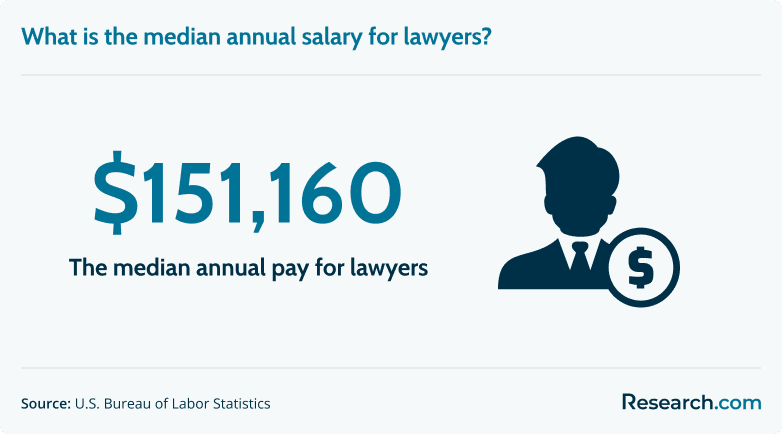
- A background in psychology provides a competitive edge for a legal career, a field where the median annual salary is $151,160.
- Law school admissions committees value diverse academic backgrounds; in a recent cycle, 5,974 applicants came from majors outside of traditional pre-law categories.
- Your psychology coursework in critical analysis and research methods directly prepares you for the logical reasoning demands of the Law School Admission Test (LSAT).
- The skills you develop are highly practical, as understanding human motivation is key to jury selection, client management, and negotiation.
- While 208,888 psychology degrees were awarded in 2023, learning how to strategically frame your major is the key to standing out.
- How do law school admissions committees view psychology majors? Overview
- What essential skills for law school do you learn in psychology? Essential Skills
- How does a psychology degree make you a more effective lawyer in practice? Psychology in Law
- What psychology courses best prepare you for law school? Psychology Courses
- What GPA and MCAT scores should a psychology major aim for? What GPA and MCAT scores should a psychology major aim for?
- What extracurriculars strengthen a pre-law psychology student's application? What extracurriculars strengthen a pre-law psychology student's application?
- How do you write a compelling personal statement as a psychology major? Personal Statement
- Who should a psychology major ask for letters of recommendation? Who should a psychology major ask for letters of recommendation?
- How can you prepare for the LSAT's logical reasoning section using psychology principles? Preparing for LSAT
- Does a psychology degree help you choose a legal specialty? Does a psychology degree help you choose a legal specialty?
- Are there any potential disadvantages to address as a psychology major? Disadvantages
- Is psychology a good major for getting into law school? Is psychology a good major for getting into law school?
- Can Supplemental Certifications Enhance Your Legal and Psychology Profile? Can Supplemental Certifications Enhance Your Legal and Psychology Profile?
How do law school admissions committees view psychology majors?
Law school admissions committees view psychology majors favorably, valuing the unique analytical skills and diverse perspectives they bring to an incoming class.
Some students wonder “are double majors worth it” when considering law school, but psychology alone can provide a strong foundation. Committees aren’t only looking for traditional majors like political science or history—they want evidence of critical thinking, research skills, and the ability to handle a rigorous curriculum, all of which a psychology program provides.
An insider tip to remember is that law schools actively seek a wide range of academic backgrounds to create a rich learning environment. Data from the Law School Admission Council (LSAC) shows that while many applicants come from common pre-law fields, thousands of successful applicants come from other disciplines.
For instance, in one recent cycle, there were 5,974 applicants from majors categorized as "Any Area Not Listed - Other," alongside hundreds from fields like anthropology and art history.
What this means for you is that your major is not a barrier. Instead, it’s an opportunity to show how your training in understanding human behavior, research, and data analysis has prepared you for the challenges of law school. The focus is on the skills you've mastered, not the label on your degree.
What essential skills for law school do you learn in psychology?
Your psychology degree provides rigorous training in the analytical and human-behavior skills that law schools value most. While some may view psychology as a "soft science," admissions committees recognize its empirical rigor as excellent preparation for the analytical demands of legal education.
The skills you gain are highly transferable; for example, understanding human behavior and communication strategies can open doors to job opportunities in media literacy, policy analysis, or other fields that value critical thinking. While only 26% of psychology bachelor's degree holders report their job is closely related to their degree, the underlying training is a powerful asset for demanding fields like law.
Here are the key skills you’re developing that provide a distinct advantage:
- Critical Analysis: You are trained to dissect complex theories, evaluate evidence, and construct logical arguments, which is the foundation of legal reasoning and case analysis.
- Empirical Research Methods: Your understanding of study design and data interpretation allows you to critically assess expert testimony, scientific evidence, and statistical claims presented in legal cases.
- Statistical Reasoning: The ability to understand and question statistics is crucial in a world where legal arguments are increasingly backed by data, from damages calculations to discrimination claims.
- Deep Understanding of Human Behavior: You learn the science behind motivation, cognitive biases, and decision-making, giving you a framework for understanding clients, juries, and opposing counsel.
This powerful toolkit isn’t just for academic success. As we’ll explore next, these same skills become a significant asset when you begin practicing law, giving you an edge in the courtroom and at the negotiation table.
How does a psychology degree make you a more effective lawyer in practice?
A psychology degree makes you a more effective lawyer by providing a deep understanding of the human element that drives every legal issue. The value of your major extends far beyond the admissions process; it becomes a practical toolkit you will use daily in a career where the median annual salary is $151,160.
Because law is fundamentally about people's motivations, biases, and decisions, your training gives you a distinct advantage.
An important insider tip is that many of the most challenging aspects of practicing law have little to do with legal texts and everything to do with human interaction. This is where your background becomes a significant asset.
- Enhanced Jury Selection: You have a unique ability to analyze potential jurors' attitudes, biases, and group dynamics, helping you build a more favorable jury.
- More Effective Witness Preparation: Your training helps you understand memory, stress, and communication, allowing you to prepare witnesses to be more credible and resilient on the stand.
- Superior Negotiation Skills: By understanding cognitive biases and motivational drivers, you can anticipate the other side's moves and craft more persuasive arguments in settlements and negotiations.
- Better Client Relationships: You can manage client expectations, build trust, and communicate complex legal issues with empathy, which is crucial for a successful practice.
The question "Is psychology a good pre-law major?" is best answered by looking at these long-term outcomes. The skills you're learning are highly valued across many professions, and you can explore more about what jobs you can get with applied psychology to see this versatility.
Ultimately, your degree equips you not just to be a lawyer, but to be a more insightful and effective one.
What psychology courses best prepare you for law school?
To best prepare for law school, you should strategically select psychology courses that emphasize analytical rigor, research methods, and critical thinking. While your psychology major provides a strong foundation, not all courses are created equal in the eyes of an admissions committee.
Just as prospective writers often ask, “should you get an MFA in creative writing?”, the answer depends on your career goals; similarly, choosing courses like cognitive psychology, statistics, and research design can demonstrate your readiness for the demands of a legal education. A key insight is that because 92% of psychology majors are in a general program, your specific course choices will make the difference in signaling your preparedness for law school.
Here are the types of courses that will build the strongest pre-law profile:
- Research Methods: This course teaches you how to design studies, evaluate evidence, and construct a logical argument based on data, which is the core of legal analysis.
- Statistics for Behavioral Sciences: Law is becoming increasingly data-driven, and this course provides the essential quantitative reasoning skills to understand and challenge statistical evidence.
- Cognitive Psychology: This provides a scientific understanding of memory, decision-making, and logical fallacies, which is direct preparation for the LSAT and for analyzing witness testimony.
- Social Psychology: This course is invaluable for understanding persuasion, group dynamics, and implicit bias, giving you a framework for jury selection, negotiation, and client interaction.
By focusing your electives in these areas, you are actively shaping your degree into a purpose-driven, pre-law training program. This allows you to build a compelling narrative for your application that showcases a deliberate and strategic academic path.
What GPA and MCAT scores should a psychology major aim for?
As a psychology major, you should aim for the same high GPA and standardized test scores as any other competitive law school applicant. Your academic performance is the primary indicator of your ability to handle a demanding legal curriculum, making these numbers a critical focus of your preparation.
For top-tier law schools, a GPA of 3.8 or higher is a strong target. For the standardized test, it is crucial to focus on the Law School Admission Test (LSAT), which is the required exam for nearly all law schools.
A common point of confusion is mixing this up with the Medical College Admission Test (MCAT), which is for medical school. Understanding the benefits of a general studies degree can also help contextualize your academic path and highlight the versatility of your undergraduate education when explaining your preparation for law school. An LSAT score of 170 or above will make you a highly competitive candidate.
One important thing to remember is that these benchmarks are more important than what your major is. Admissions data show a wide variety of successful applicants, from accounting to African American studies.
This means you have the power to build a compelling application by demonstrating excellence in your chosen field. Different academic paths lead to varied outcomes, and exploring data like the average interdisciplinary studies salary can put the value of a professional legal track into perspective.
What extracurriculars strengthen a pre-law psychology student's application?
The best extracurriculars for a pre-law psychology student are those that allow you to apply your unique skills in a relevant, real-world setting.
While traditional pre-law activities like debate club are valuable, you have the opportunity to choose experiences that more powerfully connect your understanding of human behavior to the principles of justice and advocacy. Just as many students ask “is graphic design a good career?” before pursuing creative paths, pre-law students can use extracurriculars to explore their interests while demonstrating commitment to the legal field. These activities help answer the question of whether psychology is a good pre-law major by showing your engagement in action.
Here are some extracurriculars that will strengthen your application:
- Work as a research assistant in a psychology lab. This provides direct evidence of the analytical, statistical, and critical thinking skills that admissions committees prize. It is one of the strongest ways to counter the "soft science" myth.
- Volunteer at a crisis hotline or a victim support center. This experience demonstrates empathy, strong communication skills, and the ability to handle sensitive situations—all of which are essential for a legal career focused on client advocacy.
- Get involved in student government or a campus judiciary board. Participating in these roles allows you to engage with rules, procedures, and conflict resolution, showing a practical interest in legal and regulatory systems.
- Seek out an internship in a law-adjacent field. Look for opportunities in social work, public policy, or human resources. These roles show you can apply your psychological insights within a professional, structured environment.
Choosing one or two of these focused experiences over many generic ones will build a much stronger and more coherent application narrative. It shows that you have been thoughtful and strategic in preparing for a legal career.
How do you write a compelling personal statement as a psychology major?
Is psychology a good pre-law major? You can make that case compellingly in your personal statement by framing your psychology degree not as an alternative to a traditional pre-law track, but as a deliberate and strategic choice for a legal career.
The biggest mistake students make is downplaying their major or feeling they have to apologize for it. Instead, you should make it the central theme of your story, showcasing the unique perspective it gives you on the practice of law.
A powerful tip is to structure your narrative around a clear, three-part arc that connects your academic background to your future ambitions.
- Start with your fascination. Begin with what fascinates you about human behavior, whether it's a specific psychological concept, a personal observation, or an academic question that sparked your interest.
- Showcase your analytical tools. Explain how your psychology education gave you the specific skills to analyze that behavior, referencing courses or research where you learned to use data, theory, and critical thinking.
- Connect your tools to the law. Finally, explain how you want to apply your understanding of motivation, bias, or social dynamics to advocate for clients, shape policy, or uphold justice in your legal career.
This approach transforms your personal statement from a simple biography into a powerful argument for your admission. It proves that your choice of major was the first step in a thoughtful journey toward a successful legal career.
Who should a psychology major ask for letters of recommendation?
A psychology major needs to get letters of recommendation from professors who can speak directly to their analytical rigor and research skills. While it might seem intuitive to ask a favorite professor from a general survey course, a more strategic choice is often a faculty member who has seen you perform in a more demanding academic setting.
The most compelling letters often come from:
- A professor from a statistics or research methods course who can attest to your quantitative reasoning and ability to work with data.
- A faculty member who supervised you in a research lab or on an independent study project, as they can speak to your discipline, critical thinking, and intellectual curiosity.
- A professor from an upper-level seminar that required a significant research paper, who can comment on your writing, argumentation, and ability to synthesize complex information.
An insider tip is to provide your recommenders with your personal statement, resume, and a summary of your interest in law. This helps them write a more detailed and impactful letter.
Choosing the right recommenders is a critical part of demonstrating your fitness for a demanding career path, similar to the focus required when looking into the steps to becoming a DEA agent. This strategic selection ensures your application is supported by strong, relevant evidence of your capabilities.
How can you prepare for the LSAT's logical reasoning section using psychology principles?
You can prepare for the LSAT's logical reasoning section by treating it as an applied test of cognitive psychology.
Your academic training gives you a unique advantage because you have already studied the very cognitive biases and logical fallacies that form the basis of the test's most challenging questions. Instead of learning a new skill from scratch, your task is to apply your existing knowledge.
Here are some tips on how to leverage your background:
- Reframe the test: View the logical reasoning section not as a test of formal logic, but as an exercise in identifying the flaws in everyday arguments—a skill you have honed as a psychology student.
- Hunt for familiar concepts: Actively look for the cognitive biases and logical fallacies you've studied, such as confirmation bias, straw man arguments, or false causality, within the test questions.
- Use psychology as your framework: Apply your academic knowledge as a powerful tool to deconstruct arguments, anticipate flawed reasoning, and quickly identify invalid conclusions.
This approach helps answer the question "is psychology a good pre-law major?" with a definitive yes, as it provides a practical, built-in advantage. By connecting your LSAT preparation directly to your coursework, you can study more efficiently and with greater confidence, applying your deep understanding of how people think to excel on the exam.
Does a psychology degree help you choose a legal specialty?
Your psychology degree can absolutely help you choose a legal specialty by providing a natural bridge from your academic interests to specific areas of legal practice. Rather than waiting until law school to discover your passions, you can use your undergraduate coursework as an early career compass, guiding you toward a field that aligns with what you already find fascinating.
A key insight to remember is that virtually every area of law has a deep connection to a corresponding area of psychology. The increasing focus on specialization in psychology, marked by a 26% rise in master's graduates in research subfields, mirrors a similar trend in the legal profession. This means your focused interests are a valuable asset.
You can map your interests directly:
- An interest in Developmental Psychology points naturally toward Family Law, where you'll deal with issues of child welfare, custody, and family dynamics.
- A passion for Social Psychology and Sociology aligns perfectly with Civil Rights Law, which focuses on issues of discrimination, prejudice, and systemic inequality.
- A focus on Industrial-Organizational (I/O) Psychology provides a strong foundation for Corporate or Employment Law, dealing with workplace conflicts, hiring practices, and organizational behavior. Students interested in this path might explore taking business law courses to further deepen their expertise.
This proactive approach not only helps you build a more compelling law school application narrative but also sets you on a path toward a more fulfilling and purpose-driven legal career from day one.
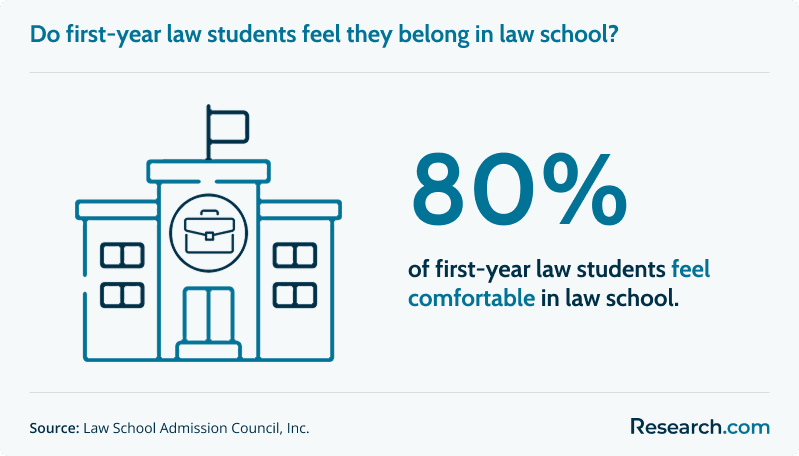
To put this into perspective, consider the student experience itself. The graphic below answers an important question about first-year students in law school.
Are there any potential disadvantages to address as a psychology major?
The primary potential disadvantage of a psychology major is the outdated perception that it's a "soft science" lacking in rigor. While this is a myth, it's a communication challenge you should be prepared to proactively address in your application. The key is to remember this is an issue of perception, not a reflection of the actual skills you've gained.
The solution is to use your application materials to highlight the empirical core of your studies. Make sure your transcript features courses like research methods, statistics, and cognitive psychology. In your personal statement and interviews, focus on the data-driven research projects you completed and the analytical skills you developed.
An excellent strategy is to supplement your major with a writing-intensive minor or electives to demonstrate a broad and rigorous intellectual foundation.
With 208,888 psychology degrees awarded last year, the need to differentiate yourself is clear. By taking these steps, you don't just overcome a potential misconception; you turn your application into a powerful testament to your strategic planning and academic seriousness. This transforms a potential weakness into a clear strength.
Is psychology a good major for getting into law school?
Yes, psychology is an excellent major for getting into law school and succeeding in a legal career. When you leverage it strategically, your degree provides a unique and powerful toolkit that sets you apart from applicants with more traditional backgrounds. It is a pathway that can lead to significant professional success.
So, is psychology a good pre-law major? The answer is clear when you consider the evidence. Law school admissions committees value the analytical and research skills that are at the core of the psychology curriculum.
More importantly, the deep understanding of human motivation and behavior you develop provides a distinct competitive advantage in the daily practice of law, from negotiating settlements to selecting a jury.
Ultimately, your success depends on your ability to frame your major as the strategic asset it is. By highlighting the right courses, choosing relevant extracurriculars, and crafting a compelling narrative, you can build an application that is not just strong, but truly distinctive.
For those ready to take the next step, exploring options like the fastest online master's in legal studies program can provide further momentum on your path. You have chosen a major that gives you a powerful lens on the human condition—the very thing the law seeks to govern.
Can Supplemental Certifications Enhance Your Legal and Psychology Profile?
While an undergraduate degree provides a strong foundation, targeted certifications can validate specialized expertise and distinguish your profile in both legal and psychological fields. For instance, obtaining certifications in behavior analysis offers an additional layer of credibility and can be particularly valuable for roles intersecting mental health and law. Exploring options such as cheap board certified behavior analyst online programs can offer a cost-effective pathway to boost both your resume and practical skill set, positioning you as a well-rounded candidate in a competitive market.
Here’s What Graduates Have to Say about Their Psychology Bachelor's Program
- Nia: "Balancing my coursework with a part-time job was tough, and I relied heavily on online resources to prep for my applications. Having a clear guide tailored to a psychology background saved me so much time and stress. It helped me focus my efforts on what truly mattered and build a competitive profile without feeling completely overwhelmed by the process. The flexibility of studying this way made all the difference."
- Declan: "The entire law school application process felt incredibly daunting, especially coming from a non-traditional pre-law field. What helped me most was having an actionable plan that covered everything from letters of recommendation to extracurriculars. It took away so much of the guesswork and allowed me to focus my energy on building the strongest application possible. I finally felt in control of my future."
- Darius: "For months, I struggled to figure out how to write my personal statement without it sounding like I was apologizing for my major. I was worried admissions committees wouldn't take me seriously. Learning how to connect my passion for cognitive psychology to my interest in legal reasoning was the key. It helped me craft a narrative that felt authentic and powerful, turning what I thought was a liability into the core of my story."
Key Findings
- The legal profession offers a financially rewarding path, with a median annual salary of $151,160, making the strategic preparation required from any major a worthwhile investment.
- The fear of having a non-traditional major is largely unfounded, as law schools accept a wide diversity of applicants, with 5,974 from "other" unlisted majors in a recent cycle.
- While only 26% of psychology bachelor's graduates find jobs "closely related" to their degree, the major's true value for pre-law students lies in its rigorous development of transferable analytical and research skills.
- Your psychology major gives you a distinct advantage in preparing for the LSAT's logical reasoning section by providing a pre-existing academic framework for identifying the cognitive biases and logical fallacies tested on the exam.
- The increasing specialization within psychology, marked by a 26% growth in master's graduates in subfields, directly aligns with the legal profession's trend toward specialization, allowing you to build focused expertise early.
- In a competitive environment with over 208,888 psychology graduates annually, the key to a successful law school application is not the major itself, but the ability to strategically frame it as a unique asset for a legal career.
References:
- Data USA. (n.d.). Psychology. Retrieved September 29, 2025, from https://datausa.io/profile/cip/psychology
- Page, C., Stamm, K., & Assefa, M. (2025, September 1). Growth in psychology graduate degrees driven by increases in health service psychology master’s degrees. American Psychological Association. Retrieved September 29, 2025, from https://www.apa.org/monitor/2025/09/health-service-psychology-masters-degrees
- Russian, A., & Bodamer, E. (n.d.). LSAC’s knowledge report: The composition of the first-year law school class and enrollment trends. The Law School Admission Council | LSAC. Retrieved September 29, 2025, from https://www.lsac.org/data-research/research/lsacs-knowledge-report-composition-1L-class-and-enrollment-trends
- Stamm, K., & Schwartz, B. (2025, August 14). Improving perceptions of the psychology major. American Psychological Association. Retrieved September 29, 2025, from https://www.apa.org/ed/precollege/psychology-teacher-network/introductory-psychology/career-pathways
- U.S. Bureau of Labor Statistics. (n.d.). Field of degree: Psychology. Retrieved September 29, 2025 from https://www.bls.gov/ooh/field-of-degree/psychology/psychology-field-of-degree.htm
- U.S. Bureau of Labor Statistics. (n.d.). Occupational outlook handbook, lawyers. Retrieved September 29, 2025, from https://www.bls.gov/ooh/legal/lawyers.htm
Other Things You Should Know About Psychology Bachelor's Programs
A psychology major offers critical thinking and research skills, valuable for law school. It helps in understanding human behavior and motivations, important in legal contexts. In 2027, this background can enhance a law school application by demonstrating analytical prowess and a multidisciplinary approach.
A psychology major can enhance a 2027 law school applicant's profile by demonstrating skills in critical thinking, understanding of human behavior, and effective communication. These skills are valuable in legal education and practice, potentially making an applicant more attractive to law schools.
In 2027, law schools increasingly value diverse backgrounds, including psychology, for skills in analyzing human behavior. Notable institutions like Harvard and Stanford appreciate how psychology contributes to understanding legal principles and client management, enhancing a candidate's profile.


