
2027 Is an MFA in Creative Writing Worth It?

Co-Founder and Chief Data Scientist
With the average Master of Arts degree costing over $71,000, deciding is an MFA in creative writing worth it can feel like a high-stakes gamble. The truth is, the degree has two very different functions: it can be a powerful tool for a strategic career change, or it can be an incubator for artistic craft and access to the publishing world.
Its value isn't a simple "yes" or "no"—it depends entirely on your primary goal. To help you make the right choice, our career planning experts with more than 10 years of experience have created this comprehensive guide to navigating the decision.
Key Things You Should Know About an MFA in Creative Writing
- The average salary for a writer with a Master's degree ($69,847) is nearly identical to one with a Bachelor′s ($69,694), meaning the financial return isn't automatic.
- With the average Master of Arts degree costing $71,140, securing a fully funded program is the most critical factor in making the degree financially viable.
- The degree opens doors to two distinct career paths: high-paying corporate roles in industries like pharmaceuticals, where writers can earn over $136,000, and creative careers in publishing.
- An MFA is an accelerator, not a requirement, as proven by the fact that only 11% of professional writers hold a Master's degree.
- The actual value of the program often comes less from the diploma itself and more from the dedicated writing time, faculty mentorship, and professional network it provides.
- How much more do writers with a master's degree make? Salary
- What jobs can you get with an MFA in Creative Writing? Jobs
- Does an MFA help you get published? Publication Chances
- How much does an MFA in Creative Writing typically cost? Program Cost
- What are the admission requirements for an MFA program? Requirements
- What is the day-to-day experience of an MFA program? What is the day-to-day experience of an MFA program?
- Which industries pay the most for high-level writing skills? Top Indsutries
- How important is the MFA network for career success? How important is the MFA network for career success?
- Can you succeed as a professional writer without an MFA? Can you succeed as a professional writer without an MFA?
- What are the major pros and cons of getting an MFA? What are the major pros and cons of getting an MFA?
- Who should (and should not) get an MFA in Creative Writing? Who should (and should not) get an MFA in Creative Writing?
- How do you make an MFA in Creative Writing worth it? How do you make an MFA in Creative Writing worth it?
How much more do writers with a master's degree make?
Based on average salaries, writers with a master's degree make only marginally more than those with just a bachelor's degree. The data shows that the average annual wage for writers with a Master's degree is $69,847, compared to $69,694 for writers with a Bachelor's degree.
While that narrow gap might seem discouraging, it reveals a crucial truth about this particular degree. Unlike a credential in business or engineering, the financial value of an MFA in creative writing is not an automatic salary bump across the board. Instead, its worth is determined almost entirely by the industry you choose to enter after graduation.
The real answer to the question, "Is an MFA in creative writing worth it financially?" depends less on the diploma itself and more on your career strategy. The degree provides you with elite-level communication skills, and the key is learning how to apply them in professional environments that value and pay a premium for that specific expertise.
What jobs can you get with an MFA in Creative Writing?
An MFA in Creative Writing opens doors to two primary career universes: a professional path that values high-level communication skills and an artistic path focused on creative and academic work. Your choice of which path to pursue will determine how you leverage the degree. Here is a guide to the most common roles in each.
The professional path is ideal for those looking to apply storytelling skills in a corporate or tech environment. The focus is on clarity, strategy, and user empathy. Common jobs include:
- Content Strategist
- UX Writer
- Technical Writer
- Copywriter
- Marketing and Communications Manager
The artistic and academic path is for those who want to work directly in the literary world or in higher education. The focus is on craft, criticism, and pedagogy. Common jobs include:
- Author or Novelist
- Editor
- Literary Agent
- University Professor or Lecturer
- Publisher
For those on the professional path, the skills learned in an MFA are highly transferable to related fields. Many find that pursuing one of the best online journalism degree programs can further enhance their career prospects in the media.
Does an MFA help you get published?
Yes, an MFA significantly improves your chances of getting published, but it does not offer a guarantee. For those weighing career paths, asking “is a PsyD worth it” alongside “is an MFA worth it” can help clarify the professional and financial investment required for advanced degrees. The program provides three key assets that are difficult to replicate on your own: dedicated time to write, high-level mentorship from established authors, and direct access to a professional network of agents and editors.
For many aspiring authors, the most significant barrier to entry is simply getting an industry professional to read their work. An MFA from a respected program acts as a powerful signal of quality, giving your manuscript a level of credibility that makes agents more likely to take it seriously. Your professors often have direct connections to the publishing world, and your peers will become your future colleagues, creating a vital support system and information channel.
A Realistic Look at a Writing Career
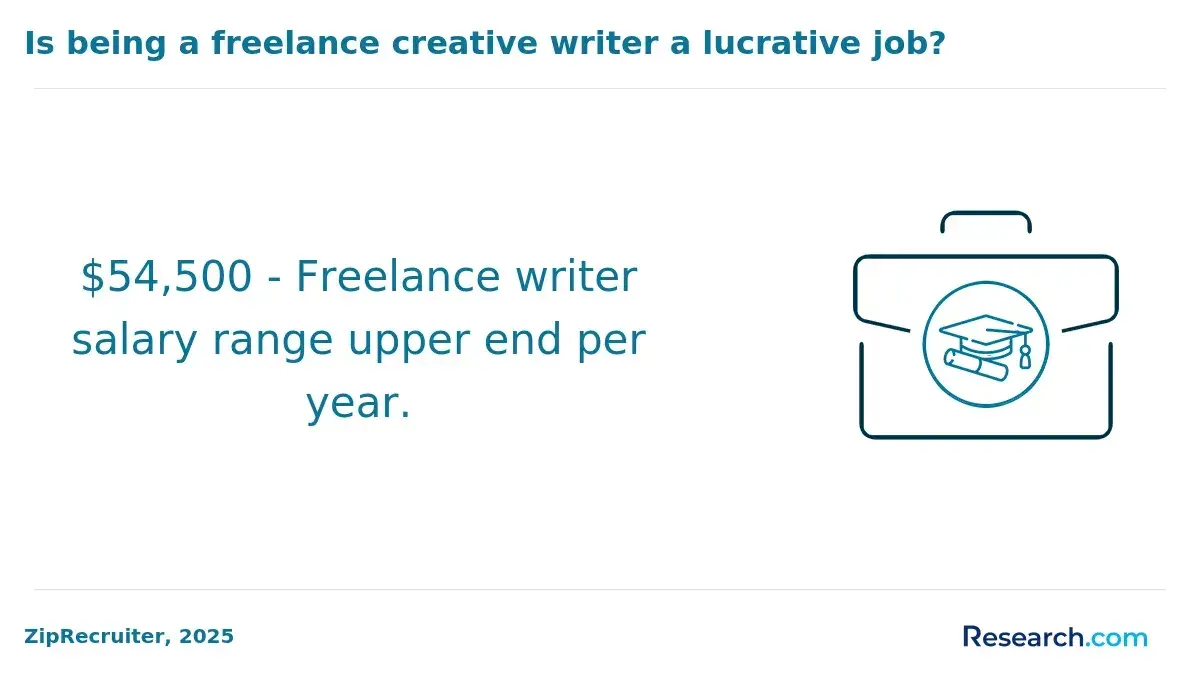
It’s essential to have a clear-eyed view of what a writing career entails, even with a successful book launch. The data shows that 63% of writers and authors are self-employed, which means you must be prepared to run your career like a small business.
This entrepreneurial reality is a key reason why most authors, even those with MFAs and book deals, have other jobs to provide a stable income. The MFA is a powerful tool for honing your craft and breaking into the industry, but it is the first step in a long-term career, not a ticket to immediate financial security through writing alone.
How much does an MFA in Creative Writing typically cost?
The cost of an MFA in Creative Writing can range from being fully funded—meaning you are paid to attend—to over $100,000 in total tuition and fees. While the average cost for a Master of Arts degree is around $71,140, the price you pay depends heavily on the type of institution. Average graduate tuition is $11,827 per year at public universities and $20,515 at private ones.
For students exploring options, it’s helpful to consider what is a general studies degree good for as a comparison in terms of career flexibility and cost-effectiveness. This wide variance means that the single most important financial factor in determining is an MFA in creative writing worth it is securing a funded position. Simply looking at the sticker price of a program can be misleading; the real question is how much financial support the program is willing to offer you.
The Golden Rule: Why You Should Almost Never Pay for an MFA
An insider tip for any prospective student is to focus your search on fully funded programs. "Full funding" is a financial aid package that typically includes a full tuition waiver, a living stipend (often in exchange for teaching an undergraduate class), and health insurance. It is the clearest signal of a program's quality and its investment in your potential.
Think of it this way: the most prestigious programs are investing in you as a writer, not asking you to take on significant debt. For applicants who are concerned about the time and financial commitment of a traditional two- or three-year program, exploring creative writing accelerated programs online can be a smart, cost-effective alternative.
What are the admission requirements for an MFA program?
The single most crucial admission requirement for an MFA program is the quality of your creative writing sample. While you will still need to submit transcripts, letters of recommendation, and a statement of purpose, these elements are secondary; a strong portfolio is what will get you accepted. For students comparing creative fields, asking “is graphic design a good major” alongside considering an MFA can help clarify where your skills and career goals best align.
An insider tip for applicants is to understand that admissions committees are not looking for a perfect, finished product. Instead, they are looking for potential. Your writing sample—typically 20-30 pages of fiction or nonfiction, or a collection of poems—needs to demonstrate a distinctive voice, a solid foundation in craft, and the promise of a compelling long-term project. Unlike other graduate programs, a high GPA or stellar test scores will rarely make up for a portfolio that doesn't show this creative spark.
This focus on the writing itself is empowering. It means that your admission is not dependent on your academic history but on the strength and originality of your work. Your portfolio is your opportunity to prove you are ready to contribute to a community of serious writers.
What is the day-to-day experience of an MFA program?
The day-to-day experience of an MFA program is less like a traditional academic schedule and more like a professional studio practice centered on a consistent rhythm of writing and critique. Your week is typically structured around three core activities: your own writing time, literature seminars, and the workshop, which is the heart of the program. Students sometimes wonder, much like they ask “can you go to med school with a psychology degree,” how their background or prior studies influence their success in a new and specialized field.
For students in funded programs, a fourth component is often added: teaching an undergraduate creative writing or composition course. This structure is designed to immerse you fully in the literary world, treating you not just as a student but as a working writer and educator. The key to success is balancing the solitary work of creation with the collaborative, and often challenging, work of critique.
Navigating the Workshop and Overcoming Critique
Many writers worry that a workshop will homogenize their voice, but a key insight is to view critique as a professional tool, not a personal judgment. The workshop is a training ground designed to sharpen your craft and your critical eye. It is not a support group; it is a professional environment where your work is taken seriously.
To get the most out of it, listen for patterns in the feedback rather than reacting to every individual comment. Learn to separate your identity from the manuscript; the critique is about the words on the page, not about you. This process empowers you to see your own work more clearly, allowing you to make more intentional choices as the ultimate authority on your story.
Which industries pay the most for high-level writing skills?
The most lucrative industries for writers with high-level skills are technology, finance, and pharmaceuticals. These sectors place a high premium on professionals who can translate complex, technical information into clear, persuasive, and empathetic narratives. For example, the average annual wage for writers in Pharmaceutical and Medicine Manufacturing is around $136,000.
An insider tip for career-switchers is to look beyond traditional media. The highest-paying writing jobs are often in companies where the product is not content but a complex service or technology. These organizations require expert storytellers to establish trust with consumers, communicate value to stakeholders, and design intuitive user experiences. Applying these narrative skills to the commercial side of creative fields is also a viable path, and some find that the fastest online entertainment business degree programs provide a strong foundation for this.
Why a Fine Arts Degree Gives You a Competitive Edge
In these competitive corporate environments, an MFA gives you a distinct advantage. While a bootcamp can teach you the tactics of writing for a user interface, an MFA teaches you the strategic mastery of narrative, audience, and voice. This deeper understanding is what separates a tactical writer from a content strategist.
The rise of formal disciplines like "Content Design" and "UX Writing" in the tech industry has created a significant new job market for these MFA-level skills. Companies are recognizing that the ability to shape a user's experience through language is a core business competency, and they are willing to pay for that expertise. This means your fine arts degree becomes a powerful credential for leadership roles that require both creative mastery and strategic insight.
How important is the MFA network for career success?
The network you build during an MFA program is critically important and is one of the most valuable and long-lasting assets you will acquire. Its power lies in its dual function: it provides direct access for those on the artistic path and a significant career accelerator for those on the professional path.
For an aspiring author, the network of professors and visiting writers provides a direct line to the agents and editors who act as gatekeepers to the publishing world. For a career-switcher, the alumni network is a powerful source of referrals and job leads in competitive industries like tech, where a personal connection can make all the difference.
A key insight to remember is that the most valuable part of your network is often your own peer cohort. These are the colleagues who will grow with you, becoming the editors, authors, and creative directors of the future who will hire you for your next project.
Can you succeed as a professional writer without an MFA?
Absolutely. While an MFA can feel like a mandatory credential, the data shows that the vast majority of successful writers do not have one. In fact, only 11% of professional writers hold a Master's degree, compared to 74% who have a Bachelor's.
The ultimate measure of success in any writing field—whether it's publishing a novel or landing a high-paying tech job—is the quality of your portfolio and your professional experience. The MFA is a powerful accelerator for developing that portfolio and network, but it is not a requirement. For those on the professional track, alternatives like intensive bootcamps or the shortest online professional writing degrees can provide targeted skills without the multi-year commitment of a fine arts degree.
This means the question "Is an MFA in creative writing worth it?" is about your personal timeline, learning style, and specific goals. Success is ultimately defined by your persistence and the quality of your work, not by any single credential on your resume.
What are the major pros and cons of getting an MFA?
Evaluating an MFA involves weighing a clear set of powerful benefits against significant and tangible costs. The right choice depends on how you value each of these factors based on your specific career and artistic goals.
- Pro: Gain dedicated time and mentorship. The program provides two to three years of protected time to focus exclusively on your craft under the guidance of established, working authors.
- Pro: Build a career-launching professional network. You gain direct access to professors, visiting agents, and a peer group that will become your professional lifeline for years to come.
- Con: Incurs significant financial and opportunity costs. The high price of tuition for non-funded programs, combined with two to three years of lost income from a mid-career salary, represents a major financial investment.
- Con: Risks a mismatch between your goals and the program's focus. A curriculum that is a "pro" for an aspiring novelist (intense focus on literary craft) can be a "con" for a career-switcher (a lack of courses on corporate content strategy or UX writing).
Who should (and should not) get an MFA in Creative Writing?
The decision to get an MFA is right for you only if you have a clear, specific goal and can attend a program that aligns with that goal without taking on significant debt.
You should get an MFA if you fit one of two profiles. The first is the career-switcher who is passionate about mastering narrative as a strategic tool and wants to pivot into a high-paying corporate role. The second is the dedicated artist who has a specific book-length project in mind and can gain acceptance into a fully funded program that provides the time and mentorship to complete it.
You should not get an MFA if you are unsure of your career goals, are hoping the degree will magically solve a lack of discipline, or would have to take on substantial student loans to attend. In these cases, the investment is unlikely to provide the return you're looking for.
How do you make an MFA in Creative Writing worth it?
You make an MFA in Creative Writing worth it by treating it as a strategic, professional investment from day one. The value of the degree is not passively received; it is actively created by the choices you make before, during, and after the program.
- Before you apply, have a specific goal. Know whether you are pursuing the degree as a professional tool to pivot into a corporate career or as an artistic incubator to write a book. Choose programs that explicitly support that single goal.
- During the program, build your network relentlessly. Your professors and your peers are your future professional connections. Go to every reading, meet every visiting writer, and build relationships that will last long after graduation.
- While you study, build a professional portfolio. If your goal is a corporate job, seek out freelance or internship opportunities. If your goal is publication, send out short stories or essays. Do not wait until you have the diploma to start building your career.
- After you graduate, market your skills strategically. Learn to articulate the value of your fine arts training in a corporate context. Frame your skills not just as "writing" but as "narrative strategy," "audience empathy," and "communication design."
An MFA provides you with a powerful toolkit. For those who want to apply those skills in a corporate setting, an accelerated online master's degree public relations can be another way to gain a competitive edge. The answer to is an MFA in creative writing worth it comes down to your own agency and strategic planning.
Here’s What Graduates Have to Say About Their MFA in Creative Writing Program
- Anya: "My writing had hit a wall, and I was just rewriting the same pages over and over. The workshop structure was intense, but it was exactly what I needed to break through my creative stagnation. Getting consistent, high-level feedback from my professor and peers forced me to see my manuscript in a new light. It wasn’t just about encouragement; it was about the rigorous craft-based criticism that helped me finally finish my novel."
- Liang: "I was deeply concerned that a "fine arts" degree would be dismissed by corporate hiring managers. However, I learned to frame my MFA as advanced training in communication strategy and audience empathy. In interviews, I could speak to narrative structure in a way that other candidates couldn't, which landed me a UX writing position in the tech sector. The degree gave me a unique and valuable professional language."
- Renata: "I was terrified that a workshop would sand down the unique edges of my writing voice. My fear was that I’d come out writing like everyone else in my cohort. I was fortunate to find a mentor who understood my unconventional style and pushed me to refine it rather than change it. The program actually gave me more confidence in my own artistic instincts."
Key Findings
- The near-identical average salaries for writers with a Master's ($69,847) versus a Bachelor′s ($69,694) reveal that the degree's financial ROI is not automatic; it is realized only through a strategic pivot into high-paying niche industries.
- A clear career roadmap exists for those seeking high financial returns, with the information industry paying writers an average annual wage of $73,070, demonstrating the MFA's power for entering lucrative corporate sectors.
- The fact that 63% of writers are self-employed underscores the entrepreneurial nature of an artistic career, meaning an MFA provides the craft and network, but success ultimately depends on treating your writing as a business.
- With only 9% of professional writers holding a Master's degree, the MFA should be viewed as a career accelerator, not a mandatory license, making it a strategic choice for those with specific goals who can secure funding.
- The average cost of a Master of Arts degree is $71,140, which makes securing a fully funded program the single most important decision for mitigating financial risk and ensuring the degree is a worthwhile investment.
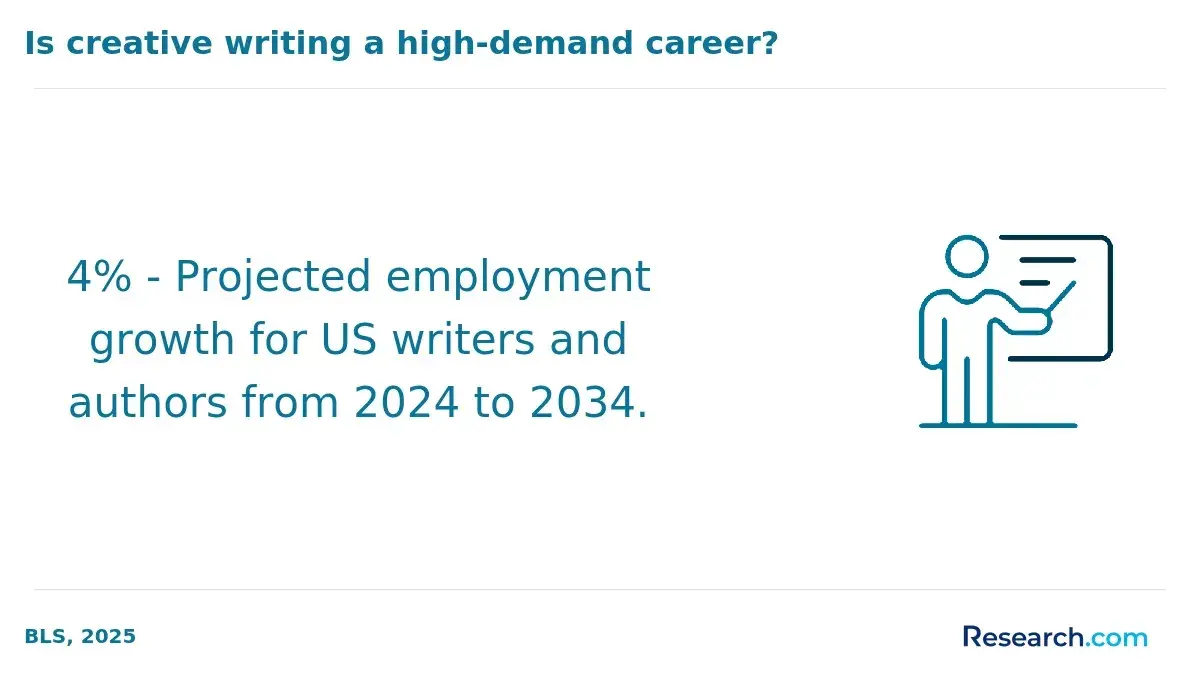
- The projected 4% job growth for writers indicates a stable but competitive field, where an MFA can serve as a key differentiator by providing the high-level skills and professional network needed to secure the most desirable roles.
References:
- Hanson, M. (2024). Average cost of a master's degree. Retrieved February 2026, from, from Education Data Initiative.
- National Center for Education Statistics. (2025a). Trend generator: Average amount of tuition and required fees for full-time graduate students at private postsecondary institutions. U.S. Department of Education, Institute of Education Sciences. Retrieved February 2026, from NCES.
- National Center for Education Statistics. (2025b). Trend generator: Average amount of tuition and required fees for full-time graduate students at public postsecondary institutions. U.S. Department of Education, Institute of Education Sciences. Retrieved February 2026, from NCES.
- U.S. Bureau of Labor Statistics. (2025a). Occupational employment and wage statistics: Writers and authors. U.S. Department of Labor. Retrieved February 2026, from BLS.
- U.S. Bureau of Labor Statistics. (2025b). Occupational outlook handbook: Writers and authors. U.S. Department of Labor. Retrieved February 2026, from BLS.
- Zippia. (2025a). Creative writer demographics and statistics in the US. Retrieved February 2026, from Zippia.
- Zippia. (2025b). Writer jobs: Education. Retrieved February 2026, from Zippia.
- ZipRecruiter. (2026). Salary: Creative Writer (February, 2026) United States. Retrieved February 2026, from ZipRecruiter.
Other Things You Should Know About MFA in Creative Writing Programs
In 2027, creative writing can provide sustainable career opportunities, but it often requires diversifying skills. Writers may find work in various fields such as content creation, editing, and teaching. However, securing a steady income solely through creative writing remains challenging and requires persistence and adaptability.
The primary difference is the degree's focus and purpose. An MFA in Creative Writing is a terminal degree in the fine arts, meaning it is considered the highest degree in its field for practitioners. Its curriculum is centered on the workshop model and the production of a book-length creative manuscript. An MA in Writing or English is typically a more academic degree focused on literary criticism, theory, and research, often serving as a stepping stone to a Ph.D.
In 2027, MFA in Creative Writing graduates may find opportunities in teaching, publishing, and content creation. While some pursue careers as novelists or poets, others leverage their skills in areas like editing, copywriting, or digital media. Networking and adaptability remain crucial for sustainable career paths.


