
2027 Is a PsyD Degree Worth It? Benefits, Costs, Salary & Career Paths

Co-Founder and Chief Data Scientist
Deciding to pursue a doctoral degree is one of the most significant professional choices you can make. With psychologist employment projected to grow 6% over the next decade, the stakes feel especially high. This naturally raises the question: is a PsyD degree worth it, given the substantial investment of time and money required?
This article is designed to give you a clear, data-driven answer. As career planning experts with more than 10 years of experience, we've structured this guide to directly address the most critical questions you have about a PsyD's costs, benefits, and long-term value. We'll provide the framework you need to move from financial anxiety to confident clarity.
Key Things You Should Know About PsyD Degrees
- The total cost isn't just tuition, which averages around $18,970 per year; it also includes four to six years of dedicated study and the opportunity cost of lost wages during that time.
- After graduation, you must complete 3,000 to 4,000 hours of supervised clinical work to become a licensed psychologist, a critical step for unlocking your full earning potential.
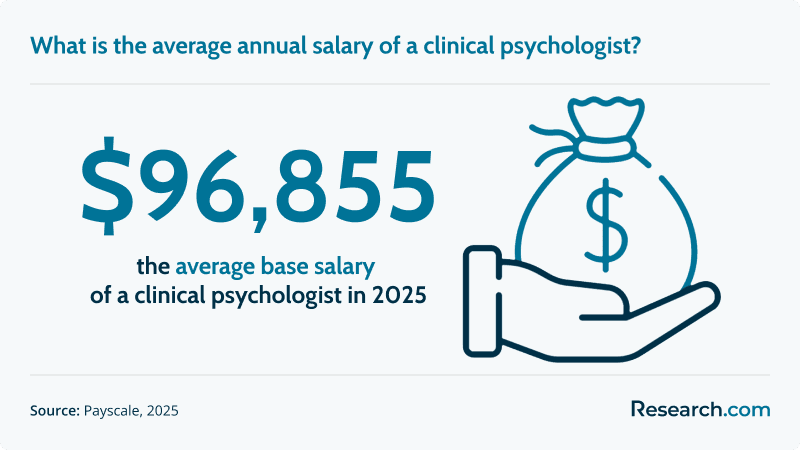
- The average base salary for a clinical psychologist is approximately $96,855, offering a strong return once you are fully licensed and established in your career.
- Is a PsyD degree a good investment today? Degree Value
- How much does it cost to become a clinical psychologist? Average Cost
- What are the benefits of getting a PsyD? Benefits
- What is the biggest risk of getting a PsyD degree? Risks
- Who is a PsyD degree a great fit for? Who is a PsyD degree a great fit for?
- What is the earning potential and salary progression of a clinical psychology career? PsyD Earnings
- What is the job outlook for PsyD graduates? Job Outlook
- What does the long-term career progression for a clinical psychologist look like? What does the long-term career progression for a clinical psychologist look like?
- How do you calculate your personal ROI for a clinical psychology career? Personal ROI
- What are the top alternative careers to consider instead of a PsyD? Alternative Careers
- How do you decide if a clinical psychology career is worth it for you? How do you decide if a clinical psychology career is worth it for you?
- Can additional certifications improve your clinical psychology career outcomes? Can additional certifications improve your clinical psychology career outcomes?
Is a PsyD degree worth it in 2026?
A Doctor of Psychology, or PsyD, can be a strong investment if your goal is to become a licensed psychologist who provides clinical services, conducts psychological assessments, and works independently with clients. It is not the right investment for every psychology student. The degree requires years of training, supervised practice, licensure exams, and a serious financial commitment before the strongest career benefits are available.
This guide is for students comparing doctoral psychology programs, master’s-level counseling paths, and non-clinical psychology careers. It explains what a PsyD can lead to, what it costs, how licensure works, what risks to consider, and how to decide whether the long-term payoff fits your goals. If you are still exploring broader career directions, comparing psychology with emerging fields such as media literacy careers can also help you clarify whether your interest is clinical practice, research, communication, or human behavior more generally.
Quick answer: When is a PsyD a good investment?
A PsyD is most likely to be worth it if you are committed to becoming a licensed clinical psychologist and want the professional authority that usually comes with doctoral-level training: independent practice, the legal use of the psychologist title, advanced assessment work, and stronger long-term earning potential. It is less likely to be worth it if you mainly want to provide counseling as quickly as possible, avoid substantial debt, or work in a non-clinical psychology-related role that does not require a doctorate.
| Decision point | A PsyD may make sense if... | You may want another path if... |
| Career goal | You want to become a licensed psychologist and provide clinical services at the highest level of practice. | You want to enter counseling, coaching, research support, HR, UX, marketing, or community services without doctoral training. |
| Training commitment | You are prepared for four to six years of doctoral study plus supervised postdoctoral work. | You need a shorter route into the workforce or cannot commit to a long training timeline. |
| Financial risk | You have compared tuition, loan repayment, lost wages, and realistic post-licensure earnings. | You are choosing a program mainly because you were admitted, without calculating total cost or debt burden. |
| Work style | You want clinical autonomy, assessment responsibilities, and the option to build a private practice. | You prefer organizational, educational, business, or research roles with less direct clinical responsibility. |
How much does it cost to become a clinical psychologist?
The cost of becoming a clinical psychologist includes more than tuition. A realistic estimate should include program charges, living expenses, reduced income while studying, internship requirements, supervised hours after graduation, exam fees, and the time it takes to reach full licensure.
For doctoral education in the United States, the average annual tuition is approximately $18,970. That figure is only one part of the decision. A lower-cost program can still be a poor choice if it does not meet licensure expectations, and a higher-cost program may create repayment pressure if your expected career path cannot support the debt. Before enrolling, confirm the program’s status using a reliable guide to psychology program accreditation, because graduating from a program that does not satisfy state licensing requirements can seriously limit your options.
Most full-time PsyD programs require four to six years. During that period, students typically complete graduate coursework, clinical practica, assessment training, research or applied projects, and a one-year, full-time internship. After graduation, candidates generally need supervised professional experience before they can practice independently.
Licensure is another major investment. Most states require 3,000 to 4,000 supervised hours, and requirements vary by jurisdiction. The professional effort of licensure should be treated as part of the career path, not as an afterthought. It is the stage where doctoral training becomes professional authority.
| Investment category | What it includes | Why it matters |
| Tuition and fees | Doctoral coursework, clinical training, assessment labs, university fees, and related program charges. | The average annual tuition is approximately $18,970, but total cost depends on program length and funding. |
| Time in school | Full-time doctoral enrollment, practica, academic milestones, and internship preparation. | Most full-time PsyD programs take four to six years, which can reduce full-time earning opportunities. |
| Internship | A one-year, full-time clinical placement required by many programs and licensing pathways. | Internship quality can affect readiness for postdoctoral roles and licensure progression. |
| Supervised experience | Postgraduate supervised hours completed under a qualified professional. | Most states require 3,000 to 4,000 supervised hours before independent licensure. |
| Opportunity cost | Income you may not earn while studying or completing required training. | This can be one of the largest hidden costs, especially for students leaving full-time employment. |
Questions to ask before accepting a PsyD admission offer
- Does the program meet licensing expectations in the state where I want to practice? Do not assume one state’s pathway automatically transfers to another.
- What is the total estimated cost from enrollment to graduation? Ask for tuition, fees, internship-related expenses, and realistic living costs.
- How are practica and internships arranged? A program’s clinical placement support can affect both training quality and stress level.
- What funding is available? Compare scholarships, assistantships, employer benefits, and part-time work options.
- What are graduates doing after licensure? Look for evidence of career outcomes that match your goals, not just general employment claims.
What are the main benefits of earning a PsyD?
The strongest benefits of a PsyD are professional scope, clinical independence, advanced assessment training, and long-term career flexibility. These benefits are most valuable for people who want to become licensed psychologists rather than master’s-level therapists, psychology-informed business professionals, or researchers in non-clinical roles. Students who ask whether psychology is a good major for med school often face a similar decision: advanced psychology training can be useful, but the right path depends on the exact professional role you want.
- Use of the psychologist title: In many contexts, the title “psychologist” is legally protected and tied to doctoral education plus state licensure. That credential can signal advanced preparation to clients, employers, courts, schools, and healthcare organizations.
- Independent clinical practice: Licensed psychologists can often work without ongoing clinical supervision, open a private practice, and make independent professional judgments within their scope of practice.
- Advanced testing and assessment: PsyD programs train students in psychological assessment, diagnostic evaluation, and interpretation of tools that are not typically part of master’s-level counseling preparation.
- Broader career mobility: A PsyD can support work in healthcare, schools, government, forensic settings, community agencies, consulting, and private practice.
- Higher earning potential over time: The financial payoff is usually strongest after licensure and experience, not during training or postdoctoral supervision.
The benefit is not simply having “more education.” The value comes from what the degree allows you to do professionally after you complete licensure.
What is the biggest risk of getting a PsyD degree?
The largest risk is entering a high-cost, emotionally demanding training path without a clear plan for debt, licensure, and long-term clinical sustainability. A PsyD can create strong professional options, but it can also create financial pressure if program costs are high, funding is limited, or post-licensure income takes longer than expected to grow. Some students compare this risk with the benefits of a master's degree, especially when a master’s-level license could lead to the type of counseling work they actually want.
Debt and burnout often interact. Heavy loan payments can make a demanding caseload feel harder to manage, while emotionally intense clinical work can make financial stress more difficult to tolerate. This is why the decision should not be based only on passion for psychology. It should also include a practical plan for repayment, boundaries, supervision, self-care, and career pacing.
| Risk | How it can affect you | How to reduce the risk |
| High debt | Large loan payments may limit flexibility after graduation. | Compare total program cost, funding, loan terms, and realistic post-licensure earnings before enrolling. |
| Licensure delays | Slow progress through internship, supervised hours, or exams can postpone full earning potential. | Choose programs with strong clinical training support and understand your state’s requirements early. |
| Burnout | Direct work with trauma, crisis, and complex diagnoses can be emotionally taxing. | Build consultation, supervision, boundaries, and recovery time into your career from the beginning. |
| Program mismatch | A school may not align with your preferred population, setting, or career goals. | Review faculty expertise, practicum sites, internship outcomes, and graduate employment patterns. |
| Overestimating salary | Not all graduates immediately reach high earnings after licensure. | Use conservative projections and separate postdoctoral pay from mid-career private practice potential. |
A PsyD is not automatically a bad financial decision, but it becomes risky when students treat admission as proof of value. The stronger approach is to treat the degree like a long-term professional investment and test whether the numbers, requirements, and day-to-day work fit your life.
Who is a PsyD degree a strong fit for?
A PsyD is best suited for people who are certain they want to provide psychological services directly to clients and are willing to complete the full pathway to licensure. Like a PMHNP program with clinical placement, a PsyD depends heavily on supervised, real-world training. Reading about psychology is not the same as sitting with clients, conducting assessments, documenting care, and making ethical clinical decisions.
The strongest candidates usually have emotional steadiness, curiosity about human behavior, respect for evidence-based practice, cultural humility, and the patience to develop clinical judgment over years rather than months. They are not just interested in psychology as a subject; they want the responsibilities of a licensed healthcare professional.
Recent data shows that for bachelor's degree holders, only 26% find work closely related to their field. For students who are certain they want a clinical psychology career, a PsyD can be a deliberate move toward a more defined professional identity. For students who are unsure, that same statistic is a reminder to explore options carefully before committing to a doctoral program.
Who should think twice before pursuing a PsyD?
- Students who mainly want to provide talk therapy quickly: A master’s-level counseling, social work, or marriage and family therapy route may be more efficient.
- Students primarily interested in research: A research-focused doctoral path may be a better match than a practice-oriented PsyD.
- Students who want psychology-adjacent work in business or technology: UX research, HR, marketing analytics, or organizational psychology may offer a better fit.
- Students who cannot tolerate a long period of uncertain income: The training timeline can be difficult if you need immediate financial stability.
- Students who are unsure about clinical work: Shadowing, volunteering, crisis line experience, or entry-level behavioral health work can help clarify your fit before enrolling.
What if you like psychology but not clinical practice?
That is a useful insight, not a failure. Some students are more interested in group behavior, social influence, research, media, education, or workplace performance than diagnosis and therapy. In that case, exploring the best online social psychology degree programs or related non-clinical specializations may lead to a better long-term fit.
What is the earning potential and salary progression for clinical psychologists?
Clinical psychologist earnings typically grow in stages. Income may be modest during postdoctoral supervision, then rise after licensure, specialization, and experience. The strongest financial returns often appear later, especially for psychologists who build a private practice, develop a niche, supervise other clinicians, or work in settings that value advanced assessment expertise.
During a postdoctoral fellowship, pay is often closer to an early-career training salary because you are still accumulating supervised hours. Licensure changes the equation. Once you can practice independently, your role becomes more valuable to employers, referral networks, healthcare organizations, and clients.
Mid-career psychologists, especially those with strong referral networks or specialized expertise, can earn well over $100,000 annually. That does not mean every PsyD graduate will reach that level, and it should not be treated as a guaranteed outcome. Location, setting, insurance participation, specialization, workload, and business skills all matter.
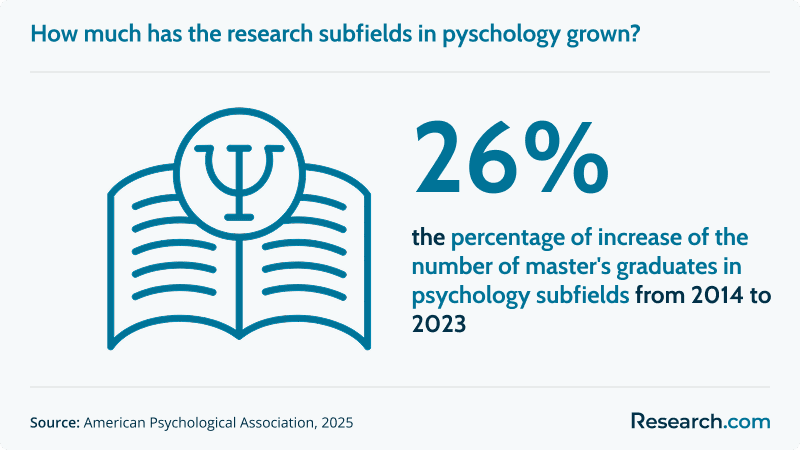
The labor market also includes more master’s-level psychology graduates than before. The number of master's graduates in psychology subfields has increased by 26%, which can make doctoral training a meaningful differentiator for roles that require advanced assessment, independent authority, or the psychologist title.
| Career stage | Typical focus | Financial implications |
| Doctoral student | Coursework, practica, research or applied projects, and internship preparation. | Tuition and opportunity cost are usually the main financial concerns. |
| Intern or postdoctoral trainee | Full-time supervised practice and completion of required hours. | Earnings may be lower than post-licensure income, so budgeting is important. |
| Newly licensed psychologist | Independent therapy, assessment, consultation, or agency-based clinical work. | Income potential improves because licensure expands scope and employability. |
| Experienced psychologist | Specialized practice, supervision, leadership, private practice, or consulting. | Mid-career psychologists with strong positioning can earn well over $100,000 annually. |
When judging whether a PsyD is worth it, do not focus only on the first job after graduation. Compare total investment with realistic earnings after full licensure and several years of experience.
What is the job outlook for PsyD graduates?
The job outlook for PsyD graduates is supported by continuing demand for mental health services, psychological assessment, school-based support, behavioral health integration, and specialized clinical expertise. The strongest opportunities are usually available to graduates who complete licensure and can demonstrate competence with specific populations, settings, or assessment needs.
Psychologists do not all work in private therapy offices. Employment data shows a wider distribution of settings: elementary and secondary schools account for 24%, ambulatory healthcare services account for 24%, self-employed work accounts for 23%, government accounts for 8%, and hospitals account for 5%. This range matters because it gives PsyD graduates several ways to shape a career.
| Work setting | Share of psychologists | What the work may involve |
| Elementary and secondary schools | 24% | Student assessment, intervention planning, consultation with educators, and support for learning or behavioral needs. |
| Ambulatory healthcare services | 24% | Outpatient therapy, assessment, integrated behavioral health, and treatment planning. |
| Self-employed work | 23% | Private practice, assessment services, consultation, and business management. |
| Government | 8% | Public health, correctional, military, veterans, forensic, or community-based psychological services. |
| Hospitals | 5% | Clinical assessment, treatment teams, crisis work, rehabilitation, and specialized patient care. |
Some psychology graduates also apply their understanding of behavior in adjacent public service roles. For example, people comparing clinical work with criminal justice careers may research how to become a probation officer to understand how behavioral assessment, rehabilitation, and case management can intersect with legal systems. These roles have different requirements and should not be treated as substitutes for psychologist licensure, but they can be useful comparison points for students still defining their path.
How AI and technology are affecting clinical psychology work
Technology is changing how psychologists document care, deliver telehealth, manage records, and use digital assessment tools. AI may assist with administrative tasks, screening workflows, or research synthesis, but it does not replace licensed clinical judgment, ethical responsibility, crisis assessment, or the therapeutic relationship. Future psychologists should expect employers and clients to value both clinical skill and comfort with responsible technology use.
What does long-term career growth look like for a clinical psychologist?
A clinical psychology career often starts with direct service and expands into specialization, supervision, leadership, consulting, teaching, or business ownership. The PsyD can create a flexible professional platform because licensed psychologists can work across multiple systems that need expertise in behavior, diagnosis, assessment, and treatment.
Early after licensure, many psychologists focus on building clinical competence. They provide therapy, conduct evaluations, collaborate with healthcare teams, and learn how to manage risk, documentation, and referrals. Over time, many move toward a more focused professional identity.
- Private practice owner: Some psychologists open solo or group practices, combining clinical work with marketing, billing, operations, and referral management.
- Clinical supervisor: Experienced psychologists may train interns, postdoctoral fellows, or master’s-level clinicians.
- Program leader: Hospitals, schools, agencies, and government systems may need psychologists to design services, manage teams, and improve care delivery.
- Specialist or consultant: Psychologists may develop expertise in areas such as neuropsychology, forensic psychology, trauma, health psychology, child assessment, or behavioral medicine.
- Educator or trainer: Some teach, run workshops, supervise trainees, or contribute to professional development programs.
Unconventional career directions for psychology-trained professionals
Advanced knowledge of motivation, behavior, interviewing, assessment, and decision-making can be useful outside traditional therapy roles. Federal law enforcement, public safety, and investigative agencies may value some of these skills, although each career has its own eligibility standards. For example, reviewing DEA agent job requirements can help students understand how behavioral insight may apply in settings far removed from private practice.
The key is not to assume that a PsyD automatically qualifies you for every psychology-adjacent job. Instead, identify the role first, then determine whether doctoral clinical training is necessary, helpful, or excessive for that path.
How do you calculate your personal ROI for a PsyD?
The return on investment for a PsyD depends on your program cost, debt, licensing timeline, career setting, income growth, and personal goals. A national average cannot tell you whether the degree is worth it for your situation. You need a personal calculation.
- Estimate your total upfront investment. Add tuition for your target programs across the expected enrollment period. Include fees, living costs, relocation, internship expenses, exam-related costs, and the income you may give up while studying.
- Separate training income from licensed income. Do not use mid-career private practice earnings to estimate your first postdoctoral year. Build a staged projection that reflects student years, supervised practice, early licensure, and experienced practice.
- Project earnings across a 30-year career. Use conservative assumptions rather than best-case scenarios. Consider whether you plan to work in schools, hospitals, government, outpatient care, or private practice.
- Subtract your investment from expected earnings. This gives you a starting point for financial ROI, but it should not be the only measure.
- Weigh non-financial returns. Autonomy, professional identity, meaningful work, intellectual challenge, and service impact may matter as much as income for some students.
| ROI question | What to calculate or confirm | Why it changes the answer |
| How much will I borrow? | Total debt at graduation, including interest assumptions. | Debt level affects flexibility after licensure. |
| How long until I am licensed? | Program length, internship, supervised hours, and exam timing. | Full earning potential usually arrives after licensure, not at admission or graduation. |
| Where do I want to work? | School, hospital, agency, government, outpatient clinic, or private practice. | Different settings offer different pay structures, benefits, and workloads. |
| What kind of life do I want during training? | Ability to work part-time, relocate, support family, or manage caregiving. | A financially sound program can still be impractical if the schedule does not fit your life. |
| What is my backup plan? | Alternative roles if licensure is delayed or clinical work is not a long-term fit. | Planning reduces the risk of feeling trapped by a single career outcome. |
A good ROI analysis is both financial and personal. The right answer is not simply “PsyD graduates can earn more.” The better question is whether your likely path can justify your specific cost, timeline, and risk.
What are the best alternatives to a PsyD?
The best alternatives are careers that use psychology without requiring a doctoral clinical license. These options may be better if you want a shorter training timeline, lower debt, business or technology roles, or human services work that does not require the psychologist title.
| Alternative path | Best for students who want... | How it compares with a PsyD |
| Master’s-level counseling | Direct therapy work through roles such as Licensed Professional Counselor or Marriage and Family Therapist. | Usually a faster route to counseling practice, but with a different scope than a licensed psychologist. |
| Industrial-organizational psychology | Workplace-focused psychology involving employee behavior, leadership, training, and organizational change. | Industrial-organizational psychology often applies psychological science in business rather than clinical care. |
| User experience research | Studying how people interact with products, websites, software, or services. | Uses research and human behavior skills, but does not require clinical licensure. |
| Marketing and consumer insights | Understanding decision-making, persuasion, audiences, and consumer behavior. | Students interested in digital strategy may compare psychology training with an accelerated social media marketing degree online. |
| Social psychology or behavioral research | Studying groups, attitudes, influence, identity, and social behavior. | May be a better fit for students who like psychology but do not want therapy or assessment work. |
Choosing an alternative does not mean giving up on psychology. It means matching the level of education to the work you actually want to do.
How do you decide whether a clinical psychology career is worth it for you?
The best decision process combines self-assessment, financial analysis, program research, and conversations with people already in the field. Do not decide based only on prestige, family expectations, or the idea that “doctorate” automatically means better.
- Define your target role. Write down the exact work you want to do: therapy, assessment, supervision, private practice, school psychology, forensic work, hospital care, or something else.
- Check whether that role requires a PsyD. If a master’s degree can lead to the same day-to-day work you want, compare both routes carefully.
- Verify accreditation and licensure fit. Make sure the program aligns with the state where you plan to practice.
- Calculate total cost before financial aid. Then calculate likely borrowing after scholarships, work income, savings, and assistantships.
- Interview current students and licensed psychologists. Ask what surprised them, what they would do differently, and how they managed debt and burnout.
- Test your interest in clinical work. Volunteer, work in behavioral health, shadow professionals where possible, or complete relevant undergraduate fieldwork.
- Build a sustainability plan. Include supervision, peer consultation, workload boundaries, continuing education, and financial planning.
Common mistakes to avoid
| Mistake | Why it is risky | Better approach |
| Choosing a PsyD without checking licensure rules | Program completion does not automatically guarantee eligibility in every state. | Confirm accreditation, supervised hour requirements, internship expectations, and exam steps before enrolling. |
| Looking only at tuition | Fees, living expenses, lost wages, relocation, and loan interest can change the real cost. | Build a full cost-of-attendance estimate for each program. |
| Assuming online flexibility solves every problem | Clinical training, practica, and internships still require supervised, hands-on experience. | Ask exactly how placements are arranged and whether they are available near you. |
| Using best-case salary assumptions | High earnings may depend on licensure, specialization, business development, and location. | Model conservative, moderate, and optimistic income scenarios. |
| Ignoring burnout risk | Clinical work can be meaningful and emotionally demanding at the same time. | Plan for consultation, manageable caseloads, therapy if needed, and clear professional boundaries. |
| Relying only on rankings | A highly visible program may not match your goals, budget, or preferred state of practice. | Compare outcomes, training sites, faculty expertise, licensure alignment, and affordability. |
A PsyD is worth it when it is the most direct and realistic route to the professional life you want. It is not worth it when the degree becomes a costly substitute for career clarity.
Can additional certifications improve your clinical psychology career outcomes?
Additional credentials can strengthen a psychology career when they align with your practice area, client population, or employment setting. Certifications in assessment, trauma treatment, behavior analysis, health psychology, forensic practice, or evidence-based interventions may help a licensed psychologist build a clearer niche. They should not be used to compensate for a weak doctoral program or unclear licensure plan.
Behavior analysis is one example. Training in applied behavior analysis can be useful in educational, healthcare, and community settings, depending on your role and state rules. Professionals comparing cost-conscious options may review cheap BCBA online masters programs to understand how specialized training can support broader service delivery. The best certifications are targeted, recognized by relevant employers, and connected to work you actually plan to do.
What PsyD graduates say about the decision
- : "I spent a long time comparing a counseling master’s with a PsyD because I was worried about the extra years and cost. The deciding factor was scope. I wanted independent practice and advanced assessment work, and I realized the doctoral path matched the ceiling I wanted for my career. — Stefan"
- : "The full timeline looked intimidating when I was still an undergraduate. Once I understood the stages—student, intern, supervised trainee, licensed psychologist, and specialist—the path felt less abstract. It is still demanding, but now I can see what each step is building toward. — Lin"
- : "I needed a program structure that worked with family responsibilities and limited finances. Flexibility mattered, but I still had to look closely at clinical training and licensure fit. The right format made the goal possible without pretending the process would be easy. — Chloe"
Key Insights
- A PsyD is most valuable when your goal is licensure as a psychologist. The degree’s strongest benefits come from independent practice, protected professional status, and advanced assessment authority.
- The real cost includes more than tuition. Include the average annual tuition of approximately $18,970, four to six years of study, internship demands, reduced income, and 3,000 to 4,000 supervised hours in your planning.
- Accreditation and state licensure fit are non-negotiable. A program that does not support your licensing pathway can undermine the entire investment.
- Salary payoff usually comes after licensure and experience. Mid-career psychologists in strong positions can earn well over $100,000 annually, but outcomes depend on setting, specialization, location, and business model.
- Debt and burnout are the main risks. A sustainable PsyD plan should include financial planning, supervision, boundaries, and realistic expectations about clinical work.
- Alternatives may be better for some students. Master’s-level counseling, industrial-organizational psychology, UX research, marketing, and social psychology can be strong options for people who do not need doctoral clinical licensure.
- The best decision is role-first, not degree-first. Identify the work you want, confirm the credential required, compare total cost, and talk with current students and licensed psychologists before committing.
References:
- American Psychological Association. (2025, September). Career pathways in psychology. Retrieved September 25, 2025, from https://www.apa.org/ed/precollege/psychology-teacher-network/introductory-psychology/career-pathways
- American Psychological Association. (2025, September). The rise of master’s degrees in health service psychology. Retrieved September 25, 2025, from https://www.apa.org/monitor/2025/09/health-service-psychology-masters-degrees
- Data USA. (2025). Psychology. Retrieved September 25, 2025, from https://datausa.io/profile/cip/psychology
- EducationData.org. (2025). Average cost of a doctorate degree. Retrieved September 25, 2025, from https://educationdata.org/average-cost-of-a-doctorate-degree
- Payscale. (2025). Average clinical psychologist salary. Retrieved September 25, 2025, from https://www.payscale.com/research/US/Job=Clinical_Psychologist/Salary
- U.S. Bureau of Labor Statistics. (2025). Field of degree: Psychology. Retrieved September 25, 2025, from https://www.bls.gov/ooh/field-of-degree/psychology/psychology-field-of-degree.htm
Other Things You Should Know About PsyD Programs
In 2027, a PsyD degree could cost anywhere from $120,000 to $200,000, depending on the institution. Salaries vary widely, but newly graduated PsyD holders may expect annual earnings between $60,000 and $90,000. Established professionals can earn substantially more, depending on location and expertise.
In 2027, PsyD graduates can explore diverse career paths, including clinical practice, academia, private practice, or consulting. Opportunities in hospitals, schools, and government agencies remain strong, with roles such as clinical psychologist, counselor, or researcher providing varied and fulfilling career options.
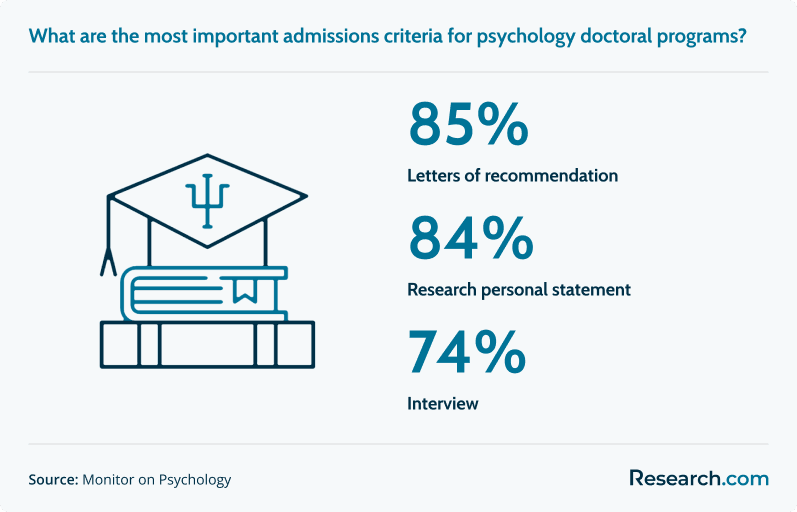
Admission requirements for a PsyD program in 2027 typically include a bachelor's degree in psychology or a related field, a minimum GPA of 3.0, GRE scores, letters of recommendation, a personal statement, and relevant work or research experience. Check specific program details for variations.


