
2027 Is a Master’s Degree Worth It? Benefits, Costs & Salary

Co-Founder and Chief Data Scientist
In an environment of rising tuition and economic uncertainty, the demand for a clear, quantifiable return on investment from any degree is more intense than ever. This transforms your decision from a simple personal choice into a complex strategic calculation. You need to be certain that this major investment of time and money will lead to a real career payoff.
According to the most recent education data, the median annual salary for a professional with a master's degree is approximately $90,324, which represents a significant pay bump over the $77,636 median for those with a bachelor's degree. This underscores the potential for a strong financial return. This guide, prepared by career planning experts with over a decade of experience, is designed to help you confidently answer the core question: is a master's degree worth it?
Key Things You Should Know About Master's Degrees
- A master's degree can lead to a substantial increase in both immediate salary and lifetime earnings, but this return on investment varies greatly by field.
- The degree’s main career benefit is providing the specialized knowledge and enhanced credibility needed to access senior, technical, or licensed professional roles.
- The student debt is a serious commitment, and it's only a worthwhile investment if your expected future salary can comfortably manage the repayment.
- The degree provides the highest value when it is targeted at a specific career goal that requires it, not when it's used simply to delay a career decision.
- For certain goals, options like professional certifications or skills bootcamps can offer a faster and more cost-effective way to gain specific, in-demand skills.
- How much does a master's degree increase your salary? Salary Effect
- What is the lifetime earnings value of a master's degree? Lifetime Earnings Value
- How much does an average master's degree cost? Average Cost
- What are some popular master's degrees in 2027? Popular Degrees
- What are the main benefits of getting a master's degree? Benefits
- What jobs are you more likely to get with a master's degree? Career Paths
- How does a master's degree help you specialize your career? How does a master's degree help you specialize your career?
- What are the biggest disadvantages of getting a master's degree? Challenges
- When is a master's degree not worth it? When is a master's degree not worth it?
- How do you decide if you should get a master's degree? How do you decide if you should get a master's degree?
- What financing options can support your master's degree investment? What financing options can support your master's degree investment?
- Are there better alternatives to a master's degree for career growth? Are there better alternatives to a master's degree for career growth?
- So, is a master's degree ultimately worth it? So, is a master's degree ultimately worth it?
How much does a master's degree increase your salary?
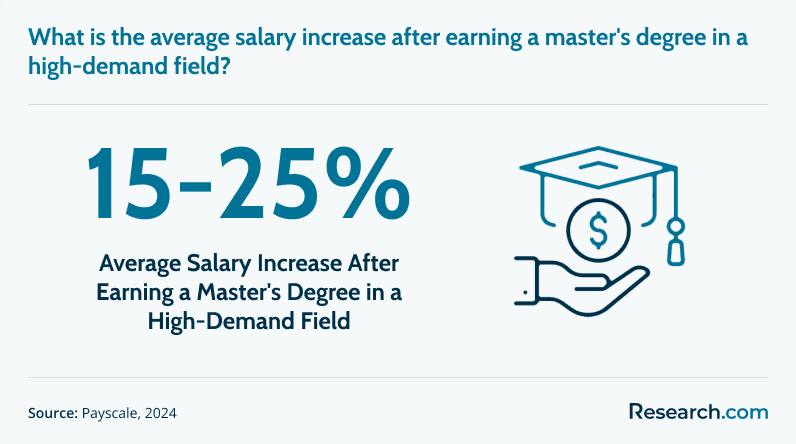
A master’s degree provides an average salary increase of about 16% over a bachelor's degree alone. According to the most recent data from the U.S. Bureau of Labor Statistics, the median annual earnings for a master's degree holder are $90,584, compared to $77,948 for someone with a bachelor's.
The difference of nearly $13,000 is a powerful initial answer to the question, is a master's degree worth it, and it also highlights why many students ask “is a degree in general studies worth it” when evaluating potential educational paths. This financial boost represents a direct return on your educational investment, but the true value becomes even clearer when you look at specific career paths.
How Salary Premiums Vary by Field
The 16% salary premium is just an average; in many high-demand fields, the increase is significantly higher. Industries like finance, technology, healthcare, and engineering often reserve their highest-paying senior and specialized roles for candidates with advanced degrees. This is because the specialized knowledge gained in a master's program is a direct prerequisite for the job's responsibilities.
For instance, roles in justice and law enforcement often require advanced degrees, and the typical criminologist salary reflects a premium for that specialized knowledge. This means the most strategic approach is to target a degree in a field where the salary bump is a well-established industry standard.
What is the lifetime earnings value of a master's degree?
The lifetime earnings value of a master's degree is approximately $400,000 more than that of a bachelor's degree alone. According to a 2025 salary analysis, workers with a bachelor's degree earn a median of $2.8 million over their lifetime, while those with a master's earn a median of $3.2 million.
Just as students consider online PMHNP programs with clinical placement to maximize both learning outcomes and career readiness, understanding the lifetime earnings boost from a master's highlights the long-term value of advanced education.
This significant gap highlights that the degree's true financial worth isn't just in the initial salary bump, but in its long-term impact on your entire career trajectory.
This long-term value is created by gaining access to promotions and senior-level positions that are often inaccessible without an advanced credential. It represents not just a higher starting point, but a steeper upward curve in your earnings potential over several decades. This means the decision to pursue a master's is an investment in your peak earning years, not just your next job.
How much does an average master's degree cost?
The total cost of a master's degree typically ranges from $30,000 to over $120,000, depending on the university and program of study. While this tuition figure is the most visible expense, it's only one part of the true financial picture. Many students also ask “is psychology a good major for law school” when considering their educational path, underscoring the importance of evaluating both costs and long-term career alignment.
For on-campus programs, you must also account for additional costs like housing, food, and transportation. To make an informed decision, you also need to calculate the significant, and often overlooked, opportunity cost.
Opportunity cost is the potential income you lose by choosing to be in school instead of working full-time. For example, if you leave a $60,000-a-year job to enroll in a two-year master's program, your opportunity cost is $120,000 in lost wages. This is a real, tangible part of your investment.
Therefore, the total cost of your degree isn't just the tuition bill; it's the tuition *plus* the income you forgo during your studies. Understanding this complete figure is the essential first step. Now that we've defined the full investment, let's analyze the specific career advantages you gain in return.
What are some popular master's degrees in 2027?
With the cost of advanced education at an all-time high, the question, "is a master's degree worth it" has become a central part of any career strategy. Many students also consider “is a degree in graphic design worth it” when evaluating which fields offer both personal satisfaction and financial return. The answer often lies in choosing a field with strong growth projections and a high demand for specialized skills.
The master's degrees gaining the most traction in 2025 are those that align directly with the fastest-growing and highest-paying sectors of the economy, promising not just a credential but a tangible career payoff.
Computer Science
This is a classic, in-demand degree that provides advanced skills in software development, algorithms, and system design. Specializations like Artificial Intelligence (AI), cybersecurity, and cloud computing are particularly sought after, with roles like AI engineer and machine learning specialist offering high salaries and significant career growth.
Data Science and Analytics
A master’s degree in this field equips students with the tools and methodologies needed to collect, clean, analyze, and interpret large and complex datasets. Professionals trained in data science and analytics play a critical role in enabling data-driven decision-making in sectors ranging from finance and marketing to healthcare and technology.
Business Administration
The Master's in Business Administration (MBA) is a highly versatile graduate degree designed to provide students with a broad foundation in key areas such as management, finance, marketing, and business strategy. This degree is particularly popular among professionals seeking to pivot into fields like management consulting, corporate finance, entrepreneurship, or executive leadership positions.
Healthcare Administration
This degree prepares professionals to manage the complex business operations of healthcare facilities, from hospitals to clinics. It's ideal for those who want to transition from a clinical role into a leadership position, focusing on improving efficiency and patient outcomes from an administrative perspective.
Nursing
This degree provides a direct pathway to in-demand, high-paying roles such as Nurse Practitioner (NP) and Clinical Nurse Leader (CNL), preparing nurses to take on greater responsibility within the healthcare system. The program also enables nurses to specialize in areas like family health, pediatrics, women’s health, or acute care, tailoring their expertise to meet the needs of specific patient populations.
Cybersecurity
With the increasing frequency and sophistication of cyber threats, cybersecurity professionals are more in demand than ever across virtually every industry. A master’s degree in cybersecurity equips graduates with the technical skills and strategic knowledge needed to safeguard networks, design secure systems, and respond effectively to security incidents.
Social Work
MSW graduates can work in diverse settings such as hospitals, schools, government agencies, and nonprofits, addressing issues like mental health, child welfare, and community development. Specialized roles often offer competitive salaries, and the degree provides the skills needed for clinical practice, policy advocacy, and leadership positions.
What are the main benefits of getting a master's degree?
Beyond a higher salary, a master’s degree delivers core professional advantages that can solve a career plateau and accelerate your advancement. For many professionals wondering is a master’s degree worth it, the answer lies in its ability to open doors that a bachelor’s degree alone may not.
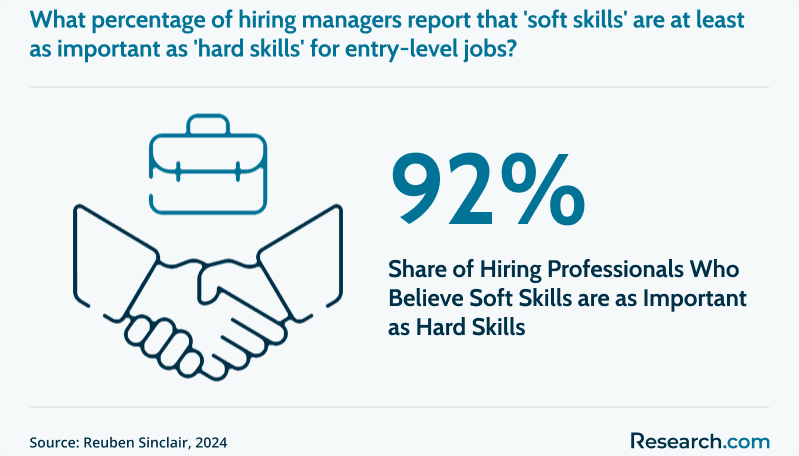
- Develop deep career specialization. A master's program moves you from a generalist to an expert. It's designed to build deep knowledge in a specific niche, developing not just technical skills but also the advanced soft skills in analysis and leadership that 92% of employers see as critical.
- Access elite professional networks. You gain entry into a concentrated network of faculty, alumni, and peers who are leaders and specialists in your target field. This community can provide mentorship and career opportunities that are otherwise difficult to access.
- Build enhanced credibility and authority. The degree acts as a powerful "credibility signal," serving as a third-party endorsement of your expertise. This is vital for career changers or anyone in competitive fields. For example, learning how to become a CIA officer often involves proving the analytical rigor that a master's degree validates.
- Future-proof your skillset. In a rapidly changing job market, a master's program equips you with the most current, cutting-edge knowledge and research in your field. This advanced training helps protect your career from becoming obsolete and positions you as a forward-thinking leader.
- Create a high-level professional portfolio. Many programs culminate in a thesis or a major capstone project. This provides you with a tangible, high-quality work product you can present to employers as definitive proof of your advanced capabilities and expertise.
These benefits combine to make you a more competitive candidate for high-level roles. Let's look at some of the specific jobs where this level of credibility is most valued.
What jobs are you more likely to get with a master's degree?
A master's degree makes you a top candidate for jobs in two specific categories: roles that legally require an advanced degree for licensure and positions that demand a deep level of specialized expertise to perform complex work. Here are some common examples in each category.
Jobs Often Requiring a Master's for Licensure:
- Speech-Language Pathologist: For this role, the benefit masters speech pathology provides is direct access to the mandatory state and national credentials needed to practice.
- Licensed Professional Counselor/Therapist: A master's in counseling or psychology is the educational foundation required by states to become licensed to practice therapy.
- School Principal or Administrator: A master's in educational leadership is typically required by state boards for the credentials needed to manage a school.
- Licensed Clinical Social Worker (LCSW): An MSW is the standard requirement for the licensure that allows you to provide clinical services and diagnoses.
- Librarian (MLS): A Master of Library Science (MLS) is the universally recognized professional standard for librarian roles in most public and academic institutions.
Jobs Often Preferring a Master's for Specialization:
- Data Scientist: A master's provides the advanced statistical modeling and machine learning skills that are essential for high-level data analysis.
- Economist: Graduate-level training is needed to perform the complex quantitative analysis and economic forecasting central to the role.
- Political Scientist / Policy Advisor: An advanced degree equips you with the deep research skills to develop and evaluate complex public policy.
- Urban Planner: This role requires specialized knowledge in land use, environmental regulations, and public policy, which is the core of a master's program.
- Statistician: A master's degree is the standard for roles that involve designing experiments and creating sophisticated statistical models.
These career paths show how a master's degree acts as a key. Let's explore exactly how the degree forges that key by helping you specialize.
How does a master's degree help you specialize your career?
A master's degree specializes your career by fundamentally shifting your role from a consumer of general knowledge to a creator and applicator of specific expertise. While a bachelor’s degree provides a broad survey of a field, a master’s program trains you to become a practitioner within it.
The curriculum focuses on depth over breadth, pushing you to analyze complex problems, master advanced techniques, and often produce a capstone project or thesis that serves as tangible proof of your expert-level skills.
This shift from generalist to specialist has a direct impact on your earning potential. Data from the Federal Reserve Bank of New York shows that specialist degrees have higher earning power over a career.
For example, a specialist in computer science sees their salary grow from around $80,000 to $130,000, while a generalist in political science may go from $54,000 to $90,000. This demonstrates how specialization creates a higher-value career path. Knowing how to prepare for a career in criminalistics, for instance, involves using a master's to refine a general science background into a specific, high-demand professional skillset.
After exploring the full case for getting a degree, it’s essential to pivot to a pragmatic reality check on the costs and commitments.
What are the biggest disadvantages of getting a master's degree?
While the benefits are clear, a master's degree is a major commitment with significant downsides that demand careful consideration. The decision to enroll involves taking on real financial risks and personal sacrifices that are not guaranteed to pay off.
It's crucial to weigh these disadvantages before moving forward.
- Significant Financial Cost & Debt: As discussed, the direct cost of tuition can be substantial, leading to tens of thousands of dollars in student loans that can impact your financial freedom for years.
- High Opportunity Cost: Forgoing one to two years of a full-time salary and potential promotions is a major financial hit. This lost income and experience is a real cost that must be added to the price of tuition.
- Intense Time & Energy Commitment: Graduate-level coursework is demanding and time-consuming. It requires a significant personal sacrifice, impacting your social life, family commitments, and overall well-being.
- Varying Program Quality and Reputation: Not all master's degrees are created equal. The ROI can be severely diminished if the program has a poor reputation, weak faculty, or few connections to employers in your target industry.
- Risk of a Skills Mismatch: There's a risk that the specialized academic skills you gain won't align with what employers need most. Many companies prioritize core attributes like problem-solving and teamwork, which may be developed more effectively through hands-on experience.
When is a master's degree not worth it?
Is a master's degree worth it in all cases? It’s a common mistake to think that any time spent in school is better than being unemployed or stuck in a job you don't love.
However, using a master’s degree simply to delay a difficult career decision is one of the fastest ways to accumulate debt without a clear return. A master's degree is not worth it when the cost and time commitment clearly outweigh the expected career benefits.
You should seriously reconsider your plans if you find yourself in one of these red-flag scenarios:
- You are pursuing a degree without a specific career target in mind.
- The debt required would be financially crippling, with only a minimal projected salary gain.
- You are trying to solve a problem like a toxic work environment, which a degree cannot fix.
When Experience and Certifications Outweigh Credentials
In many industries, hands-on experience, a strong portfolio, or specific industry certifications are valued far more than an academic credential. This is especially true in skilled trades, many creative fields like graphic design, and certain fast-moving sectors of the tech industry.
In these cases, the two years and tens of thousands of dollars spent on a master's program would be better invested in gaining practical skills and building a track record of success. For example, in fields that are heavily regulated and experience-based, the formal bounty hunter job requirements focus on licensure and on-the-job training, not academic credentials.
After weighing the pros, cons, and red flags, the next step is to synthesize everything into a personal decision-making tool.
How do you decide if you should get a master's degree?
Making the final call requires a clear-eyed, rational evaluation of your specific situation. The best way to move from uncertainty to a confident decision is to work through a structured checklist.
Ask yourself the following key questions, and be honest with your answers. If you can answer "yes" to most of them, a master's degree is likely a strong strategic move for you.
- Have I identified a specific career problem, like a salary ceiling or a specialization gap, that this degree is uniquely positioned to solve?
- Have I researched job postings for my target role and confirmed that a master's degree is either required for licensure or strongly preferred by employers?
- Have I calculated a realistic debt-to-income ratio and confirmed that my expected post-graduation salary can comfortably manage the loan payments?
- Have I accounted for the opportunity cost of lost wages and work experience and factored it into my total investment?
- Have I explored all non-loan funding options, such as employer reimbursement, fellowships, and scholarships, to minimize my potential debt?
Once you have these answers, it's also helpful to compare the master's degree directly against other career growth options.
What financing options can support your master's degree investment?
Explore targeted financial strategies that make advanced education more accessible and reduce the immediate economic burden. Consider employer tuition reimbursement, federal or private loan programs, and specialized scholarships offered by professional associations or the institutions themselves. Additionally, investigate flexible payment plans and income-driven repayment options that align education expenses with future earnings potential. For those considering online pathways, review the highest paying online degrees to identify quality programs that balance cost-effectiveness with career advancement.
Are there better alternatives to a master's degree for career growth?
Yes, for certain goals, alternatives like professional certifications or skills bootcamps can offer a faster and more cost-effective return on investment. The key is understanding what kind of career problem you are trying to solve. This is not about which option is better overall, but which is the right tool for your specific job.
Certifications and bootcamps are tactical tools. They are excellent for acquiring a specific, in-demand technical skill quickly, such as a project management professional (PMP) certification or a coding language. They solve an immediate skills gap.
A master's degree is a strategic tool. It's designed for a more fundamental career transformation, such as changing industries, qualifying for licensed professional roles, or building the deep, foundational expertise required for leadership. It solves a long-term career trajectory problem.
Thinking about it this way allows you to choose the right-sized solution for your goal. With this final piece of context, it's time to deliver the final verdict on the value of a master's degree.
Is a master's degree ultimately worth it?
Yes, a master’s degree is worth it, but its value has fundamentally shifted. In an era increasingly defined by skills-based hiring, the degree is no longer a generic next step after a bachelor's.
Instead, a master's degree has become a highly specialized tool for career acceleration. Its worth is no longer assumed; it must be strategically targeted at a specific career outcome, whether that's entering a licensed profession, gaining deep technical expertise, or breaking through a promotion ceiling.
The final ROI of the degree is not determined by the diploma itself, but by the intentionality of the person who earns it. When you align the high cost and intense effort with a clear, in-demand career goal, you are not just buying a credential—you are making a powerful investment in your professional future.
Ultimately, you have the framework to decide and justify the answer to a question like, "Is a master's degree worth it for you?"
Here’s What Graduates Have to Say About Their Master's Degree
- Kyle: "My career had definitely hit a wall after seven years in the field, and I knew I needed more specialized knowledge to move into a leadership role. The master's program gave me the exact strategic skills I was missing, and the promotion I was aiming for came just a few months after I graduated. I'm now leading a team, which simply wouldn't have been possible without the advanced credential and the confidence it gave me."
- Janet: "I felt like I was being overlooked for the most interesting projects at work because I lacked deep technical expertise. The master’s curriculum was incredibly focused and gave me the specific, high-level skills to become a true subject-matter expert in my niche. Now, I’m the go-to person for complex challenges, and the work is so much more engaging and fulfilling."
- Courtney: "Honestly, I was worried an online program would feel isolating, but the faculty support was incredible. My professors were active leaders in the field and were genuinely invested in helping me connect my coursework to my career goals. That mentorship was crucial and helped me build a professional network that has been invaluable since I graduated."
Key Findings
- The long-term financial value is substantial, with master's degree holders earning a median of $400,000 more over their lifetime than those with only a bachelor's degree.
- Beyond long-term value, the degree provides an immediate salary premium, with median annual earnings for master's graduates sitting at $90,584 compared to $77,948 for bachelor's graduates.
- The investment in a master's degree also comes with greater job security, as graduates face a lower unemployment rate of just 1.7% compared to 2.2% for bachelor's degree holders.
- While a master's builds technical expertise, employers' most sought-after attribute is problem-solving skills (88.6%), underscoring the need to choose a program that emphasizes practical application over pure theory.
- The degree’s primary function is specialization, which has a clear financial payoff, as specialists in fields like computer science can see their mid-career salaries reach $130,000, significantly outpacing generalists.
- For many professions, the degree's most important function is not financial but practical, serving as the required "terminal degree" for professional licensure or as a crucial "credibility signal" for career changers.
References:
- Bankrate. (2025). The U.S. college majors with the best and worst ROI. Retrieved September 24, 2025, from https://www.bankrate.com/loans/student-loans/roi-by-college-major/
- Education Data Initiative. (2024). Average cost of a master’s degree. Retrieved September 24, 2025, from https://educationdata.org/average-cost-of-a-masters-degree
- Indeed Editorial Team. (2024). 35 jobs you can get with a master's degree (and high salaries). Indeed. Retrieved September 24, 2025, from https://www.indeed.com/career-advice/career-development/jobs-you-can-get-with-a-masters-degree
- National Association of Colleges and Employers. (2024). What are employers looking for when reviewing college students’ resumes?. Retrieved September 24, 2025, from https://www.naceweb.org/job-market/trends-and-predictions/what-are-employers-looking-for-when-reviewing-college-students-resumes/
- Payscale. (2024). Is a master's degree worth it?. Payscale Career News. Retrieved September 24, 2025, from https://www.payscale.com/career-news/2024/06/is-a-masters-degree-worth-it/
- Reuben Sinclair. (2024). Top 10 soft skills employers are looking for (backed by data). Retrieved September 24, 2025, from https://www.reuben-sinclair.com/resources/top-10-soft-skills-employers-are-looking-for-backed-by-data
- Site Selection Magazine. (2025). Education level is only one part of the lifetime earnings picture. Retrieved September 24, 2025, from https://siteselection.com/education-level-is-only-one-part-of-the-lifetime-earnings-picture/
- U.S. Bureau of Labor Statistics. (2024). Education pays. Career Outlook. Retrieved September 24, 2025, from https://www.bls.gov/careeroutlook/2024/data-on-display/education-pays.htm
Other Things You Need To Know About Master’s Degrees
In 2027, the costs of obtaining a master's degree can include tuition, fees, books, and living expenses. Tuition alone at public institutions can range from $10,000 to $25,000 annually, while private institutions may charge significantly more. Scholarships and grants may offset some expenses, making careful financial planning essential.
In 2027, master’s degree students can access federal aid such as Direct Unsubsidized Loans, scholarships from universities, state grants, and private loans. Eligibility varies, with FAFSA being a crucial application for federal and some state aid programs.


