
2027 How to Apply for a PhD Program in the USA

Co-Founder and Chief Data Scientist
Those considering higher education in the US often face a pivotal question: Is applying for a PhD program, a type of doctorate, a worthwhile investment, and if so, what are the exact requirements? According to the latest data, just 2% of the U.S. population holds a doctorate, a figure that places it below countries like Switzerland and Slovenia, highlighting the exclusivity of this academic pursuit.
Backed by over a decade of experience in career planning, the Research.com team has created this guide using only credible sources. This article will help you navigate the complexities of the application process, providing a clear roadmap to successfully securing your spot in a U.S. PhD program.
Key Things to Know about Applying for a PhD Program in the USA
- PhD program application requirements in the U.S. typically include a minimum 3.0 GPA and a bachelor's or master's degree, with applicants needing to submit transcripts, standardized test scores (like the GRE), letters of recommendation, and a statement of purpose.
- The total cost for a PhD program in the USA ranges from approximately $25,000 to $70,000 annually, but most full-time students receive funding through tuition waivers and stipends, with stipends typically ranging from $15,000 to $37,000 per year to cover living expenses.
- The ideal PhD application timeline is 8 to 12 months before the program starts, with most application deadlines falling between December and January, and students are advised to apply to 6 to 12 programs to balance their options.
- What are the PhD academic requirements in the USA? Academic Requirements
- What is the ideal timeline for applying to PhD programs in the USA? Application Timeline
- How much does a PhD in the USA cost? Program Cost
- How is a PhD in the USA funded, and what is a PhD stipend? How is a PhD in the USA funded, and what is a PhD stipend?
- What are the most important factors to consider when choosing a PhD program? How to Choose
- How many PhD programs should a student apply to for the best chance of acceptance? How many PhD programs should a student apply to for the best chance of acceptance?
- What GPA is needed to get into a top PhD program in the USA? What GPA is needed to get into a top PhD program in the USA?
- What are the common student visa requirements for PhD students in the USA? Student Visa Requirements
- How do I prove English proficiency if my undergraduate degree was in English? How do I prove English proficiency if my undergraduate degree was in English?
- What is the minimum TOEFL or IELTS score for international PhD applicants? What is the minimum TOEFL or IELTS score for international PhD applicants?
- Can an online graduate certificate strengthen my PhD application? Can an online graduate certificate strengthen my PhD application?
- What are the typical career paths for PhD graduates outside of academia? Career Paths
PhD Requirements in the USA: What Applicants Need to Know Before Applying
Applying for a PhD in the United States is not just a longer version of applying to a master’s program. Doctoral admissions are built around research fit, faculty availability, funding, academic preparation, and the applicant’s ability to complete original scholarly work. A strong GPA helps, but it is rarely enough by itself.
This guide explains the core academic requirements for U.S. PhD programs, how the application timeline works, what costs and funding packages usually include, how international student visa and English proficiency requirements are handled, and how to compare programs before committing several years of your life to one institution.
Quick answer: What are the PhD academic requirements in the USA?
Most U.S. PhD programs require applicants to have a bachelor’s or master’s degree, a strong academic record, recommendation letters, a statement of purpose, transcripts, and, in some cases, GRE or GMAT scores. International applicants usually need TOEFL or IELTS scores unless they qualify for an English proficiency waiver. Once admitted, students typically complete advanced coursework, pass comprehensive or qualifying exams, conduct original research, write a dissertation, and defend it before a faculty committee.
| Requirement area | What it usually involves | Why it matters |
| Academic background | Bachelor’s or master’s degree in a relevant or closely related field | Shows that the applicant has the foundation needed for doctoral-level study |
| GPA | Many programs expect at least a 3.0 on a 4.0 scale; top programs often expect stronger records | Signals academic consistency, especially in advanced or major-related coursework |
| Research fit | Alignment between the applicant’s research goals and faculty expertise | Often one of the most important factors in PhD admissions |
| Testing | GRE or GMAT scores when required by the department | Some programs still use tests, while others now evaluate applicants more holistically |
| English proficiency | TOEFL or IELTS scores for many international applicants | Confirms readiness for graduate coursework, research writing, and teaching duties |
| Doctoral milestones | Coursework, comprehensive exams, proposal, dissertation research, and oral defense | Marks the progression from student to independent researcher |
Admission requirements
U.S. PhD applicants are generally expected to hold a bachelor’s or master’s degree with coursework connected to the intended field of study. A minimum Grade Point Average (GPA) of 3.0 on a 4.0 scale is common, although competitive departments may expect a much stronger academic record.
Typical application materials include official academic transcripts, letters of recommendation, a statement of purpose, a CV or resume, and standardized test scores if the program requires them. Some departments request GRE scores, while business-related doctoral programs may ask for GMAT scores instead.
International applicants often need to submit TOEFL or IELTS results unless the university grants a waiver. Most doctoral programs also require three or more recommendation letters from professors, research supervisors, or professional mentors who can speak directly to the applicant’s academic ability and research potential.
The GRE remains part of some PhD admissions processes, but it is no longer universal. Some graduate programs now use broader review practices that weigh research experience, writing, recommendations, and fit more heavily than a single exam. A similar shift can be seen in some master’s-level fields, including online speech pathology master’s programs that do not require GRE scores.
Coursework and examinations
Most PhD students begin with advanced seminars, research methods courses, theory courses, and field-specific electives. This stage builds the knowledge base and methodological training needed for independent research.
After coursework, students usually take comprehensive, qualifying, or preliminary exams. These may be written, oral, or both. Passing these exams typically allows the student to advance to doctoral candidacy and begin focused dissertation work.
Research and dissertation
The dissertation is the defining requirement of a PhD. It must make an original contribution to the discipline rather than simply summarize existing work. Students identify a research problem, develop a proposal, secure committee approval, collect or analyze evidence, write the dissertation, and defend the work orally.
The defense gives the dissertation committee an opportunity to test the student’s command of the research design, findings, limitations, and contribution to the field. Passing the defense is usually the final academic step before the degree is awarded.
Duration and credits
PhD programs usually require a minimum of three years of graduate work, but many students take longer depending on the discipline, dissertation scope, funding, teaching obligations, and whether they enter with a bachelor’s or master’s degree.
Many doctoral programs require around 60 to 120 semester credit hours. Students entering directly after a bachelor’s degree often complete more coursework than students who already hold a relevant master’s degree.
What is the ideal timeline for applying to PhD programs in the USA?
A strong PhD application usually takes about 8 to 12 months to prepare. Most U.S. PhD deadlines fall in December or early January for programs that begin the following fall, usually in August or September.
The most successful applicants do not wait until application forms open. They use the months before the deadline to clarify research goals, identify faculty mentors, prepare writing materials, request recommendations early, and confirm funding expectations.
| Period | Main tasks | Decision point |
| March to May | Define research interests, review departments, identify faculty, and compare program strengths | Does the program have faculty who can supervise your proposed research? |
| June to September | Draft the statement of purpose, update the CV, contact recommenders, prepare for required tests, and reach out to potential advisors when appropriate | Can you explain why each program fits your research goals? |
| October to November | Finalize the school list, customize statements, request transcripts, and complete online applications | Are all materials tailored rather than copied across schools? |
| December to January | Submit applications, confirm receipt of materials, and follow up on recommendation letters | Have all required documents been submitted before the deadline? |
| February to April | Attend interviews or visit days when offered and compare admissions and funding decisions | Which offer gives the best combination of advisor fit, funding, and career support? |
| April to August | Accept an offer, complete enrollment steps, arrange housing, and prepare for the first semester | Are you financially and academically ready to begin full-time doctoral work? |
Early preparation: March to May
This is the time to move from a broad interest to a realistic research direction. Applicants should read faculty profiles, recent publications, lab or research group pages, and department requirements. The goal is to identify programs where the applicant’s interests match the work already being done by potential advisors.
Application material preparation: June to September
Applicants should begin drafting the statement of purpose, polishing the CV, and asking recommenders if they can write detailed letters. If GRE or GMAT scores are required, this is also the practical window for taking or retaking the exam.
When contacting faculty, applicants should be concise and specific. A strong message explains the research interest, why the professor’s work is relevant, and what preparation the applicant brings. Generic mass emails rarely help.
Finalizing applications: October to November
By this stage, the school list should be realistic and balanced. Applicants should tailor every statement of purpose to the department, faculty, research resources, and funding model. Official transcripts should be requested early because processing times vary by institution.
Submission and waiting: December to January
Many deadlines fall between December 1 and early January. After submitting, applicants should verify that transcripts, test scores, and recommendation letters have arrived. Admissions decisions are often released between February and April.
Acceptance and enrollment: April to August
Admitted students should compare offers carefully rather than accepting based on prestige alone. Funding length, stipend level, health insurance, advisor availability, teaching load, location, and placement outcomes can all affect the doctoral experience.
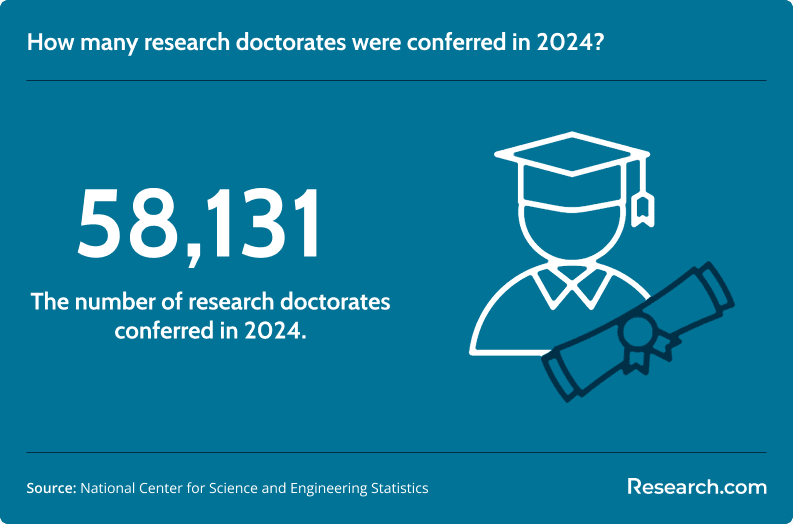
How much does a PhD in the USA cost?
The cost of a PhD in the United States varies widely by university, discipline, residency status, and funding package. Tuition alone can range from about $12,000 to $87,000 per year, with private research universities and high-cost professional fields often at the upper end.
After housing, food, health insurance, transportation, books, fees, and personal expenses are included, the total annual cost can fall between $25,000 and $70,000. Because a PhD commonly takes four to seven years to complete, applicants should evaluate the full multi-year cost rather than only the first-year tuition figure.
| Cost category | What to check before enrolling | Why it affects affordability |
| Tuition and fees | Annual tuition, mandatory fees, out-of-state rates, and whether tuition is waived | A full tuition waiver can change the real cost of a PhD dramatically |
| Living expenses | Housing, food, transportation, utilities, and local cost of living | A higher stipend may still feel tight in an expensive city |
| Health insurance | Whether the program covers insurance fully, partially, or not at all | Health coverage can be a major recurring expense |
| Research costs | Travel, software, lab supplies, fieldwork, conference fees, and data access | Some research expenses are not automatically covered by the department |
| Time to degree | Typical completion time in the department, not just the university minimum | Longer programs increase living costs and delay full-time earnings |
Costs also differ by field. STEM PhDs in areas such as engineering, computer science, and the natural sciences can be expensive because of laboratory infrastructure, specialized equipment, and research facilities. Business-related PhDs, including management and finance, can also sit at the higher end, especially at private universities.
Humanities and social science PhDs, including history, philosophy, and sociology, may have lower annual tuition in some cases, but longer completion timelines can raise total living expenses. Education and public policy programs often fall in the middle, though public versus private university pricing can make a significant difference.
For nurses who already hold a terminal clinical degree and want to move toward research, faculty roles, or academic leadership, DNP to PhD nursing programs may offer a more structured route into doctoral research than starting over in a traditional pathway.
How is a PhD in the USA funded, and what is a PhD stipend?
Many U.S. PhD students receive funding through a mix of tuition scholarships, teaching assistantships, research assistantships, fellowships, and grants. A strong funding package may cover tuition, fees, health insurance, and a living stipend. In return, students may teach, grade, lead discussion sections, work in labs, or support faculty research.
External fellowships and grants from organizations such as the National Science Foundation (NSF) can also support doctoral study, particularly in STEM fields. Funding is competitive, and the details vary by university, department, advisor, and year.
Common PhD funding sources
| Funding type | How it usually works | Important question to ask |
| Tuition scholarship or waiver | Covers all or part of tuition and sometimes mandatory fees | Is the tuition waiver guaranteed for every year of the program? |
| Teaching assistantship | Provides a stipend in exchange for teaching, grading, labs, or discussion sections | How many hours per week are expected? |
| Research assistantship | Provides a stipend for working on a faculty-led or grant-funded research project | Is the work aligned with your dissertation interests? |
| Fellowship | Usually merit-based and may provide funding without a regular work assignment | Does the fellowship cover fees, insurance, and summer support? |
| External grant or fellowship | Comes from a government agency, foundation, or professional organization | Can the award be combined with university funding? |
What is a PhD stipend?
A PhD stipend is a fixed payment, often distributed monthly or by semester, intended to help doctoral students cover living expenses while they study and conduct research. It is not a loan and does not have to be repaid.
Stipends for PhD students in the US can range from about $15,000 to $37,000 annually, depending on the program and location, with $20,000 to $35,000 being typical in many research universities. Applicants should compare the stipend against local housing costs, health insurance expenses, required fees, and whether summer funding is included.
Funding can reduce the financial burden, but it does not make doctoral study easy. Students should also understand how hard it is to get a doctorate degree before committing. The biggest challenge is often the sustained intellectual effort, uncertain research progress, and long timeline rather than tuition alone.
What are the most important factors to consider when choosing a PhD program?
The best PhD program is not always the highest-ranked university. For doctoral study, fit matters because students depend heavily on advisor guidance, research resources, funding stability, and departmental culture. A prestigious program with no suitable mentor may be a poor choice; a less famous department with the right advisor and strong funding may be the better option.
| Factor | What to evaluate | Red flag |
| Research fit | Faculty publications, lab groups, methodology, and active projects | Only one faculty member could supervise your topic, or that person is not taking students |
| Advisor compatibility | Mentoring style, availability, placement history, and student feedback | Students report poor communication, delayed feedback, or unclear expectations |
| Funding | Years guaranteed, stipend amount, tuition coverage, fees, insurance, and summer support | Funding is only promised for the first year with no clear renewal conditions |
| Program structure | Coursework, exams, teaching requirements, dissertation milestones, and average time to degree | Requirements are vague or students routinely take much longer than expected |
| Career outcomes | Alumni placement in academia, industry, government, nonprofits, or other sectors | The department cannot explain where graduates go after completing the program |
| Resources and location | Libraries, labs, archives, field sites, computing resources, and local cost of living | The program lacks the tools needed for your proposed research |
Research fit and faculty expertise
Applicants should look for more than a general department match. Ideally, at least two faculty members should have expertise related to the applicant’s intended research area. This reduces risk if one professor leaves, retires, changes research direction, or cannot take new students.
Program reputation and resources
University and department reputation can influence networking, conference access, postdoctoral opportunities, and employer recognition. However, reputation should be weighed alongside practical resources such as labs, data access, archives, libraries, software, and research funding.
Funding and financial support
A fully funded offer can make a PhD far more viable, but applicants should read the details carefully. Ask whether funding covers tuition, fees, health insurance, and summer months. Also ask what work is required and whether the stipend is enough for the area.
Program structure and requirements
Some programs admit students directly after a bachelor’s degree, while others prefer or require a master’s degree. Applicants should compare coursework expectations, qualifying exam formats, dissertation proposal requirements, teaching obligations, and typical time to completion.
Career outcomes and alumni success
Before enrolling, review where graduates work. Strong programs should be able to point to alumni in tenure-track roles, research positions, industry, government, consulting, education, policy, or other relevant sectors. The right outcome depends on the student’s goals, not just academic placement.
Some students later ask whether they can transfer graduate schools after discovering a poor fit. Transferring can be possible, but it is often complicated because coursework, funding, advisor relationships, and dissertation progress may not transfer cleanly. Careful program selection before enrollment is the safer strategy.
Location also matters. It affects cost of living, fieldwork access, employment options for partners, professional networks, and quality of life. The following chart provides additional context on top states for PhD researchers.
How many PhD programs should a student apply to for the best chance of acceptance?
Many PhD applicants apply to about 6 to 12 programs, with the average number of applications often around 7 to 10. This range lets applicants build a balanced list without sacrificing the quality and customization each application requires.
A practical strategy is to use a version of the reach, match, and safety framework. For PhD admissions, however, “fit” matters more than simple selectivity. A safety school is not truly safe if no faculty member can supervise your work.
| Application category | Recommended number | How to define it for PhD admissions |
| Reach programs | 2 to 3 | Highly selective departments where your interests fit but admission is uncertain |
| Match programs | 3 to 4 | Programs where your academic record, research background, and faculty fit are strong |
| Safety programs | 2 to 3 | Programs where your profile is above typical admitted students and research alignment is clear |
Applying to more programs does not automatically improve outcomes if the applications are generic. Each statement of purpose should explain why that department, those faculty members, and that research environment make sense for the applicant’s goals.
The same principle applies to other advanced education decisions. Students considering a career pivot into creative or design-focused work, for example, should also compare training options carefully and connect education choices to realistic career outcomes, including the careers available with a graphics design master’s degree.
What GPA is needed to get into a top PhD program in the USA?
A GPA of around 3.5 or higher on a 4.0 scale is often needed to be competitive for top PhD programs in the USA. Many reputable programs expect at least a 3.0 GPA, while highly competitive or Ivy League institutions often look for GPAs closer to 3.7 or above, especially in relevant graduate coursework.
That said, PhD admissions are not decided by GPA alone. A lower GPA can be offset by strong research experience, excellent recommendations, advanced coursework, a focused statement of purpose, and evidence that the applicant is prepared for independent research.
How to strengthen an application with a lower GPA
- Show substantial research experience: Lab work, fieldwork, publications, conference presentations, thesis projects, or research assistant roles can demonstrate readiness for doctoral study.
- Secure detailed recommendation letters: Letters from professors or research mentors should describe specific examples of your analytical ability, persistence, writing, and research potential.
- Earn strong grades in advanced coursework: Graduate-level courses or post-baccalaureate study can show recent academic growth and mastery of difficult material.
- Use the statement of purpose strategically: If there were circumstances behind a weaker GPA, address them briefly and professionally, then focus on research preparation and fit.
- Consider a master’s or post-baccalaureate pathway: A strong master’s record can help applicants demonstrate readiness for doctoral-level research and produce stronger academic references.
| If your GPA is... | Application priority | Best supporting evidence |
| 3.7 or above | Prove research fit and originality | Research proposal direction, faculty alignment, publications, and strong letters |
| Around 3.5 or higher | Show readiness for competitive doctoral work | Advanced coursework, research experience, and a focused statement of purpose |
| Below 3.5 | Offset concerns with clear evidence of research ability | Graduate-level grades, publications, thesis work, and strong mentor recommendations |
| Near the 3.0 minimum | Target programs carefully and strengthen the academic record where possible | Master’s coursework, post-baccalaureate study, and a compelling explanation of improvement |
Can an online graduate certificate strengthen my PhD application?
An online graduate certificate can help a PhD application when it fills a real gap in the applicant’s preparation. Certificates in research methods, statistics, data analysis, academic writing, project management, or a specialized technical area may be useful if they connect directly to the intended doctoral field.
A certificate is not a substitute for research experience or strong faculty fit. It is most valuable when it helps the applicant show recent academic performance, build a needed skill, or prepare for a new research area. Applicants looking for a lower-cost option can compare affordable online graduate certificate programs before committing to a program.
| When a certificate may help | When it may not help much |
| You need formal training in methods, statistics, coding, policy analysis, or another research tool | The certificate is unrelated to your proposed PhD research |
| You have been out of school and need recent academic evidence | You already have strong graduate coursework in the same area |
| You are shifting fields and need prerequisite knowledge | You are using it to avoid gaining actual research experience |
| The program is accredited and offers rigorous coursework | The credential is expensive, vague, or not recognized by your target field |
What are the common student visa requirements for PhD students in the USA?
International PhD students commonly use the F-1 Academic Student Visa. According to EducationUSA guidance for graduate student visas, students must be admitted to an eligible U.S. institution and complete required visa steps before beginning study.
Visa rules can change, so students should confirm requirements with the university’s international student office, the U.S. embassy or consulate, and official government sources before making travel plans.
Common F-1 visa requirements for PhD students
- Admission to an SEVP-certified institution: The university must be certified by the Student and Exchange Visitor Program, and the student must receive Form I-20 from the school.
- Full-time enrollment: Students are generally expected to maintain full-time status during required academic terms.
- English proficiency: The student must meet the university’s English language requirement or follow the institution’s approved pathway for language preparation.
- Financial documentation: Applicants must show sufficient funds for tuition, living costs, and travel through documents such as bank statements, scholarship letters, assistantship offers, or fellowship letters.
- Valid passport: A passport should generally be valid at least six months beyond the intended stay in the U.S.
- Residence abroad: Applicants may need to demonstrate intent to leave the United States after completing their studies.
Step-by-step F-1 visa process
- Receive admission from an SEVP-certified university and obtain Form I-20.
- Pay the SEVIS fee.
- Complete the DS-160 online visa application.
- Schedule a visa interview, which is required for most applicants aged 14 to 79.
- Prepare documents for the interview, including the I-20, valid passport, DS-160 confirmation, financial evidence, academic records, test scores, and evidence of intent to depart after study.
Beyond the visa process, international applicants should also understand the broader U.S. doctoral education environment, including the demographic profile of PhD researchers shown in the following chart.
How do I prove English proficiency if my undergraduate degree was in English?
If an applicant completed an undergraduate degree entirely in English, many U.S. PhD programs may waive the TOEFL or IELTS requirement. However, waivers are controlled by each university and sometimes by each graduate department, so applicants should not assume automatic approval.
Common English proficiency waiver policies
Universities often accept a bachelor’s degree from an institution where English was the main language of instruction, especially if the degree was completed in the USA or another recognized English-speaking country such as the UK, Australia, Canada, or New Zealand.
If the degree was earned outside a recognized English-speaking country, the university may require an official letter confirming that English was the medium of instruction for the entire program. Some schools may also require that the degree was completed within a specific time period, although policies vary.
Waivers may not apply if only part of the program was taught in English, if the institution’s official language was not English, or if the department has stricter speaking requirements for teaching assistants. Applicants should check both the graduate school policy and the individual PhD program policy.
Communication expectations also vary by field. Students pursuing language-focused careers, for instance, may consider a fast online TESOL master’s degree, where English proficiency and teaching communication are central to career preparation.
What is the minimum TOEFL or IELTS score for international PhD applicants?
Minimum English proficiency scores vary by university and department, but many U.S. PhD programs use the following common benchmarks.
| Test | Common minimum requirement | Additional considerations |
| TOEFL iBT | Overall minimum score typically ranges from 90 to 100 | Some programs require section minimums, including Speaking (20-27), reading (20 or above), listening (15 or above), and writing (20 or above) |
| TOEFL iBT at top universities | Universities such as Harvard, Stanford, and the University of Pennsylvania often require scores of 100 or higher | Some programs may set higher section minimums, including 26-27 in speaking and writing |
| IELTS Academic | The overall band score typically required is 7.0 or higher | Some programs require a speaking band of 7.5 to 8.0 for doctoral candidates serving as teaching assistants |
Applicants should always verify the exact score requirement on the graduate school and department websites. Communication-heavy fields may set higher speaking and writing expectations. Similarly, applicants comparing the best online strategic communication degree programs often need to demonstrate strong writing, presentation, and audience analysis skills beyond basic admission requirements.
What are the typical career paths for PhD graduates outside of academia?
Not every PhD graduate becomes a professor. Doctoral training can also lead to roles in industry, government, nonprofits, consulting, data science, policy, communication, and organizational leadership. The strongest nonacademic transitions usually come from translating research skills into employer language: problem definition, data analysis, project management, writing, teaching, stakeholder communication, and evidence-based decision-making.
| Career path | How PhD skills apply | Common preparation gap |
| Industry research and development | Designing studies, solving technical problems, analyzing results, and developing new products or processes | Understanding business timelines, cross-functional teamwork, and product goals |
| Program evaluation and institutional research | Using research methods and data analysis to assess programs, outcomes, and organizational performance | Communicating findings to nonacademic decision-makers |
| Data science or analytics | Modeling, statistical reasoning, large dataset analysis, and evidence-based recommendations | Industry tools, coding workflows, dashboards, and applied business cases |
| Policy analysis | Evaluating evidence, writing briefs, forecasting impacts, and advising public or nonprofit leaders | Policy writing style, legislative context, and stakeholder engagement |
| Science communication and outreach | Translating complex research for public audiences, media, funders, or policymakers | Plain-language writing, audience strategy, and multimedia communication |
| Management consulting | Structuring ambiguous problems, conducting analysis, and presenting recommendations | Business frameworks, client communication, and fast-paced project cycles |
| Faith-based, nonprofit, or ministry leadership | Applying advanced scholarship, ethics, leadership, teaching, and organizational strategy | Role-specific ministry, nonprofit management, or community leadership experience |
- Research and development in industry: PhD graduates may work in private-sector research labs in pharmaceuticals, biotechnology, technology, engineering, and other innovation-focused industries.
- Program evaluation and institutional research: Doctoral graduates can evaluate educational programs, nonprofit initiatives, government services, and institutional performance.
- Data scientist or analyst: PhDs with quantitative training may move into analytics roles. Those who need applied technical skills can explore fast online data analytics bootcamps.
- Policy analyst or advisor: Graduates with expertise in health, science, technology, education, or social policy may work for government agencies, think tanks, advocacy groups, or nonprofits.
- Science communication and public outreach: Some PhDs write, edit, produce media, or lead outreach programs that make research understandable to broader audiences.
- Management consulting: Consulting firms may value PhD-level analytical ability, especially when graduates can communicate clearly and work in fast-moving team environments.
- Theology, ministry, and faith-based leadership: Some doctorate holders apply advanced scholarship in seminaries, churches, nonprofits, chaplaincy, or religious education. Students interested in this direction may compare options such as an online doctorate degree in theology.
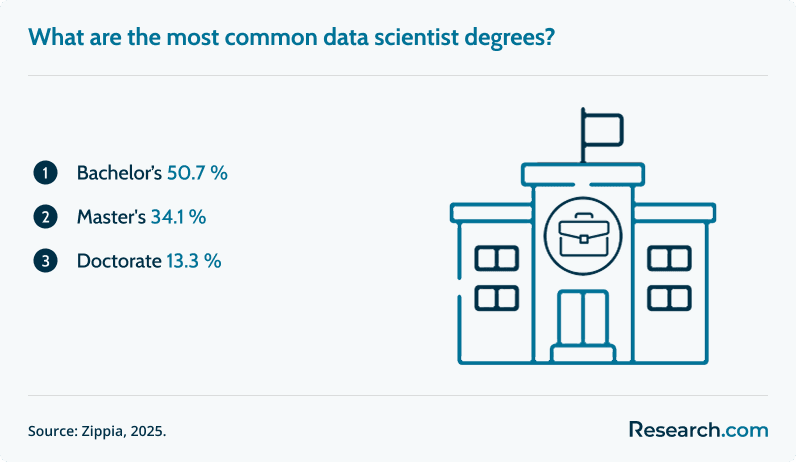
Common mistakes to avoid when applying for a PhD in the USA
| Mistake | Why it hurts applicants | Better approach |
| Choosing programs mainly by ranking | A highly ranked department may not have the right advisor or funding for your research | Prioritize faculty fit, funding, resources, and placement outcomes |
| Using the same statement of purpose for every school | Generic applications do not show why the program is a serious research match | Customize each statement around faculty, methods, projects, and departmental strengths |
| Ignoring funding details | A nominally funded offer may still leave major costs uncovered | Ask about tuition, fees, health insurance, summer support, and work expectations |
| Assuming GRE waivers apply everywhere | Testing policies differ by program and can change by cycle | Check each department’s current application requirements before planning |
| Overlooking visa timing | International students need time for the I-20, SEVIS fee, DS-160, interview, and travel planning | Start the visa process promptly after accepting an offer |
| Relying only on one potential advisor | If that advisor is unavailable, your research plan may become difficult to complete | Look for departments with at least two relevant faculty members when possible |
| Assuming a PhD guarantees an academic job | Faculty hiring is competitive and varies heavily by field | Build transferable skills and explore academic and nonacademic career paths early |
Questions to ask before accepting a PhD offer
- Is funding guaranteed, and for how many years?
- Does the funding cover tuition, fees, health insurance, and summer months?
- What teaching or research work is required in exchange for the stipend?
- Which faculty members are available to supervise my research?
- What is the department’s typical time to degree?
- How often do students meet with advisors?
- What happens if an advisor leaves or cannot continue supervision?
- Where have recent graduates found jobs?
- What professional development support exists for nonacademic careers?
- For international students, what support does the university provide for visa, employment, and compliance questions?
References
- 10 Best States for PHD Researchers in 2025 - Zippia. (2025, January 8). https://www.zippia.com/phd-researcher-jobs/best-states
- Garisto, D. (2025). US universities curtail PhD admissions amid Trump science funding cuts. Nature. https://doi.org/10.1038/d41586-025-00608-z
- How to become a data scientist: what it is and career path - Zippia. (2025, January 8). https://www.zippia.com/data-scientist-jobs
- PhD percentage per country 2025. (n.d.). World Population Review. https://worldpopulationreview.com/country-rankings/phd-percentage-by-country
- PHD Researcher Demographics and Statistics [2025]: Number of PHD researchers in the US. (2025, January 8). https://www.zippia.com/phd-researcher-jobs/demographics
- Student visa. (n.d.). https://travel.state.gov/content/travel/en/us-visas/study/student-visa.html
- Students and employment. (n.d.). U.S. Citizenship And Immigration Services. Retrieved September 9, 2025, from https://www.uscis.gov/working-in-the-united-states/students-and-exchange-visitors/students-and-employment
Key Insights
- A U.S. PhD is built around original research, not only coursework. Applicants should prove they are ready to contribute new knowledge in a specific field.
- Research fit is one of the most important admissions factors. A strong applicant can still be rejected if no faculty member can supervise the proposed work.
- Most applicants should begin preparing 8 to 12 months before the intended start date because deadlines often fall in December or early January.
- Tuition can range from about $12,000 to $87,000 per year, and total annual costs can fall between $25,000 and $70,000, so funding details matter as much as admission.
- A PhD stipend can range from about $15,000 to $37,000 annually, with $20,000 to $35,000 being typical in many research universities, but local cost of living can change the real value of that support.
- Applying to about 6 to 12 programs is usually more effective than sending many generic applications. A balanced list often includes 2 to 3 reach programs, 3 to 4 match programs, and 2 to 3 safety programs.
- A GPA around 3.5 or higher helps for top programs, but research experience, recommendations, graduate coursework, and a focused statement of purpose can strengthen the application.
- International students should verify TOEFL, IELTS, waiver, Form I-20, SEVIS, DS-160, and visa interview requirements early because policies vary and processing takes time.
- Before accepting an offer, compare advisor fit, guaranteed funding, time to degree, student outcomes, and career support. Prestige alone is not enough reason to choose a PhD program.
Other Things You Should Know About Applying for a PhD Program in the USA
PhD applicants in the USA typically need to take the TOEFL or IELTS to demonstrate English proficiency if their native language is not English. Each university will have its own minimum score requirements for these exams, often around 90 for TOEFL iBT and 6.5 for IELTS.
Yes, many USA PhD programs have made the GRE optional or no longer require it as of 2026. Applicants should check the specific requirements of each program they are interested in, as policies may vary by institution and department.


