
2027 Most Affordable Online Divinity (MDiv) Degree Programs

Co-Founder and Chief Data Scientist
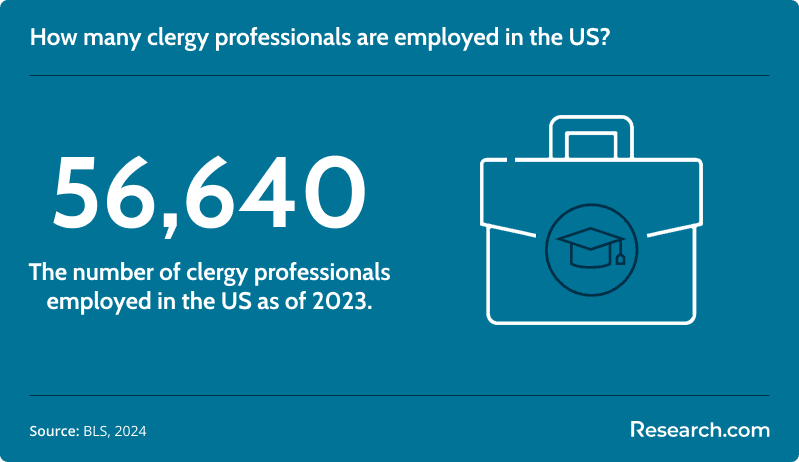
Choosing an online Master of Divinity (MDiv) is usually not just an academic decision. It affects your ministry preparation, ordination path, family schedule, debt level, and long-term career options. The US Bureau of Labor Statistics (BLS) reported 56,640 clergy members employed in 2023, showing that spiritual leadership continues to have a defined place in churches, hospitals, schools, home care settings, and community organizations.
Cost, however, can make the decision difficult. MDiv programs are often longer than many master’s degrees, and total tuition can rise quickly if a program requires 72, 75, 78, or 90 credits. This guide helps prospective pastors, chaplains, ministry leaders, and career-changing adults compare affordable online MDiv programs, understand what the degree includes, estimate value, and avoid choosing a program that does not fit their calling, budget, or denominational requirements.
Quick Answer: Is an Affordable Online MDiv Worth Considering?
An affordable online MDiv can be a strong option if you need graduate-level theological training but cannot relocate or pause work, ministry, or family responsibilities. The best programs combine accredited coursework, supervised ministry experience, denominational fit, and a realistic total cost. According to BLS, clergy earned a median annual wage of $58,920 in May 2023, but compensation varies by role, employer, region, congregation size, and benefits structure.
| Best fit | Why an online MDiv may work | What to check before enrolling |
| Current ministry workers | Online study allows students to keep serving while completing theological training. | Confirm whether field education can be completed at your current church or ministry site. |
| Future pastors or ordained leaders | Many MDiv programs are built around preaching, pastoral care, biblical interpretation, and leadership. | Ask your denomination whether the program satisfies ordination expectations. |
| Future chaplains | Chaplaincy tracks may support preparation for hospitals, prisons, military settings, or hospice care. | Review practicum requirements, clinical pastoral education expectations, and accreditor recognition. |
| Students managing cost carefully | Online learning can reduce relocation and commuting expenses. | Compare total program cost, not only cost per credit. |
What are the benefits of getting an online divinity degree?
- An MDiv can support preparation for roles such as pastor, chaplain, youth minister, nonprofit spiritual leader, or faith-based educator. It can also serve as a foundation for doctoral study in theology, ministry, or related disciplines.
- BLS reported a median annual wage of $58,920 for clergy in May 2023. Higher compensation may be possible in senior leadership, large congregations, institutional chaplaincy, or administrative ministry roles, though salary outcomes are never guaranteed.
- Online delivery helps students study theology while remaining connected to their workplace, congregation, family, and local ministry context.
What can I expect from an online divinity degree program?
An online MDiv usually blends academic theology with hands-on ministry formation. Students study Scripture, church history, theology, pastoral care, ethics, preaching, leadership, and spiritual formation. Many programs also require supervised ministry, field education, internships, or practica in settings such as churches, hospitals, nonprofit organizations, campus ministries, or community care agencies.
Delivery varies by school. Some programs rely heavily on asynchronous courses, which let students review lectures and complete assignments around work or ministry. Others include live online meetings, cohort-based discussion, short residencies, or optional campus intensives. Students should expect graduate-level reading, writing, theological reflection, and applied ministry assignments rather than a self-paced Bible study format.
What an online MDiv usually includes
| Program component | What it usually covers | Why it matters |
| Biblical studies | Old Testament, New Testament, interpretation, and sometimes biblical languages. | Builds the foundation for preaching, teaching, and theological analysis. |
| Theology and history | Doctrine, church history, ethics, denominational traditions, and historical theology. | Helps students understand beliefs, traditions, and ministry decisions in context. |
| Practical ministry | Preaching, pastoral care, leadership, worship, mission, counseling basics, and administration. | Connects classroom learning to real ministry responsibilities. |
| Formation and supervision | Mentoring, spiritual formation, field education, practicum, or supervised ministry. | Develops personal maturity, pastoral judgment, and vocational readiness. |
Where can I work after completing a divinity degree program?
Many MDiv graduates work in religious organizations, including churches, synagogues, denominational offices, and faith-based ministries. Common roles include pastor, associate minister, youth pastor, ministry director, teaching pastor, or denominational staff member. These positions often combine preaching, teaching, pastoral care, volunteer leadership, administration, and community outreach.
MDiv graduates may also pursue chaplaincy or spiritual care roles in hospitals, long-term care facilities, hospice organizations, prisons, universities, the military, and community service agencies. Outside traditional ministry, graduates may work in nonprofit leadership, missions administration, religious education, advocacy organizations, interfaith programs, or counseling-adjacent roles that draw on pastoral care training.
How much can I make after completing a divinity degree program?
BLS reported that clergy earned a median salary of $58,920 in May 2023. Individual earnings can differ substantially based on denomination, geographic location, congregation size, job title, seniority, housing benefits, institutional setting, and whether the role is full time, part time, or bi-vocational.
Some senior pastors, administrators, or leaders in larger urban congregations may earn significantly more, sometimes exceeding $80,000 annually. Chaplaincy compensation can follow different employer structures. Healthcare chaplains employed in hospitals or long-term care facilities may earn between $55,000 and $75,000 per year, while military chaplains can receive compensation equivalent to mid-level officers, including housing and benefits.
The safest way to evaluate earning potential is to research your intended role and region before enrolling. Ask schools for placement data, talk with denominational leaders, and compare salary ranges for clergy, chaplains, nonprofit leaders, and faith-based educators in the communities where you plan to serve.
- Most Affordable Online Divinity (MDiv) Degree Programs for 2027
- How long does it take to complete an online divinity degree program?
- How does an online divinity degree compare to an on-campus program?
- What is the average cost of an online divinity degree program?
- What are the financial aid options for students enrolling in an online divinity degree program?
- What are the prerequisites for enrolling in an online divinity degree program?
- What courses are typically in an online divinity degree program?
- What types of specializations are available in online divinity degree programs?
- Can an online divinity degree open doors to interdisciplinary academic pursuits?
- What are the potential challenges of pursuing an online divinity degree?
- Does an online divinity degree offer a strong return on investment?
- Can interdisciplinary studies enhance the value of an online divinity degree?
- What additional credentials can complement your online divinity degree?
- How do you choose the most affordable online divinity degree program?
- What career paths are available for graduates of online divinity degree programs?
- What is the job market outlook for graduates who completed an online divinity degree program?
Most Affordable Online Divinity (MDiv) Degree Programs for 2027
An MDiv is a major commitment because many programs require far more credits than a typical master’s degree. To help readers compare options, Research.com reviewed affordable online MDiv programs for 2027 using verifiable education data and program information.
The ranking draws from the IPEDS database, Peterson’s database, including its Distance Learning Licensed Data Set, the College Scorecard database, and the National Center for Education Statistics. Readers who want to understand how Research.com evaluates programs can review the Research.com methodology page.
How do we rank schools?
Programs are evaluated using affordability, access, academic quality, and available student outcome indicators. Factors include tuition per credit, estimated total cost, accreditation, graduation-related data, and student satisfaction information when available. The goal is not to name the “cheapest” program in isolation, but to identify programs that offer a stronger balance of price, credibility, flexibility, and ministry preparation.
| Rank | School | Program features | Cost per credit | Credits required | Accreditation |
| 1 | Liberty University | Fully online MDiv established in 2005, with optional intensives and tracks in Chaplaincy, Global Studies, Pastoral Counseling, and Theology. The program is designed for pastoral leadership, chaplaincy, and ministry roles. | $395 (full-time online student rate) | 75 | Southern Association of Colleges and Schools Commission on Colleges (SACSCOC); Association of Theological Schools (ATS) |
| 2 | Campbellsville University | 100% online MDiv with no on-campus requirements. Concentrations include Pastoral Leadership, Biblical Studies, and Theological Studies, with an emphasis on biblical literacy, ethical leadership, and pastoral care. | $319 | 75 | SACSCOC; ATS |
| 3 | Regent University | Online MDiv launched in 2004 with optional campus intensives. Tracks include Marketplace Ministry, Worship and Media, Missiology, and Church and Ministry. | $395 | 72 | SACSCOC; ATS |
| 4 | Abilene Christian University | 100% online MDiv for working professionals and ministry practitioners, with live virtual sessions, mentoring, and tracks in Ministry and Mission and Church Leadership. | $525 | 72 | SACSCOC; ATS |
| 5 | Anderson University-South Carolina | Flexible online MDiv through Clamp Divinity School for full-time and bi-vocational ministers. Tracks include Pastoral Ministry and Church Planting. | $425 | 75 | SACSCOC; ATS |
| 6 | Amridge University | Fully online MDiv for students pursuing ministry, counseling-related service, or doctoral study in theology. The available track is General Ministry. | $450 | 90 | SACSCOC; ATS |
| 7 | Southeastern University | Online Pentecostal-based MDiv with tracks in Biblical Studies and Practical Theology. Coursework includes Hebrew and Greek language studies, homiletics, and systematic theology. | $395 | 72 | SACSCOC; ATS |
| 8 | Denver Seminary | Online MDiv using synchronous and asynchronous delivery, with options in Leadership, Justice and Mission, and Pastoral Care. Optional campus residencies and faculty mentorship support formation. | $470 | 78 | ATS |
| 9 | Lexington Theological Seminary | Online MDiv for students already engaged in ministry. The General Ministry program uses cohort learning, contextual ministry education, and brief on-campus intensives. | $395 | 76 | ATS |
| 10 | Clarks Summit University | Fully online MDiv for evangelical pastors, missionaries, and Bible teachers. The General Ministry curriculum includes pastoral counseling, church administration, and preaching. | $450 | 90 | Middle States Commission on Higher Education (MSCHE); ATS |
How long does it take to complete an online divinity degree program?
Most online MDiv programs take about two and a half to four years, depending on course load, transfer credit, program structure, and whether the student enrolls full time or part time. Full-time students may complete some programs in two and a half to three years, while students balancing work, family, and ministry may need closer to four years.
The timeline also depends on the number of required credits. Programs in this guide range from 72 to 90 credits. Students who already have graduate theology credits, seminary coursework, or denominational training should ask each school how transfer credit is reviewed. Those considering ministry-adjacent roles may also compare the MDiv timeline with pathways such as becoming a Christian counselor, since counseling-related careers may involve different degree, supervision, or licensure expectations.
How does an online divinity degree compare to an on-campus program?
Online and campus-based MDiv programs can be academically comparable when they hold appropriate accreditation and require the same learning outcomes. The biggest differences are usually community experience, scheduling, access to faculty, residency expectations, and how field education is arranged.
| Factor | Online MDiv | On-campus MDiv |
| Flexibility | Best for students who need to keep working, serving in ministry, or living in their current community. | Best for students who can relocate or commit to a fixed weekly campus schedule. |
| Community | Built through discussion boards, video meetings, cohorts, mentorship, and occasional intensives. | Often includes chapel, in-person advising, informal peer relationships, and campus ministry life. |
| Field education | May be completed locally if the school approves the ministry site and supervisor. | Often connected to churches, hospitals, or agencies near the seminary campus. |
| Cost considerations | Can reduce relocation, commuting, and housing costs, though fees and intensives may still apply. | May provide more direct campus resources, but students must consider relocation and transportation. |
| Best for | Bi-vocational ministers, adult learners, rural students, and those already embedded in a ministry context. | Students who want intensive residential formation and face-to-face seminary community. |
The right format depends on how you learn, what kind of spiritual formation you need, and whether your future denomination or employer accepts online theological education. When comparing formats, use the same discipline-specific questions you would use for other online graduate options, even if the field differs, such as an affordable online EdS degree in special education: accreditation, practicum expectations, faculty access, and total cost all matter.
What is the average cost of an online divinity degree program?
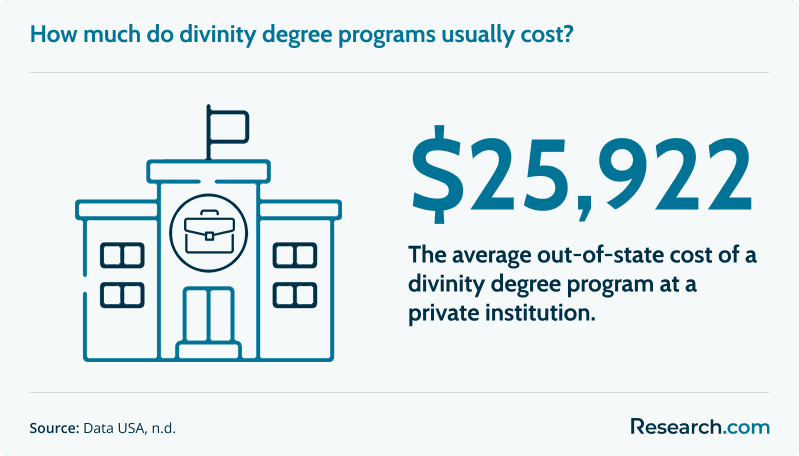
Online MDiv costs vary because schools charge different tuition rates and require different numbers of credits. According to Data USA, the median cost for a divinity or ministry program at an out-of-state private institution is approximately $25,922. Some denominational schools, in-state public options, scholarships, or church-supported programs may lower the actual price a student pays.
Students should calculate total cost instead of comparing tuition per credit alone. A lower per-credit rate can still lead to a higher total bill if the program requires more credits. Also include technology fees, textbooks, graduation fees, spiritual formation fees, travel for residencies, and lost income if you reduce work hours.
| Cost item | Why it matters | Question to ask |
| Tuition per credit | This is the most visible price, but it does not show the full cost by itself. | What is the current graduate tuition rate for online MDiv students? |
| Required credits | Programs in this guide require 72, 75, 76, 78, or 90 credits. | How many credits are required to graduate, including field education? |
| Residency or intensive travel | Short campus visits can add transportation, lodging, and meal costs. | Are any intensives required, optional, or fully online? |
| Books and digital fees | Theology programs can involve substantial reading and research resources. | What do students typically spend beyond tuition? |
| Transfer credit | Accepted credits can reduce both time and cost. | How many prior graduate credits can be transferred? |
Students comparing helping professions may also review related affordability guides, such as Research.com’s list of affordable online school counseling degrees, to understand how tuition, fieldwork, and career requirements differ across spiritual care and counseling-related paths.
What are the financial aid options for students enrolling in an online divinity degree program?
Online MDiv students may be able to use several funding sources, but availability depends on the school, accreditation, enrollment status, citizenship or residency status, and program eligibility. Start early, because scholarship deadlines may come before admission deadlines.
- Federal student aid: Eligible students can complete the Free Application for Federal Student Aid (FAFSA) to be considered for federal aid options.
- Institutional scholarships: Seminaries and universities may offer merit-based, need-based, denominational, ministry leadership, or cohort scholarships for divinity students.
- Denominational and church support: Congregations, dioceses, associations, conferences, missionary agencies, and religious foundations may provide grants, tuition assistance, or reimbursement.
- Military and veteran education benefits: Some eligible students may use GI Bill funding or military tuition assistance at approved institutions.
- Employer or ministry sponsorship: Churches, hospitals, nonprofit organizations, or faith-based agencies may contribute if the degree aligns with the employee’s role.
- Payment plans: Monthly plans can reduce the need for large lump-sum payments, though students should review any fees.
Students considering spiritual care careers outside congregational ministry may also compare related paths, including spiritual psychology careers, because credential requirements and funding options can differ sharply from MDiv-based ministry preparation.
What are the prerequisites for enrolling in an online divinity degree program?
Most online MDiv programs admit students who already hold a bachelor’s degree from an accredited institution. The undergraduate major usually does not have to be theology, although applicants without prior biblical or religious studies coursework should expect a steep reading and writing load.
- Bachelor’s degree from an accredited institution, often in any field
- Minimum GPA, commonly around 2.5 to 3.0 on a 4.0 scale
- Recommendation letters from pastors, church leaders, professors, supervisors, or mentors
- Personal statement, ministry calling essay, or faith journey reflection
- Resume or documentation of ministry, volunteer, leadership, or professional experience
- Possible interview, writing sample, or evidence of church involvement, depending on the school
Among people working in clergy roles, the most common educational achievements were:
- Graduate degree: 229,473 individuals
- Bachelor’s degree: 124,302 individuals
- Some college (no degree): 49,596 individuals
These figures show that graduate education is common among clergy, but students should still verify the specific expectations of their intended denomination or employer. If your interest is closer to counseling, disability support, or community rehabilitation, compare requirements with the steps to become a rehabilitation counselor, since licensure-based careers may require a different graduate degree and supervised hours.
What courses are typically in an online divinity degree program?
Online MDiv programs are designed to form students intellectually, spiritually, and practically. The curriculum usually includes biblical interpretation, theological reasoning, church history, pastoral practice, leadership, and supervised ministry experience.
Common core courses
- Old and New Testament Studies: Students examine biblical texts, historical settings, literary forms, and interpretive methods.
- Systematic Theology: Courses explore doctrines such as God, Christ, salvation, the church, the Trinity, and eschatology.
- Church History: Students study the development of Christianity from early communities through contemporary traditions.
- Homiletics: Preaching courses train students to prepare, deliver, and evaluate sermons responsibly.
- Pastoral Care and Counseling: Coursework introduces spiritual support for grief, crisis, conflict, illness, and life transitions.
- Ethics and Christian Leadership: Students evaluate moral decision-making, leadership models, and institutional responsibility in ministry contexts.
- Field Education or Practicum: Supervised ministry helps students apply classroom learning in real communities.
Electives may cover youth ministry, world religions, church planting, worship, interfaith engagement, missions, biblical languages, nonprofit leadership, or spiritual formation. For readers comparing affordability across very different online fields, Research.com also publishes guides such as the most affordable online esports business degree programs and the most affordable online graduate certificate programs in nursing informatics, which can be useful examples of how credit load, delivery model, and career alignment affect value.
What types of specializations are available in online divinity degree programs?
Specializations help students align their MDiv with a particular ministry setting. Not every school offers every track, and the same concentration name can mean different coursework at different institutions. Review the course list, field education options, and faculty expertise before assuming a specialization fits your goal.
| Specialization | Best for students interested in | Typical focus |
| Pastoral Ministry | Congregational leadership, preaching, discipleship, and church administration. | Sermon preparation, pastoral care, leadership, worship, and local church practice. |
| Chaplaincy | Hospitals, prisons, military settings, hospice, universities, or institutional spiritual care. | Crisis care, interfaith awareness, trauma-informed ministry, ethics, and supervised practice. |
| Biblical Studies | Teaching, preaching, advanced theological study, or academic preparation. | Scripture, interpretation, Hebrew, Greek, exegesis, and biblical theology. |
| Christian Counseling | Church-based care, lay counseling, pastoral support, or referral-informed ministry. | Pastoral counseling, human development, crisis response, and spiritual support. This is not the same as state counseling licensure unless the program is specifically designed for that purpose. |
| Missional Leadership or Church Planting | New churches, missions, community outreach, or cross-cultural ministry. | Evangelism, intercultural ministry, leadership strategy, and contextual theology. |
| Spiritual Formation | Discipleship, mentoring, retreats, spiritual direction, and congregational formation. | Prayer, spiritual disciplines, personal formation, mentoring, and reflective practice. |
BLS data shows clergy professionals working in multiple industries:
- Religious Organizations: 26,850 employed
- General Medical and Surgical Hospitals: 8,390
- Home Health Care Services: 8,280
- Elementary and Secondary Schools: 2,020
- Nursing Care Facilities (Skilled Nursing Facilities): 1,560
Those employment settings explain why specialization matters. A student preparing for hospital chaplaincy should evaluate a program differently from a student preparing to pastor a rural church or teach in a faith-based school.
Can an online divinity degree open doors to interdisciplinary academic pursuits?
Yes. An online MDiv can support interdisciplinary study when paired with education, counseling, nonprofit leadership, public service, communication, or research-focused training. The degree develops skills in interpretation, ethics, public speaking, community engagement, and pastoral leadership, which can transfer into several faith-based and secular environments.
For example, a ministry leader who wants to teach, design curriculum, or work in faith-based schools may decide to earn an education degree online alongside or after theological training. The key is to avoid stacking credentials without a plan. Each additional degree or certificate should connect to a clear role, employer requirement, or ministry need.
What are the potential challenges of pursuing an online divinity degree?
Online MDiv programs are flexible, but they are not effortless. Students must manage heavy reading loads, theological writing, discussion participation, ministry assignments, and sometimes field education while maintaining work and family obligations. The lack of daily campus contact can also make spiritual formation and peer relationships feel less immediate.
| Challenge | Why it matters | How to reduce the risk |
| Limited in-person community | Ministry formation often depends on mentoring, worship, and honest peer conversation. | Choose programs with cohorts, live sessions, faculty mentoring, retreats, or approved local mentors. |
| Self-discipline demands | Asynchronous courses can be easy to postpone. | Create a weekly study rhythm before classes begin and protect it like a work commitment. |
| Technology issues | Online study depends on reliable internet, video tools, digital libraries, and learning platforms. | Test technical requirements and ask about support hours before enrolling. |
| Field placement complexity | Students may need to secure approved ministry sites and supervisors locally. | Ask how placements are approved and whether current ministry work can count. |
| Denominational mismatch | A respected program may still fail to meet a particular ordination pathway. | Confirm requirements with denominational authorities before paying a deposit. |
When reviewing support services, use the same careful approach you would use when comparing other low-cost online professional programs, such as the most affordable online master’s in early childhood education programs: flexibility is valuable only if the program also provides advising, field support, and credible outcomes.
Does an online divinity degree offer a strong return on investment?
An online MDiv can offer a strong return when the program is affordable, accredited, aligned with ordination or chaplaincy expectations, and connected to a realistic career goal. ROI for ministry education is not only financial; many students also value vocational clarity, theological depth, pastoral competence, and the ability to serve communities well.
Still, students should be financially practical. Compare the total program cost with likely compensation in your intended role. Consider whether you will serve full time, part time, or bi-vocationally. Ask whether your church, denomination, employer, or military benefit can reduce tuition. Students planning future doctoral study may also compare timelines and costs for advanced options, including accelerated online EdD programs, if their long-term goal includes academic leadership, education administration, or organizational leadership.
Can interdisciplinary studies enhance the value of an online divinity degree?
Interdisciplinary study can increase the practical value of an MDiv when it fills a real skills gap. Ministry leaders increasingly need competence in budgeting, data-informed outreach, digital communication, education, trauma awareness, nonprofit management, and organizational leadership. The goal is not to replace theological formation, but to strengthen how that formation is applied.
For instance, leaders who oversee programs, grants, attendance trends, or community impact reports may benefit from stronger quantitative reasoning. Readers exploring analytical pathways can compare how other online programs structure skill-building, including the fastest online bachelor’s degree programs in mathematics. The best interdisciplinary choice is the one that directly supports the ministry setting where you plan to serve.
What additional credentials can complement your online divinity degree?
Useful add-on credentials depend on your target role. Chaplaincy students may pursue clinical pastoral education. Pastors may add training in conflict mediation, nonprofit administration, biblical languages, preaching, or trauma-informed care. Students interested in research, archives, theological libraries, or institutional knowledge management may consider library and information science.
For example, a low-cost online MLIS degree can be relevant for graduates who want to work with theological collections, seminary libraries, denominational archives, digital research systems, or knowledge management in faith-based institutions.
How do you choose the most affordable online divinity degree program?
The most affordable online MDiv is not always the program with the lowest advertised tuition. The better choice is the program that meets your ministry goal at the lowest responsible total cost while protecting accreditation, academic fit, and ordination or employment eligibility.
Step-by-step checklist for choosing an online MDiv
- Clarify your goal first. Decide whether you are preparing for pastoral ministry, chaplaincy, missions, nonprofit leadership, teaching, doctoral study, or personal theological formation.
- Confirm accreditation. Prioritize schools with ATS and/or recognized institutional accreditation, especially if you need ordination, credit transfer, doctoral admission, or employer recognition.
- Ask your denomination before applying. Requirements can include specific courses, field education, language study, supervised ministry, or approved seminaries.
- Calculate total cost. Multiply tuition by required credits, then add fees, books, travel, technology costs, and any residency expenses.
- Compare field education support. Ask whether the school helps secure placements or expects students to arrange them independently.
- Review faculty and theology fit. A program’s doctrinal tradition, worship expectations, and ministry philosophy should match your calling and community.
- Evaluate schedule realism. Make sure the course format fits your weekly work, family, and ministry responsibilities.
- Ask about transfer credit and scholarships. These two factors can significantly change affordability.
Students who want a shorter or less expensive ministry-related credential may compare MDiv programs with affordable online Christian ministry degree programs, especially if ordination or chaplaincy is not the immediate goal.
Common mistakes to avoid
| Mistake | Why it can hurt you | Better approach |
| Choosing only by lowest tuition | A cheaper program may require more credits, travel, or extra fees. | Compare total estimated cost to completion. |
| Ignoring accreditation | Unrecognized credentials may limit transfer, ordination, employment, or doctoral options. | Verify ATS and institutional accreditation before enrolling. |
| Assuming online equals easier | MDiv programs require serious reading, writing, reflection, and ministry practice. | Plan weekly study time before the first term starts. |
| Overlooking denomination rules | Your church body may require specific coursework or approved seminaries. | Get requirements in writing from the appropriate denominational office. |
| Forgetting field education logistics | Supervised ministry can delay graduation if placements are not approved on time. | Ask how local practica are arranged and evaluated. |
| Assuming salary outcomes are guaranteed | Ministry compensation varies widely by setting and role. | Research local salaries and benefits for your intended career path. |
What career paths are available for graduates of online divinity degree programs?
The United States employed around 56,640 clergy professionals in 2023. Online MDiv graduates commonly pursue church ministry, chaplaincy, education, nonprofit leadership, counseling-adjacent pastoral care, missions, and spiritual formation roles. The best path depends on the student’s denomination, field experience, specialization, and additional credentials.
| Career path | Typical responsibilities | Important considerations |
| Clergy, pastor, priest, or minister | Preach, teach, lead worship, provide pastoral care, oversee staff or volunteers, and guide congregational life. | Ordination requirements differ by tradition and may include exams, supervised ministry, or denominational approval. |
| Chaplain | Offer spiritual and emotional support in hospitals, prisons, the military, hospice, universities, or care facilities. | Many roles value or require specialized training, supervised experience, and sometimes clinical pastoral education. |
| Religious educator | Teach theology, Bible, ethics, or ministry courses in faith-based schools, seminaries, or church programs. | Advanced degrees or teaching credentials may be required for some settings. |
| Faith-based counselor or pastoral care leader | Provide spiritual guidance, crisis support, premarital guidance, grief care, or referrals within a ministry context. | An MDiv alone is generally not the same as professional counseling licensure. |
| Nonprofit or missions leader | Manage outreach, humanitarian work, community programs, fundraising, volunteers, or faith-based advocacy. | Leadership, budgeting, communication, and grant management skills can improve employability. |
| Spiritual coach or formation leader | Support individuals or groups in values-based growth, reflection, mentoring, or spiritual development. | Graduates interested in coaching may review transformational coaching career paths to understand related opportunities. |
According to Data USA, common occupations for divinity graduates include clergy, other managers, postsecondary teachers, and secondary school teachers. This range shows why students should choose electives and field placements that match their intended work setting.
What is the job market outlook for graduates who completed an online divinity degree program?
The job market for MDiv graduates is steady rather than uniform. Opportunities exist in congregations, healthcare systems, schools, home health care, nursing facilities, nonprofits, correctional institutions, and denominational organizations. Demand depends heavily on region, denomination, institutional budgets, retirement patterns, and whether the role is full time or part time.
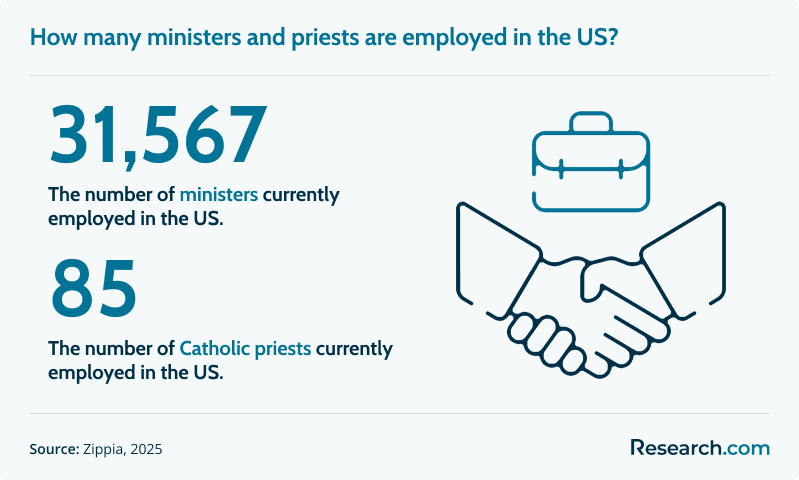
According to Zippia, there are currently over 31,567 ministers employed in the US. In a narrower religious role category, Zippia reports that over 85 Catholic priests are actively serving nationwide. These figures should be interpreted carefully because job titles, religious traditions, and data sources may define ministry roles differently.
Graduates may find that MDiv training strengthens transferable skills such as communication, ethical reasoning, conflict mediation, public speaking, counseling presence, and community leadership. Those interested in spiritual care beyond congregational ministry can review the spiritual counselor job outlook for additional context on counseling-adjacent and spiritual support roles.
Here’s What Graduates Have to Say About Online Divinity Degree Programs
-
: "
Online study allowed me to keep serving my church while completing the MDiv. The coursework pushed me academically, but I could apply what I was learning almost immediately in preaching, pastoral care, and leadership. The flexibility also helped me avoid relocation expenses and finish with less financial pressure. Mark
"
-
: "
I appreciated being able to revisit recorded lectures and study theology from home without stepping away from my family responsibilities. My cohort connected through virtual groups, and the program helped me prepare for hospital-based pastoral care with both biblical depth and practical training. Stanley
"
-
: "
Earning the MDiv online made it possible to work full time while pursuing ministry preparation. The program was demanding, especially the biblical languages and preaching courses, but faculty support and spiritual formation assignments helped me grow in both confidence and humility. James
"
Key Insights
- An affordable online MDiv is best for students who need serious theological training while remaining rooted in their current work, family, church, or ministry context.
- In 2023, there were 56,640 clergy in the US, and BLS reported a median annual clergy salary of $58,920 in May 2023.
- Program price should be evaluated by total cost to completion. Required credits, fees, books, residencies, and transfer credit policies can matter as much as cost per credit.
- Top-ranked programs cost between $5,500 and $19,152 per year; median out-of-state private tuition is around $25,922.
- Most online MDiv programs take two and a half to four years, with programs in this guide requiring 72 to 90 credits.
- ATS and regional accreditation are important for quality assurance, credit transfer, doctoral study, employer recognition, and many ordination pathways.
- Online and campus MDiv programs can be academically comparable, but students should compare community formation, mentorship, field education, and denominational acceptance.
- Graduates work in religious organizations, hospitals, schools, home health care, nursing care facilities, nonprofits, and educational settings.
- The biggest mistakes are choosing only by sticker price, ignoring accreditation, assuming online programs meet every ordination requirement, and failing to plan field education early.
References
- BLS. (2023, April 25). Clergy. BLS.
- Data USA. (n.d.). Clergy. Data USA.
- Data USA. (n.d.). Divinity & Ministry. Data USA.
- Zippia. (2025). Catholic Priest trends. Zippia.
- Zippia. (2025, January 8). Minister Demographics and Statistics [2025]: Number of ministers in the US. Zippia.
Other Things You Should Know About the Most Affordable Online Divinity (MDiv) Degree Programs
Joining professional organizations offers networking opportunities, access to industry publications, and potential discounts on conferences. For MDiv students in 2027, these benefits can enhance learning and career prospects, connecting them with experienced ministers and theologians.
When selecting an affordable online MDiv program in 2027, look for accreditation from bodies like the Association of Theological Schools (ATS). Accreditation ensures the program meets quality standards, which is crucial for academic credibility and future ordination prospects.


