2027 Online MBA vs Specialized Business Master's: Which Pays Off More?

Co-Founder and Chief Data Scientist
Choosing between an online MBA and a specialized business master's degree presents a crucial challenge for professionals aiming to maximize career growth and earning potential. Many struggle to assess which option offers the best return on investment, especially when navigating diverse program structures and varying industry demands. This uncertainty affects decisions on time commitment, skill acquisition, and job market alignment. The article explores key differences in curriculum, flexibility, and salary outcomes to provide a clear comparison, helping readers determine which degree aligns best with their career goals and financial expectations.
Key Things You Should Know
- Online MBA graduates earn a 15% higher average salary within five years compared to specialized business master's holders, reflecting broader leadership and management skills valued by employers in 2025.
- Specialized master's degrees in fields like finance or marketing offer quicker skill acquisition and job placement, with 82% employed in their specialty within six months post-graduation.
- Cost and duration vary widely; online MBAs typically require 2-3 years with higher tuition, while specialized master's programs are shorter and often less expensive, impacting return on investment.
What is an Online MBA vs Specialized Business Master's?
An online MBA is a broad business degree designed to develop leadership, management, and strategic thinking skills across multiple organizational functions. It covers core subjects such as finance, marketing, operations, and human resources, preparing graduates for senior roles in various industries. Students typically learn corporate strategy, accounting principles, and organizational behavior. The flexibility and comprehensive scope make it attractive for professionals targeting executive or consulting positions. According to College Transitions, online MBA graduates entering consulting roles often see a $30,000-$70,000 annual salary increase, the highest among industries.
In contrast, a specialized business master's degree offers deep technical expertise focused on fields like finance, data analytics, supply chain management, or marketing. These programs emphasize advanced skills tailored to specific career paths. For example, a master's in finance focuses on investment analysis and risk management, while a marketing specialization highlights digital strategy and consumer behavior. Graduates usually pursue positions requiring detailed knowledge rather than broad management authority.
Key differences include:
- Online MBA programs build versatile leadership and managerial skills applicable across sectors.
- Specialized master's degrees hone in on particular business disciplines with technical rigor.
- Career prospects after an MBA often lead to general management, strategy, or consulting roles.
- Specialized degrees suit careers needing specific expertise, such as a financial analyst or a supply chain specialist.
Professionals weighing these options should consider their goals carefully. If seeking executive leadership or consulting careers with notable salary growth, the online MBA program's benefits are clear. Those certain about technical specialization may prefer a specialized master's for concentrated skill development and industry insight. For those interested in affordable and flexible options, exploring online MBA programs cheap can provide valuable starting points.
What are the key differences between Online MBA and specialized master's programs?
The key differences between online MBA and specialized master's programs lie in curriculum focus, applicant experience, and career outcomes. Online MBA programs provide broad management education targeting leadership and strategic skills across finance, marketing, operations, and human resources. By contrast, specialized business master's degrees concentrate deeply on one area, like finance or marketing analytics, offering advanced technical expertise tailored for specific industries. This distinction often influences the career outcomes for online MBA versus specialized business master's degrees, with MBA graduates typically pursuing executive or general management roles while specialized master's graduates aim for technical or niche positions.
Applicant profiles vary: according to BestColleges.com, citing the GMAC 2023-2024 Application Trends Survey, 73% of MBA applicants have three or more years of work experience, compared to 69% for specialized master's applicants. This suggests MBA candidates are generally mid-career professionals seeking to expand managerial impact, while specialized master's attract early-career individuals and those pivoting into new fields.
Program duration and cost also differ. Specialized master's programs usually last one year and may be less expensive, whereas online MBA programs often require two years but provide broader networking opportunities. Considering these factors relative to career timelines is key. Prospective students may want to explore options such as the most affordable AACSB online MBA programs to balance quality with investment.
Which offers better ROI: Online MBA or specialized business master's?
Online mba programs often deliver a better return on investment comparison for many students than specialized business master's degrees. Tuition for AACSB-accredited programs such as LSU Shreveport is around $14,520, with some students paying as little as $4,020 out-of-pocket after employer assistance (College Transitions, 2024-2025 analysis). This cost-effectiveness significantly boosts ROI compared to specialized master's degrees, which may cost $30,000 to $60,000 without substantial employer aid.
Specialized master's degrees in finance, marketing, or supply chain management tend to offer higher starting salary increases in specific fields, but their narrow focus limits flexibility. An online MBA cultivates versatile skills that open doors to managerial roles across various industries, often leading to greater long-term salary growth. This difference is key when considering the best ROI specialized business master's vs online MBA for career advancement.
Career progression also depends on professional experience: MBA graduates usually experience salary raises of 20% to 50% within five years after graduation, whereas specialized master's holders tend to receive smaller increases aligned with their niche roles. Prospective students should evaluate their career ambitions, employer support, and readiness to change fields when deciding.
For those leveraging employer tuition assistance and seeking leadership or entrepreneurial positions, an online MBA offers a measurable advantage. To explore options, consider the most affordable executive MBA programs.
What are admission requirements for Online MBAs versus specialized master's?
Admission requirements for online MBAs typically demand more extensive professional experience compared to specialized business master's programs. Most online MBA programs require candidates to have two to five years of management or leadership experience.
Applicants must submit official transcripts proving a bachelor's degree from an accredited institution, alongside competitive GMAT or GRE scores, although some schools waive these tests for those with strong work backgrounds or advanced degrees. Essays, recommendation letters, and interviews are vital in assessing leadership potential and career goals, reflecting the complexities of the application process differences for MBA versus specialized business master's programs.
In contrast, specialized master's degrees such as Finance or Marketing often admit applicants directly from undergraduate studies with fewer work experience demands. These programs require a solid academic record, usually a minimum GPA of 3.0, and may require relevant coursework or technical prerequisites. GMAT or GRE scores are generally accepted at lower thresholds, emphasizing academic preparation rather than professional experience.
The difference in admission standards also impacts return on investment (ROI). Data from BestColleges.com citing Payscale shows MBA holders earn 17% higher average salaries ($98,000) than specialized master's graduates. This salary premium explains the more rigorous admission criteria, demonstrating the career value of advancing managerial expertise.
Prospective students should carefully consider their career stage and academic background when comparing online MBA admission requirements compared to specialized business master's offerings. For those looking for affordable options, there are programs described as online MBA no GMAT low cost that balance quality with accessibility.
How long do Online MBA and specialized master's programs take?
Online MBA programs generally require two years to complete, though accelerated tracks can shorten this to 12-18 months. These programs combine essential business courses with leadership development and typically offer electives across multiple industries. In contrast, specialized business master's degrees focus on a specific area such as finance, marketing, or technology management and usually take 12-18 months.
Specialized master's programs are ideal for professionals seeking fast upskilling without the broader leadership content in MBA programs. For example, technology management concentrations are linked to salary jumps of $25,000-$50,000 in roles like product management and IT director, according to College Transitions' 2024-2025 industry data. This targeted approach delivers immediate, industry-specific advantages.
Completion timelines vary based on program format and student pace. Part-time and evening options can extend studies up to three years, while full-time intensive paths accelerate graduation. Many online MBA candidates balance work and study, which can lengthen the duration but enrich learning with professional experience.
When choosing, consider availability, career goals, and salary expectations. Specialized master's degrees provide quicker workforce reentry, while MBA programs prepare students for broader leadership roles supporting long-term career growth.
What do curricula look like in Online MBAs vs specialized business master's?
Online MBA programs emphasize broad management skills, leadership, finance, marketing, and operations. Core courses often include strategy, organizational behavior, accounting, and economics, establishing a solid foundation for general managerial roles. Many programs provide electives to specialize, but the main focus is on skills applicable across industries. Leadership development, case studies, and teamwork projects simulate real-world business challenges and decision-making.
In contrast, specialized master's degrees like MS in analytics, finance, or marketing deliver focused technical training in a specific domain. These programs delve deeply into relevant tools, methodologies, and theories. For instance, an MS in analytics prioritizes data modeling, statistics, and programming languages such as Python or R. Graduates typically pursue niche roles that require this expertise rather than broad leadership capabilities.
Career outcomes differ accordingly. According to Coursera's 2024 salary reports, specialized MS in analytics graduates earn an average base salary of $84,000, compared to MBA graduates, who average $101,000. This gap reflects the MBA's broader emphasis on leadership, which often accelerates entry into senior management and higher compensation.
Consider these factors when deciding:
- Online MBA programs suit career changers or aspiring executives seeking versatile business education.
- Specialized master's degrees target professionals aiming for technical roles with domain-specific knowledge.
- MBA curricula support quicker advancement through leadership readiness.
- Specialized programs may be shorter and less costly but focus on narrower job markets.
Your choice depends on whether you want generalist leadership skills or focused expertise with specific technical competencies.
How much do Online MBAs and specialized master's cost?
Online MBA programs can cost anywhere between $20,000 and over $100,000 in total tuition, influenced by factors like school prestige, program length, and delivery format. Public universities often provide lower tuition rates, especially for in-state students, typically ranging from $20,000 to $40,000 for the full degree. Conversely, private and top-tier business schools frequently charge upwards of $90,000. Many students consider these costs worthwhile given that chief executives with MBAs earn a median annual salary of around $207,000, according to the U.S. Bureau of Labor Statistics.
Specialized master's degrees in business areas such as finance, marketing, or supply chain management generally cost less, usually between $15,000 and $60,000. These programs tend to be shorter, often about one year full-time, reducing living expenses and opportunity costs compared to longer MBAs.
When evaluating cost, consider both financial investment and career goals. An online MBA typically opens doors to higher starting salaries and broader leadership roles but requires a greater initial outlay. Specialized master's degrees offer a faster, more affordable route for those focused on specific industries or functions.
Additional expenses may include fees, materials, or commuting for hybrid formats. Employer tuition assistance and scholarships can help offset costs. Researching the total cost of attendance alongside expected salary gains is key to identifying the best educational value for your situation.
What careers can you pursue with an Online MBA versus specialized master's?
Online MBA graduates often pursue leadership roles such as management consulting, financial management, operations leadership, and marketing management. These positions require versatile skills to manage multiple departments or drive company-wide growth. Common roles include business analyst, project manager, and strategy consultant, all leveraging broad business knowledge.
Specialized business master's degrees prepare students for niche careers like data analytics, technology management, and other high-demand fields. Graduates typically enter roles such as product manager, IT project leader, or operations analyst. ProductLeadership.com's 2024 analysis shows specialized technology management MBAs achieve over 90% job placement in growth sectors, surpassing the roughly 80% placement rate of general MBA holders.
Typical career paths by specialization include:
- Finance master's graduates working as financial analysts or corporate finance managers
- Marketing master's graduates aiming for digital marketing director or brand manager roles
- Supply chain master's graduates taking supply chain manager or logistics coordinator positions
The decision between an online MBA and a specialized master's depends on career goals. MBAs offer flexibility and broad leadership for those seeking versatility across industries. Specialized master's degrees accelerate entry and growth in technical or expanding fields. Prospective students should ask:
- Does your job market value broad or specialized skills?
- Are placement rates higher for specialized or general degrees in your field?
- Will versatility or deep expertise better serve your career?
Aligning degree choice with industry demands influences employment success, with specialized master's increasingly favored in tech sectors.
What are salary expectations after Online MBA vs specialized business master's?
Salary expectations differ notably between graduates of online MBA programs and those holding specialized business master's degrees, largely influenced by industry and job role. Consulting firms typically recruit from top-tier full-time MBAs, where starting salaries often surpass $150,000. Conversely, online MBA graduates usually earn between $90,000 and $140,000, especially in boutique consulting firms or in-house strategy roles. This range offers a strong opportunity for professionals pursuing strategic positions without attending traditional full-time programs.
Specialized master's degrees in fields like finance, marketing, or supply chain management tend to lead to more focused roles with diverse salary ranges. Entry-level compensation generally falls between $70,000 and $110,000, varying by specialization and company size. For instance, finance-focused programs often provide starting salaries near $100,000, while marketing specializations may begin lower but can offer swift career advancement. These degrees usually don't open many doors in broad consulting but excel in technical or industry-specific careers.
What is the job outlook for Online MBA and specialized master's graduates?
The job market favors online MBA graduates with higher salaries and broader opportunities compared to holders of specialized business master's degrees. Data from edX indicates the median estimated salary for MBA graduates is $125,000, outpacing the $86,000 median for all master's graduates. This reflects strong demand and a compensation advantage for those with MBA credentials.
Employers seek MBA candidates for leadership roles involving strategic decision-making and general management. Positions such as product managers, business consultants, and senior analysts typically prefer MBA graduates for their versatile business knowledge. This leads to greater career mobility and access to higher management tiers.
Specialized business master's holders, such as finance, marketing, or supply chain graduates, offer deep expertise tailored to specific industries. They often start in roles with focused technical responsibilities, like financial analysts or digital marketing managers. Though salaries may begin lower than those of MBAs, rapid advancement is common within specialized sectors emphasizing technical skills.
Key considerations include:
- Online MBA programs often result in higher median salaries and more diverse job options.
- Specialized degrees deliver niche expertise crucial to certain fields.
- Job stability varies; MBA skills generally suit volatile markets better.
- Time and cost investment differ, with MBA programs typically longer and more expensive but offering strong leadership returns.
Choosing between an online MBA and a specialized master's requires weighing broad leadership versus focused technical skills in relation to career goals and industry trends.
Other Things You Should Know About MBA
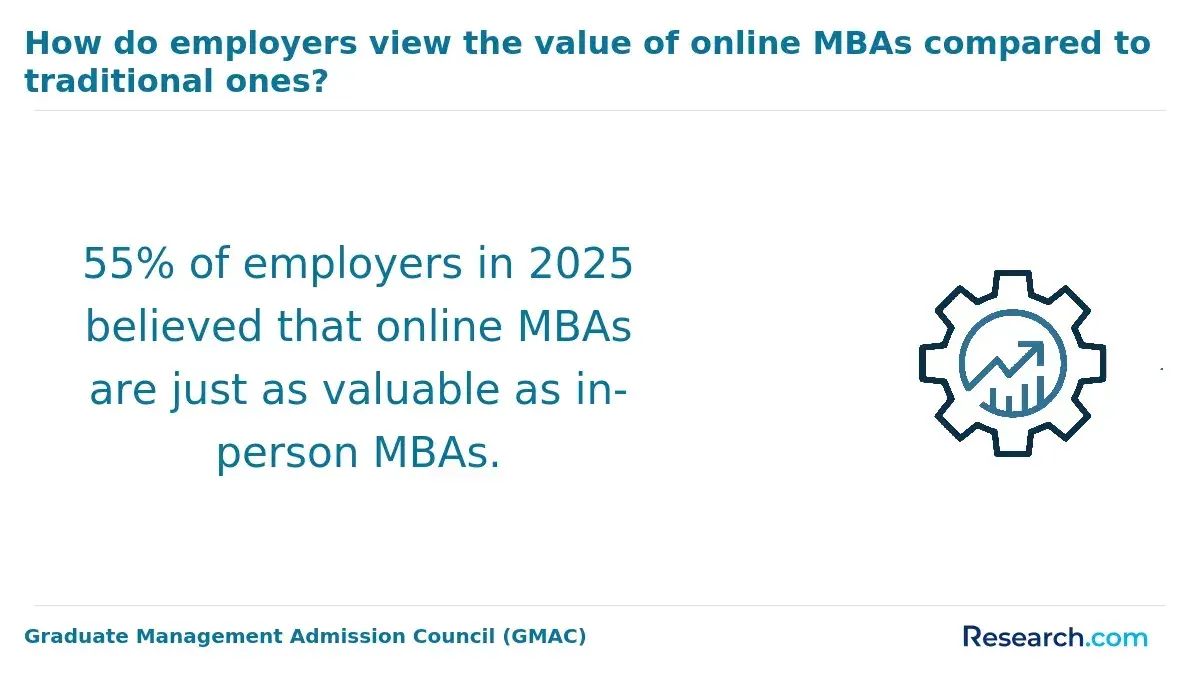
The value of an online MBA depends largely on the program's accreditation and reputation. Accredited online MBAs from reputable institutions are recognized by employers and can offer comparable benefits in career advancement as traditional programs. However, some industries may still favor traditional on-campus degrees for networking and experiential opportunities.
Many online MBA programs offer specialization options, allowing students to focus on specific areas such as finance, marketing, or supply chain management. This flexibility enables graduates to tailor their education to their career goals while benefiting from the broad managerial training typical of MBA curricula.
In 2027, job prospects depend on industry needs and personal career goals. Online MBAs provide broad business skills, often leading to leadership roles. Specialized Business Master’s offer in-depth expertise in a specific area, which can lead to niche opportunities. Research industry trends to determine the best fit.
Online MBA programs typically provide networking through virtual events, group projects, and alumni networks, but these may differ from the in-person connections available in specialized master's programs. Specialized business master's often include a tighter industry focus, which can offer more concentrated networking within a particular field, but online MBAs compensate with broader professional contacts across industries.
References
- MBA or Specialized Master’s Degree: Which One is Best for You? | INOMICS - Le site des économistes - Le site des économistes https://inomics.com/fr/terms/mba-or-specialized-masters-degree-which-one-is-best-for-you-1463082
- How to Choose The Right MBA Program Length https://www.princetonreview.com/business-school-advice/mba-program-length
- MBA vs Masters: Which to choose https://www.hotcoursesabroad.com/study-abroad-info/subject-guides/mba-vs-masters-which-is-better/
- What's the Difference Between an MBA and a Specialized Master's Degree? - The Hub https://hub.fullsail.edu/articles/whats-the-difference-between-an-mba-and-a-specialized-masters-degree
- Online MBA Specialisations 2025 – Scope, Jobs & Salary Insights https://www.tmuonline.ac.in/blog/online-mba-specialisations-scope-jobs-industry-demand
- Strong Job Outlook for MBA Graduates https://online.tamucc.edu/degrees/business/mba/general/strong-job-outlook-for-mba-graduates/
- MBA or Specialised Masters – ETS GRE https://www.amba-bga.com/insights/mba-or-specialised
- Chandigarh University UGC-Entitled Online Degree Courses and Programs in India https://www.onlinecu.in/blog/cu/skills-employers-expect-from-mba-graduates
- MBA Vs Specialized Masters: 3 Important Differences | News - Concordia University https://www.concordia.ca/cunews/jmsb/graduate/recruitment/2019/10/07/mba-vs-specialized-masters-3-important-differences.html
- Should you get an MBA or a master's? | edX https://www.edx.org/resources/should-you-get-an-mba-or-masters