2027 Top Entry-Level Management Jobs After an Online MBA

Co-Founder and Chief Data Scientist
Many professionals with unrelated undergraduate degrees face uncertainty when seeking management roles. The traditional experience requirement and lack of formal business education often create barriers. This challenge intensifies for those needing flexible learning options due to personal or professional commitments.
The rising popularity of online MBA programs offers a promising solution for career changers. These programs equip candidates with essential skills without disrupting their schedules. This article explores the top entry-level management jobs accessible after completing an online MBA, guiding readers in making informed career decisions and successfully transitioning into leadership roles.
Key Things You Should Know
- Graduates with an online MBA in 2026 can access diverse entry-level management roles in industries like healthcare, technology, and finance, with an average starting salary of approximately $75,000.
- Leadership and digital skills gained from online MBA programs are highly valued, with 62% of employers prioritizing candidates who demonstrate adaptability and remote collaboration abilities.
- Networking opportunities through online MBA platforms significantly enhance job placement, with 45% of graduates securing positions via alumni connections or virtual career fairs.
What are the top entry-level management jobs after an online MBA?
Top entry-level management roles after an online MBA include positions such as project manager, product manager, operations manager, and business analyst. These careers utilize core skills like strategic planning, financial analysis, and team leadership. For instance, project managers coordinate resources and timelines, especially in tech firms where MBA graduates hired increased by 12% in 2025 (Graduate Management Admission Council, 2025 Corporate Recruiters Survey). Product managers focus on product development and market fit, requiring excellent cross-functional communication, while operations managers improve daily workflows across sectors like manufacturing, healthcare, and retail. Business analysts analyze data trends to suggest operational improvements in industries undergoing digital transformation.
Other promising roles are marketing manager and supply chain manager. Marketing managers handle campaign strategies and budgets, ideal for graduates aiming to enhance brand growth. Supply chain managers oversee logistics and vendor relations, crucial for companies emphasizing cost efficiency and sustainability. These options represent some of the best entry-level management careers for online MBA graduates.
Graduates should evaluate these roles based on their strengths and preferred industries. For example, tech-oriented students might pursue project or product management with software companies, while those interested in consumer goods could focus on supply chain or marketing management. Earning certifications like PMP for project management or Six Sigma for operations boosts job prospects. Additionally, companies increasingly seek digital fluency, so skills with tools such as Microsoft Power BI or Salesforce are valuable.
For those looking for affordable options, exploring online MBA low cost programs can be a practical first step toward entering these competitive roles.
How does an online MBA prepare you for entry-level management roles?
An online MBA equips students with essential skills for entry-level management positions by blending strategic business knowledge with practical leadership abilities. Core competencies include strategic planning, financial analysis, team management, and operational oversight. Coursework emphasizes real-world applications such as case studies, simulations, and group projects to reflect challenges managers face daily.
These programs also foster expertise in decision-making frameworks, data-driven analysis, and communication techniques that empower graduates to lead teams and interact confidently with upper management. For instance, sales team leads gain insights into performance measurement and incentive alignment, which can boost team productivity and revenue. According to the 2025 Entry-Level Management Jobs Report by Coursera, sales team leads with an MBA earn a median total compensation of $124,000, including bonuses averaging 25% of base salary. This demonstrates how online MBA skills for entry-level management positions can translate into tangible career advancement and earning potential.
Flexibility is another advantage of the online format, allowing working professionals to develop time management and remote collaboration skills crucial for today's hybrid workplaces without interrupting their careers. How an online MBA enhances leadership in management roles includes key areas like developing leadership techniques to motivate teams and resolve conflicts, building strategic thinking skills for problem-solving and innovation, and applying marketing concepts to drive customer engagement and growth.
For those interested in cost-effective options, exploring the cheapest online MBA AACSB programs can be a valuable starting point.
What is the average salary for entry-level managers with an MBA?
Entry-level managers with an MBA typically earn between $70,000 and $95,000 annually, with roles like management analysts commanding salaries near $90,000 at the outset. These positions emphasize operational efficiency, financial analysis, and strategic planning, often resulting in higher pay compared to non-MBA peers. The average salary for entry-level managers with an MBA varies significantly based on industry, geographic location, and prior experience.
Key factors influencing entry-level management salary range after an online MBA include:
- Industry sector: Finance and consulting firms usually offer starting salaries closer to or above $90,000, while nonprofits and government roles may start between $65,000 and $75,000.
- Geographic location: Metropolitan areas like New York and San Francisco report higher salary baselines due to cost of living and market competitiveness.
- Prior work experience: Relevant professional backgrounds can help MBA graduates negotiate starting salaries above average offers.
Job growth for management analysts with MBAs is projected at 14% from 2024 to 2030, nearly double the national average, reflecting ongoing demand in operational consulting (U.S. Bureau of Labor Statistics, May 2025 Occupational Outlook). This growth helps sustain competitive salary prospects. Prospective students should consider company size, industry trends, and location preferences carefully to set realistic expectations.
For those interested in specialized fields, programs like the executive MBA healthcare online offer focused education that may impact salary and advancement opportunities positively.
What is the job outlook for entry-level management positions?
The job outlook for entry-level management positions driven by organizational demands remains strong, with significant growth projections in industries like manufacturing, healthcare, technology, and retail. Professionals skilled in practical management and business acumen are highly sought after, especially those with advanced qualifications. Entry-level roles such as project manager, operations coordinator, business analyst, and assistant manager offer common career opportunities for online MBA graduates, who benefit from developed leadership, communication, and analytical skills.
Operations coordinators holding online MBA degrees often realize a 15% return on investment within two years due to higher salary premiums compared to non-MBA peers, according to the National Association of Colleges and Employers 2025 Salary Survey. To enhance job prospects, candidates should focus on industries with high turnover or rapid growth, including logistics, healthcare administration, and tech startups. Leveraging internship and networking opportunities during the MBA program helps build relevant experience, while emphasizing measurable achievements such as process improvements or cost savings strengthens resumes and interviews.
While competition exists, the combination of an MBA and targeted industry experience creates a favorable job market. Those pursuing an MBA online no GMAT often find accelerated career advancement and higher starting salaries. Understanding entry-level management job growth projections supports informed career planning for aspiring leaders.
What accreditation should an online MBA program have?
Regional accreditation from recognized bodies like the Higher Learning Commission (HLC) or the Middle States Commission on Higher Education (MSCHE) is essential for online MBA programs. This type of accreditation confirms the program meets rigorous academic standards, ensuring credits transfer smoothly and degrees have strong recognition in the job market.
Specialized business accreditations further enhance value, with AACSB (Association to Advance Collegiate Schools of Business) being the most prestigious. AACSB accreditation signals high-quality faculty and curriculum tailored to business. Other respected accreditations include EQUIS (European Quality Improvement System) and AMBA (Association of MBAs), particularly beneficial for those pursuing international business careers.
Hiring managers increasingly prefer graduates from accredited programs. For example, MBA holders in learning and development roles gain advantage as corporate training budgets rose 18% and MBA-qualified positions earned 22% more, according to the Association for Talent Development's 2025 State of the Industry Report.
Verify that an MBA program's accrediting agency is recognized by the U.S. Department of Education or the Council for Higher Education Accreditation to avoid diploma mills and protect career prospects. Consider your career goals when evaluating accreditation-for instance, HR professionals often seek AACSB-accredited programs, while regional accreditation is critical for general management roles.
What are typical admission requirements for online MBA programs?
Admission to online MBA programs typically requires a bachelor's degree from an accredited institution, though it need not be in business. Programs usually expect a minimum cumulative GPA of around 3.0, but this can vary based on the program's selectivity. Official transcripts are often required to confirm academic credentials.
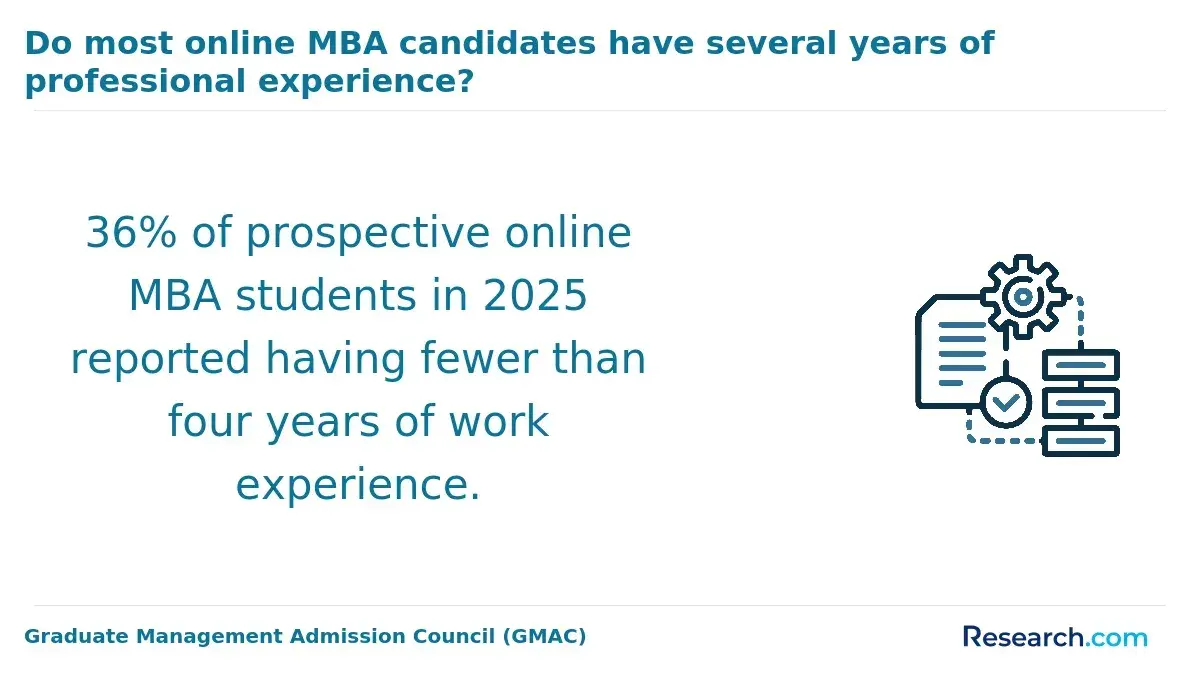
Professional experience expectations vary widely. Some accelerated programs admit candidates with little to no work experience, while others prefer three to five years in managerial or supervisory roles. Demonstrating leadership or project management skills is crucial, as these programs value candidates who can translate theory into practice.
Standardized tests such as the GMAT or GRE are commonly requested but are often optional, especially for applicants with strong work experience or academic records. Non-native English speakers must usually provide TOEFL or IELTS scores to prove language proficiency.
Applications typically include essays that explain career goals and motivations for pursuing an MBA, letters of recommendation from professional supervisors, and sometimes interviews to assess communication and drive.
The demand for strategic management skills is reflected in workforce trends, with human resource generalists holding MBAs representing 28% of new job openings in 2025 amid talent shortages, highlighting the value of combining advanced education with real-world experience (Society for Human Resource Management, 2025 Workforce Trends Report).
How long does an online MBA take and what are the costs?
An online MBA program typically takes between 18 and 36 months to complete, depending on course load and program format. Accelerated tracks enable full-time students to finish in as few as 12 months by following an intensive curriculum. Part-time programs usually span closer to two or three years, accommodating working professionals.
Costs vary widely across institutions, ranging from about $20,000 at public universities to over $100,000 at private or elite business schools. Additional expenses may include technology fees, course materials, and graduation charges. Tuition structures differ: some schools charge per credit hour, others per term or the full program upfront. Employer tuition reimbursement is often available if the degree aligns with an employee's role.
Affordability should be considered alongside expected salary benefits. For instance, business development managers at top tech companies like Google Cloud reported median salaries of $151,000, with 35% of these hires holding recent MBA degrees (Coursera, 2025 High-Paying Entry-Level Management Analysis). This highlights a strong return on investment potential.
Prospective students should verify program accreditation and how prior credits transfer to avoid redundant coursework. Flexibility in deadlines and part-time enrollment can help balance work and study commitments. Financial aid, scholarships, and federal loans are typically accessible for U.S. students.
What does the online MBA curriculum cover for management careers?
An online MBA curriculum provides comprehensive training across key management domains vital for entry-level leadership roles. Core coursework typically includes strategic management, organizational behavior, financial accounting, marketing principles, and operations management, which collectively build a foundation to help businesses run effectively and remain competitive.
Many programs also integrate data analytics and decision-making modules, equipping graduates to interpret business metrics and leverage quantitative analysis. This skillset is increasingly important as companies adopt AI-driven tools, such as those revolutionizing digital marketing. For example, digital marketing managers holding an MBA reported a 20% salary increase and an average base pay of $90,000, reflecting the value of proficiency in AI campaign tools (eMarketer, 2025 Marketing Careers Outlook).
Courses in leadership development focus on essential soft skills, including negotiation, team management, and communication, preparing students to navigate workplace challenges effectively. Project management teachings often emphasize Agile or Lean methodologies to enhance process efficiency.
Electives allow students to specialize in areas like healthcare, technology, or finance, increasing their marketability. Common options include supply chain management, entrepreneurship, and international business, aligning with diverse career goals.
Capstone projects or consulting practicums offer hands-on experience, bridging classroom theory with real-world business challenges. This practical component enhances graduates' competitiveness for entry-level management positions.
Online or campus MBA: Which is better for entry-level management?
Campus MBA programs often provide stronger networking through in-person interactions, events, and alumni connections, which can accelerate entry into management roles in traditional industries. They also offer experiential learning like internships and group projects, essential for leadership development. In contrast, online MBAs offer flexibility and accessibility for working professionals or those with geographic limits. Many online programs now include live virtual sessions and cohort models that replicate campus networking benefits.
The Corporate Finance Institute's 2025 Finance Jobs Report shows that finance-focused MBAs-regardless of delivery mode-led to a 16% faster promotion to managerial roles within a year compared to bachelor's degrees alone. This underscores the credential's value over format.
Key considerations include:
- Accessibility: Online MBAs fit those juggling full-time work or family.
- Networking: Campus MBAs foster deeper connections but may demand more time and money.
- Employer Perceptions: Some finance and consulting firms prefer campus MBAs at entry-level management; others prioritize skills and experience.
- Program Specializations: Finance-focused MBAs show measurable advancement through promotion rates.
Choosing between formats depends on individual circumstances and industry targets rather than a general preference.
How to choose a reputable online MBA program for management jobs?
Selecting a reputable online MBA program for management roles requires careful consideration of accreditation from recognized bodies like AACSB, ACBSP, or EQUIS. These accreditations ensure the program maintains high academic standards valued by employers. Faculty expertise is equally important, with a preference for instructors holding doctoral degrees and significant industry experience.
Review the curriculum to confirm it addresses essential management skills such as strategic planning, finance, operations, and leadership. Programs with specializations, like supply chain management or business analytics, can enhance career prospects in niche areas. Alumni outcomes and job placement rates offer insight into a program's real-world effectiveness. For example, demand for MBA talent among business operations managers grew 25% in logistics roles, with median salaries of $115,000 (Council of Supply Chain Management Professionals, 2025 Salary and Career Survey).
Consider program flexibility, including delivery format and schedules, to fit your lifestyle. Strong career support services-resume help, interview coaching, and employer networking-are vital. Investigate networking opportunities with peers and industry leaders. Compare tuition alongside financial aid options to assess overall value, and evaluate the technology platform for user-friendly, interactive learning.
Research student reviews and third-party rankings to gauge reputation and satisfaction. Connecting with current students or alumni helps clarify real experiences. Confirm the institution's recognition in your job market. Finally, address program length, credit requirements, and transfer policies to align with your career goals and timeline.
Other Things You Should Know About MBA
Yes, an online MBA is designed to provide foundational business skills applicable across industries, making it a useful tool for career changers. It offers knowledge in leadership, finance, marketing, and operations, which prepares graduates to step into management roles even without prior industry-specific experience.
Internships and practical experiences significantly enhance the value of an online MBA by allowing students to apply theoretical knowledge in real-world settings. They help build professional networks, develop hands-on skills, and improve employment prospects in management roles after graduation.
Employers in 2027 expect entry-level managers with an MBA to have strong leadership, strategic thinking, and analytical skills. Proficiency in data analysis and understanding of digital tools are also key, alongside excellent communication and adaptability to dynamic business environments.
References
- Online MBA Curriculum Supporting Career Transitions https://www.onlinecu.in/blog/cu/how-does-online-mba-curriculum-support-career-transitions
- How Online MBAs Facilitate Career Changes and Transitions - European Business Magazine https://europeanbusinessmagazine.com/how-online-mbas-facilitate-career-changes-and-transitions/
- Career Options After Online MBA â Entry Roles and Growth https://onlinematsuniversity.com/blog/career-options-after-online-mba-entry-roles-and-growth.html
- Careers for MBA Graduates | Life After an Online MBA https://www.onlinesrm.in/careers-for-mba-graduates/
- How to Choose the Best Online MBA Program for Your Career https://www.dypatilonline.com/blogs/how-to-choose-online-mba-program-for-career-growth
- Online MBA vs Traditional MBA: What are the differences? | StudyNext Australia https://studynext.com/au/resources/online-mba-vs-on-campus-mba
- Online MBA for working professionals: Accelerate Your Career in 2026! https://ebsedu.org/blog/online-mba-for-working-professionals/
- As the entry-level suffers, IT management remains a bright spot in 2026 - Spiceworks https://www.spiceworks.com/it-careers/as-the-entry-level-suffers-it-management-remains-a-bright-spot-in-2026/
- Average MBA Salary in India, US, UK, Canada, and Other countries https://e-gmat.com/blogs/average-mba-salary-by-industry/
- How Entry-Level Management Builds Future Success https://ascensionmanagementinc.com/news/1267578-how-entry-level-management-experience-opens-doors-to-future-opportunities/