2027 What to Know Before Applying to a Speech Pathology Master's Program

Co-Founder and Chief Data Scientist
Transitioning into a new career with an undergraduate degree unrelated to health sciences can feel overwhelming, especially when aiming to enter specialized fields like speech pathology. Prospective students often face uncertainty about program prerequisites, accreditation, and balancing study with existing responsibilities. These challenges can stall progress or lead to costly missteps. Understanding the application landscape is critical to making informed decisions that suit individual career goals. This article outlines essential considerations for applying to speech pathology master's programs, focusing on flexible and accredited pathways that accommodate diverse academic backgrounds and professional commitments.
Key Things You Should Know
- Entry into speech pathology master's programs typically requires completion of a bachelor's in communication sciences or related field, with competitive GPA averages around 3.5 as of 2025 admissions data.
- Applicants must prepare for rigorous clinical practicum hours mandated by ASHA, commonly exceeding 400 supervised hours before graduation and certification eligibility.
- Funding remains a critical consideration, with average program costs ranging from $20,000 to $60,000; scholarship and federal loan opportunities are increasingly vital for affordability.
What is a speech pathology master's program?
A speech pathology master's program overview reveals a comprehensive graduate-level course designed to prepare students for certification and clinical practice as speech-language pathologists. These programs usually span two years, combining academic coursework, clinical practicum, and research to train students in assessing and treating communication disorders affecting speech, language, voice, fluency, and swallowing.
Curricula in speech pathology graduate program requirements typically include anatomy, neurophysiology, linguistics, audiology, and evidence-based therapeutic techniques. Rigorous clinical experience across healthcare, educational, and community settings ensures applied skill development. Many students also complete a research thesis or capstone project to demonstrate mastery of core concepts.
Training addresses communication disorders across the lifespan, from pediatric speech delays to adult neurogenic impairments, with some programs offering specializations such as augmentative communication or swallowing disorders. Accreditation by the Council on Academic Accreditation in Audiology and Speech-Language Pathology (CAA) is essential for clinical certification eligibility and employment success.
Outcomes data emphasize program effectiveness. For example, the LSUHSC Speech-Language Pathology program reports 100% pass rates on the Praxis exam, 100% completion, and full-time employment for graduates over the past three years. Prospective students considering an online masters speech pathology should prioritize accredited programs combining strong clinical training with comprehensive curricula.
What are the admission requirements for speech pathology master's programs?
Admission requirements for speech pathology master's programs in the US generally include a bachelor's degree in communication sciences and disorders or a closely related field. Competitive academic performance is important, with accepted students typically having a GPA between 3.08 and 3.98, according to the Communication Sciences and Disorders Education Survey. In the 2023-2024 cycle, 45% of applicants were admitted out of over 52,000 applications, highlighting the selective nature of these programs.
Typical prerequisites for applying to speech pathology graduate programs often include courses in anatomy, physiology, linguistics, statistics, and psychology. Many programs require standardized test scores, such as the GRE, though some schools no longer mandate these exams. Strong letters of recommendation and a personal statement outlining motivation and relevant experience are also commonly needed.
Clinical observation or volunteer work in speech-language pathology settings can strengthen applications by demonstrating commitment and practical exposure to the field. International applicants must prove English proficiency through exams like TOEFL or IELTS. Those with non-traditional backgrounds may face additional requirements or need to submit supplemental materials.
Successful admission depends on academic excellence, relevant coursework, standardized testing, and professional recommendations. Prospective students considering this career path can explore the speech language pathologist salary to better understand future opportunities in the field.
How long do speech pathology master's programs take and what do they cost?
Speech pathology master's programs generally require two years for completion when students meet prerequisite academic requirements. This timeframe covers both coursework and supervised clinical experience needed for certification. Applicants without at least 25 credit hours in speech-language pathology must first complete an additional year of prerequisites, which can extend the overall timeline. Despite this, the average cost and length of speech pathology graduate programs show solid outcomes, with many programs reporting an 81% graduation rate.
Tuition costs vary significantly based on institution type and residency. Public universities typically charge between $15,000 and $30,000 for in-state students, while out-of-state tuition can exceed $40,000. Private institutions usually range from $40,000 to $70,000 in total tuition. Other expenses include clinical fees, textbooks, and licensing exam costs, which can add several thousand dollars to the overall investment.
Part-time and online options may extend program duration to three or four years and may have different tuition structures. Some schools incorporate prerequisite courses within the master's curriculum, streamlining credit transfer but lengthening study time. Prospective students should explore accelerated speech pathology programs if seeking shorter completion periods.
Helpful advice for applicants includes:
- Assess undergraduate coursework early to confirm prerequisite fulfillment.
- Investigate full tuition plus ancillary fees before committing.
- Consider program format and duration carefully to balance work and study.
- Explore financial aid, scholarships, and employer tuition assistance options.
What accreditation should speech pathology programs have?
Accreditation standards for speech pathology masters programs in the US are essential to ensure graduates can pursue licensure and certification. The Council on Academic Accreditation in Audiology and Speech-Language Pathology (CAA) under ASHA is the primary recognized accreditation body for speech pathology graduate programs. CAA accreditation confirms that a program meets rigorous national educational standards, covering curriculum quality, clinical practicum opportunities, and faculty qualifications.
Programs with CAA accreditation are typically eligible for federal financial aid and enable graduates to take licensure exams and obtain the Certificate of Clinical Competence (CCC) from ASHA. Institutional or regional accreditation alone does not provide these professional licensure pathways, making CAA accreditation mandatory for speech pathology master's programs aimed at licensure.
Applicants should verify program accreditation status through ASHA's official CAA directory and ensure clinical training hours align with state requirements. Many competitive programs, such as George Washington University, require GRE scores and maintain high graduation rates, reflecting strong academic and clinical standards. For those exploring options, reviewing easiest speech pathology programs to get into can be helpful in finding accessible accredited programs.
Choosing a program without proper CAA accreditation or sufficient clinical practicum can delay certification and increase expenses, so priority should be placed on fully accredited options that meet professional and financial aid standards.
What does the speech pathology master's curriculum cover?
The master's curriculum in speech pathology covers essential topics to prepare students for clinical and research roles in communication disorders. Core courses include anatomy and physiology of speech and hearing mechanisms, acoustics, phonetics, and language development. Training focuses on assessing and treating speech, language, voice, fluency, and swallowing disorders across all ages.
Programs integrate evidence-based practice principles, ensuring graduates apply the latest research effectively. Clinical practicum hours are required, offering hands-on experience with diverse populations such as children with developmental delays or adults recovering from stroke.
Specialized areas explored include neurogenic communication disorders, cognitive-communication impairments, and augmentative and alternative communication (AAC). Coursework often covers cultural competence and ethical issues, addressing challenges in serving multilingual or multicultural clients. Research methods and statistics help students critically evaluate studies and contribute to advancing the field.
Program emphases vary, with some focusing on pediatric speech pathology and others on adult rehabilitation or voice disorders. Tuition costs, especially for out-of-state students, vary notably, ranging from $11,349 to $13,203 annually as reported by BestColleges. This investment reflects the specialized clinical training required to become a licensed speech-language pathologist.
Are there online speech pathology master's programs?
Several online speech pathology master's programs are available, blending asynchronous coursework with synchronous virtual sessions to offer flexibility for working professionals or those who cannot relocate. Despite the remote format, these programs require in-person supervised clinical practicums. Accreditation bodies like the Council on Academic Accreditation in Audiology and Speech-Language Pathology (CAA) mandate hands-on clinical hours to ensure students gain essential practical experience.
These programs vary by delivery and duration, with some offering part-time paths that extend beyond the traditional two-year full-time schedule. It is important for applicants to verify if a program partners with local clinics or hospitals to arrange clinical placements nearby. This helps address the common challenge of geographic distance faced by online learners.
Graduate outcomes from reputable online speech pathology master's programs demonstrate strong career prospects. For example, 100% of graduates from the University of Louisiana's program between 2020 and 2023 were employed as speech-language pathologists or pursuing doctoral studies within one year. This underscores the ability of accredited online programs to produce competent professionals who meet industry standards.
Prospective students should confirm that their chosen program complies with state licensure requirements, which typically require graduation from CAA-accredited programs and completion of verified clinical hours. Early verification prevents licensure or employment obstacles.
What clinical experiences are required in speech pathology programs?
Master's programs in speech pathology require comprehensive clinical experience, with supervised practicum placements typically totaling 375 to 400 hours before graduation. These hours expose students to diverse client populations and environments, including hospitals, schools, rehabilitation centers, and private practices. The clinical training covers pediatric and adult patients, providing hands-on experience in diagnosing and treating various speech, language, and swallowing disorders.
In addition to practicum hours, many programs mandate a final clinical fellowship or internship lasting approximately 36 weeks. This full-time supervised experience is crucial for skill refinement and is a requirement for state licensure and certification by the American Speech-Language-Hearing Association (ASHA). Some programs offer specialized clinical rotations focusing on areas like neurogenic communication disorders or augmentative and alternative communication.
Applicants should carefully review each program's clinical hour requirements and the range of settings available. Selecting programs that align with ASHA standards can facilitate earning the Certificate of Clinical Competence (CCC-SLP), an essential credential in the field. Strong clinical training correlates with greater professional success and an encouraging salary outlook; according to the U.S. Bureau of Labor Statistics Occupational Outlook Handbook, the median annual wage is $95,410, or $45.87 per hour.
What careers can you pursue with a speech pathology master's?
A master's degree in speech pathology equips graduates to work as speech-language pathologists (SLPs) who diagnose and treat communication and swallowing disorders across the lifespan. These professionals serve in diverse environments, including schools, hospitals, rehabilitation centers, and private practices.
Specialized career paths include pediatric speech therapy for developmental delays, neurogenic communication for stroke and brain injury recovery, audiology support, voice coaching, and autism spectrum disorder interventions. Additionally, graduates may work in research exploring new therapies or technologies to improve patient outcomes.
Some speech pathology professionals pursue roles in academia as educators or clinical supervisors, while others engage in healthcare administration, overseeing services within multidisciplinary teams. Private sector jobs include consulting for companies making assistive communication devices or therapy apps, as well as expert evaluation roles for insurers and legal cases.
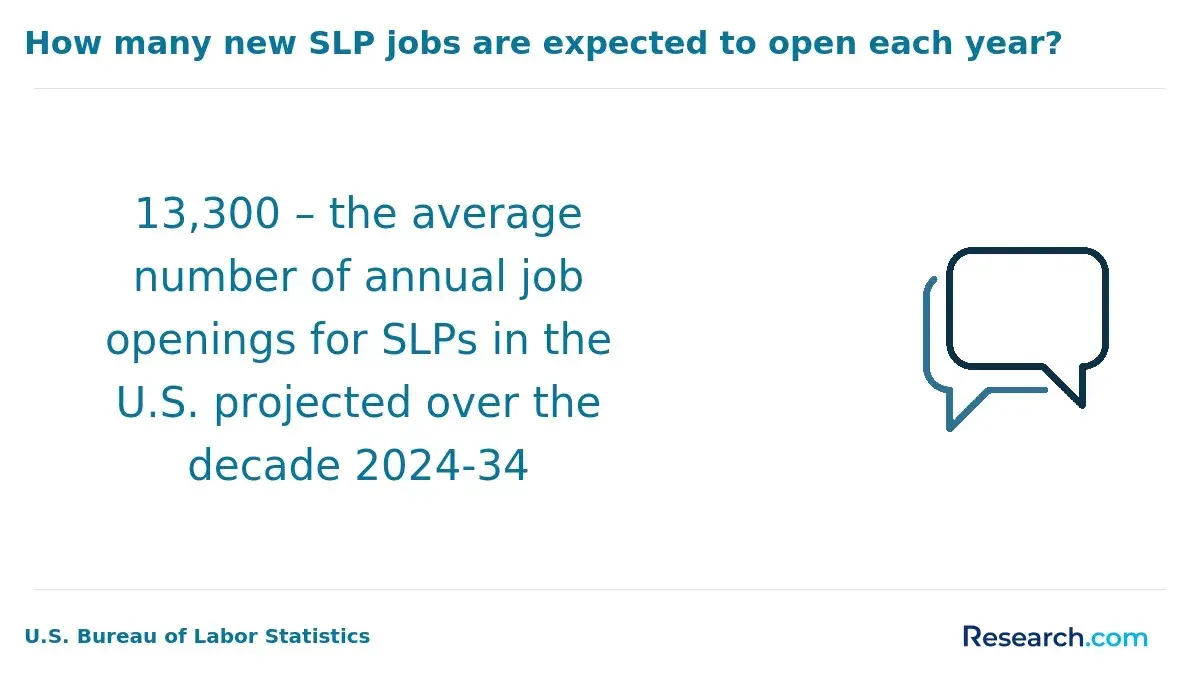
The U.S. Bureau of Labor Statistics projects a 15% employment growth for speech-language pathologists from 2023 to 2033, reflecting an increased demand driven by an aging population and heightened awareness of disorders.
Prospective students benefit most from programs offering clinical practicum opportunities tailored to their interests, which greatly influence job prospects and professional growth.
What is the salary outlook for speech pathologists?
The salary outlook for speech pathologists in 2026 remains promising, driven by demand in healthcare, education, and private practice. According to the U.S. Bureau of Labor Statistics, median annual wages hover around $82,000, with entry-level positions starting near $60,000 and experienced professionals in specialized roles or high-cost regions earning upwards of $120,000.
Several factors influence salary levels:
- Geographic location, with metropolitan areas typically offering higher pay
- Work environment, such as hospitals versus school settings
- Specialization in areas like pediatric or neurogenic communication disorders
Certification significantly impacts career advancement and earning potential. The Praxis exam is a key step; for instance, Xavier University reports an average three-year pass rate of 82.76%, while top-ranked programs boast 100% success. Employers prioritize certified candidates, which can directly enhance salary prospects.
Obtaining additional credentials such as the Certificate of Clinical Competence in Speech-Language Pathology (CCC-SLP) further strengthens employability. Building clinical experience during master's programs and networking are valuable strategies to access diverse and better-paying positions.
What are the licensing requirements for speech pathologists?
Licensing for speech pathologists in the U.S. involves several standardized steps to ensure professional competence and public safety. Candidates must first earn a master's degree in speech pathology from a program accredited by the Council on Academic Accreditation in Audiology and Speech-Language Pathology (CAA). Following this, applicants complete a clinical fellowship, typically lasting 36 weeks or approximately 1,260 hours of supervised practice.
Passing the Praxis Examination in Speech-Language Pathology, administered by the Educational Testing Service, is required by most states for licensure. After meeting these steps, professionals apply to their specific state licensing board, as requirements and fees vary regionally.
Additional obligations may include continuing education credits, criminal background checks, or mandatory reporting certifications, depending on the state. Those interested in practicing across multiple states should research reciprocity policies, as these differ widely.
Highest concentrations of speech pathology master's degree recipients are found in Boston, MA; New York, NY; and San Diego, CA, correlating with greater job demand in these areas. Early planning for clinical fellowships and exam preparation can streamline the licensure process and avoid delays.
Consult state boards and accredited programs for the latest regulatory details and ensure all licensing steps are thoroughly completed.
Other Things You Should Know About Speech Pathology
In 2027, gaining research experience is increasingly valued by speech pathology master's programs. It demonstrates a student's initiative and ability to engage with evidence-based practice, providing a competitive edge in the application process. Prior experience in research can also deepen understanding of complex speech and language disorders.
Yes, many speech pathologists choose to specialize in areas such as pediatric speech disorders, neurogenic communication disorders, or swallowing therapy. Specialization usually involves pursuing additional certifications or clinical experience post-graduation. This can enhance career opportunities and allow practitioners to focus on populations or conditions of greatest interest to them.
Continuing education is essential to maintain licensure and certification and to keep skills current in this evolving field. Speech pathologists must regularly complete professional development courses to stay informed about new treatments, technologies, and research findings. This ongoing learning ensures high standards of patient care throughout their careers.
References
- Top Requirements for Speech Pathology: Your Guide to Success https://www.growwithcoral.com/blog/slp-requirements
- Online Master of Science in Speech-Language Pathology - General Pathway https://slponline.ithaca.edu/programs/masters-speech-language-pathology-online
- Online MSLP Programs with No GRE Requirement for Admissions https://www.speechpathologydegrees.com/online/mslp-no-gre-required
- How to Become a Speech Pathologist https://speechpathologymastersprograms.com/become-speech-pathologist/
- Is Speech-Language Pathology a Good Career? Salary, Demand & Outlook https://www.mghihp.edu/news-and-more/opinions/csd-discussions/speech-language-pathology-good-career-salary-demand-outlook
- Master of Science (MS) in Speech-Language Pathology https://www.rushu.rush.edu/college-health-sciences/academic-programs/master-science-speech-language-pathology
- Speech pathology--what is considered clinical experience? https://forums.medicalschoolhq.net/t/speech-pathology-what-is-considered-clinical-experience/15213
- Online Master of Science in Speech-Language Pathology | Maryville University https://slp.maryville.edu/online-programs/online-masters-degrees/speech-language-pathology/
- Admission Requirements & Deadlines - Speech-Language Pathology (M.S.) https://www.towson.edu/chp/departments/asld/grad/speech/admission.html
- SLP Clinical Practicum Experiences | Rockhurst University https://www.rockhurst.edu/slp/clinical-practicum-experiences