Best Dental School Loan Refinance Lenders for 2027

Student Finance & Loan Expert
Navigating the financial landscape of dental school loans can be daunting, but refinancing offers a strategic way to manage and reduce your debt. Finding the best dental school loan refinance lender is crucial, as it can significantly lower your interest rates, reduce monthly payments, and save you thousands of dollars over the life of your loan.
By comparing refinancing offers from different lenders, you can identify the terms and benefits that align best with your financial goals. This careful evaluation not only eases your current financial burden but also positively impacts your long-term financial health, enabling you to invest in your future with greater confidence.
What You Should Know About Dental School Loan Refinance Lenders
- Refinancing your federal dental school loans into private loans disqualifies you from public service loan forgiveness (PSLF). If PSLF is a potential future goal, stick with your federal loans and explore income-driven repayment plans to manage payments during lower earning periods.
- Refinancing can potentially lower your interest rate, but it might extend your loan term. Carefully assess the total interest paid over the entire loan term when comparing offers from different lenders.
- Refinancing is a long-term financial decision. Analyze your long-term financial goals and career path to determine if the potential benefits of refinancing outweigh the drawbacks for your specific situation.
- 2027 Best Dental School Loan Refinance Lenders
- Here’s What Dental School Graduates Have to Say About Loan Refinancing
- What is dental school loan refinancing?
- Is refinancing the best option if you are struggling to make payments?
- Who should consider refinancing dental school loans?
- What are the benefits of refinancing dental school loans?
- Are there any drawbacks to refinancing dental school loans?
- What factors should I consider when choosing a dental school loan refinance lender?
- What repayment terms are available for dental school loan refinancing?
- Can refinancing dental school loans affect my tax advantages?
- What are the eligibility requirements for refinancing dental school loans?
- How can refinancing dental school loans support further professional education?
- How does timing impact the refinancing process?
- What are the potential risks of refinancing dental school loans?
- How can you compare refinance lenders for the best fit?
- How can I evaluate lender credibility effectively?
- What regulatory and accreditation standards should I verify?
- What are the current market trends affecting dental school loan refinancing?
- What steps can you take to optimize your financial readiness?
- What questions should you ask your lender during the refinancing process?
- What consumer protections should I expect during refinancing dental school loans?
2027 Best Dental School Loan Refinance Lenders
How do we rank refinancing lenders?
The top 10 lenders by market share and online search volume, as well as lenders that serve specialty or nontraditional markets, are included in our survey of over 26 banks, credit unions, and online lenders that offer student loans and student loan refinancing.
We evaluate 41 features and data points for each financial institution, including the availability of biweekly payments through autopay, minimum credit score and income requirement disclosures, availability to borrowers in all states, extended grace periods, and in-house customer service, depending on the category.
SoFi Medical Professional Refinancing
SoFi Medical Professional Refinancing caters to dentists, including those who recently graduated and are in residency. This program refinances existing dental school loans. SoFi offers a streamlined application process for residents and offers various repayment terms (5, 7, 10, 15, and 20 years) to potentially align with your financial situation.
- Minimum credit score: None
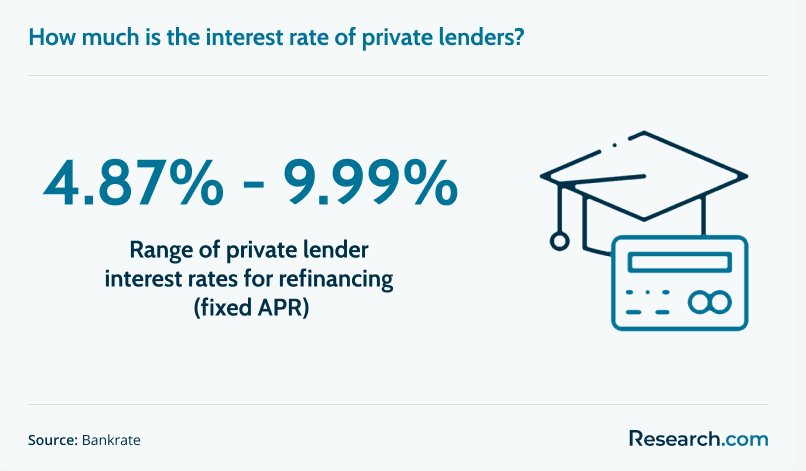
- Fixed APR: 5.24-9.99%
- Variable APR: 6.24-9.99%
Laurel Road Student Loan Refinance
Laurel Road Student Loan Refinance can be an option for refinancing dental school loans. This program refinances private or federal dental school loans you have already taken out to cover the cost of your education. Laurel Road offers competitive fixed interest rates for refinancing, and a variety of repayment terms (5, 7, 10, 12, 15, and 20 years) to allow you to choose a repayment plan that fits your financial situation after graduation.
- Minimum credit score: 660
- Fixed APR: 5.44-9.75%
- Variable APR: 5.49-9.95%
College Ave Student Loan Refinance
College Ave Student Loan Refinance caters to refinancing existing student loans, including dental school loans, after graduation. This program refinances private or federal dental school loans you have already taken out. They offer various repayment terms (5, 7, 10, 12, 15, and 20 years) to allow you to choose a plan that aligns with your income after graduation.
- Minimum credit score: Mid-600s
- Fixed APR: 6.99-13.99%
- Variable APR: 6.99-13.99%
Here’s What Dental School Graduates Have to Say About Loan Refinancing
Refinancing my dental school loans was a game-changer! I secured a much lower interest rate, which reduced my monthly payments significantly, allowing me to focus on building my practice without constant financial stress. The entire process was smooth and straightforward. Emily
After refinancing my dental school loans, I saved over $10,000 in interest! The financial freedom this brought me has been incredible, letting me invest more in my professional development and personal life. I only wish I had done it sooner. David
Refinancing my dental loans helped me consolidate multiple loans into one easy payment, simplifying my financial management. The customer service was exceptional, guiding me through every step and ensuring I got the best deal possible. This decision truly lifted a huge weight off my shoulders. Sarah
What is dental school loan refinancing?
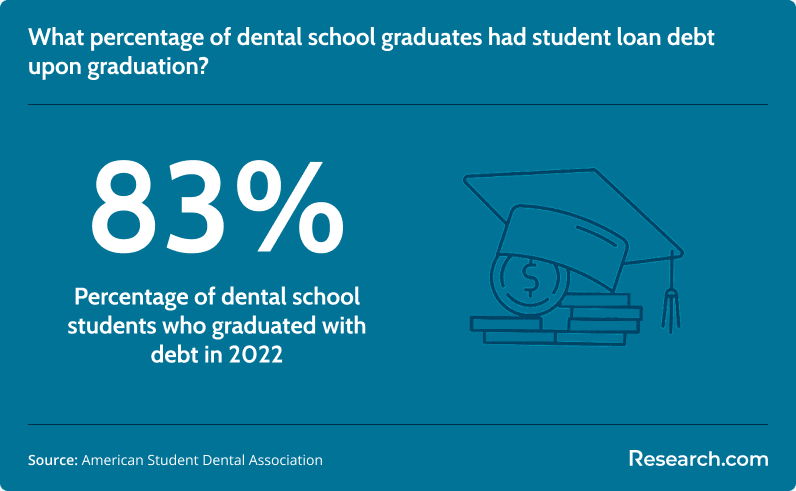
Among dental school students, 83% graduated with debt in 2022. The process of dental school loan refinance involves replacing your existing dental school loans with a new, private loan. This new loan could potentially offer you better terms, such as:
- Lower interest rates: This can save you a significant amount of money on your total loan repayment.
- More flexible repayment options: You might be able to choose a repayment term that better fits your budget and career goals.
However, it is important to consider some drawbacks as well:
- Loss of federal loan benefits: Refinancing federal loans into a private loan means you lose access to programs like income-driven repayment and Public Service Loan Forgiveness (PSLF).
- Potential credit score impact: Applying for a new loan can cause a temporary dip in your credit score.
Is refinancing the best option if you are struggling to make payments?
In 2022, the average debt per graduate was $293,900, according to ADEA. Refinancing might not be the best option if you are currently struggling to make payments on your dental school loans. Here's why:
- Higher Minimum Payments: Refinancing often aims to secure a lower interest rate, which can extend the loan term. This could lead to a higher minimum payment compared to income-driven repayment plans offered by federal loans.
- Loss of Federal Benefits: Refinancing federal loans into private ones removes you from programs designed for hardship, like Income-Driven Repayment (IDR) plans that adjust your payments based on your income.
Alternatives for Struggling Borrowers:
- Income-Driven Repayment (IDR) Plans: With IDR plans, your monthly payments are capped based on your income and family size. This can significantly reduce your burden.
- Deferment or Forbearance: These federal programs allow you to temporarily pause your loan payments or reduce them for a set period. However, interest may still accrue during these periods.
- Consolidation: Consolidating your federal loans can simplify your repayment process by combining them into a single loan with one monthly payment.
Who should consider refinancing dental school loans?
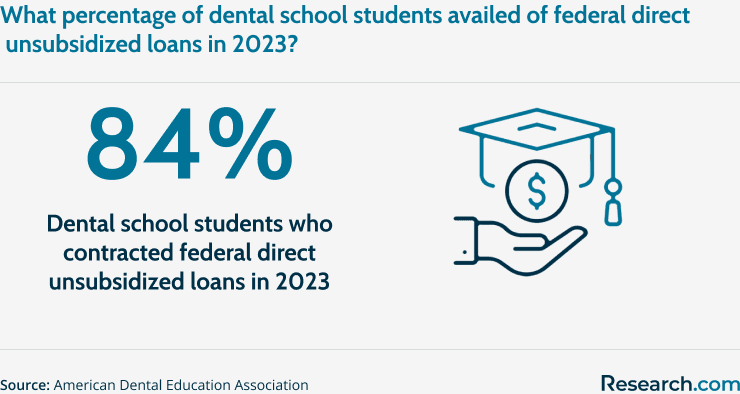
Dental school loan refinancing can be a good fit for several dentist profiles, but it is not a one-size-fits-all solution. For the 84% of dental school students who used federal direct unsubsidized loans in 2023, it is important to understand if refinancing is an option for them should they face challenges in repayment.
Refinancing typically requires a good credit score (high 600s or above) and stable income to qualify for the best interest rates. This ensures you can comfortably afford the new loan payments. If you have private dental school loans, refinancing can potentially secure a lower interest rate compared to the original loan terms.
Refinancing eliminates access to federal programs like Income-Driven Repayment (IDR) and Public Service Loan Forgiveness (PSLF). So, if you do not see yourself needing these options, refinancing might be advantageous.
Refinancing often extends the loan term, so consider if you have a stable career path with an income that allows you to manage the new repayment schedule.
On the other hand, if you are currently having difficulty making your existing loan payments as reflected in current student loan statistics, refinancing could lead to higher minimum payments due to potentially longer loan terms. Explore federal hardship programs like IDR plans first. If you are unsure about your future career path or income potential, the stability of federal loan programs might be a better safety net.
What are the benefits of refinancing dental school loans?
From $84K in 1996, dental school graduate debt increased to $294K in 2022. Refinancing dental school loans can offer several attractive benefits, potentially making a big difference in your financial well-being.
- Potentially Lower Interest Rates: Refinancing with a private lender may secure a significantly lower interest rate compared to your existing loans. This can translate to substantial savings on total interest paid over the life of the loan.
- Simplified Loan Management: Dental school loan refinance process allows you to consolidate multiple dental school loans into a single loan with one monthly payment. This simplifies budgeting and eliminates the hassle of managing separate loans with different due dates and terms.
- Flexible Repayment Options: Many private lenders offer a wider range of repayment terms compared to federal loans. Taking into account the average time to pay off student loans, you might be able to choose a longer repayment term for lower monthly payments.
- Fixed Interest Rates: Refinancing can lock you into a fixed interest rate. This protects you from future interest rate hikes, providing more predictability and stability in your monthly payments.
- Potential Tax Benefits: In some cases, depending on your tax bracket, interest paid on refinanced student loans may be tax-deductible. Consult with a tax professional to confirm eligibility.
Are there any drawbacks to refinancing dental school loans?
Among dental school students in 2023, 66% financed their dental education through debt. While refinancing dental school loans can offer attractive benefits, there are also some drawbacks to consider before you proceed.
- Loss of Federal Loan Benefits: Refinancing federal loans into private loans means you lose access to valuable programs offered by the government such as income-driven repayment, and loan forgiveness.
- Risk of Variable Interest Rates: While some lenders offer fixed interest rates, others might offer variable rates. These rates can fluctuate over time, potentially increasing your monthly payments in the future.
- Impact on Credit Score: Applying for a new loan can cause a temporary dip in your credit score, even with a good credit history. This could affect your eligibility for other loans or lines of credit in the short term.
- Limited Deferment and Forbearance Options: Deferment and forbearance options are generally less flexible with private lenders compared to federal loans. These programs allow temporary pauses or reductions in payments during hardship periods.
What factors should I consider when choosing a dental school loan refinance lender?
Among private student loans, 76.3% are in repayment, 19.3% are in deferment, 3.0% are in a grace period and 1.4% are in forbearance. Choosing the right dental school loan refinance lender hinges on several key factors because as a borrower, your objective is to avoid default. Some crucial aspects to consider when making your decision include:
- Interest Rates and Fees: Compare interest rates (fixed vs. variable) offered by different lenders. Consider any origination fees, application fees, or other potential charges associated with the loan.
- Repayment Options: Look for a lender that offers flexible options that align with your financial goals and income. This might include standard repayment terms, extended terms for lower monthly payments, or options for faster payoff.
- Eligibility Requirements: Ensure you meet the credit score and income requirements of each lender you consider. Some lenders might specialize in refinancing for dentists or healthcare professionals, potentially offering more favorable terms.
- Customer Service Reputation: Look for reviews and feedback from other borrowers to gauge their responsiveness, communication style, and overall customer support experience.
- Additional Benefits: Some lenders offer additional perks which could include discounts for professional association memberships, autopay benefits that lower your interest rate, or hardship forbearance programs.
What repayment terms are available for dental school loan refinancing?
Refinancing dental school loans with private lenders typically offers a wider range of repayment that typically extends 5, 7, 10, 15, and 20 years. The most common repayment options include:
- Standard Repayment Terms: This is the most common option, with a fixed monthly payment over a set loan term (typically 5 to 15 years). This provides predictability but might not be ideal if you need more flexibility.
- Extended Repayment Terms: Some lenders offer loan terms extending up to 20 years. This translates to lower monthly payments, which can be beneficial if you're starting your career or have a lower initial income. However, the longer term means you'll pay more interest overall.
- Graduated Repayment Terms: These plans start with lower monthly payments that gradually increase over time. This can be helpful if you expect your income to grow significantly in the future.
- Income-Driven Repayment (IDR) Alternatives: While not identical to federal IDR plans, some private lenders offer programs that adjust your monthly payments based on your income. These might be less flexible than federal options, but they can still provide some relief during periods of financial hardship.
Can refinancing dental school loans affect my tax advantages?
Refinancing from federal to private loans can have nuanced tax implications. While you may still qualify for deductions on student loan interest, the shift in lender terms and potential loss of certain federal benefits might alter the overall tax outcome. It is essential to assess how these changes integrate with your broader financial strategy and consult reliable sources for updated tax policies. For a comprehensive review of associated considerations, refer to Edfinancial.
What are the eligibility requirements for refinancing dental school loans?
Refinancing dental school loans with private lenders comes with specific eligibility requirements.
Lenders typically require you to be a U.S. citizen or permanent resident to qualify for refinancing.Generally, a good credit score (high 600s or above) is necessary to qualify for refinancing. A higher credit score translates to better interest rates.
Lenders will assess your income stability and debt-to-income ratio (DTI). This ratio compares your monthly debt obligations to your gross income. A lower DTI indicates a better ability to manage the refinanced loan.
Stable employment and a track record of on-time payments on existing debts are strong indicators for lenders. Some lenders might specialize in refinancing specific loan types, such as private dental school loans. They might also have minimum or maximum loan amount requirements.
Depending on your creditworthiness, a co-signer with a strong credit history might be required to improve your chances of approval or secure a lower interest rate. The dental school you graduated from must be accredited by a relevant agency to be eligible for refinancing with some lenders.
How can refinancing dental school loans support further professional education?
Refinancing dental school loans can help streamline your budget, potentially freeing up resources for specialized career development investments. Assess whether the cash flow improvements from a refinanced loan can strategically fund further qualifications, such as certifications or targeted postgraduate training. Consider programs like online graduate certificate programs to broaden your expertise without compromising your financial stability. Evaluate the long-term return on investment these educational opportunities may offer in enhancing professional growth and marketability.
How does timing impact the refinancing process?
Understanding the timing of the process is critical for seamless execution when planning to refinance your dental school loans. Loan refinancing involves multiple steps, including application submission, approval, and funds disbursement. The specific timeline can vary among lenders and depends on factors like the completeness of your application, credit checks, and loan processing efficiency.
Typically, finalizing the refinancing process can take a few days to several weeks. Being aware of these timelines can help you better coordinate your finances and avoid periods of overlap where you might need to make payments on your existing loan while waiting for the refinanced loan to activate. For further insights into the timing of loan processes, check out this resource that explains how long does it take to get a student loan.
Additionally, the timing of your refinancing decision can have long-term financial implications. For example, refinancing during low interest rates may allow you to lock in more favorable terms. Conversely, acting impulsively without considering your financial readiness or changes in repayment plans could lead to suboptimal outcomes. It is recommended to carefully assess your financial situation and market conditions before proceeding.
What are the potential risks of refinancing dental school loans?
Potential risks include the loss of federal protections such as Income-Driven Repayment plans and loan forgiveness benefits, which can impact long-term financial planning. In addition, refinancing may lead to higher total interest costs if extended repayment terms are chosen without a clear strategy for early repayment. Missteps in application documentation or eligibility assessment can also affect your credit profile, adding undue pressure on future financing needs. Consider evaluating your long-term educational and career plans, including options like a no dissertation doctorate degree, to ensure that refinancing supports rather than restricts your broader financial objectives.
How can you compare refinance lenders for the best fit?
When selecting a lender to refinance your dental school loans, it's important to focus on specific criteria to ensure you are making an optimal financial decision. While interest rates are a primary factor, there are additional aspects that can significantly impact your loan experience.
First, evaluate the lender's repayment terms and flexibility. Lenders that offer multiple term options allow you to tailor repayment to your current income and financial goals. It's also essential to consider whether the lender offers deferment or forbearance options in case of financial hardship.
Second, verify if the lender provides exclusive benefits for dental professionals, such as lower rates during residency or understanding future income potential. These perks could save you substantial amounts over the loan's lifespan.
In addition, consider their application process, customer support quality, and whether they provide detailed disclosures about fees or prepayment penalties. Transparent terms can help you avoid unexpected costs later on.
Finally, assess whether other loan products might better meet your needs. For instance, if you're looking for private student loans no cosigner, explore options that can bypass cosigner requirements without sacrificing favorable terms.
Taking the time to compare lenders thoroughly ensures you leverage refinancing as an effective tool to manage and reduce your dental school debt.
How can I evaluate lender credibility effectively?
Assessing lender credibility goes beyond comparing interest rates and payment terms. Look for transparent disclosure of fee structures, clear explanations of rate adjustments, and detailed customer support processes. Consider independent customer feedback and third-party reviews to gain insights into real-world experiences. Additionally, evaluate how long a lender has been active in the refinancing market and their adherence to regulatory standards. Cross-reference reviews with those from school loan companies to gain a comprehensive perspective before making a decision.
What regulatory and accreditation standards should I verify?
When reviewing potential lenders, confirm that they comply with all relevant state and federal regulations and maintain up-to-date accreditations. Validate that the lender transparently discloses licensing information, fee structures, and terms of service to ensure adherence to industry standards. Additionally, examine third-party reviews and regulatory oversight reports to assess the institution’s standing in the market. For further educational considerations that could bolster your financial strategy, explore an affordable bachelor degree online.
What are the current market trends affecting dental school loan refinancing?
Lenders are increasingly leveraging digital platforms and data analytics to offer more personalized refinancing options, competitive interest rates, and transparent fee structures. Shifts in economic conditions are prompting refiners to adjust credit standards and rate offerings, emphasizing borrower-centric services and streamlined online applications. Such changes require applicants to stay informed of market fluctuations and evolving lending practices, which may also open opportunities for further financial planning and educational advancement—such as pursuing the fastest bachelor degree online.
What steps can you take to optimize your financial readiness?
Proactively review and address your credit report discrepancies, and reduce outstanding debts to improve your debt-to-income ratio before applying. Ensure all income documentation is accurate and readily available to streamline the application process. Incorporate strategic financial planning by setting a realistic budget and considering professional financial advice to reinforce your borrowing profile. Additionally, exploring opportunities such as 1 year masters programs can enhance your professional credentials and potentially improve your overall financial standing.
What questions should you ask your lender during the refinancing process?
• What fees or prepayment penalties are associated with the new loan terms?
• How will changes in interest rates or repayment schedules affect my long-term financial planning?
• Can the lender provide detailed disclosures on any hidden costs or administrative charges?
• What support services are available to address future financial queries or challenges?
• Which contingency plans does the lender offer if market or personal financial conditions change?
For professionals aiming to balance continued education with debt management, evaluating the comprehensive support framework of a lender is crucial alongside their traditional loan offerings, similar to exploring shortest masters programs to expedite academic advancement without unnecessary delays.
What consumer protections should I expect during refinancing dental school loans?
When evaluating a refinancing offer, verify that the lender adheres strictly to federal and state disclosure regulations and industry standards. Confirm that all fees, terms, and penalties are clearly outlined, and establish that you have the right to dispute any erroneous loan servicing information. It is also essential to review if the lender provides structured recourse options and standardized customer service protocols to address potential disputes. Additionally, consulting reputable resources — such as private student loans for summer classes — can offer further insights into competitive market practices and evolving borrower rights.
Key Findings
- Among dental school students, 83% graduated with debt in 2022.
- In 2022, the average debt per dental school graduate was $293,900.
- 84% of dental school students used federal direct unsubsidized loans in 2023.
- From $84K in 1996, dental school graduate debt increased to $294K in 2022.
- 66% of dental school students in 2023 financed their dental education through debt.
References:
- American Dental Education Association (2023). Dentists of Tomorrow 2023: An Analysis of the Results of the 2023 ADEA Survey of U.S. Dental School Seniors Summary Report.
- American Student Dental Association (2024.). Dental Student Debt.
- Tennessee Dental Association (2023). (n.d.). ADA Student Loan Refinancing Program.
- Sallie Mae. (2023). How America Pays for College.
- The Institute for College Access & Success (2023). Private Student Loans: Facts and Trends.
Other Things You Need to Know About Dental School Refinance Lenders
Dental professionals should evaluate interest rates, lender reputation, customer service, repayment terms, and any borrower benefits. Comparing these aspects will help find a suitable lender for refinancing dental school loans in March 2027.
Several lenders focus on refinancing student loans for dentists and other healthcare professionals. They have access to better wholesale rates due to the high volume of loans they handle in this sector. This can translate to more competitive interest rates for you.
These lenders understand the unique financial journey of dentists. They may offer repayment terms tailored to your income trajectory, potentially considering residency income and future earning potential. This can provide more flexibility than standard repayment plans. Some lenders specializing in dental professionals can advise on refinancing options that wouldn't disqualify you from the PSLF program.
Dental professionals should evaluate interest rates, repayment terms, and the lender's reputation. Additionally, they should consider options for forbearance or deferment and any unique benefits tailored to dental professionals, like career-specific advice or customer service expertise.