
2027 Do Online Accounting Programs Offer Weekly Start Dates? Enrollment Calendar & Start Options

Co-Founder and Chief Data Scientist
Choosing an online accounting program is not only about tuition, accreditation, or course format. For many working adults, the first practical question is simpler: When can I actually start? A program with weekly start dates can help you begin sooner, while a monthly, quarterly, or semester-based calendar may offer more structure but require a longer wait.
This guide explains how start dates work in online accounting programs, including weekly enrollment, rolling admissions, transfer student timing, financial aid delays, international student considerations, late registration, and first-week preparation. It is designed for adult learners aged 25 and older, career changers, transfer students, and professionals who need an accounting program that fits around work, family, and financial planning.
Flexible enrollment has become more important as undergraduate accounting enrollments surged by 7.4% last year and more students look for programs that let them begin without waiting for a traditional fall or spring semester. Weekly starts can be useful, but they are not automatic, and they do not remove every barrier. Admissions review, transcript evaluation, financial aid processing, prerequisite checks, and course sequencing can still affect when you actually enter your first class.
Key Things to Know About Online Accounting Program Enrollment
- Many online accounting programs use rolling enrollment with weekly or monthly start dates, enabling students to begin courses promptly without waiting for traditional semester schedules.
- This flexible structure contrasts with fixed academic terms, allowing learners to manage pacing and course load according to personal and professional commitments.
- Flexible start options cater especially to working adults and career changers, supporting the growth in online accounting program enrollments driven by demand for adaptable learning.
Do Online Accounting Programs Offer Weekly Start Dates?
Yes, some online accounting programs offer weekly start dates, but this is not universal. Weekly enrollment is most common in online programs built around short, modular terms rather than traditional semester calendars. Other schools may offer monthly, every-eight-week, quarterly, or semester-based starts instead.
A weekly start model usually means the school accepts students continuously and places them into the next available course section after admission requirements are complete. These programs often use four- to eight-week course modules, which allow students to move from one class to the next with fewer gaps. Institutions such as Southern New Hampshire University and Liberty University are examples of schools known for flexible online pathways that help learners avoid long waits between terms.
According to the National Center for Education Statistics and industry reports, about 60% of online degree programs, including accounting degree programs with rolling start dates, now provide multiple enrollment opportunities throughout the year. That does not always mean “start any Monday.” In practice, weekly starts may apply only to certain courses, certain student types, or specific online formats.
What weekly starts usually mean
- More frequent entry points: Students may begin shortly after admission instead of waiting for the next semester.
- Shorter academic terms: Courses are often delivered in compact blocks rather than full 16-week semesters.
- Continuous enrollment: Students can often register for the next course soon after finishing the current one.
- Faster initial access: The biggest advantage is usually starting sooner, not automatically graduating sooner.
Research from the Online Learning Consortium shows that flexible start options can support enrollment among nontraditional students, especially those balancing work, caregiving, military service, or career changes. Students comparing flexible graduate options in other fields may notice similar calendar designs in programs such as the cheapest online masters in artificial intelligence, where rolling enrollment structures are also used to improve access and shorten wait times before classes begin.
What Does the Enrollment Calendar Look Like for Online Accounting Programs?
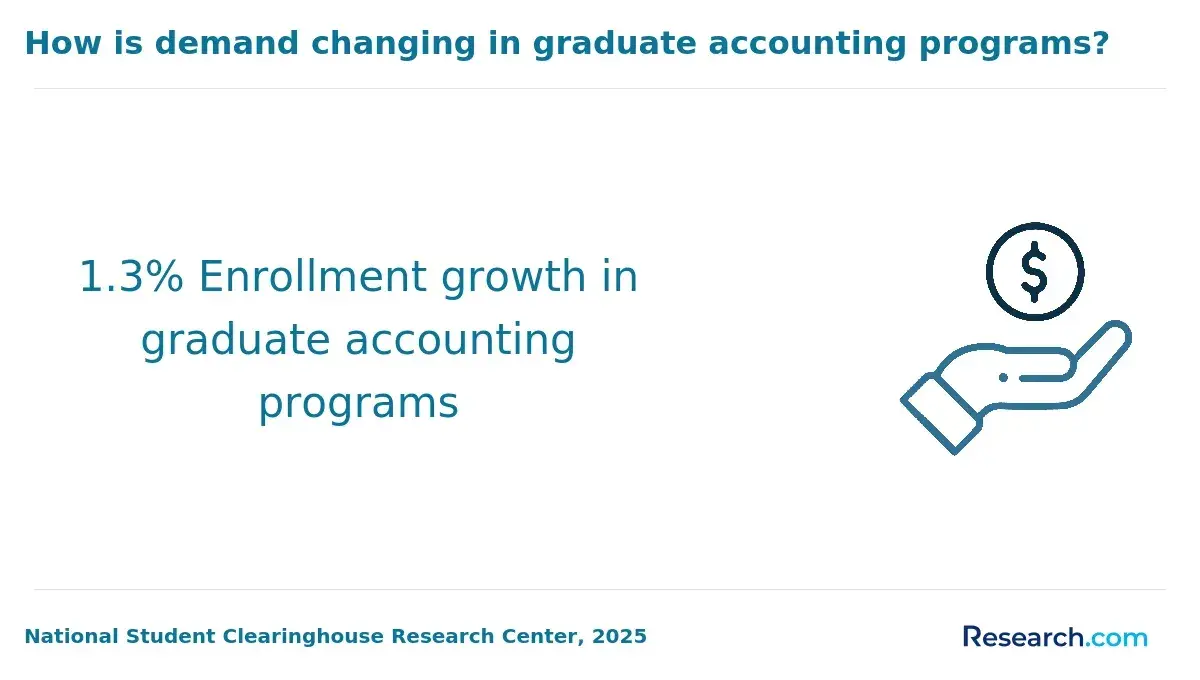
The enrollment calendar for an online accounting program depends on how the school structures its academic year. Some programs still follow the familiar fall, spring, and summer model. Others divide the year into shorter online terms or allow rolling enrollment throughout the year. In Fall 2025, enrollment in graduate accounting programs grew by over 1.3%, which reflects continued demand for scheduling models that work for professionals and career changers.
Most online accounting calendars fall into one of several patterns:
- Traditional semester or quarter starts: These programs typically have fewer entry points and a more predictable academic rhythm. They may be better for students who want a fixed calendar, larger cohorts, and more time in each course.
- Eight- to 16-week term starts: Many online programs use compressed terms that begin several times per year. This model gives students more chances to start while preserving a structured schedule.
- Monthly start options: Monthly starts offer a middle ground. They reduce waiting time without requiring the administrative intensity of weekly enrollment.
- Weekly or rolling starts: These programs allow the most frequent entry points, though students must still complete admissions, advising, registration, and payment or financial aid steps before beginning.
- Modular course design: Courses may be broken into shorter units so students can focus on one or two subjects at a time. This can be useful in accounting, where concepts such as financial statements, taxation, auditing, and managerial accounting often build on one another.
- Year-round access: Continuous enrollment allows students to start and continue with fewer long breaks, which can help working adults maintain momentum.
When comparing calendars, ask whether the start date applies to the program, the first course, or every required course. A school may advertise frequent starts but still offer upper-level accounting classes, tax courses, audit courses, or capstone requirements on a more limited schedule. Students reviewing accounting programs online should compare both tuition and calendar structure because affordability matters most when the schedule also fits your work and completion timeline.
Students interested in other flexible online pathways can also review fields such as CACREP accredited online masters counseling programs, which may use similar enrollment flexibility and student support systems.
Do Admission Requirements Delay Start Dates for Online Accounting Programs?
Yes. Even when an online accounting program advertises weekly or rolling starts, admission requirements can delay your actual first class. A flexible calendar creates more opportunities to begin, but it does not eliminate the time needed to review applications, verify transcripts, evaluate transfer credit, confirm prerequisites, and finalize registration.
Transcript verification alone may take up to four weeks depending on the institution and how quickly the applicant submits complete documents. Students who want to start quickly should treat admission steps as part of the start-date timeline, not as a separate process.
- Transcript verification: Schools must confirm that academic records are official, complete, and received from the correct institutions. Processing times ranging from one to four weeks can push a student into a later start date if documents arrive late.
- Prerequisite review: Accounting programs may require prior coursework in areas such as introductory accounting, business, mathematics, or statistics before students move into advanced courses. If gaps exist, students may need to complete foundation courses first.
- Transfer credit evaluation: Students with prior college credits need those courses reviewed for equivalency. This can be especially important in accounting because course titles may look similar while covering different content.
- Standardized test requirements: Some programs may still request exams such as the SAT or ACT, although many have waived these requirements recently to simplify enrollment, especially following changes induced by the COVID-19 pandemic.
- Program-specific documentation: Some schools may require a resume, personal statement, proof of English proficiency, or additional records for certain student groups.
- Provisional enrollment policies: A few institutions allow students to begin while selected documents or evaluations are pending. This can help, but students should confirm what happens if final records do not meet the program’s requirements.
The practical takeaway is to apply earlier than the advertised start date suggests. If a program offers weekly starts, submit transcripts, financial aid forms, and transfer credit requests as soon as possible. Missing one document can turn an “immediate” start into a delay of several weeks.
Do Online Accounting Programs Offer Immediate Enrollment for Transfer Students?
Some online accounting programs can move transfer students into classes quickly, but immediate enrollment is not guaranteed. Transfer students usually face an added step: the school must determine how prior credits apply to the new accounting curriculum. Until that review is complete, the student may not know which course should come first.
- Transfer credit evaluation: Schools compare previous coursework with their own requirements. This protects students from repeating classes unnecessarily, but it can delay registration while evaluators confirm equivalencies.
- Accounting sequence checks: Many accounting courses build in order. If a student has credit for introductory accounting but not the school’s required prerequisite, the advisor may need to adjust the schedule.
- Application review procedures: Programs may also verify identity, residency, transcripts, and other documents before approving enrollment.
- Prerequisite compliance: If prerequisite gaps exist, a transfer student may be admitted but placed into foundational courses before starting upper-level accounting classes.
- Start-date availability: Rolling or weekly calendars help after credit approval. Instead of waiting months for the next semester, a transfer student may be able to begin with the next available online term.
Transfer students should ask for two timelines: the admission decision timeline and the credit evaluation timeline. These are not always the same. A student may be accepted quickly but still wait for the final transfer report before registering for the right courses.
A graduate of an accounting degree program described the transfer process as thorough but generally smooth. The credit evaluation took a few weeks longer than expected, but the school’s rolling start calendar allowed enrollment soon after the credits were approved rather than forcing a wait of several months. The main lesson from that experience: immediate enrollment depends less on the marketing phrase “rolling admissions” and more on how quickly the school can evaluate prior coursework and communicate the next steps.
Does Financial Aid Processing Affect Start Dates for Online Accounting Programs?
Yes. Financial aid processing can affect when you start an online accounting program, particularly if you need loans, grants, scholarships, employer tuition assistance, or a payment plan before registering. A school may be ready to admit you, but you may not be cleared to begin until funding is confirmed or a payment arrangement is in place.
Data from the National College Attainment Network indicates federal aid verification may take between 4 to 6 weeks, which can affect enrollment timing for many students. This is one reason students should complete financial aid forms early, even when a program offers weekly or rolling start dates.
- Grant and scholarship documentation: Students may need to submit proof of eligibility, financial information, or scholarship forms before awards are finalized.
- Loan processing periods: Federal and private loans require approvals and may involve counseling, promissory notes, school certification, and disbursement timelines.
- Verification delays: Some students are selected for additional verification. If documents are incomplete or inconsistent, the process can add several weeks.
- Employer tuition assistance: Working adults using employer benefits may need approval from a manager or HR department before the school confirms payment status.
- Rolling and weekly start dates: Flexible calendars can reduce the penalty for aid delays. If funding is finalized after one start date passes, the student may be able to enter the next available start instead of waiting for a full semester.
Before choosing a start date, ask the financial aid office whether aid must be fully awarded, merely in progress, or replaced by a temporary payment arrangement before enrollment. Also confirm whether starting late in an aid period changes disbursement timing or enrollment status requirements.
Do International Students Have Different Start Date Options for Online Accounting Programs?
International students may have different start date options than domestic students, especially when visa rules, credential evaluation, language proficiency documentation, payment processing, or time-zone logistics are involved. Even in fully online programs, administrative review can take longer for applicants educated outside the United States.
As enrollment of international students in online business-related fields increase, many schools are adjusting online calendars to serve global learners. However, international applicants should not assume that weekly start dates are available on the same timeline offered to domestic students.
- Visa and regulatory constraints: Some international students face start-date limits because the school must comply with visa, residency, or authorization rules. Institutions may use fixed quarterly or semester starts to align documentation and compliance steps.
- Credential evaluation: Transcripts from non-U.S. institutions may need translation, authentication, or third-party evaluation before admission or transfer credit decisions are finalized.
- Language proficiency checks: Programs may require proof of English proficiency, and missing or delayed test documentation can push enrollment to a later start.
- Time zone challenges: Online accounting programs may include live sessions, proctored exams, group work, or instructor meetings. Schools may cluster start dates so orientation and synchronous requirements are easier to manage.
- Flexible start dates: Some programs are expanding entry points for global learners, but these options may still be less frequent than weekly domestic starts.
An international student enrolled in an online accounting program described having to skip several available start dates while waiting for visa approval and document authentication. He found the delay frustrating because domestic classmates could begin sooner, and he also had to manage occasional late-night live sessions from a different time zone. Still, he appreciated that the university offered specific entry points for international students, which helped him plan around the required documentation and eventually join the program successfully.
International applicants should request a written timeline that includes credential review, English proficiency review, payment requirements, orientation dates, and the earliest realistic course start. The “next available start date” listed on a website may not be the next available start date for every applicant category.
Do Online Accounting Programs Allow Late Registration?
Some online accounting programs allow late registration, but policies vary widely. Late registration is more common in flexible online programs than in traditional semester-based programs, yet students should not rely on it unless the school confirms the policy in writing.
- Institutional policies: Schools with fixed academic calendars often require registration before a specific cutoff, usually within the first week of classes. After that point, students may need to wait for the next term.
- Course workload: Registering late can mean catching up on lectures, readings, quizzes, discussion posts, and accounting practice problems. In a short online term, even a few missed days can create pressure.
- Group assignments and participation: Some courses include team projects, case discussions, or live sessions. Late entry may limit a student’s ability to participate fully from the beginning.
- Flexible scheduling: Programs with rolling admissions or weekly starts may avoid traditional late registration altogether by placing students into the next course section instead of adding them after a course has already begun.
- Support resources: Recorded lectures, tutoring, online forums, academic coaching, and instructor office hours can help late starters catch up, but students still need a realistic plan.
- Financial aid and billing limits: Late registration may affect financial aid eligibility, disbursement timing, refund deadlines, or payment due dates.
If you are considering late registration, ask three questions before committing: How much work has already been assigned? Will late enrollment affect financial aid or refunds? Is it academically better to start in the next available section instead? In accounting courses, starting with a strong foundation is important because later topics often depend on earlier concepts.
Do Weekly Start Dates Shorten the Time to Complete an Online Accounting Degree?
Weekly start dates can help students begin sooner and reduce downtime between courses, but they do not automatically shorten the total time needed to complete an online accounting degree. Completion speed depends on transfer credits, course load, prerequisite sequencing, academic performance, financial aid status, and whether required courses are available when needed.
- Accelerated course sequencing: Shorter terms can reduce the duration of a degree by several months when the program is designed for continuous progress and the student can handle the workload.
- Modular and self-paced formats: Some online accounting programs combine modular coursework with flexible starts, allowing students to move steadily through requirements. However, self-paced does not always mean unlimited speed; schools may still set minimum time, assessment, or course-order rules.
- Continuous enrollment benefits: Weekly start dates for online accounting programs in 2026 help students avoid waiting for standard semester starts. This is especially useful for working adults and career changers who want to begin as soon as they are ready.
- Prerequisite bottlenecks: Accounting curricula are often sequential. Students may need to complete introductory accounting before intermediate accounting, and intermediate accounting before advanced work in auditing, taxation, or financial reporting.
- Course availability limits: Even if entry-level classes start weekly, specialized courses may run less often. This can affect graduation timing.
- Workload reality: Accelerated schedules require consistent study time. Students working full time should compare the advertised completion timeline with the number of hours they can realistically devote each week.
The best way to estimate completion time is to request a degree plan before enrolling. Ask the advisor to show the order of required accounting courses, how often each course is offered, how transfer credits apply, and whether taking breaks will change the projected graduation date.
To compare similar flexible learning options for business professionals, students may also review programs such as the EMBA online, which often use modular course structures and flexible calendars for working learners.
How Do Schools Prepare Students for Their First Week of Online Accounting Classes?
Schools prepare online accounting students for the first week by helping them understand the learning platform, course expectations, technology requirements, advising plan, and academic support options before assignments begin. This preparation matters because accounting courses often require steady practice from the start; falling behind early can make later topics harder to manage.
- Orientation modules: These sessions introduce the course layout, online classroom, academic policies, deadlines, and communication expectations. Some include practice activities so students can test the system before graded work begins.
- Technology setup assistance: Schools may provide help with login access, browsers, file uploads, proctoring tools, spreadsheets, accounting software, and troubleshooting.
- Academic advising: Advisors help students choose the right first courses, understand prerequisites, and build a schedule that matches work and family responsibilities.
- Learning platform navigation: Students learn where to find lectures, readings, discussion boards, quizzes, gradebooks, assignment portals, and instructor feedback.
- Faculty communication: Instructors may post welcome videos, send first-week announcements, host live sessions, or open discussion forums to establish expectations early.
- Early student engagement strategies: Schools may encourage introductions, low-stakes assignments, peer discussion, or early check-ins to reduce isolation in online courses.
- Academic support access: Tutoring, writing help, library databases, math support, and accounting practice resources can be especially useful for students returning to school after time away.
According to the National Center for Education Statistics, approximately 54% of postsecondary institutions with online courses implement such targeted onboarding techniques, reflecting demand from adult learners for flexible programs with stronger support systems. For students using weekly start dates, onboarding needs to be especially clear because new learners may enter at many points throughout the year rather than as one large cohort.
Good first-week preparation should answer practical questions: What is due first? How do I contact the instructor? What accounting tools will I use? How many hours should I study each week? Where do I get help if I do not understand a concept? Students weighing education against career outcomes may also benefit from reviewing what degrees make the most money as part of broader academic and financial planning.
What Are the Pros and Cons of Weekly Start Dates for Online Accounting Programs?
Weekly start dates can be valuable for students who need flexibility, but they are not the best fit for everyone. According to recent data, enrollments in undergraduate accounting-related fields have increased by 7.4%, driven in part by demand for flexible weekly enrollment. The right choice depends on how much structure, advising, peer interaction, and scheduling predictability you need.
Pros
- Faster entry: Students can often begin soon after admission instead of waiting for the next semester.
- Better fit for working adults: Weekly starts can accommodate changing work schedules, caregiving responsibilities, relocation, or career-transition timing.
- Continuous progression: Students may avoid long breaks between courses, which can help them maintain study habits and academic momentum.
- More recovery options: If a student misses one start date because of transcripts, financial aid, or personal obligations, another may be available soon.
- Improved access: Flexible calendars can help students in different time zones or with nontraditional schedules find an entry point that works.
Cons
- Less cohort connection: Students who start at different times may have fewer opportunities to build long-term study groups or professional networks.
- More individualized planning: Advisors must map each student’s sequence carefully, especially when prerequisites and transfer credits are involved.
- Uneven course availability: Not every course may start weekly. Specialized accounting classes may have limited offerings.
- Possible pacing pressure: Shorter terms can move quickly, which may be challenging for students who are new to accounting or returning to school after a long break.
- Administrative complexity: Financial aid, billing, registration, and academic deadlines may be harder to track when starts occur frequently.
Prospective students should match the calendar to their learning style. Weekly starts are useful if you are organized, ready to begin, and comfortable managing deadlines independently. A semester or cohort model may be better if you want a slower pace, a stable peer group, and a more traditional academic rhythm. Students focused on efficient career pathways may also compare flexible accounting options with other online degrees that pay well.
What Graduates Say About Their Online Accounting Program Enrollment Calendar & Start Options
- : "Enrolling in an online accounting degree program with a weekly start date gave me the flexibility to begin my education exactly when I was ready. The cost was reasonable, especially compared to traditional programs, which made it easier to commit without financial stress. Thanks to this degree, I've advanced to a senior analyst role much quicker than I expected, and I feel confident tackling complex financial challenges now. —Raiden"
- : "I chose an online accounting program for its weekly start dates because it allowed me to fit studies around my unpredictable work schedule. While the cost was higher than I initially anticipated, it was an investment that paid off by opening doors to specialized roles in auditing. Reflecting on my journey, this program truly transformed my perspective on professional growth. —Emmaline"
- : "Starting an online accounting degree with weekly enrollments meant I didn't have to wait months to begin-a big plus for my career timeline. The overall cost was competitive, especially considering the quality of education and access to resources. This degree has been instrumental in securing my current position in tax consulting, and I appreciate the professional edge it provided me. —Benzo"
Other Things You Should Know About Accounting Degrees
Prerequisite courses in online accounting programs often have varied start dates depending on the institution. Some schools offer these courses on a quarterly or semester basis, while others provide multiple start options throughout the year to accommodate students' schedules. Flexibility is generally greater for online prerequisites compared to traditional programs, but it's important to check the specific enrollment calendar for each course.
Many online accounting programs allow students to defer their start date if they notify the admissions or registrar's office within a specified timeframe. Policies vary by school, so it is essential to review deferral options and deadlines before enrolling. Deferring typically applies only before classes officially begin and may require reapplying or updating financial aid information.
In 2027, online accounting programs typically offer flexible enrollment options with multiple start dates throughout the year, including weekly or monthly starts. This flexibility helps accommodate diverse student schedules, allowing them to commence studies at a time that best suits their personal and professional commitments.
References
- 4 Things to Expect from Your Online Accounting Degree Program https://www.uagrantham.edu/blog/4-things-expect-online-accounting-degree-program/
- Main navigation https://financialaid.santarosa.edu/faq
- Late Add and Late Registration https://student.worldcampus.psu.edu/enrollment-and-registration/adding-and-dropping-courses/late-add-and-late-registration
- Business - Accounting - Humber College https://business.humber.ca/programs/business-accounting.html
- Accounting | North Seattle College https://northseattle.edu/accounting
- How to Study Accounting Online Successfully https://business.caw.ac.uk/blog/caw-business-news/how-to-study-accounting-online/
- The Most Valuable Skills You'll Develop in an Online Accounting Program https://www.ucumberlands.edu/blog/most-valuable-skills-youll-develop-online-accounting-program
- Online Accounting Degrees: How to Choose a Program That Can Boost Your Career https://money.com/online-accounting-degrees/
- Online Bachelor of Science in Accounting https://www.cedarville.edu/academic-programs/online-accounting
- How Long Does It Take to Complete an Online Accounting Course? - Best Colleges Online https://www.bestcollegesonline.org/faq/how-long-does-it-take-to-complete-an-online-accounting-course/
- National Center for Education Statistics. (2024). Student Enrollment: What is the percent of students enrolled in distance education courses in postsecondary institutions in the fall?. Trend Generator. https://nces.ed.gov/ipeds/trendgenerator/app/answer/2/42
- National Student Clearinghouse Research Center. (2025). Clearinghouse Enrollment Insights Series: Final Fall Enrollment Trends. https://nscresearchcenter.org/final-fall-enrollment-trends/
- Hood, D. (2026. January 2). Accounting in 2026: The year ahead in numbers. Accounting Today. https://www.accountingtoday.com/list/accounting-in-2026-the-year-ahead-in-numbers
- AICPA. (2025). AICPA 2025 Trends Report. https://www.aicpa-cima.com/professional-insights/download/2025-trends-report


