2027 How Long Does It Take to Earn an Online Exercise Science Degree?

Co-Founder and Chief Data Scientist
Before choosing an online exercise science program, the practical question is not only whether the degree fits your career goals, but how long you can realistically commit to school. Program length affects tuition planning, work schedules, internship timing, certification preparation, and how soon you can move into fitness, wellness, coaching, rehabilitation support, or graduate study.
Online programs can make that timeline easier to manage because many offer asynchronous coursework, multiple start dates, transfer credit policies, and part-time pacing. Still, “online” does not automatically mean “faster.” The time it takes depends on the degree level, number of required credits, prior college coursework, clinical or internship requirements, and how many courses you can handle each term.
This guide explains how long it typically takes to earn an online exercise science degree, what can speed up or slow down graduation, which program types are available, and how completion time connects to cost, job readiness, and salary expectations.
Key Benefits of Online Exercise Science Degree
- Online exercise science degrees typically take 2 to 4 years to complete depending on whether students enroll full-time or part-time, allowing flexibility for working professionals.
- The asynchronous schedule of many programs enables students to study at their own pace, often accelerating completion by managing coursework around personal and work commitments.
- Many accredited programs offer accelerated tracks that can shorten the timeline to as little as 18 months, making it possible to enter the workforce faster while still gaining comprehensive knowledge and practical skills.
What is the Average Completion Time for Online Exercise Science Programs?
Most online exercise science programs take two to four years to complete, depending on the degree level and whether the student enrolls full time or part time. Associate programs are usually the shortest route, bachelor’s degrees are the standard option for many exercise science careers, and graduate programs are designed for students seeking advanced clinical, research, coaching, or leadership preparation.
| Degree level | Typical completion time | Best fit |
| Associate degree | About two years | Students seeking a foundation in exercise science or a pathway into a bachelor’s program |
| Bachelor's degree | About four years full time; as little as two to two and a half years with substantial transfer credit or accelerated pacing | Students preparing for fitness, wellness, coaching, strength and conditioning, or graduate school pathways |
| Master's degree | One and a half to two years | Students pursuing advanced study in areas such as exercise physiology, performance, wellness leadership, or sports management |
A full-time online bachelor’s program often follows the same broad timeline as an on-campus degree, but students with prior coursework may shorten the path. Transfer credit is often the biggest time-saver because it can reduce the number of general education or elective courses a student must retake.
Graduate study is usually shorter in total time because master’s programs require fewer credits than bachelor’s programs, but the coursework is more advanced and may require prerequisites. Students comparing fast graduate pathways may also want to review online 1 year masters programs to understand how accelerated formats differ from standard exercise science master’s options.
What Factors Can Affect How Long It Takes to Earn an Online Exercise Science Degree?
The length of an online exercise science degree is shaped by academic requirements and personal pacing. Two students in the same program can graduate at very different times if one studies full time with transfer credits and the other studies part time while working or completing local fieldwork.
Key factors that affect completion time
- Enrollment status: Full-time students often finish a bachelor’s degree in about four years. Part-time students may need five or six years, especially if they take only one or two courses per term while balancing work, caregiving, or military obligations.
- Program structure: Some schools use traditional semesters, while others offer accelerated semesters or 8-week terms. Shorter terms can help students complete credits faster, but they also require stronger weekly time management.
- Transfer credits: Prior college coursework, an associate degree, or approved credits from another institution can shorten the path to graduation. The exact impact depends on how many credits the school accepts and whether those credits match degree requirements.
- Type of degree: The degree level sets the baseline timeline. Associate degrees usually take two years, bachelor's degrees four years, master's degrees two years, and doctoral degrees typically range from three to five years.
- Clinical or internship requirements: Some programs require internships, practicums, or supervised experiences. These can be valuable for employment, but they may take longer to arrange because students often need an approved local site and a schedule that fits both the school and the host organization.
- Prerequisites and course sequencing: Courses such as anatomy, physiology, biomechanics, and exercise physiology may need to be completed in a specific order. Missing a prerequisite can delay progress if the needed course is not offered every term.
- Student workload tolerance: Taking extra courses can shorten a degree, but it is not always the best choice. Exercise science courses can involve labs, projects, research assignments, and applied analysis, so an overloaded schedule can hurt learning and grades.
Students who want the shortest realistic path should ask each school for a degree audit before enrolling. That audit should show accepted transfer credits, remaining requirements, projected graduation date, and whether internships or labs must be completed in person. If speed and ease are major priorities, it can also help to compare program demands with broader guidance on what is the easiest degree to get online?.
What Are the Different Types of Online Exercise Science Programs Available?
Online exercise science programs are offered at several academic levels, and the right choice depends on whether you want a quick entry point, a broad undergraduate credential, advanced professional preparation, or a research-focused academic path. Students should compare not only program length, but also curriculum depth, hands-on requirements, certification alignment, and whether the degree supports their intended career or graduate school plans.
- Associate of Applied Science in Exercise Science: This two-year foundational degree introduces anatomy, physiology, fitness principles, and basic wellness concepts. It can be useful for students exploring the field, preparing for entry-level fitness roles, or planning to transfer into a bachelor’s program.
- Bachelor of Science in Exercise Science: A four-year bachelor’s program combines general education with courses in movement science, nutrition, kinesiology, exercise testing, and program design. This is often the most versatile option for students seeking broader career preparation or future graduate study.
- Master of Science in Exercise Science: A two-year graduate program focuses on advanced physiology, evidence-based exercise prescription, coaching, research, and leadership. It is designed for students who already have a bachelor’s degree and want deeper preparation for specialized or supervisory roles.
- Doctorate in Exercise Science: Doctoral programs are the most advanced option and typically require three to five years of study. They are usually focused on research, teaching, scholarly writing, and high-level leadership rather than entry-level practice.
- Specialized concentrations and certificates: Some bachelor’s and master’s programs offer focused tracks in areas such as Sport and Exercise Psychology, Human Performance, Kinesiology, Wellness Management, or Strength and Conditioning. Certificates may help students build targeted skills without committing to a full degree.
When comparing formats, look closely at whether “online” means fully online or mostly online with local fieldwork. A student researching an exercise science degree online should also check accreditation, transfer policies, internship expectations, and whether coursework aligns with the certifications or graduate programs they may need later.
How Many Credit Hours Are Required for an Online Exercise Science Degree?
Credit requirements determine how many courses you must complete before graduation. They also affect cost because many schools charge by the credit hour. In exercise science, the credit load varies by degree level, with undergraduate programs requiring the most total credits and graduate programs requiring fewer but more specialized courses.
| Degree level | Typical credit requirement | Timeline impact |
| Associate degree | Around 60 credit hours | Often completed in about two years by full-time students; part-time study takes longer |
| Bachelor's degree | 120 to 124 credit hours | Usually four years full time; transfer credits or accelerated study may reduce the timeline to 2-3 years |
| Master's degree | Between 30 and 36 credit hours | Often completed in 1-2 years full time; part-time study may take three years or more |
| Doctoral degree | 60 or more post-master's credit hours | Varies widely because of research, dissertation, and enrollment requirements |
Credit totals alone do not tell the full story. A 120-credit bachelor’s program with generous transfer policies may be faster than a program with fewer accepted credits. Similarly, a master’s program may be delayed if students must complete prerequisites in anatomy or physiology before starting graduate-level courses.
Students should ask admissions or academic advising for a written plan showing how many credits will apply, which courses remain, and how often required courses are offered. This is especially important for working adults because one missed course sequence can push graduation into a later term.
One graduate of an online exercise science degree described the credit load as manageable only after they chose a part-time pace. Balancing work, family, and coursework made full-time study unrealistic, but spreading the credits over a longer period helped them absorb the material more deeply. The flexibility of online learning mattered most during weeks when work schedules or family responsibilities changed unexpectedly.
What Courses Are Included in a Standard Online Exercise Science Curriculum?
A standard online exercise science curriculum teaches how the body moves, responds to physical activity, adapts to training, and supports health across different populations. Programs usually combine science courses, applied fitness coursework, research training, and professional preparation. Some courses may be fully online, while labs, assessments, or internships may require approved local arrangements.
- Anatomy and Physiology: Covers the structure and function of major body systems, including muscular, skeletal, cardiovascular, and respiratory systems. This foundation is essential for understanding exercise response, injury risk, and human performance.
- Kinesiology/Biomechanics: Examines movement, joint mechanics, posture, force, and motion. Students learn how to analyze technique and design safer exercise programs.
- Exercise Physiology: Focuses on acute and chronic responses to exercise, including cardiovascular, metabolic, muscular, and respiratory adaptations. This course is central to careers in fitness programming, performance, health promotion, and clinical exercise settings.
- Nutrition for Exercise Science: Introduces nutrition principles related to metabolism, training, recovery, and wellness. Students learn how nutrition supports performance and general health, while also recognizing the boundaries of their professional scope.
- Research Methods and Statistics: Teaches students how to read studies, evaluate evidence, interpret data, and apply research findings responsibly. This is especially valuable for students considering graduate school or evidence-based practice roles.
- Personal and Community Health: Explores health behaviors, disease prevention, mental health, wellness education, and public health concepts. This coursework supports roles in corporate wellness, community programs, and health education.
- Exercise Program Design and Prescription: Develops skills in fitness assessment, goal setting, training progression, safety, and individualized programming for different populations.
- Stress Management and Wellness: Covers lifestyle strategies, behavior change, relaxation techniques, and the role of physical activity in stress reduction and overall wellness.
- Fitness Management and Leadership: Introduces business and administrative topics such as facility management, budgeting, marketing, staff supervision, and client service.
- Specialized Certifications Preparation: Some programs include coursework aligned with credentials such as Certified Personal Trainer (NASM), Certified Strength and Conditioning Specialist (CSCS), or ACSM-CPT. Students should confirm whether the degree itself includes exam eligibility or simply prepares them academically.
Course names vary by school, so applicants should review the full degree plan rather than relying on program titles. A strong curriculum should connect theory to practice and clearly explain how online students complete labs, assessments, or field experiences.
How Often Do Online Exercise Science Programs Start During the Year?
Online exercise science programs may start once, twice, or several times per year. Start-date flexibility can reduce waiting time, but students should also consider financial aid deadlines, transfer evaluation timelines, and whether required first-term courses are available in the session they want to enter.
- Traditional Academic Calendar: Many programs begin in fall (August/September) and spring (January). This works well for students who prefer a predictable semester structure and a pace similar to campus-based programs.
- Multiple Session Starts (Bi-Monthly or Quarterly): Some online programs open new sessions every eight to twelve weeks. This can help students begin sooner and maintain momentum throughout the year.
- Rolling Admissions: Programs with rolling admissions review applications continuously and admit students at different points during the year. This can be helpful for working adults or transfer students who do not want to wait for a single annual deadline.
- Monthly or Flexible Entry Points: Certain programs offer start dates nearly every month. This gives the most flexibility, but students should verify that course sequencing will still allow steady progress toward graduation.
A faster start date is useful only if the program is academically and financially ready for you. Before committing, confirm when your transfer credits will be evaluated, when financial aid can begin, and whether the first courses in your plan are available in the term you choose.
How Much Faster Can You Complete an Accelerated Online Exercise Science Degree?
An accelerated online exercise science degree can shorten the path to graduation by using compressed terms, year-round scheduling, transfer credits, and heavier course loads. The biggest time savings usually come from combining several strategies rather than relying on one feature alone.
- Shorter Course Terms: Instead of 15-week semesters, accelerated programs may use intensive 5-, 7-, or 8-week sessions. This lets students complete more courses in a year, but the weekly workload can be demanding.
- Year-Round Enrollment: Multiple start dates and limited breaks help students continue earning credits without long gaps between terms.
- Transfer Credits: Credits from prior college work, advanced placement, or associate degrees can reduce the number of remaining courses. In some cases, this can allow degree completion in as little as two years.
- Competency-Based Learning: Some programs let students move faster by demonstrating mastery of material they already know. This format can benefit experienced learners, but it requires strong independence and self-assessment.
- Integrated Bachelor's/Master's Options: Certain pathways allow students to earn graduate credits while completing the bachelor’s degree, reducing the total time needed for both credentials.
- Accelerated Course Loads: Taking more courses per term can shorten the calendar timeline. Students should use advising support to avoid overloading themselves in terms that include anatomy, physiology, biomechanics, labs, or fieldwork.
Accelerated study is best for students who can protect consistent study time each week. It may be less suitable for those with unpredictable work schedules, limited academic support, or little prior exposure to science-heavy coursework.
A graduate of an accelerated online exercise science degree described the format as intense but motivating. Compressed terms required quick mastery of subjects such as biomechanics and physiology, and the student had to use small blocks of time efficiently while continuing full-time work. The faster pace helped them move toward career goals sooner, but it also required strong discipline and careful planning each term.
Does Finishing an Online Exercise Science Degree Faster Save You Money?
Finishing faster can save money, but it depends on how the school charges tuition and fees. If tuition is billed per credit hour, completing the same number of credits faster may not reduce tuition itself, but it can reduce semester-based fees, technology charges, supply costs over time, and the opportunity cost of delaying full-time work. If a program charges flat-rate tuition for a term, taking more credits during that term may create larger savings.
- Lower tuition-related costs: Many programs charge per credit hour, typically around $420 to $429. A student in a 120-credit program may not pay less per credit by finishing faster, but completing the degree in three years instead of four can reduce repeated term-based costs.
- Reduced education-related expenses: Online students avoid some campus costs, but they still pay for books, supplies, technology, and daily living expenses. Books and supplies can average $1,300 annually, so fewer years in school can reduce these recurring costs.
- Earlier entry into the workforce: Graduating sooner may allow students to begin earning earlier. Exercise science careers such as fitness trainers have salaries around $40,880 annually, so entering the job market even a year earlier can improve the overall financial return.
- Less time balancing school and work: Working students may benefit from reducing the number of years spent juggling employment and coursework. However, an overly aggressive course load can also reduce work hours or increase stress, so the financial benefit is not automatic.
The best way to estimate savings is to compare total program cost under different timelines. Ask each school for a cost breakdown that separates tuition, fees, books, supplies, and any internship or lab expenses. Students considering graduate study and affordability may also compare options for a cheap masters degree online before choosing an accelerated path.
How Soon Can Graduates Start Working After Earning Their Online Exercise Science Degree?
Graduates can usually begin applying for jobs as soon as they receive official confirmation that the degree is complete. Depending on the school, this may happen right after the final term or within a few weeks after grades are processed. For many entry-level roles, the job placement timeline for online exercise science degree graduates is commonly three to six months.
How quickly a graduate gets hired depends on the target role, location, experience, certifications, and whether the student completed an internship or relevant work while enrolled. Entry-level roles such as fitness trainer, personal trainer, wellness consultant, or fitness program assistant may be accessible sooner. More specialized roles, including exercise physiologist or health center manager, may require additional credentials, stronger experience, or a longer search.
Demand for exercise science professionals is projected to grow by 4-14% through 2033, which can support job prospects, but graduates should not rely on the degree alone. Employers often look for applied experience, communication skills, client-facing ability, and familiarity with assessment tools or exercise programming.
Students can shorten the transition from school to work by building a resume before graduation. Useful steps include completing internships, volunteering in fitness or wellness settings, earning relevant certifications, networking with faculty and classmates, and asking the program about career services. For students still choosing where to apply, reviewing accredited schools that offer free online applications can make it easier to compare options without adding application costs.
How Much Do Online Exercise Science Graduates Earn on Average?
Online exercise science graduates typically earn between $46,000 and $58,000 annually, but pay varies widely by occupation, employer, location, experience, and credentials. The degree format matters less than the graduate’s skills, accreditation of the institution, hands-on experience, and fit for the role.
- Entry-Level Roles: Fitness trainers and personal trainers often start with salaries between $35,000 and $46,000. Earnings may depend on certification status, client base, employer type, and geographic area.
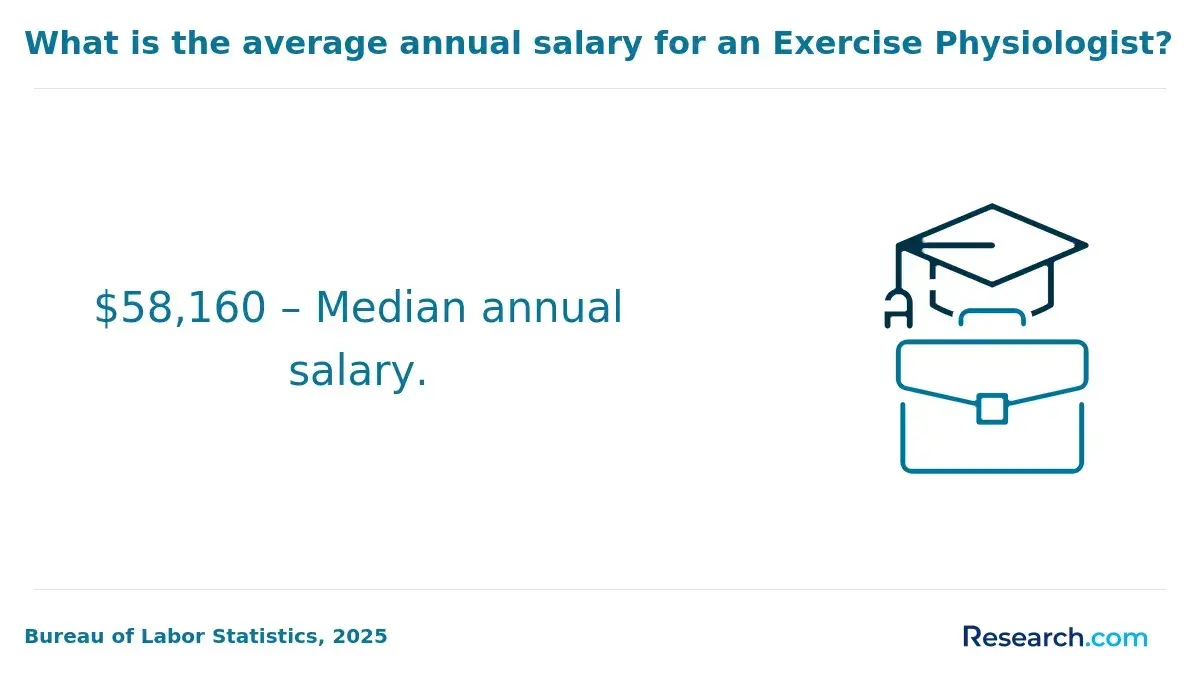
- Exercise Physiologists: Graduates with a bachelor's degree can expect median salaries around $58,160. Hospital or clinical settings may offer different compensation than fitness or wellness employers, and advanced credentials can influence advancement.
- Recreational Therapists: These professionals use activity-based interventions to support rehabilitation and quality of life, earning approximately $65,350 annually. Certification and a bachelor’s degree are commonly important for this path.
- Coaches and Scouts: Median salaries hover near $58,910, but pay varies by sport, competition level, location, and institutional budget. Career growth often depends on reputation, results, and networking.
- Specialized or Leadership Positions: Roles such as physical therapists or program directors can exceed $78,000 per year, but they usually require graduate degrees, advanced education, or significant experience.
Salary expectations should be tied to a specific job target. A student planning to become a personal trainer will evaluate the degree differently from someone preparing for graduate school, clinical exercise physiology, coaching, or wellness management. Comparing related career paths can also help students decide whether exercise science is the right investment; for another perspective, see information on what is the best career in trades.
Here's What Graduates of Online Exercise Science Programs Have to Say About Their Degree
- Jacob: "Completing my online exercise science degree completely changed my career trajectory. The flexibility allowed me to continue working while gaining the latest knowledge in kinesiology and rehabilitation sciences. I'm now employed as a clinical exercise physiologist and feel confident applying evidence-based practices every day. This degree opened doors to a stable job in healthcare, and I've also grown personally by staying committed through online coursework. The experience was challenging but incredibly rewarding."
- Maris: "Studying exercise science online gave me the freedom to balance family life and education without sacrificing quality. The community forums and virtual labs fostered connections that made me feel supported despite the distance. Beyond the science, I discovered my passion for helping youth develop healthy lifestyles, and I now work as a school wellness coordinator. This program empowered me to make a real impact in my community while advancing my career professionally."
- Leon: "The rigorous online curriculum in exercise science refined both my critical thinking and technical skills. Navigating coursework remotely required discipline, but also encouraged self-motivation and time management, qualities vital for my role as a strength and conditioning coach. The professional development modules prepared me well for certifications, and I feel ready to pursue advanced roles in sports performance. Reflecting, the balance of research and practical knowledge was exactly what I needed for my career growth."
Other Things You Should Know About Online Exercise Science Degree Programs
Yes, many online Exercise Science programs accept transfer credits from accredited institutions. This can help reduce the overall time required to complete the degree. However, transfer policies vary by school, and some courses may not be eligible if they do not align with the program's curriculum.
In 2027, online Exercise Science degrees offer flexibility with schedules, allowing students to balance work, study, and personal commitments. They often provide a more cost-effective option and access to diverse programs without geographic limitations, catering to students with different learning needs and preferences.
An online Exercise Science degree in 2027 offers flexibility, allowing students to balance studies with other commitments. It often provides a more diverse selection of courses and the opportunity to study at top institutions without relocating. However, it's crucial to ensure the program includes adequate virtual or local hands-on training components to maintain practical learning experiences.
References
- Exercise Science Jobs | Career Information https://www.nutritioned.org/exercise-science-jobs/
- Online Bachelor's in Exercise Science https://online.maryville.edu/online-bachelors-degrees/exercise-science/
- Curriculum | B.A. in Exercise Science Degree Online | CSP Global https://online.csp.edu/programs/ba-bachelors-exercise-science/courses/
- Top 15 Affordable Exercise Science Degree Online Programs https://www.sports-management-degrees.com/affordable-online-bachelors-sports-science/
- How Fast Do Graduates Find Jobs After an Exercise Physiology Masters? https://exsci.cuchicago.edu/how-fast-do-graduates-find-jobs-after-an-exercise-physiology-masters/
- Exercise Science https://online.pennwest.edu/programs/exercise-science/index.php
- Online Bachelor's in Exercise and Sport Science (BS) – Methodist University https://online.methodist.edu/programs/bs-bachelors-exercise-sport-science/