
2027 Health Care Business Intelligence Careers: Skills, Education, Salary & Job Outlook

Co-Founder and Chief Data Scientist
Choosing a health care business intelligence career means deciding whether you want to work at the intersection of health care operations, data analytics, technology, and strategy. The role is not simply “working with reports.” It involves helping hospitals, clinics, insurers, pharmaceutical firms, and other health organizations turn messy clinical, financial, and operational data into decisions that can improve care, reduce waste, and guide leadership.
This guide is for students, career changers, analysts, health information professionals, and business or technology workers who want a practical view of the field. You will learn what health care business intelligence specialists do, which skills and credentials matter, how salaries and job prospects compare, what the work environment is like, and how to decide whether this career path fits your strengths and goals.
Key Things You Should Know About Health Care Business Intelligence Careers
- Health care business intelligence specialists earn a median annual salary of about $99,864, with most salaries ranging from $76,000 to $116,000 depending on experience and location.
- This field is expanding rapidly, with job growth projected at 23% from 2022 to 2032, reflecting high demand for data-driven decision-making in healthcare.
- A bachelor's degree in health information management, computer science, data analytics, or a related field is typically required to enter this career, with some positions preferring advanced degrees or certifications.
- Critical skills include expertise in data analysis, proficiency with SQL and BI tools like Tableau or Power BI, understanding healthcare data standards, and strong communication to translate complex data effectively.
- Career advancement can lead from entry-level analyst roles to senior analyst, BI developer, and into leadership positions such as BI manager, director of analytics, or chief data officer, especially with advanced education and leadership experience.
What do health care business intelligence specialists do?
Health care business intelligence specialists convert health care data into usable information for decision-makers. They work with data from electronic health records, billing systems, scheduling platforms, claims, quality measures, staffing reports, and operational databases. Their job is to identify patterns, explain what those patterns mean, and present findings in a format that clinicians, administrators, finance teams, and executives can act on.
In practice, this role sits between data teams and health care leaders. A specialist may build a dashboard showing patient wait times, analyze readmission trends, track revenue cycle performance, or compare service-line outcomes across locations. The value of the role comes from translating technical analysis into decisions that affect patient care, staffing, compliance, costs, and long-term strategy.
What the work looks like day to day
A typical day often combines independent analysis with meetings and requests from other departments. Health care business intelligence specialists may write SQL queries, validate data, update dashboards, investigate unusual trends, document reporting logic, and explain findings to nontechnical stakeholders. Some work is routine, such as recurring reports, while other work is urgent, such as responding to a leadership request before a budget, quality, or operations meeting.
The best specialists do more than produce charts. They ask whether the data is reliable, whether the metric is defined correctly, and whether the proposed interpretation matches how care is actually delivered. That judgment is especially important in health care, where incomplete or misunderstood data can lead to poor operational decisions.
What are the key responsibilities of health care business intelligence specialists?
The core responsibility of a health care business intelligence specialist is to make health care data accurate, understandable, and useful. The role usually includes both technical work, such as preparing and modeling data, and business-facing work, such as helping leaders understand what the numbers mean.
- Analyze health care data: Review information from electronic health records, billing systems, claims platforms, operations tools, and other sources to identify trends, risks, inefficiencies, and opportunities for improvement.
- Build dashboards and reports: Create visual reports that track performance indicators for clinical, financial, operational, and executive audiences.
- Clean and integrate data: Combine data from multiple systems, resolve inconsistencies, check definitions, and confirm that reports are based on reliable information.
- Translate business questions into analysis: Work with clinicians, administrators, finance teams, IT teams, and leadership to clarify the problem before building a report or model.
- Monitor key performance indicators: Track metrics tied to patient access, care quality, utilization, revenue cycle performance, staffing, and organizational goals.
- Investigate root causes: Look beyond surface-level trends to explain why a metric changed and what action may be needed.
- Automate reporting processes: Reduce repetitive manual reporting by improving workflows, creating reusable data models, and standardizing dashboards.
Most challenging responsibilities
The hardest part of the job is often data quality. Health care data can be fragmented across departments, entered inconsistently, and shaped by different workflows. A report may look polished but still be misleading if the underlying definitions, filters, or source systems are wrong. Specialists need patience, skepticism, and strong documentation habits.
Most rewarding responsibilities
The most rewarding work happens when analysis leads to visible improvement. A dashboard may help a clinic reduce delays, a utilization report may support better staffing decisions, or a financial analysis may help leaders protect resources for patient care. For readers looking for a shorter educational starting point, the best 6-month certificate programs that pay well online can help build early technical or analytics foundations.
What are the key skills for health care business intelligence specialists?
Health care business intelligence specialists need a combination of analytics, database, visualization, health care, and communication skills. Technical ability gets the data ready; judgment and communication make the analysis useful.
Key hard skills
- Data analysis: Ability to examine clinical, financial, and operational datasets, identify patterns, test assumptions, and explain what the findings mean.
- SQL: Skill in querying relational databases, joining tables, filtering records, and preparing data for reporting and analysis.
- Data visualization: Ability to build dashboards and reports that are clear, accurate, and tailored to the audience using business intelligence tools.
- Statistical and machine learning tools: Familiarity with R or Python can support predictive modeling, patient risk analysis, forecasting, and more advanced analytics work.
- Data quality and validation: Skill in checking source data, reconciling discrepancies, and documenting reporting logic so that users can trust the output.
- Health care systems knowledge: Understanding how clinical workflows, billing processes, quality reporting, and operational metrics affect the data.
Important soft skills
- Critical thinking: Evaluating whether a trend is meaningful, whether a metric is defined correctly, and whether the evidence supports the conclusion.
- Complex problem solving: Breaking broad business questions into specific data tasks and practical recommendations.
- Active listening: Understanding what stakeholders actually need before creating a report or dashboard.
- Written and verbal communication: Explaining findings clearly to technical teams, clinicians, administrators, and executives.
- Stakeholder management: Balancing competing requests and helping users understand what analytics can and cannot answer.
The overlooked skill that separates strong candidates
Business acumen is often the difference between a report builder and a trusted analytics partner. A specialist with business acumen understands how a metric connects to staffing, patient flow, reimbursement, quality performance, compliance, or strategic planning. This prevents the common mistake of delivering accurate numbers without a useful interpretation.
For example, a strong specialist does not simply report that a measure increased or decreased. They clarify the definition, compare it with operational context, explain possible causes, and identify what leaders should examine next. Readers exploring accessible education pathways may also want to compare the easiest associate degrees to get as an early step toward analytics, information systems, or health care data roles.
Health Care Business Intelligence Careers: A Step-by-Step Guide to Getting Started
Breaking into health care business intelligence is easier when you treat it as a staged plan rather than a single leap. Most candidates build a foundation in analytics or health care first, then add technical tools, applied projects, and industry-specific knowledge.
- Build the right educational foundation: Start with coursework or a degree in data analytics, computer science, information systems, business administration, mathematics, statistics, health informatics, or a related field.
- Learn the core tools: Develop practical skill in SQL, spreadsheet analysis, databases, data visualization, and, when relevant, R or Python.
- Understand health care data: Study how electronic health records, claims, billing, scheduling, quality metrics, and operational systems generate data.
- Create a portfolio of applied work: Build sample dashboards, reporting projects, or data analyses that show how you turn raw data into decisions.
- Gain practical experience: Look for internships, analyst roles, health information positions, reporting roles, or operations roles that expose you to health care data.
- Pursue certification when it supports your goal: Use credentials to validate specialized knowledge, especially if you are changing careers or targeting advancement.
- Specialize over time: Move toward clinical analytics, financial intelligence, population health, BI development, quality improvement, or leadership based on your strengths.
The most common mistake is trying to learn every tool before applying for roles. Employers usually value evidence that you can solve real reporting and analysis problems. A focused portfolio, clear understanding of health care workflows, and strong SQL and visualization skills can make a candidate more credible than a long list of loosely learned tools.
What education, training, or certifications are required?
Health care business intelligence roles commonly require formal education in analytics, technology, business, health informatics, or a quantitative field. Relevant degrees include a Bachelor of Science in Computer Science, Data Analytics, Business Administration with a focus on business intelligence, or Mathematics and Statistics. Some candidates choose a specialized Bachelor of Science in Business Intelligence and Analytics Management to build a more targeted analytics background.
Education alone is rarely enough. Employers also look for hands-on ability with databases, reporting tools, data visualization, and health care data sources. Internships, supervised work experience, analyst projects, and applied training can help candidates prove they can work with real-world data rather than only classroom examples.
Certifications that can strengthen your profile
Two credentials often associated with this field are the Certified Specialist Business Intelligence (CSBI) from the Healthcare Financial Management Association and the Certified Health Data Analyst (CHDA) from the American Health Information Management Association. These certifications can be useful for professionals who want to demonstrate health care analytics knowledge, financial intelligence expertise, or health data competency.
Are advanced degrees or niche certifications worth the investment?
Advanced degrees such as a Master of Science in Health Informatics or Business Intelligence & Analytics can support movement into senior analytics, management, data strategy, or specialized health informatics roles. They may also help candidates who want a deeper understanding of health systems, data governance, analytics leadership, or advanced methods. However, they require meaningful time and financial commitment.
Certifications such as CSBI and CHDA can be a more targeted option for validating skills without completing a full master's degree. The better choice depends on your current experience and career goal. A new graduate may benefit most from practical projects and entry-level experience, while a working analyst may use a certification or graduate program to move into a more specialized or senior role.
If your goal is long-term advancement, compare cost, time, employer tuition support, and expected role outcomes before enrolling. You can also review broader graduate options by exploring high earning master's degrees and considering how well they align with health care analytics leadership.
What is the earning potential for health care business intelligence specialists?
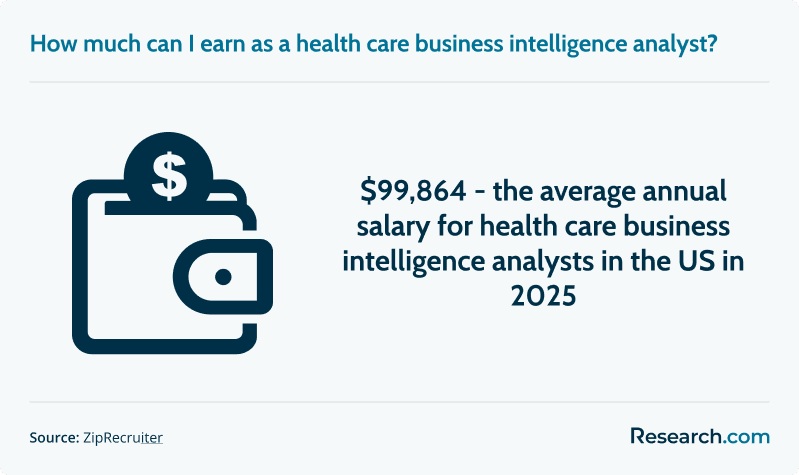
Health care business intelligence can offer strong earning potential for professionals with the right mix of analytics skill, health care knowledge, and business judgment. The median salary for a healthcare business intelligence analyst stands at $99,864 per year. According to recent data, the average health care business intelligence analyst salary in 2025 is $114,229 per year.
Entry-level positions typically start around $76,000 annually, while senior roles can command salaries as high as $148,500. Actual compensation depends on experience, employer type, technical depth, location, scope of responsibility, and whether the role includes leadership, architecture, or advanced analytics duties.
| Career stage or salary measure | Reported pay figure | What it usually reflects |
| Entry-level roles | Around $76,000 annually | Early analyst work, reporting support, dashboard maintenance, and supervised analysis |
| Median salary | $99,864 per year | A common benchmark for established healthcare business intelligence analyst roles |
| Average salary in 2025 | $114,229 per year | Overall average reported for health care business intelligence analysts |
| Senior roles | As high as $148,500 | Advanced analysis, leadership, complex BI systems, stakeholder strategy, or specialized expertise |
To improve earning potential, focus on skills that move you beyond basic reporting. SQL depth, dashboard design, data modeling, health care domain knowledge, automation, stakeholder communication, and the ability to connect analysis to business decisions can all make a candidate more competitive for higher-paying roles.
What is the job outlook for health care business intelligence specialists?
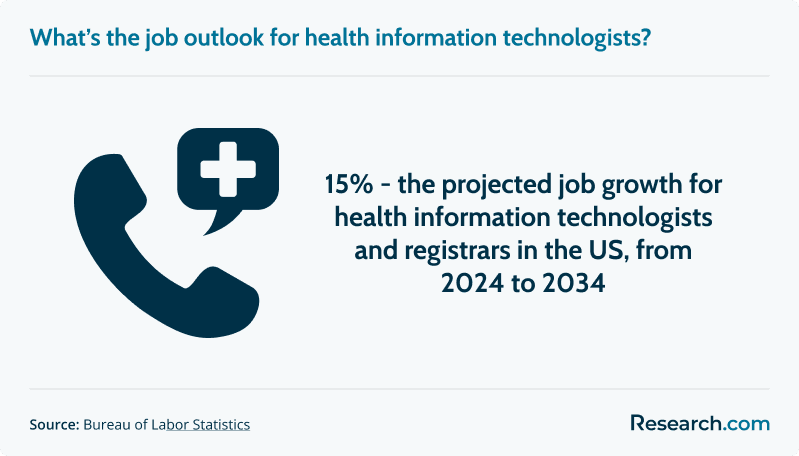
The projected 10-year growth rate for health care business intelligence careers ranges from 8.0% to 13.95%, which is significantly faster than the average growth of 3-5% for all U.S. occupations. That outlook reflects two durable trends: health care organizations are generating more data, and leaders increasingly need analytics to manage quality, cost, access, compliance, and performance.
This career also has a degree of stability because health care remains an essential industry and data-driven decision-making is becoming embedded in daily operations. Even so, job prospects are strongest for candidates who can combine technical skills with health care context. General analytics knowledge helps, but health care employers often prefer professionals who understand clinical operations, reimbursement, privacy expectations, and the consequences of inaccurate reporting.
Factors shaping future demand
- Digital transformation: Electronic health records and connected systems create large volumes of data that need to be analyzed and interpreted.
- Value-based care: Organizations need analytics to monitor outcomes, costs, utilization, and performance against care-quality goals.
- Operational pressure: Health systems use BI to improve scheduling, staffing, patient access, service lines, and resource allocation.
- Artificial intelligence and machine learning: As advanced analytics tools become more common, organizations need specialists who can apply them responsibly and explain results clearly.
- Regulatory and reporting demands: Accurate data is necessary for compliance, quality reporting, reimbursement, and internal governance.
For professionals considering deeper academic specialization, some two year doctoral programs may offer accelerated routes to advanced expertise, although this level of education is not required for most business intelligence roles.
What is the typical work environment for health care business intelligence specialists?
Health care business intelligence specialists usually work in office-based, remote, or hybrid settings. Common employers include hospitals, health systems, clinics, ambulatory care facilities, insurance companies, pharmaceutical firms, and other organizations that rely on health care data for strategic and operational decisions.
The work is computer-intensive and highly collaborative. Specialists spend significant time using databases, business intelligence platforms, spreadsheets, and visualization tools. They also meet with hospital administrators, physicians, finance teams, quality leaders, IT staff, and department managers to define metrics, review findings, and refine reports.
Many roles follow standard Monday-through-Friday business hours, but workloads can become more intense around leadership meetings, audits, reporting deadlines, system changes, or urgent operational issues. Remote and hybrid options are common, though some positions require on-site time for stakeholder meetings, workflow observation, training, or collaboration with clinical and operational teams.
What are the pros and cons of health care business intelligence specialist careers?
Health care business intelligence can be a strong fit for people who enjoy analytical work and want their output to support meaningful decisions. It is also a demanding field because the data is complex, the stakes are high, and stakeholders may need answers quickly.
| Pros | Cons |
| Work can improve patient care, operational efficiency, and organizational decision-making. | Health care data can be messy, fragmented, and difficult to validate. |
| The role combines technical problem solving with real-world business impact. | Specialists must explain complex findings to nontechnical audiences under time pressure. |
| There are opportunities to keep learning across analytics, health care operations, and technology. | Privacy, compliance, and data governance expectations require constant attention. |
| Remote and hybrid work options are common in many organizations. | Competing requests from leadership, clinical teams, finance, and operations can create a heavy workload. |
| The career offers advancement into senior analytics, BI management, consulting, or specialized health care analytics roles. | Errors in definitions, source data, or interpretation can affect important decisions. |
This career may fit you if you like structured problem solving, careful analysis, and behind-the-scenes influence. It may be less appealing if you prefer work with minimal ambiguity, little stakeholder interaction, or simple datasets. For readers comparing personality fit, this field can align with some of the qualities described in the top career path for introverts, especially when the role emphasizes analysis, documentation, and focused technical work.
What are the opportunities for advancement for health care business intelligence specialists?
Advancement in health care business intelligence usually comes from taking on more complex data problems, working more directly with leadership, specializing in a high-value domain, or moving into management. Early roles often focus on reporting and data preparation; senior roles require strategy, governance, communication, and ownership of analytics outcomes.
Common advancement path
- Junior BI Analyst/Clinical Data Analyst: With 0-3 years of experience, professionals usually focus on data cleaning, recurring reports, dashboard updates, and analysis under supervision.
- Health Care Business Intelligence Analyst/BI Analyst II: After 3-5 years, analysts often handle more complex reporting, predictive models, stakeholder meetings, and independent analysis.
- Senior BI Analyst/Lead BI Analyst: With 5-10+ years of experience, professionals may lead projects, mentor analysts, define metrics, and shape BI strategy.
- BI Manager/Director of Business Intelligence: In executive roles with 10+ years, leaders oversee analytics teams, manage BI priorities, and align reporting strategy with organizational goals.
Specialization options
- Clinical Analytics: Focuses on care quality, clinical workflows, patient outcomes, and data integrity.
- Population Health Analytics: Examines trends across patient groups, risk factors, utilization, and disease patterns.
- Healthcare Financial Intelligence: Uses billing, claims, revenue cycle, and cost data to support financial performance.
- Healthcare BI Development/Engineering: Builds, maintains, and improves BI tools, data models, pipelines, and reporting infrastructure.
- Healthcare Consulting/Advisory: Helps organizations implement analytics strategies, improve reporting, and support compliance or operational change.
To advance, document your impact. Track the dashboards you built, the manual processes you automated, the decisions your work supported, and the measurable improvements your analysis helped identify. Promotion decisions often depend not only on technical skill but also on whether leaders trust your judgment.
What other careers should you consider?
If health care business intelligence sounds appealing but not exactly right, several related careers use similar skills. Comparing these options can help you decide whether you prefer data governance, clinical analysis, advanced modeling, general business analytics, or quality improvement.
- Health Information Manager: Focuses on health data governance, data quality, security, records management, and information integrity across health care systems.
- Clinical Data Analyst: Analyzes clinical data to support patient care improvements, workflow changes, quality initiatives, and operational performance.
- Healthcare Data Scientist: Uses advanced analytics, statistics, and machine learning to model health care trends, predict risks, and support strategic decisions.
- Business Intelligence Analyst: Applies reporting, dashboarding, and analytics skills in industries beyond health care, often focusing on sales, operations, finance, marketing, or strategy.
- Healthcare Quality Improvement Analyst: Tracks quality measures, evaluates care processes, and supports data-driven projects to improve patient outcomes and organizational performance.
Choose based on the kind of problem you want to solve. If you enjoy building dashboards and advising leaders, health care BI may fit well. If you prefer data governance, consider health information management. If you want advanced modeling, explore health care data science. If you are motivated by care quality metrics and process improvement, a quality improvement analyst role may be a better match.
Here's What Professionals Say About Their Health Care Business Intelligence Careers
- : "Every day, I can see that the dashboards I build are not just numbers on a screen. They help clinicians and leaders understand where care gaps exist and where processes need attention. Turning complex data into clear trends makes the work feel directly connected to better health care delivery. — Norman"
- : "Early in my career, pulling data from EHR, billing, and scheduling systems felt like trying to combine pieces from different puzzles. The inconsistencies were frustrating, and validation took time. Building routines, documenting definitions, and working closely with IT and end users made the data more reliable for everyone who depended on it. — Lourdes"
- : "One of the most rewarding moments is seeing leadership use a dashboard I spent weeks refining. After all the troubleshooting, automation, and testing, watching that work support better access or cost decisions makes the behind-the-scenes effort worthwhile. — Devin"
Key Findings
- Health care business intelligence specialists turn clinical, financial, and operational data into reports, dashboards, and recommendations that support better decisions.
- The role requires a mix of SQL, data analysis, visualization, data quality, health care systems knowledge, and clear communication.
- Common education paths include computer science, data analytics, business administration with a BI focus, mathematics and statistics, health informatics, and related fields.
- Recognized credentials include the Certified Specialist Business Intelligence (CSBI) from the Healthcare Financial Management Association and the Certified Health Data Analyst (CHDA) from the American Health Information Management Association.
- The median salary for a healthcare business intelligence analyst stands at $99,864 per year, while the average health care business intelligence analyst salary in 2025 is $114,229 per year.
- Entry-level positions typically start around $76,000 annually, and senior roles can command salaries as high as $148,500.
- The projected 10-year growth rate ranges from 8.0% to 13.95%, above the average growth of 3-5% for all U.S. occupations.
- Advancement can lead to senior BI analyst, lead BI analyst, BI manager, director of business intelligence, consulting, or specializations in clinical analytics, population health, financial intelligence, or BI engineering.
Other Things You Should Know About Health Care Business Intelligence Careers
In 2027, generative AI significantly enhances the efficiency and accuracy of health care business intelligence by automating data analysis, enabling predictive insights, and facilitating personalized patient care strategies, thereby allowing specialists to focus more on strategic decision-making and less on routine data processing.
A common misconception is that health care business intelligence specialists only focus on data analysis. In 2027, they are also integral in strategic planning and decision-making processes, ensuring that insights derived from data drive efficiency and innovation in health care organizations.
In 2027, health care business intelligence specialists rely heavily on data integration platforms, predictive analytics, and cloud-based solutions. Mastery of tools like Tableau and Python is critical, along with understanding AI's role in data processing. These skills support effective decision-making and health care optimization.
Many believe this role is purely technical, focused only on data analysis and reporting. In truth, it is highly interdisciplinary, demanding business acumen, knowledge of healthcare regulations, and the ability to communicate complex findings to clinical and executive teams. Specialists serve as strategic partners who bridge IT, clinical, and administrative functions to drive organizational decisions.
References
- What Is Health Care Business Intelligence? https://www.coursera.org/articles/healthcare-business-intelligence
- How to get started in health informatics | Prospects.ac.uk https://www.prospects.ac.uk/jobs-and-work-experience/job-sectors/healthcare/how-to-get-started-in-health-informatics
- Essential Skill and Knowledge Required for Health Data Professionals: A Content Analysis of Job Advertisements https://ahisp.ahima.org/Page/essential-skill-and-knowledge-required-for-health-data-professionals-a-content-analysis-of-job-advertisements
- Healthcare Technology Careers: The Skills You Need and What to Expect https://innovate.kgi.edu/blog/healthcare-technology-careers-the-skills-you-need-and-what-to-expect
- How I Moved From Healthcare to Data Analytics and Why You Should Too https://medium.com/learning-data/how-i-moved-from-healthcare-to-data-analytics-and-why-you-should-too-607503982cc1
- Business Intelligence Lead Analyst Remote @ AdventHealth | Jobright.ai https://jobright.ai/jobs/info/68f665c776a51a4307bd9ef2
- Healthcare Business Intelligence: Benefits and Importance | Langate https://langate.com/news-and-blog/healthcare-business-intelligence-benefits-and-importance/
- What is Healthcare Business Intelligence? Top 8 Use Cases https://kms-healthcare.com/blog/healthcare-business-intelligence/
- Business Intelligence Analyst https://www.jobs.nhs.uk/candidate/jobadvert/B0534-25-1646
- Hard Skills vs. Soft Skills: Why Both Matter in 2025/26 Hiring https://www.assesscandidates.com/hard-skills-vs-soft-skills-in-hiring/


