
2027 Is a Journalism Online Degree Worth It?

Co-Founder and Chief Data Scientist
Online education has surged in popularity, with over 40% of college students now taking at least one course online. For those interested in journalism, this format offers access to programs that might not be available locally, combining flexibility with specialized training. The rise of digital media also fuels demand for adaptable journalism skills suited to virtual learning environments.
This article examines whether an online journalism degree is truly worth pursuing by exploring key factors such as tuition costs, program flexibility, accreditation, job market outlook, and how employers view online credentials in this field. Understanding these aspects can help prospective students make informed decisions about their education and career paths.
Key Benefits of Online Journalism Degree
- Online journalism programs offer flexible schedules and digital tools, enabling students to gain hands-on experience with multimedia reporting and real-time news production.
- The degree aligns with evolving media careers; about 78% of journalism graduates find work in digital media, communications, or related fields within a year.
- Many programs emphasize critical thinking and ethical reporting, equipping students for long-term adaptability in diverse media landscapes and emerging platforms.
Who Should Choose an Online Journalism Degree Program?
Online learning has become an increasingly practical option for students seeking flexibility and convenience, especially as it accommodates varied lifestyles and responsibilities. This adaptability makes online education attractive to individuals balancing multiple commitments. The following groups typically find online journalism degree programs to be an excellent fit for their circumstances and goals.
- Working Professionals: These learners juggle full-time careers and appreciate asynchronous classes that allow studying without interrupting their work schedules. The flexibility helps them advance their education while maintaining job stability.
- Caregivers and Parents: Managing family duties alongside education is challenging, but online programs enable these students to integrate coursework into their daily routines without sacrificing family time.
- Students in Remote or Rural Areas: For those living far from institutions offering journalism degrees, online study removes the need to relocate or commute, providing access to quality education otherwise unavailable in their region.
- Career Changers and Adult Learners: Those aiming to switch professions or enhance skills later in life benefit from the self-paced and inclusive nature of online courses, making learning manageable and relevant.
- Learners with Accessibility Needs: Online programs eliminate many physical barriers, offering opportunities for students with disabilities or health challenges to pursue their academic goals comfortably.
What Are the Pros and Cons of an Online Journalism Degree?
Online journalism programs have grown in popularity as they offer flexibility for students and professionals to balance education with work or family commitments. These programs also provide valuable opportunities to advance careers in a rapidly changing media environment.
Pros of an Online Journalism Degree
- Flexible Scheduling: Online journalism degrees allow students to learn from any location and often follow a self-paced format, making it ideal for those juggling full-time jobs or caregiving duties. This flexibility is a key benefit of earning a journalism degree online, accommodating diverse lifestyles.
- Broader Accessibility: These programs overcome geographical barriers, enabling students in remote or rural areas to earn respected degrees without relocating. This accessibility widens education opportunities for many aspiring journalists.
- Cost Efficiency: Online options often reduce commuting, housing, and campus fees, making them more affordable than traditional degrees. However, prospective students should evaluate tuition plus additional fees before enrolling to understand total costs.
- Career-Relevant Skills: Emphasizing digital storytelling, multimedia production, and data journalism, online programs equip graduates with skills highly sought in today's media job market, boosting their employment prospects.
Cons of an Online Journalism Degree
- Limited Hands-On Experience: Gaining practical skills such as reporting and multimedia production is more challenging remotely. Access to studios, specialized equipment, or in-person internships can be restricted, which is a common challenge of online journalism degree programs.
- Technology Dependence: Success requires reliable internet and current devices. Technical difficulties may disrupt coursework, especially when working with multimedia editing tools essential for journalism studies.
- Reduced Networking Opportunities: Online learners might find fewer chances to build professional relationships with peers, faculty, and industry experts-connections often crucial for job placement in journalism.
- Perception and Employer Bias: Despite 87.4% of employers hiring graduates from online programs, some traditional media companies still prefer candidates with in-person experience, particularly for newsroom collaboration roles.
For those interested in a shorter, high-impact credential, consider exploring a 6 month online course with high salary that complements journalism skills and improves career options.
How Do AI-Enhanced Virtual Classrooms Work in Online Journalism Programs?
AI technologies have become central to modern online education, significantly improving the learning experience for journalism students by making it more interactive and personalized. These innovations support diverse learning styles and help overcome typical online challenges.
Below are key features of AI-enhanced virtual classrooms that demonstrate how these tools transform online journalism programs.
- Adaptive Learning Tools: AI platforms customize course materials based on each student's progress, allowing learners to tackle complex topics at their own pace. This personalized learning in virtual journalism classrooms ensures students stay engaged and receive resources tailored to their needs.
- AI-Powered Real-Time Feedback: Automated systems instantly review writing assignments, offering immediate suggestions on grammar, structure, and clarity. This AI-powered real-time feedback for online journalism students accelerates skill development and enhances writing quality.
- Collaborative Platforms: AI organizes group projects by managing tasks and tracking contributions, enabling seamless cooperation across time zones. This fosters teamwork despite the physical distance often found in online programs.
- 24/7 AI Chatbots: These virtual assistants provide constant support, answering questions about coursework or technical issues so students can learn without delay.
According to a 2025 report by the Knight Center for Journalism in the Americas, online journalism programs using AI tools experienced a 45% increase in student engagement and a 35% improvement in assignment completion rates. Students seeking flexible and effective learning options may want to explore some of the easiest associates degrees to get that incorporate such innovative technologies.
What Technology Do You Need for an Online Journalism Degree?
Success in modern online journalism programs depends critically on having the right technology setup. Without professional-grade equipment and software, students may face challenges fully engaging with multimedia assignments and collaborative projects essential in today's digital newsrooms.
Below is a detailed list of the essential tools, equipment, and software students should prepare before enrolling in an online journalism program.
- Reliable high-speed internet connection: A stable internet connection is foundational for accessing course content, participating in live virtual discussions, submitting assignments, and conducting interviews. A download speed of at least 25 Mbps ensures smooth streaming and file uploads vital for multimedia storytelling.
- Professional-grade camera or smartphone with video capability: Photography and video reporting are core components of online journalism. Modern smartphones with 4K video offer convenience, but dedicated cameras provide enhanced control for producing high-quality visuals used in broadcast and digital media projects.
- Audio recording and editing software: Tools like Audacity and Adobe Audition are essential for podcast creation, narration, and audio journalism assignments. These programs help students develop clear, polished sound packages integral to multimedia coursework.
- Video editing software: Software such as Adobe Premiere Pro and DaVinci Resolve enables students to create professional video reports and documentaries. Mastery of these platforms prepares learners for real-world journalism roles requiring editing and production skills.
- Data visualization tools: Applications like Tableau and Google Data Studio are used to convert raw data into engaging visual stories. These tools are increasingly important for students focusing on data journalism and infographics.
- Collaborative productivity suite: Platforms like Google Workspace and Microsoft 365 facilitate seamless teamwork among students and instructors. These suites support document sharing, real-time editing, and project management critical for editorial assignments.
When considering technology requirements for an online journalism degree, it is vital to understand the best laptops and software for journalism students to ensure compatibility with industry standards. Selecting devices that support multimedia production and data analysis enhances learning efficiency and practical skill development.
For prospective students interested in exploring career value alongside educational technology, reviewing resources about which bachelor's degree pays the most can provide useful insight when planning academic and professional goals.
How Long Does It Take to Finish an Online Journalism in 2027?
Program length is a crucial consideration for students balancing education with work or personal obligations. Online journalism degree timelines vary widely depending on course format, credit requirements, and pacing options. Below is an overview of typical completion times for these programs.
- Bachelor's Degree Programs: Usually designed for completion in three to four years with full-time study, these programs require around 120 credits. Part-time enrollment and flexible scheduling can extend the timeline, accommodating students' individual needs.
- Associate Degree Tracks: Often taking about two years, associate degrees require roughly 60 credits. Full-time students typically finish faster, while part-time options allow for a more gradual approach.
- Master's Level Options: Graduate programs are highly flexible, offering accelerated paths that can be completed in as little as 16 months. Many also provide up to five years to finish, ideal for working professionals managing other commitments.
- Flexible and Self-Paced Formats: Many online journalism courses feature rolling admissions, multiple start dates, and asynchronous classes. Transfer credits and course load adjustments can further shorten or extend completion periods.
Can You Work Full-Time While Completing an Online Journalism Degree?
Balancing full-time employment with pursuing an online journalism degree is a common concern for many considering this path. Juggling these responsibilities can be challenging, and several factors influence whether managing both is realistic. The following points explore the key elements affecting this balance.
- Program Pacing: Choosing part-time enrollment often helps students handle full-time work, allowing them to take fewer courses each term and extend their study period for a manageable workload.
- Course Format: Asynchronous classes offer flexibility, letting students complete assignments on their schedule, while synchronous sessions require fixed attendance, which can clash with work hours.
- Workload Demands: The intensity of coursework varies by program; some might demand extensive reading and projects, requiring effective planning to avoid burnout.
- Employer Support: Flexible work hours or tuition assistance can ease the strain, making it easier to attend classes and meet deadlines.
- Time Management Skills: Prioritizing tasks, scheduling study time, and maintaining open communication with supervisors help sustain health and productivity during the program.
How Do Online Journalism Degree Programs Help with Internships?
Internships play a crucial role in journalism education by offering practical experience and industry connections essential for career development. They allow students to apply classroom knowledge in real-world settings, preparing them for the demands of the profession. Online journalism degree programs recognize this need and deploy various strategies to support students in securing and completing internships effectively.
These programs typically provide:
- Virtual Placement Coordination: Many institutions partner with media outlets and maintain online internship databases or job boards, enabling students to find relevant opportunities locally or remotely with flexibility for personal commitments.
- Mentorship and Guidance: Faculty members and internship advisors offer personalized support, helping students navigate application procedures, prepare professional materials, and align internship goals with career aspirations.
- Digital Portfolio Development: Students receive tools and platforms to build and showcase portfolios, which are critical for demonstrating skills and attracting potential employers.
- Flexible Scheduling: Coursework and internship timelines are integrated to accommodate varying student needs, facilitating a balance between academic responsibilities and practical training.
What Is the Average Tuition Cost of an Online Journalism Program?
Understanding the tuition costs for an online journalism degree is vital for students planning their education budget and avoiding unexpected debt. Knowing how fees vary by school and residency can guide better financial decisions. Below is a breakdown of major tuition-related factors prospective students should consider.
- Average Annual Tuition (Public Institutions): Online journalism programs at public universities typically range between $6,577 and $15,000 per year for in-state students, with a national average around $10,730 annually. These lower rates make public schools a popular choice for budget-conscious learners.
- Average Annual Tuition (Private Institutions): Private colleges generally charge higher tuition, often exceeding $30,000 yearly. For example, Academy of Art University's program costs about $35,112 each year, reflecting the premium associated with private education.
- Average Tuition Per Credit: Public universities charge approximately $337 per credit for in-state students, while private schools average $516 per credit hour, which can impact total costs depending on course load.
- In-State vs. Out-of-State Rates: Many public institutions offer discounted tuition for in-state residents, while out-of-state students may pay nearly triple, significantly affecting affordability.
- Additional Fees: Costs beyond tuition, such as technology and lab fees for digital broadcasting courses, can add several hundred dollars annually, so budgeting for extras is essential.
What Is the Average Salary for Someone with an Online Journalism Degree in 2027?
Understanding the earning potential is essential when evaluating whether an online journalism degree offers real career value. Salary information provides insight into what graduates might expect, factoring in experience, specialization, and geographic location.
Below are key salary insights that highlight the financial prospects for those considering this path.
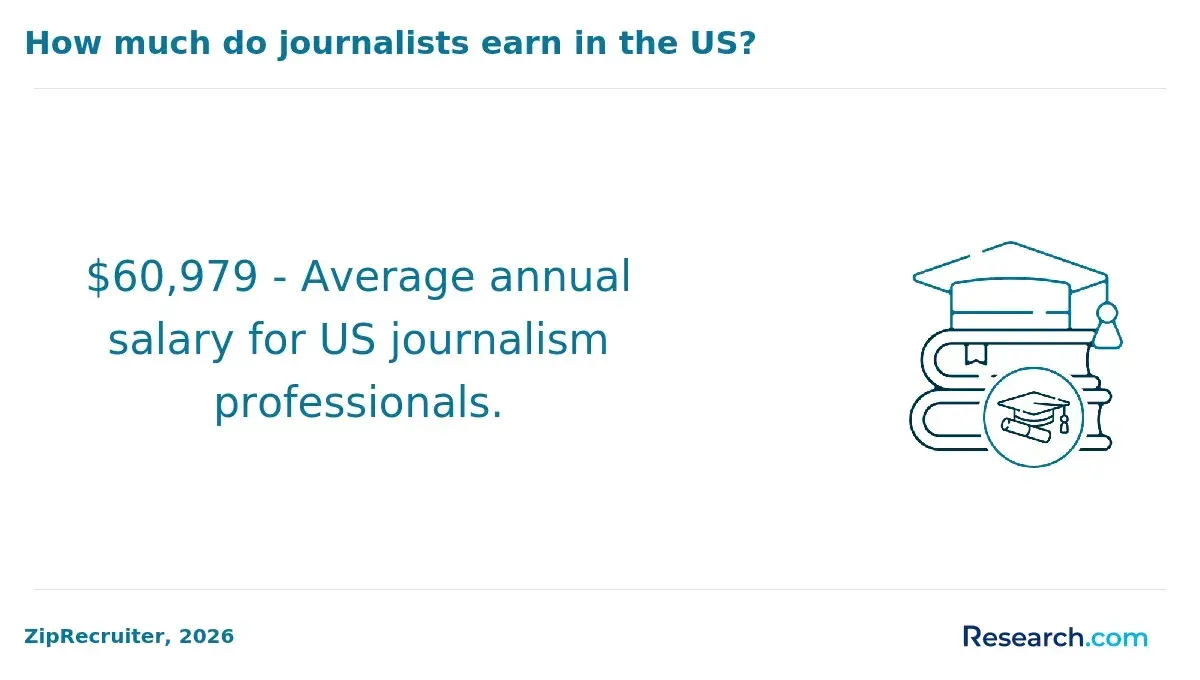
- Average Entry-Level Salary: Graduates face modest starting pay, with median salaries ranging from approximately $15,900 to $30,100 within two years of graduation. This range reflects the competitive and often community-focused nature of entry-level journalism jobs, typically involving roles like staff writers or junior reporters.
- Mid-Career Salary Growth: With experience, earnings improve significantly. The median annual wage for news analysts, reporters, and journalists is $60,280, though the field's median salary sits slightly lower at $57,500 due to wide variations. Graduates with specialized digital media skills report a median salary of $51,112 just four years after completing their program, positioning them in the top 25% of peers.
- Salary by Industry and Region: Location heavily influences pay; for example, Washington state journalists average $69,065 per year, and those in the District of Columbia earn roughly $68,908. Moreover, journalism graduates branching into related sectors such as web design, producing, or public relations can earn salaries exceeding $100,000, highlighting the financial benefits of versatile skills.
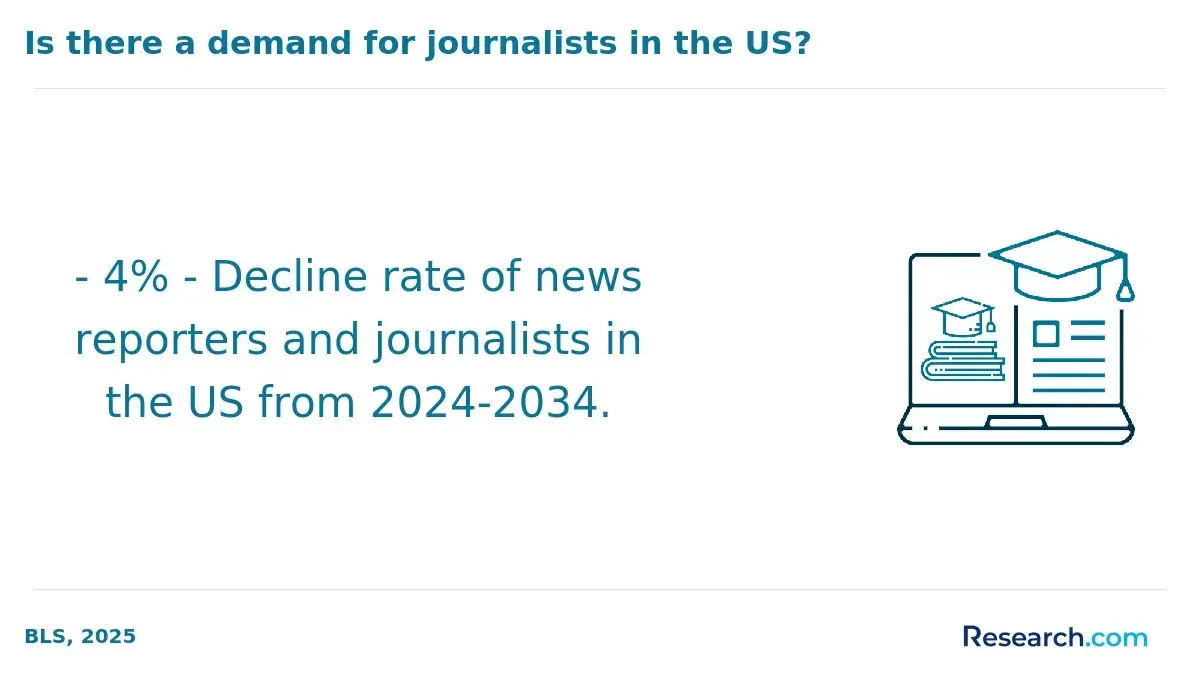
- Labor Market Trends: Employment in traditional journalism roles is projected to decline 4% through 2034, increasing job competition. Consequently, programs emphasizing multimedia and digital proficiency, especially via online study, enhance career viability and earnings potential.
For students seeking reputable programs that balance cost and quality, checking options among accredited non profit online universities is advisable. Being informed about the online journalism degree average salary 2025 and the median salary for online journalism graduates helps prospective students make sound decisions aligned with their career goals.
Which Industries Hire Graduates From Online Journalism Programs?
An online journalism degree offers versatility, equipping graduates with skills applicable to a wide range of industries. This adaptability prepares them for diverse professional fields that require strong research, writing, and multimedia communication abilities. Below are key industries that hire graduates from online journalism programs.
- Traditional Media: Newspapers, magazines, and broadcast television continue to employ journalism graduates as reporters, editors, and producers, valuing their ability to deliver accurate and engaging content.
- Digital Media and Online News Outlets: Many find roles as reporters, editors, video producers, and content strategists for digital-first platforms and news websites. The demand for journalism jobs in digital media companies remains strong due to the surge in online content consumption.
- Public Relations and Strategic Communications: Corporations and nonprofits often hire journalism graduates as communications specialists and PR managers, appreciating their storytelling skills and media expertise.
- Marketing and Content Creation: The growth of branded content and digital marketing fuels roles like content writers, copywriters, and social media strategists, where clear and engaging writing is essential.
- Corporate Communications: Businesses across technology, healthcare, and finance sectors employ graduates to manage internal and external messaging, crisis communication, and public affairs.
- Nonprofit and Advocacy Organizations: Graduates serve as impact storytellers and digital campaigners, supporting social causes through effective communication.
- Academia and Research: Some pursue positions as research communications assistants and writers, particularly in education and policy analysis fields.
Recent job postings show salaries for remote online journalism positions ranging from $36,000 to over $100,000 annually, reflecting the field's broad opportunities. For prospective students interested in expanding their qualifications, exploring options like a dual degree university program can further enhance career prospects in industries that hire online journalism graduates.
What Graduates of Online Journalism Programs Say About Their Degree
- Azaniel: "Pursuing my online journalism degree allowed me to learn at my own pace while juggling work and family commitments. The flexibility made the experience truly rewarding, and the cost was surprisingly reasonable compared to traditional programs. This degree jump-started my career as a digital content creator in ways I never expected. "
- Rhea: "I was initially skeptical about online learning, but the journalism program exceeded my expectations with its in-depth coursework and real-world assignments. Reflecting on the modest investment of time and money, it's clear this degree has given me the critical skills needed to succeed in a competitive media landscape. "
- Christian: "The most valuable part of my online journalism degree was gaining practical skills through interactive modules and peer feedback, all without the hefty price tag of on-campus tuition. Professionally, it has expanded my opportunities and boosted my confidence in storytelling and reporting. I appreciate how streamlined and efficient the entire learning experience was."
Other Things You Should Know About Journalism Degrees
In 2027, online journalism programs often include practical courses in multimedia storytelling, digital design, and data journalism to equip students with industry-relevant skills. Many programs also offer virtual workshops and assignments that mimic real-world journalism practices, ensuring graduates emerge well-prepared for digital media careers.
While online programs may lack traditional in-person networking, many provide virtual opportunities to connect with faculty, industry professionals, and peers. Webinars, online workshops, and virtual career fairs help students build industry contacts. Some programs also facilitate alumni networks and mentor programs designed to support students' career development.
References
- Journalism Education in the Age of AI Curriculum Analysis from Turkey https://www.scirp.org/journal/paperinformation
- Firsthand Advice for Taking Online Classes While Working Full Time https://www.umassglobal.edu/blog-news/advice-for-taking-online-classes-while-working-full-time
- 5 Tips for Studying an Online Degree Whilst Working Full Time- Online https://www.ukstudyonline.com/5-tips-for-studying-an-online-degree-whilst-working-full-time/
- 5 Ways to Successfully Work While Studying Online in 2025 | Distancelearningportal https://www.distancelearningportal.com/articles/249/how-to-work-while-studying-online.html
- Artificial Intelligence in Journalism https://cnti.org/article/ai-in-journalism/
- Journalism Technology Requirements - Grady https://grady.uga.edu/journalism-technology-requirements/
- Online journalism degrees: What you need to know https://journalism.uiowa.edu/explore/online-journalism-degrees
- Is Earning a Journalism Degree Online Worth It? https://www.allartschools.com/5-reasons-journalism-degree-matters/
- Knight Center for Journalism in the Americas. (2025). The impact of generative AI on digital journalism education: Trends and metrics. https://journalismcourses.org/reports/ai-education-impact-2025/
- Top 50 Low-Cost Online Bachelor's in Journalism https://www.greatvaluecolleges.net/rankings/online-journalism-degree/


