
2027 Quality Improvement in Healthcare Careers: Skills, Education, Salary & Job Outlook

Co-Founder and Chief Data Scientist
A career in quality improvement in healthcare is for people who want to improve patient care at the system level, not only one patient encounter at a time. These roles sit at the intersection of healthcare operations, clinical quality, data analysis, compliance, and project leadership. The work can involve reviewing performance metrics, investigating safety events, redesigning workflows, preparing for audits, and helping teams adopt better care processes.
The decision to enter this field deserves careful planning because the role is not purely administrative or purely clinical. Employers often look for a mix of healthcare knowledge, analytical ability, communication skills, and familiarity with improvement methods such as Lean or Six Sigma. The upside is strong: quality improvement roles offer meaningful work, career stability, and salary potential, with a median salary around $78,000 and job growth projected at 28%.
This guide explains what Quality Improvement in Healthcare Specialists do, the skills and credentials that matter, what you can expect to earn, where the jobs are, and how to decide whether this career fits your goals.
Key Things You Should Know About Quality Improvement in Healthcare Career
- The typical earning potential for a healthcare quality improvement specialist ranges from $54,328 to $74,164 annually, with top professionals earning up to $88,500 or more.
- This field offers steady demand with ongoing job opportunities, reflecting stable growth and a strong outlook for advancement based on experience and location.
- A bachelor's degree in healthcare administration, nursing, public health, or a related discipline is usually required, with advanced certifications like Six Sigma or CPHQ enhancing competitiveness.
- Success depends on skills in data analysis, project management, quality improvement methodologies such as Lean or Six Sigma, plus strong communication, teamwork, and problem-solving abilities.
- Career advancement commonly leads to roles such as quality improvement manager or director of quality, and earning advanced degrees or certifications can accelerate progression into leadership positions.
What do Quality Improvement in Healthcare Specialists do?
Quality Improvement in Healthcare Specialists help healthcare organizations deliver safer, more consistent, and more effective care. Instead of treating patients directly, they study how care is delivered, identify gaps, and lead projects that improve outcomes, reduce errors, strengthen compliance, and make clinical workflows more reliable.
The role is highly practical. A specialist may examine infection rates, patient satisfaction scores, readmission trends, medication safety events, appointment delays, or documentation problems. From there, they work with clinicians, administrators, data teams, and department leaders to understand the cause of the problem and implement a measurable solution.
A day in the life of Quality Improvement in Healthcare Specialists
A typical day may include reviewing dashboards, preparing reports, attending committee meetings, interviewing staff about workflow barriers, documenting corrective actions, or coordinating an improvement project. Some days are data-heavy; others require direct communication with nurses, physicians, executives, or regulatory reviewers.
The work environment is usually collaborative and deadline-driven. Routine weeks may follow a standard business schedule, while accreditation visits, audits, safety investigations, or major improvement initiatives can create periods of higher pressure. The most visible outputs of the job are reports, action plans, dashboards, training materials, audit findings, and documented improvements in patient care or operational performance.
What are the key responsibilities of Quality Improvement in Healthcare Specialists?
Quality Improvement Specialists are responsible for turning healthcare performance problems into structured improvement plans. They use data, staff input, regulatory requirements, and improvement frameworks to help organizations make care safer and more efficient.
- Collect, clean, and analyze clinical and operational data to identify performance trends, risks, and improvement priorities.
- Develop quality improvement projects with clear goals, timelines, metrics, and accountability.
- Coordinate with physicians, nurses, administrators, compliance teams, and data analysts to implement process changes.
- Prepare reports, dashboards, meeting summaries, and documentation needed for leadership review and regulatory compliance.
- Conduct audits, chart reviews, root cause analyses, and follow-up reviews after safety events or process failures.
- Train staff on new workflows, quality standards, documentation expectations, and best practices.
- Monitor whether improvement efforts are working and adjust plans when results fall short.
- Support a culture of continuous improvement by helping teams discuss problems openly and act on evidence.
The most challenging vs. the most rewarding tasks
The hardest part of the job is often not the data analysis. It is helping people change established habits in high-pressure clinical settings. A new documentation rule, discharge process, infection-prevention protocol, or safety checklist can affect busy professionals who may already feel stretched. Successful specialists need patience, credibility, and strong communication skills to move teams from resistance to adoption.
The most rewarding part is seeing improvement translate into real outcomes. Lower infection rates, fewer preventable errors, smoother patient follow-up, stronger audit results, or better satisfaction scores can show that the work is making healthcare safer. For students comparing academic paths, reviewing different types of college majors can help clarify which undergraduate foundation best supports this career.
What are the key skills for Quality Improvement in Healthcare Specialists?
Quality improvement work requires both technical skill and people skill. Employers need professionals who can interpret data accurately, understand healthcare operations, and persuade teams to change processes without disrupting patient care.
Hard skills
- Data analysis: Ability to interpret clinical outcomes, operational metrics, survey results, audit findings, and benchmark data.
- Process improvement methodologies: Familiarity with approaches such as Six Sigma and Lean, including how to map workflows, identify waste, and test changes.
- Regulatory compliance: Understanding of healthcare standards, accreditation expectations, documentation requirements, and quality reporting obligations.
- Project management: Ability to define scope, set milestones, coordinate stakeholders, track progress, and close the loop on action items.
- Training and education delivery: Skill in explaining new standards or workflows clearly to clinical and administrative staff.
- Root cause analysis: Ability to investigate problems systematically instead of assuming the first explanation is correct.
Soft skills
- Analytical thinking: Breaking complex care problems into causes, contributing factors, and measurable solutions.
- Communication: Translating data and requirements into language that clinicians, executives, and frontline staff can act on.
- Collaboration: Working across departments where priorities, workflows, and professional cultures may differ.
- Leadership: Guiding teams through improvement efforts even when the specialist does not have direct authority over everyone involved.
- Attention to detail: Maintaining accurate documentation because quality, compliance, and patient safety often depend on precise records.
The overlooked skill that separates strong candidates from average ones
Change management is often the difference between a good improvement idea and a successful improvement project. A specialist may identify the right solution, but if staff do not understand it, trust it, or know how to use it, the project can fail.
For example, introducing a new patient safety protocol may require more than a staff memo. A strong specialist identifies who will be affected, explains why the change matters, listens to objections, adjusts the rollout, trains users, and monitors adoption. This is especially important in high-stakes settings such as General Medical and Surgical Hospitals, where quality problems can affect patient outcomes, reimbursement, compliance, and public trust.
For readers still choosing an entry point into healthcare education, exploring "what is the easiest 2 year degree to get?" can help compare shorter academic options before committing to a longer pathway.
Quality Improvement in Healthcare Careers: A Step-by-Step Guide to Getting Started
A quality improvement healthcare career roadmap is easiest to manage when you build it in stages. Most professionals enter the field by combining relevant education, healthcare experience, project exposure, and credentials that demonstrate quality expertise.
- Build a healthcare-related educational foundation. Start with undergraduate study in a relevant area such as nursing, healthcare administration, public health, social work, or another field connected to patient care or healthcare operations.
- Gain practical healthcare experience. Look for entry-level roles, internships, clinical experience, administrative work, or project assignments that expose you to patient safety, quality reporting, compliance, documentation, or operations.
- Participate in quality projects early. Volunteer for committees, audits, workflow reviews, patient safety initiatives, or data reporting projects. Real examples matter when applying for quality improvement roles.
- Pursue recognized credentials when ready. Certifications can help validate your knowledge and signal commitment to the field, especially once you have enough experience to apply the concepts in practice.
- Strengthen advanced skills. Build competence in data analysis, Lean or Six Sigma concepts, project management, regulatory standards, and change management.
- Move into leadership or specialization. As experience grows, target roles in patient safety, accreditation, risk management, healthcare analytics, utilization management, or quality leadership.
These steps to start a quality improvement career are not always linear. A nurse may enter through clinical safety work, while a healthcare administrator may enter through compliance or operations. The common thread is the ability to use evidence, collaboration, and structured methods to improve how care is delivered.
What education, training, or certifications are required?
The typical entry point for a Quality Improvement in Healthcare Specialist is a bachelor's degree in a relevant field such as nursing (BSN), healthcare administration, public health, or social work. These programs can provide the healthcare context, ethical grounding, communication skills, and systems knowledge needed for entry-level quality roles.
Certification is also important. The Certified Professional in Healthcare Quality (CPHQ), issued by the National Association for Healthcare Quality, is widely recognized as an industry standard credential. It can be especially valuable for professionals who already have healthcare experience and want to demonstrate formal knowledge of quality concepts.
Many employers also expect hands-on experience. Some roles require four to seven years of supervised quality improvement work in healthcare settings. This matters because quality improvement depends on understanding how healthcare organizations actually operate, not only knowing theory. Professionals may also complete a Graduate Certificate in Healthcare Quality Improvement from accredited universities or receive structured mentorship and continuing education on the job.
Are advanced degrees or niche certifications worth the investment?
Advanced degrees can be worth it when they match a clear career goal. A Master of Science in Health Sciences focused on Healthcare Quality, or a related master's program in nursing or public health, may strengthen your candidacy for leadership, consulting, research, or director-level roles. These roles can command higher salaries, often exceeding $100,000.
However, graduate study is not always the first or best move. Advanced degrees require time, money, and sustained commitment, and many senior roles still depend heavily on work experience. For many professionals, the more practical sequence is to gain healthcare quality experience first, pursue the CPHQ or another relevant credential, and then consider graduate education if it supports a specific promotion path.
When comparing degrees, consider cost, accreditation, employer tuition support, schedule flexibility, and whether the curriculum includes quality measurement, healthcare analytics, patient safety, compliance, and implementation work. You can also review profitable majors to understand how education choices may affect long-term return on investment.
What is the earning potential for Quality Improvement in Healthcare Specialists?
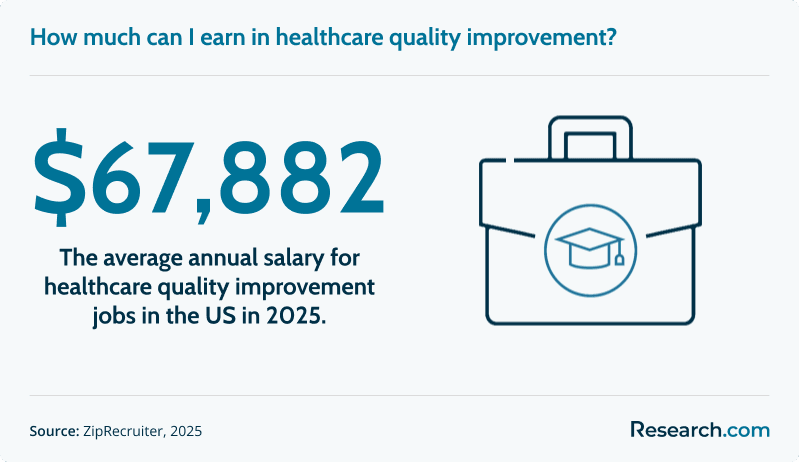
The earning potential quality improvement healthcare professionals can expect depends on experience, credentials, employer type, geography, and whether the role is focused on coordination, analytics, compliance, or leadership. On average, a Healthcare Quality Improvement Specialist earns a median salary of $61,637 per year.
The quality improvement healthcare salary range 2025 shows a clear progression. Entry-level specialists typically start around $48,500 annually. Senior-level salaries can reach approximately $88,500, especially for professionals with stronger project leadership, regulatory knowledge, data skills, and healthcare experience.
Several factors can increase or limit pay:
- Experience level: Professionals who have led measurable improvement projects are often more competitive than candidates with only classroom knowledge.
- Credentials: Certifications such as CPHQ can support advancement, especially when paired with relevant work history.
- Employer type: Hospitals, health systems, ambulatory care organizations, consulting firms, and long-term care facilities may use different pay structures.
- Location: Compensation can vary significantly by state, city, and local demand for quality and compliance talent.
- Specialization: Skills in patient safety, accreditation, healthcare analytics, utilization management, or regulatory compliance can improve mobility into higher-responsibility roles.
Salary should be evaluated alongside job stability, benefits, schedule expectations, advancement opportunities, and the type of healthcare setting where you want to work.
What is the job outlook for Quality Improvement in Healthcare Specialists?
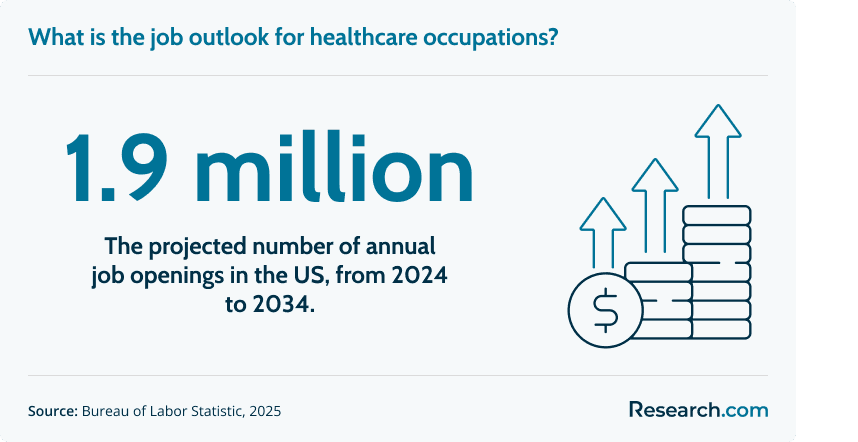
The job outlook for quality improvement specialists in healthcare is strong, with a projected growth rate of approximately 28% from 2018 to 2028. That growth rate is much faster than the average growth expected for all occupations, and the career is supported by the healthcare sector's ongoing need for safer, more efficient, and more accountable care.
The key factors shaping the future outlook
Several forces continue to support demand for quality improvement professionals. An aging population and increasing chronic illnesses raise the need for healthcare services, which in turn increases the importance of monitoring quality, reducing avoidable complications, and improving care coordination.
Regulation and accreditation also play a major role. Healthcare organizations must document performance, respond to safety concerns, meet reporting requirements, and prepare for audits or reviews. Quality specialists help organizations meet those expectations while keeping improvement efforts connected to patient care rather than paperwork alone.
Technology is another driver. Electronic health records, dashboards, analytics platforms, and reporting tools create more data than many organizations can use effectively. Specialists who can interpret that data and turn it into action will be well positioned. If affordability is a concern while preparing for this field, comparing options at the cheapest online school can help reduce education costs while building relevant credentials.
What is the typical work environment for Quality Improvement in Healthcare Specialists?
Quality Improvement in Healthcare Specialists commonly work in hospitals, outpatient clinics, physician offices, ambulatory care organizations, and long-term care settings. The role usually involves close collaboration with doctors, nurses, administrators, compliance teams, data analysts, and department managers.
Employment settings vary. With 35% employed in hospitals, 20% in ambulatory healthcare services, and 10% in nursing and residential care facilities, the quality improvement healthcare work environment can range from large health systems to smaller care facilities. Hospital roles may involve more complex reporting structures and urgent safety concerns, while ambulatory or clinic-based roles may focus more on access, preventive care, documentation, and patient experience.
The quality improvement healthcare typical schedule is usually full time and often follows standard business hours, commonly Monday through Friday from 8:00 AM to 4:00 PM. Overtime or weekend work may occur during major projects, accreditation preparation, audits, or urgent investigations, but many roles offer a more predictable schedule than direct patient care positions.
Hybrid and remote work are becoming more common for data review, reporting, project coordination, and consulting tasks. Still, many positions require some onsite presence because effective improvement work often depends on observing workflows, meeting staff, reviewing records, and understanding how care is delivered in real time.
What are the pros and cons of Quality Improvement in Healthcare Specialist careers?
A Quality Improvement in Healthcare Specialist career can be meaningful and stable, but it is not a low-pressure administrative job. The role requires accountability, diplomacy, comfort with data, and the ability to help teams improve under regulatory, financial, and patient safety pressures.
Pros
- Meaningful impact: Your work can improve patient safety, care quality, access, satisfaction, and clinical outcomes.
- Strong problem-solving focus: The role is well suited to people who enjoy investigating causes, testing solutions, and measuring results.
- Cross-functional collaboration: You work with clinicians, executives, analysts, compliance teams, and frontline staff rather than staying isolated in one function.
- Transferable skills: Data analysis, project management, compliance, training, and process improvement are useful across many healthcare settings.
- Career growth: Experience can lead to management, patient safety, accreditation, analytics, risk management, or consulting roles.
Cons
- Resistance to change: Staff may be skeptical of new workflows, especially if they feel the change adds work without clear value.
- Competing priorities: Specialists often manage several projects, deadlines, audits, and stakeholder expectations at the same time.
- Slow progress: Healthcare systems can be complex, and measurable improvement may take time.
- Regulatory pressure: Frequent policy, documentation, and compliance changes can make the work demanding.
- Indirect patient impact: Professionals who want daily one-on-one patient interaction may find the systems-level focus less satisfying.
This career is a strong fit if you want to improve healthcare through systems, evidence, and collaboration. It may be less ideal if you prefer routine tasks, quick results, or work that does not involve persuading others. If you are comparing shorter career-building options, online certificates that pay well may help you explore related credentials.
What are the opportunities for advancement for Quality Improvement in Healthcare Specialists?
Advancement in healthcare quality improvement usually happens in two ways: moving into leadership or developing specialized expertise. The best path depends on whether you prefer managing people and strategy or becoming a subject-matter expert in a focused area.
Advancing into leadership
Quality improvement leadership roles in healthcare typically require several years of experience, proven project outcomes, strong communication skills, and often certification or graduate-level education. Leadership roles may involve setting quality strategy, managing teams, preparing for accreditation, reporting to executives, and overseeing organization-wide initiatives.
- Quality Improvement Manager: Leads quality initiatives, supervises staff, tracks performance, and coordinates improvement priorities across departments.
- Medical Director for Quality: Oversees clinical quality operations, often connecting physician leadership with organizational quality goals.
- Team Lead: Coordinates project work, supports staff, and bridges clinical practice with administrative strategy.
Specializing to elevate expertise
Specialization can also create career advancement opportunities in healthcare quality improvement. A niche can make you more valuable to employers with specific regulatory, safety, operational, or data challenges.
- Patient Safety & Risk Management: Focuses on reducing adverse events, investigating safety incidents, and strengthening prevention systems.
- Regulatory Compliance & Accreditation: Helps organizations meet standards, prepare for surveys, and maintain accreditation.
- Healthcare Data Analytics & Informatics: Uses data systems, dashboards, and performance metrics to guide improvement decisions.
- Clinical Documentation Improvement: Improves the accuracy and completeness of patient records for compliance, quality reporting, and billing.
- Utilization Management: Supports appropriate resource use while maintaining care quality.
To advance, keep a record of measurable project results. Employers value candidates who can show what changed, how it was measured, who was involved, and what outcome improved.
What other careers should you consider?
If quality improvement interests you but you are not sure it is the exact fit, compare it with adjacent healthcare careers. These roles share some skills but differ in daily focus, level of patient interaction, and emphasis on data, compliance, safety, or project execution.
- Healthcare Data Analyst: Focuses more heavily on data collection, reporting, visualization, and trend analysis to support evidence-based decisions.
- Clinical Compliance Officer: Concentrates on state and federal regulations, internal policies, audits, corrective actions, and organizational compliance risk.
- Patient Safety Officer: Works specifically on reducing errors, infections, adverse events, and preventable harm through risk management and safety programs.
- Healthcare Project Manager: Leads projects across healthcare operations, balancing timelines, budgets, stakeholders, and deliverables.
- Clinical Process Improvement Consultant: Applies continuous improvement methods such as LEAN to redesign workflows and improve operational performance.
Choose quality improvement if you want a balanced role that combines data, systems thinking, staff collaboration, and measurable care improvement. Choose a related path if you want to go deeper into analytics, compliance, safety, or project management.
Here's What Professionals Say About Their Quality Improvement in Healthcare Careers
- Julian: "Every day, I focus on pinpointing inefficiencies in clinical workflows that affect patient outcomes. The work is meaningful because a well-designed change can make care smoother for staff and safer for patients. One project that stands out involved a new outreach system that improved patient follow-up compliance. Seeing that measurable result made the impact of quality improvement feel very real."
- Nia: "The hardest part of my role is staying current with federal and state requirements while helping busy teams understand what needs to change. I rely on policy knowledge, communication, and project management to bring physicians, nurses, and administrative staff into the same conversation. The work can be demanding, but successful alignment across departments is what allows quality initiatives to move forward."
- Aidan: "One of the most rewarding parts of this career is seeing quality programs reduce problems such as hospital readmissions. After leading training on new improvement methods, I saw patient satisfaction scores increase, which reinforced why the effort mattered. Staff resistance can be challenging, but positive patient outcomes make the work worth it."
Key Findings
- Quality Improvement in Healthcare Specialists improve care at the systems level by using data, process improvement, compliance knowledge, and cross-functional collaboration.
- The role is a strong fit for people who like healthcare, problem-solving, measurable outcomes, and teamwork, but it requires patience with change management and regulatory complexity.
- Common educational backgrounds include nursing (BSN), healthcare administration, public health, and social work, while the CPHQ is a widely recognized credential.
- Many employers value practical experience, and some roles require four to seven years of supervised quality improvement work in healthcare settings.
- Salary potential varies by experience, employer, location, and specialization. A Healthcare Quality Improvement Specialist earns a median salary of $61,637 per year, with entry-level salaries around $48,500 and senior-level salaries reaching approximately $88,500.
- The career outlook is strong, with projected growth of approximately 28% from 2018 to 2028.
- Advancement can lead to roles in quality management, patient safety, accreditation, healthcare analytics, risk management, utilization management, or executive-level quality leadership.
Other Things You Should Know About Quality Improvement in Healthcare
Essential skills for a healthcare quality improvement specialist in 2027 include data analysis, effective communication, project management, and problem-solving abilities. Proficiency in health informatics and knowledge of regulatory standards are also crucial for implementing successful quality initiatives in the healthcare setting.
Certifications like the Certified Professional in Healthcare Quality (CPHQ) from the National Association for Healthcare Quality can enhance career prospects in 2027. These certifications validate expertise and may be preferred by employers for specialized roles in quality improvement.
In 2027, healthcare quality improvement specialists can expect a positive job outlook. The increasing focus on patient safety and service efficiency, coupled with advancements in health technologies, drives demand for skilled professionals in quality improvement. Career opportunities in various healthcare settings will likely expand accordingly.
References
- The Importance of Soft Skills in Healthcare https://www.ttmhealthcare.co.uk/blog/2024/08/the-importance-of-soft-skills-in-healthcare
- Beyond clinical engagement: a pragmatic model for quality improvement interventions, aligning clinical and managerial priorities https://qualitysafety.bmj.com/content/25/9/716
- 20 Highest Paid Non-Physician Jobs in Healthcare | Medical Field Jobs https://www.healthcare-management-degree.net/highest-paid-non-physician-jobs-in-healthcare/
- Health Care Job Growth Remains Strong Through 2031 https://www.purdueglobal.edu/blog/health-sciences/growing-health-care-workforce/
- Career in the Quality Department of healthcare https://www.thehindu.com/education/career-in-the-quality-department-of-healthcare/article69042111.ece
- What is Quality Improvement in Healthcare? https://www.snhu.edu/about-us/newsroom/health/what-is-quality-improvement-in-healthcare
- Outside the Fold: Exploring Nonclinical Work Opportunities for Physicians - NEJM CareerCenter Resources https://resources.nejmcareercenter.org/article/outside-the-fold-exploring-nonclinical-work-opportunities-for-physicians/
- Top 12 Hard and Soft Skills Needed in Healthcare https://www.bryantstratton.edu/blog/healthcare-degrees/healthcare-skills-hard-soft/
- The Role of Continuing Professional Training or Development in Maintaining Current Employment: A Systematic Review https://pmc.ncbi.nlm.nih.gov/articles/PMC10647344/
- How to Leverage Your CPHQ Certification for Career Advancement in Healthcare https://anexas.net/how-to-leverage-your-cphq-certification-for-career-advancement-in-healthcare/


