
2027 Questions to Ask About Online Business Law Degree Programs Before You Enroll

Co-Founder and Chief Data Scientist
An online business law degree can be useful if you want to understand contracts, compliance, employment rules, corporate governance, risk management, or legal issues that affect business decisions. It can also be a poor investment if the program is not accredited, does not match your career goal, or gives the impression that it leads to attorney licensure when it does not.
The main decision is not simply whether to study business law online. It is whether a specific program offers the credential, curriculum, flexibility, cost structure, and career support you need. Nearly 40% of business law graduates report dissatisfaction with career preparation or program cost, often because they enrolled without enough information about licensure readiness, faculty expertise, curriculum relevance, or total expenses.
This guide explains how to evaluate online business law degree programs in a practical way. You will learn how accreditation affects credibility, what admissions offices commonly require, what courses to expect, how long programs take, whether internships matter, what licensure limits apply, how much programs cost, what financial aid may be available, and which careers and salary ranges are realistic after graduation.
Key Benefits of Enrolling in Online Business Law Degree Programs
- Online business law programs offer flexible scheduling, allowing students to balance studies with jobs or family commitments, increasing completion rates by up to 25% compared to traditional formats.
- Cost savings are significant, with online degrees often reducing expenses related to commuting, housing, and materials, making legal education more accessible.
- These programs support better work-life balance by enabling students to learn at their own pace, which can reduce stress and improve academic performance.
Is the Online Business Law Degree Program Accredited?
Accreditation should be one of the first things you verify before applying to an online business law program. It signals that an institution or program has been reviewed against recognized academic standards, and it can affect transfer credit, financial aid eligibility, employer recognition, graduate school admission, and some licensing pathways.
For business law students, accreditation matters in two different ways. Institutional accreditation shows that the college or university meets broader quality standards. Programmatic or professional accreditation may matter if the degree is intended to support a specific legal pathway. Key accrediting bodies that may be relevant include the American Bar Association (ABA) and regional organizations such as the Middle States Commission on Higher Education and the Southern Association of Colleges and Schools Commission on Colleges (SACSCOC).
Graduates from accredited online business law programs are more likely to have their credentials recognized by employers and licensing boards. This is especially important for students who may later pursue graduate legal study, professional certification, compliance roles, or other regulated positions. Data from the U.S. Department of Education reveals that fewer than 70% of online degree programs hold regional or national accreditation.
How to verify accreditation before enrolling
- Check the school in the U.S. Department of Education database. Do not rely only on marketing language on the program website.
- Confirm the accrediting agency directly. Accreditation status can change, so use the accreditor’s current listing when possible.
- Separate institutional accreditation from bar eligibility. A university may be accredited while a business law program still does not qualify graduates for attorney licensure.
- Ask about transfer and graduate-school recognition. If you may continue into a JD, MBA, master’s program, or certificate program, confirm whether the credits are likely to be accepted.
- Review public disclosures. Look for program outcomes, licensure statements, tuition details, and complaint or consumer information pages.
Accreditation is also a useful comparison point when reviewing affordability resources in adjacent fields, such as online BCBA program affordability guides, because credible cost comparisons should clearly identify institutional quality and eligibility factors.
What Are the Admission Requirements for Online Business Law Programs?
Admission requirements for online business law programs depend on the degree level, the school’s selectivity, and whether the program is designed for first-time college students, working professionals, or graduate students. Before applying, compare requirements against your academic record, work experience, timeline, and readiness for legal reading and writing.
Most programs ask for some combination of the following:
- Educational background: Undergraduate programs typically require a high school diploma or its equivalent. Graduate programs generally require a bachelor's degree in any discipline, although some may prefer applicants with coursework or experience in business, law, political science, public administration, or a related field.
- Official transcripts: Schools use transcripts to confirm prior coursework, GPA, degree completion, and academic preparation. If you have transfer credits, ask how many may apply toward the business law degree before you enroll.
- Standardized test scores: Some programs may request SAT, ACT, GRE, or LSAT scores, especially for more selective pathways. Many online programs waive tests or make them optional, so applicants should verify the current policy rather than assume scores are required.
- Letters of recommendation: Recommendations from instructors, supervisors, or professional mentors can strengthen an application by showing writing ability, judgment, reliability, and readiness for advanced study.
- Personal statement or essay: A strong essay explains why you want to study business law, how the degree fits your career plan, and what experience has prepared you for online learning.
- Resume or work history: Graduate and professional programs may ask for a resume to evaluate leadership, compliance exposure, contract work, management experience, or other relevant responsibilities.
Application mistakes to avoid
- Applying without checking whether the program is undergraduate, graduate, certificate-based, or pre-law oriented.
- Assuming that a business law degree is the same as a JD or that it automatically leads to bar eligibility.
- Submitting a generic essay that does not connect your goals to the program’s curriculum.
- Ignoring transfer-credit rules, which can affect both time to completion and total cost.
Students exploring interdisciplinary careers may also compare legal-adjacent programs, including a fast track social work degree online, when their goals involve advocacy, policy, compliance, or regulated professional services.

What Classes Do You Take in an Online Business Law Program?
Online business law programs usually combine legal foundations with business-focused applications. The strongest programs do more than introduce legal terminology; they teach students how to read cases, analyze risk, interpret regulations, draft or review documents, and communicate legal issues clearly to business decision-makers.
Recent studies reveal that over 60% of students prioritize courses that develop practical legal skills, which makes curriculum transparency especially important when comparing programs. Review the course catalog before applying, not just the program overview page.
Common course areas
- Contracts: Students learn how agreements are formed, interpreted, breached, enforced, and negotiated. This is one of the most practical areas for business roles.
- Corporate law: Coursework may cover business entities, shareholder rights, fiduciary duties, governance structures, mergers, and corporate decision-making.
- Employment law: These classes examine workplace rules, discrimination, hiring, termination, wage issues, employee rights, and employer obligations.
- Intellectual property: Students study legal protections for trademarks, copyrights, patents, trade secrets, and digital assets.
- Tax law: Electives may introduce taxation issues affecting businesses, transactions, and organizational planning.
- International business law: Students may examine cross-border contracts, trade rules, dispute resolution, and global compliance issues.
- Real estate law: Coursework can address property rights, leases, transactions, land use, and financing structures.
- Legal research and writing: These courses teach students how to find legal authority, evaluate sources, brief cases, and write clear legal or compliance documents.
- Case analysis and problem-solving: Students practice applying rules to business scenarios rather than memorizing definitions alone.
What to look for in the curriculum
- Practical assignments: Strong programs include contract review, memo writing, compliance scenarios, negotiation exercises, or case briefs.
- Current regulatory topics: Business law changes with technology, employment practices, privacy, finance, and global commerce. The curriculum should not feel outdated.
- Faculty with relevant expertise: Look for instructors with legal practice, compliance, corporate, government, or policy experience.
- Clear alignment with career goals: A student interested in compliance should not choose a program with little regulation-focused coursework.
One student currently enrolled in an online business law degree program described the reading load and case briefs as demanding at first. He said, "The volume and complexity of cases pushed me to develop better time management and critical thinking."
He also said the best assignments were the ones that resembled legal work: "helped me connect classroom theory with practical problem-solving." His experience reflects a common pattern: online business law coursework can be rigorous, but it is most valuable when it builds analysis, writing, and judgment rather than only broad legal awareness.
How Long Does It Take to Complete an Online Business Law Degree?
The time required to complete an online business law degree depends on the degree level, enrollment status, transfer credits, course load, and whether the program includes internships or other experiential requirements. Your timeline matters because it affects tuition planning, work-life balance, eligibility for promotion, and when you can start using the credential professionally.
- Full-time programs: These usually take between two and four years depending on whether the credential is an associate, bachelor's, or master's degree. Full-time study can be faster, but it requires a larger weekly time commitment.
- Part-time options: Part-time study may extend from four to six years. This format is often better for working professionals, caregivers, or students who cannot take a heavy course load each term.
- Accelerated tracks: Accelerated programs shorten the timeline by using heavier course loads, shorter terms, or fewer breaks. They can be efficient, but they are not ideal for students who need substantial scheduling flexibility.
- Programs with practical components: Internships, practicums, clinical-style projects, or capstone experiences can add time, but they may improve job readiness and help students build evidence of practical skills.
Questions to ask about program length
- How many credits are required for graduation?
- How many credits can transfer into the program?
- Are courses offered every term, or only once per year?
- Can students pause enrollment without losing progress?
- Are there required synchronous sessions that may affect scheduling?
- Does the program allow year-round enrollment?
A faster program is not automatically better. The right timeline is the one you can sustain while completing legal reading, writing, research, and case analysis at a high level.
Does an Online Business Law Program Require Internships or Practicums?
Some online business law programs require internships or practicums, while many make them optional. Either way, experiential learning can be valuable because business law is applied through documents, negotiations, compliance systems, risk reviews, and professional judgment—not only classroom theory.
When internships or practicums are included, placements may involve law firms, corporate legal departments, compliance offices, government agencies, nonprofit organizations, or regulated businesses. Students may assist with legal research, policy review, contract management, regulatory tracking, document organization, or compliance projects under supervision.
Business law degrees seldom directly qualify graduates for bar admission, but internships can still strengthen employment prospects. They help students show employers that they can apply legal concepts in practical settings. Notably, recent data indicate that over 60% of law-related educational programs now emphasize experiential learning.
How to evaluate an internship requirement
- Placement support: Ask whether the school helps students find placements or expects them to locate opportunities independently.
- Remote options: Online students should confirm whether virtual internships, local placements, or employer-based projects are allowed.
- Credit and cost: Some internships carry tuition charges because they are credit-bearing. Include this in your cost estimate.
- Supervision: Clarify who supervises the work and how performance is evaluated.
- Career relevance: A placement should connect to your goals, such as compliance, contracts, legal operations, risk management, or corporate governance.
A graduate of an online business law degree recalled that the internship process felt challenging but worthwhile. She had to balance coursework with practicum expectations while coordinating remotely with a mentor. The practical exposure, however, gave her a clearer understanding of legal procedures than coursework alone.
She explained, "It wasn't just about completing hours, but truly applying what I learned in class to actual client scenarios, which boosted my confidence." For many students, that bridge between academic concepts and professional settings is the main value of a practicum.
Can You Get Licensed with an Online Business Law Degree?
An online business law degree does not automatically make you eligible to become a licensed attorney. Licensure depends on the state, the type of credential, the school’s accreditation, and the specific licensing or certification you plan to pursue. This is one of the most important distinctions to understand before enrolling.
Becoming a licensed attorney generally requires graduation from an American Bar Association (ABA) accredited program, passing the state bar exam, and satisfying character and fitness criteria. Since few online business law degrees hold full ABA accreditation, they often do not confer bar exam eligibility. Students who want to practice law should verify state bar requirements before choosing any online legal program.
Online business law degrees are more commonly designed for careers where legal knowledge is useful but a law license is not required. These may include corporate compliance, contract administration, legal operations, business management, risk analysis, entrepreneurship, or paralegal-related work. Some graduates may also pursue professional certifications, depending on their field and employer expectations.
Licensure is a crucial consideration because about 60% of law graduates secure employment requiring bar passage within nine months of graduation. That figure applies to law graduates in roles requiring bar passage and should not be read as a guarantee for graduates of every online business law program.
Licensure checklist before you apply
- Identify the exact credential you need. Attorney licensure, paralegal certification, compliance certification, and business credentials have different requirements.
- Check state rules. Legal licensing is often state-specific, and online program acceptance can vary.
- Confirm ABA status if you want to become an attorney. Do this directly through reliable sources, not only through admissions materials.
- Ask the school for licensure disclosures. Programs should be able to state whether they meet educational requirements for specific jurisdictions or professions.
- Review exam support. If your goal involves a certification exam, ask whether the curriculum includes preparation resources.
Students comparing regulated career paths can learn from fields such as online marriage and family therapy programs, where accreditation, supervised experience, and exam preparation also play major roles in licensure planning.
How Much Do Online Business Law Programs Cost?
The cost of an online business law program can vary widely, so students should calculate the full price rather than comparing tuition alone. Recent data shows an average annual tuition increase of about 3% in legal and business-related fields, which makes early cost planning important.
The average cost of online business law degrees depends on degree level, school type, residency policy, credit requirements, and fee structure. Tuition is generally the largest expense, often charged per credit hour. Rates typically range from $300 to over $1,000 per credit, influenced by the institution's prestige and the program format.
Costs to include in your budget
- Tuition fees: Confirm the per-credit cost and multiply it by the total number of required credits. If you are transferring credits, ask for an official evaluation before estimating your final cost.
- Application and enrollment fees: These one-time charges can add several hundred dollars before classes begin.
- Technology fees: Online programs may charge per course or per term for learning platforms, online services, and technical infrastructure.
- Course materials fees: Legal textbooks, casebooks, databases, software, and digital materials can add to the total price.
- Flat-rate tuition options: Some schools offer flat-rate tuition per term instead of per credit. This can lower the per-credit cost for students who can handle a heavier course load.
- Internship or practicum costs: If the program includes fieldwork, consider transportation, scheduling, background checks, or tuition for internship credits.
- Lost income or reduced work hours: Even online students may need to adjust work schedules during demanding terms.
Students comparing business-related programs by price may also want to review the cheapest online business management degree options to understand how tuition structures differ across related online business programs.
For broader perspective on cost control in advanced online degrees, resources such as affordable EdD program comparisons can help students think through tuition, fees, and total program value across disciplines.
What Financial Aid Is Available for Online Business Law Students?
Financial aid can make an online business law degree more affordable, but eligibility depends on the school, accreditation status, enrollment level, degree type, and student circumstances. With nearly 85% of undergraduates receiving some form of financial support nationally, applicants should review aid options before deciding that a program is too expensive.
The first step is usually completing the FAFSA, or Free Application for Federal Student Aid, if the school participates in federal aid programs. Students should also ask the financial aid office whether online learners receive the same aid consideration as campus-based students.
Common financial aid options
- Federal grants and loans: Grants do not need to be repaid, while loans must be repaid with interest. Borrow only what you need and compare projected debt against realistic career outcomes.
- Scholarships: Scholarships may be offered by colleges, professional associations, private foundations, employers, or community organizations. Some awards consider academic achievement, professional goals, financial need, or demographic criteria.
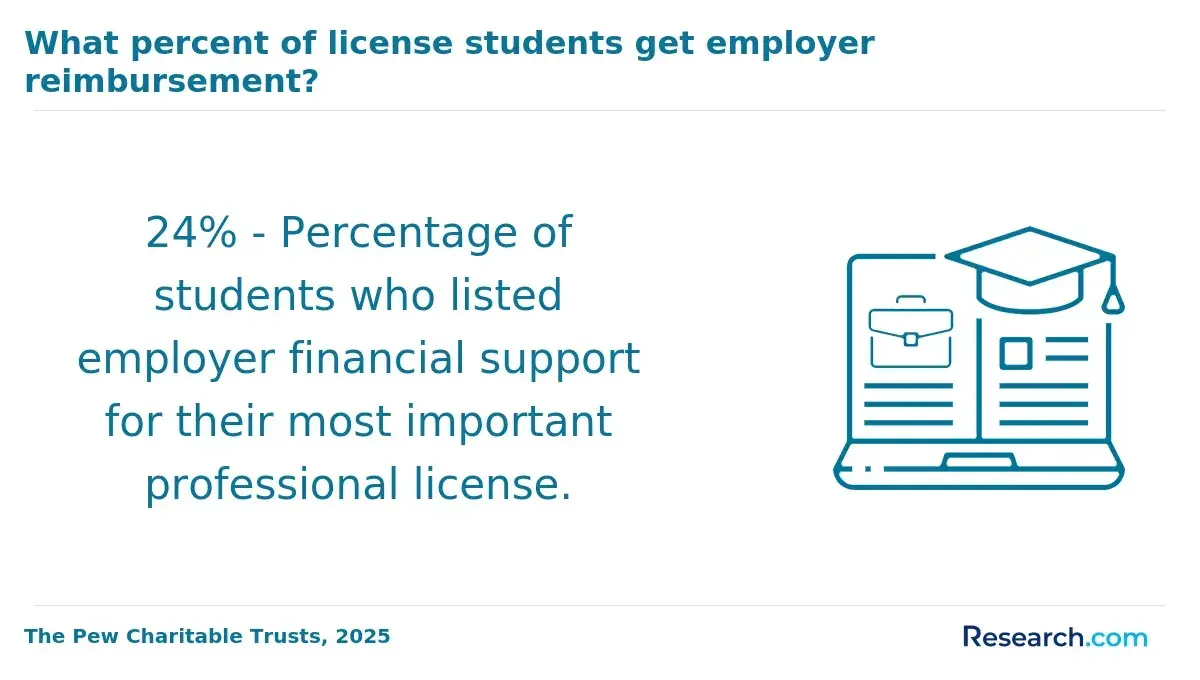
- Employer tuition assistance: Many employers support education connected to compliance, contracts, management, human resources, risk, or legal operations. Read the rules carefully because reimbursement may require minimum grades or continued employment.
- State aid programs: State grants and scholarships may be available to residents enrolled in eligible accredited online programs. Criteria and award amounts differ by state.
- Payment plans: Some schools allow students to divide tuition into installments, which can reduce the need for short-term borrowing.
- Military and veteran benefits: Eligible students should ask whether the institution accepts applicable education benefits and whether the online program qualifies.
Questions to ask the financial aid office
- Is the program eligible for federal financial aid?
- Do online students qualify for institutional scholarships?
- Are there separate fees that aid may not fully cover?
- What is the school’s satisfactory academic progress policy?
- Will changing from full-time to part-time status affect aid eligibility?
Prospective students comparing schools by aid access can consult lists of online colleges that accept FAFSA to better understand how accreditation and federal aid participation affect affordability.
What Jobs Can You Get With an Online Business Law Degree?
An online business law degree can support careers that require legal awareness in business settings, but it usually does not qualify graduates to practice law unless they separately meet attorney licensure requirements. The best-fit roles are often in compliance, contracts, legal support, business operations, risk management, and corporate administration. Job growth in the legal and compliance sectors is projected to increase by 8% over the next decade.
Common career paths include:
- Corporate compliance officer: Compliance officers help organizations follow laws, regulations, internal policies, and ethical standards. A business law background is useful for interpreting rules, managing risk, training employees, and documenting compliance efforts.
- Legal analyst: Legal analysts research laws, summarize legal developments, review business risks, and support attorneys or corporate legal teams. This role rewards strong reading, writing, research, and analytical skills.
- Contract manager: Contract managers help draft, review, organize, negotiate, and monitor business agreements. Knowledge of contract law, negotiation, obligations, remedies, and risk allocation is especially relevant.
- Paralegal or legal assistant: Paralegals and legal assistants support attorneys through research, document preparation, case organization, and administrative legal work. Requirements vary by employer and jurisdiction.
- Risk management specialist: These professionals identify legal and operational risks, recommend controls, and help businesses reduce exposure to disputes or regulatory problems.
- Human resources or employee relations specialist: Business law coursework in employment law can help professionals handle workplace policies, investigations, hiring practices, and compliance issues.
- Entrepreneur or small business manager: Legal knowledge can help business owners understand contracts, entity formation, employment rules, intellectual property, and regulatory obligations.
How to choose a program based on career goals
- If you want compliance roles, prioritize courses in regulation, governance, ethics, and risk.
- If you want contract roles, look for contract drafting, negotiation, procurement, and commercial law coverage.
- If you want legal support roles, make sure the curriculum includes legal research, writing, procedure, and document management.
- If you want management roles, choose a program that connects law to finance, operations, human resources, and strategy.
What Is the Average Salary for Online Business Law Graduates?
Salary outcomes for online business law graduates vary by role, credential level, industry, location, experience, and whether the job requires attorney licensure. Recent figures show that business law professionals see an average annual salary between $60,000 and $85,000, with some sectors experiencing wage growth exceeding 3% yearly.
Students should treat salary ranges as planning tools, not guarantees. A graduate working in corporate compliance at a large employer may have a different earning path than someone working as a legal assistant, contract coordinator, nonprofit administrator, or small business manager.
Factors that influence earnings
- Level of education: Higher degrees such as a master's or juris doctor can improve earning possibilities by providing advanced expertise and, in the case of qualifying legal education, access to some licensed roles.
- Specialization: Focused knowledge in intellectual property, mergers and acquisitions, tax law, employment law, privacy, or regulatory compliance can be more valuable than a broad business law background alone.
- Experience: Internships, clerkships, prior business roles, compliance work, contract management, or legal office experience can improve employability and compensation.
- Geographic location: Salaries differ by region. Urban areas with higher living costs and larger corporate markets may offer higher pay than rural or less economically active regions.
- Work setting: Large law firms, corporations, financial institutions, healthcare organizations, government agencies, and regulated industries may offer different compensation structures than small firms or nonprofits.
- Licensure and certification: A licensed attorney role, a paralegal credential, or a compliance certification may affect job eligibility and pay depending on the employer.
How to assess return on investment
- Compare total program cost with realistic salaries for your target role, not only the highest possible salary.
- Ask programs for career outcome data related to business law graduates specifically.
- Look at job postings in your region to see required credentials and preferred experience.
- Consider whether the degree can help you advance with your current employer, which may improve the payoff.
What Graduates Say About Enrolling in an Online Business Law Degree
- Joseph: "Initially, I was hesitant because I thought the cost of an online business law degree would be prohibitive, but the program was surprisingly affordable compared to on-campus options. The flexible online format allowed me to balance work and study, and the instructors were incredibly supportive. Earning this degree has opened doors to new roles in corporate compliance and has significantly boosted my confidence in legal matters."
- Wesley: "After researching various options, I realized the average cost of the online business law program was a worthwhile investment for my future. The coursework was rigorous but accessible, blending theoretical knowledge with practical applications. Since graduating, I've noticed a marked improvement in my negotiation skills and professional credibility. This degree truly enhanced my career trajectory."
- Bryan: "What motivated me to enroll was the combination of cost-effectiveness and the career advancement opportunities the online business law degree promised. The program's structure suited my busy schedule, offering comprehensive lessons that I could revisit at my own pace. Professionally, this education has been invaluable, helping me secure a management position that requires vast knowledge of business regulations."
Other Things You Should Know About Business Law Degrees
Before enrolling, check if the online program accepts transfer credits from accredited institutions and how credits align with their course requirements. This can impact how long it takes to complete your degree and any additional coursework you may need.
Online business law degrees from accredited institutions are generally recognized by employers, especially when the program is well-established and affiliated with reputable universities. Employers often focus on accreditation, faculty expertise, and the rigor of the curriculum rather than the mode of delivery. Prospective students should seek programs that have strong reputations and provide opportunities for networking or internships to enhance employability.
Most reputable online business law programs provide support services such as academic advising, career counseling, library access, and technical support comparable to on-campus offerings. These services are designed to assist students with academic planning, job placement, and research needs remotely. It is advisable to check in advance what specific support options are available to online students to ensure a smooth learning experience.
Accreditation ensures that an online business law degree meets specific quality standards, making it credible to employers and ensuring eligibility for federal financial aid. In 2027, confirm that the program is accredited by a recognized agency to maintain the value and recognition of your qualifications.
References
- Online Business Law Degree Programs | Colleges of Law https://www.collegesoflaw.edu/business-law-technology-programs/
- Which WIL program is right for me? https://www.ecu.edu.au/schools/business-and-law/industry-community-and-alliances/work-integrated-learning/which-wil-program-is-right-for-me
- Business Law Major Salary and Career Opportunities https://www.lebow.drexel.edu/academics/undergraduate/degrees-and-programs/business-administration/business-law/business-law
- LLM International Business Law https://online.essex.ac.uk/courses/llm-international-business-law/
- Virtual Attorney Jobs - Full-time and Part-time Remote Legal Careers https://www.axiomlaw.com/virtual-attorney-jobs
- International Business Law LLM | PGDip | PGCert | PGAward – Online Course https://online.liverpool.ac.uk/programmes/llm-international-business-law/
- Best Business Law Courses & Certificates [2025] | Coursera Learn Online https://www.coursera.org/courses
- 11 Benefits of Earning an Online Law Degree Today - Leaders in Law https://www.leaders-in-law.com/11-benefits-of-earning-an-online-law-degree-today/
- Business Professional Practicum (BPP) | Study Programs https://www.acicis.edu.au/our-programs/business-law/business-professional-practicum-bpp/
- Pros and Cons of Getting a Legal Degree Online https://onlinemasteroflegalstudies.com/mls-degrees/pros-and-cons-of-online-legal-degrees/


