
2027 What Does an Investment Accountant Do: Responsibilities, Requirements, and Salary

Co-Founder and Chief Data Scientist
Choosing an investment accounting career means choosing the control room behind investment reporting. Instead of pitching products or advising clients, investment accountants verify that trades, income, valuations, fees, cash movements, and portfolio records are captured correctly. Their work supports fund reports, financial statements, audits, regulatory filings, and management decisions.
This guide is written for students, early-career accountants, finance professionals, and career changers evaluating whether investment accounting is the right path in 2026. It explains the daily work, education requirements, technical skills, specializations, career progression, salary signals, certifications, job outlook, and common challenges so you can compare this role with nearby finance and accounting careers more confidently.
What are the benefits of becoming an Investment Accountant?
- Investment accountants earn a median salary of $81,680 per year, or approximately $39.27 per hour, reflecting the high value placed on their financial expertise and analytical skills (Bureau of Labor Statistics [BLS], 2025).
- Employment for accountants and auditors is projected to grow by 5% from 2024 to 2034, which is faster than the average for all occupations (BLS, 2025).
- Investment accountants can work across various sectors, such as finance, investment management, government, and corporate accounting, offering flexibility and multiple paths for advancement.
What does an Investment Accountant do on a daily basis?
An investment accountant is responsible for the accounting accuracy of investment portfolios. In practical terms, that means verifying that every trade, cash movement, income item, fee, and valuation is recorded correctly and reconciled across internal systems, brokers, custodians, administrators, and portfolio records.
The daily workload depends on the employer and investment structure. A fund accountant may spend much of the day supporting net asset value calculations and investor reporting. An investment accountant at an insurance company, pension fund, asset manager, government investment office, or corporate treasury team may focus more on portfolio reporting, audit schedules, statutory reporting, compliance, and controls.
- Record and reconcile investment transactions. Investment accountants document purchases, sales, transfers, realized gains and losses, interest, dividends, corporate actions, and other portfolio activity. Reconciliation is central because small breaks in quantity, price, settlement date, or cash can affect downstream reporting.
- Prepare investment reports and financial statements. They compile recurring schedules showing holdings, market values, income, cash activity, realized and unrealized gains or losses, and portfolio results for management, investors, auditors, regulators, or internal finance teams.
- Review portfolio activity and performance-related data. They check returns, asset values, cash flows, accruals, and variances to identify unusual movements, missing transactions, pricing issues, or data quality problems before reports are finalized.
- Support accounting and regulatory compliance. Investment accountants help ensure investment activity is treated consistently under applicable standards such as GAAP or IFRS, along with internal policies, control requirements, and industry rules.
- Coordinate with auditors, custodians, brokers, and investment teams. They provide schedules, explanations, source documents, reconciliations, and support for audit questions. They also work with portfolio managers or operations teams to resolve position, pricing, income, or classification issues.
- Track income, expenses, and fees. They account for interest income, dividend income, management fees, advisory fees, transaction costs, and other items that affect portfolio reporting and investment results.
- Improve processes and controls. More experienced investment accountants help reduce recurring breaks, automate routine checks, improve review procedures, and strengthen documentation.
The role is detail-heavy, deadline-driven, and control-focused. It is usually a better fit for someone who enjoys precise financial work and problem solving than for someone seeking a primarily sales-oriented or client-advisory investment role.
What qualifications do you need to become an Investment Accountant?
Most investment accountant jobs require a bachelor’s degree, solid accounting fundamentals, and the ability to work with financial systems and investment data. Employers typically want candidates who understand both financial reporting and the practical mechanics of securities, funds, cash activity, and portfolio records.
- Bachelor’s degree in accounting, finance, or a related field. Accounting and finance are the most direct majors because they cover financial reporting, auditing, taxation, corporate finance, investments, and business analysis. Students comparing affordable routes into the field may also consider an online accountant degree if the program offers strong accounting coursework, accreditation, and career support. A quantitative background can also be useful; for example, an online bachelor's mathematics degree may be relevant when paired with accounting coursework, finance electives, internships, or hands-on financial reporting experience.
- Coursework in accounting and investments. Helpful subjects include intermediate accounting, financial statement analysis, investments, auditing, cost accounting, business law, statistics, information systems, and corporate finance. Students aiming for fund accounting should also learn how mutual funds, hedge funds, fixed income securities, derivatives, and alternative investments are recorded, valued, and reported.
- Experience in accounting, finance operations, or investment reporting. Entry-level candidates often begin in staff accounting, audit, fund administration, investment operations, or financial reporting. Experience with Systems, Applications, and Products in Data Processing (SAP), Oracle Financials, Bloomberg Terminal, portfolio accounting platforms, reconciliation tools, or spreadsheet-based reporting can make a résumé stronger.
- Knowledge of GAAP, IFRS, and internal controls. Investment accounting depends on consistent treatment of transactions, valuations, classifications, income recognition, disclosures, and review procedures. A working understanding of Generally Accepted Accounting Principles (GAAP) and International Financial Reporting Standards (IFRS) is often expected.
- Professional certification, when it fits the career goal. Credentials such as Certified Public Accountant (CPA), Chartered Financial Analyst (CFA), or Certified Management Accountant (CMA) are not always required for entry-level roles, but they can strengthen advancement prospects in senior accounting, investment reporting, compliance, analytics, or leadership positions.
Investment accountant qualifications differ from certified Forensic Accountant requirements. Forensic accounting emphasizes fraud investigation, evidence, litigation support, and dispute analysis. Investment accounting focuses more on portfolio transactions, reconciliations, valuation support, investment reporting, controls, and compliance.
What skills do you need to be a successful Investment Accountant?
Investment accounting requires more than general bookkeeping ability. The strongest professionals combine accounting accuracy, investment product knowledge, systems fluency, deadline discipline, and the judgment to question numbers that appear unusual even when a system has processed them successfully.
- Financial reporting and analysis. Investment accountants need to understand how trades, cash, income, market value changes, accruals, fees, and classifications flow into reports, statements, schedules, and management summaries.
- Reconciliation discipline. Reconciliation is one of the core skills in this field. Accountants compare internal records with broker, custodian, administrator, bank, and portfolio system data, then investigate and resolve breaks.
- Attention to detail. Errors in trade dates, settlement dates, quantities, prices, income accruals, exchange rates, or classifications can affect financial statements and performance reporting. Precision is a core requirement, not a bonus skill.
- Accounting software and data skills. Familiarity with Systems, Applications, and Products in Data Processing (SAP), Oracle Financials, Bloomberg Terminal, spreadsheet tools, reporting platforms, and portfolio accounting systems helps accountants manage high-volume data efficiently.
- GAAP, IFRS, and compliance knowledge. Investment accountants must know how accounting standards and policies apply to valuation, classification, income recognition, disclosures, audit support, and control documentation.
- Investment product knowledge. Stocks, bonds, funds, derivatives, private equity, venture capital, and alternative assets can each create different accounting and reporting issues. The more complex the portfolio, the more important product knowledge becomes.
- Problem-solving ability. Many issues involve exceptions: missing trades, pricing differences, incorrect mappings, timing problems, stale data, currency issues, or classification errors. Successful accountants can trace the source and document the fix.
- Communication and collaboration. Investment accountants work with auditors, fund managers, compliance teams, custodians, brokers, operations teams, and finance leaders. Clear explanations reduce delays and prevent the same issue from recurring.
- Time management. Month-end close, quarter-end reporting, daily fund deadlines, audit requests, and valuation reviews can overlap. Strong organization helps maintain quality under pressure.
- Ethical judgment and confidentiality. Investment accountants handle sensitive financial information and must follow internal controls, professional standards, confidentiality rules, and escalation procedures.
The chart below shows that common skills for investment fund accountants are concentrated in core accounting tasks. Reconciliations lead at 11.8%, followed by calculations at 5.0%, securities knowledge at 4.9%, and familiarity with Generally Accepted Accounting Principles (GAAP) at 4.8%. Other skills account for 60.1%, showing that investment accounting requires a broad mix of accounting, systems, controls, communication, and analytical capabilities.
Are there specializations available for Investment Accountants?
Yes. Investment accountants can specialize by investment vehicle, asset class, reporting function, or regulatory area. Specialization matters because investment accounting becomes more complex as portfolios include different securities, valuation methods, ownership structures, fee arrangements, and disclosure requirements.
- Fund Accounting. Fund accountants support pooled investment vehicles such as mutual funds, hedge funds, and pension funds. Their work may include valuation support, income allocation, expense accruals, investor reporting support, and fund reporting compliance.
- Portfolio Accounting. Portfolio accountants track holdings, trades, income, cash, and market values across investment portfolios. This path is common in asset management, insurance, pension funds, institutional investing, and corporate treasury teams.
- Private Equity and Venture Capital Accounting. Accountants in this area work with capital calls, distributions, partner allocations, valuation adjustments, management fees, carried interest support, and privately held investments. The work can be less standardized than public securities accounting because valuation inputs and legal structures may be more complex.
- Investment Performance and Analytics. This specialization focuses on performance measurement, attribution, benchmarking, and reporting. It can suit accountants who want to move closer to interpreting results while still relying on accurate investment data.
- Compliance and Regulatory Reporting. These accountants help prepare reports, schedules, controls, and documentation required by regulators, including the U.S. Securities and Exchange Commission (SEC). The work requires strong documentation habits and careful attention to disclosure requirements.
- Risk Management Accounting. Specialists in this area help monitor financial exposure, valuation risk, market movements, and reporting issues that could affect investment decisions, audit conclusions, or compliance obligations.
When choosing a specialization, look closely at the work rhythm and complexity. Fund accounting may involve frequent production deadlines. Portfolio accounting may offer broader ownership of reporting. Private equity and venture capital accounting may involve more judgment and less standardized valuation support. Performance and analytics may appeal to accountants who want more interpretation and less pure transaction processing.
What is the typical career path for an Investment Accountant?
The investment accountant career path usually begins with transaction processing, reconciliations, and report preparation. Over time, professionals may move into review responsibilities, complex reporting, process ownership, team supervision, policy work, and senior finance leadership. Advancement depends on technical accuracy, systems knowledge, communication, credentials, industry exposure, and the ability to explain investment data clearly.
- Entry-Level Investment Accountant. New professionals often start as junior accountants, staff accountants, fund accountants, or investment operations analysts. Typical duties include entering transactions, reconciling accounts, preparing schedules, investigating basic breaks, and supporting month-end close or daily fund reporting.
- Senior Investment Accountant. With experience, professionals handle more complex reconciliations, review junior staff work, analyze portfolio activity, prepare reporting packages, and respond to audit or compliance requests.
- Fund Accounting Manager or Investment Accounting Supervisor. Managers oversee close processes, coordinate deadlines, resolve escalated accounting issues, supervise teams, improve controls, and make sure reports meet internal and regulatory standards.
- Accounting Director or Controller. At this level, professionals may oversee multiple portfolios, manage reporting policies, coordinate audits, strengthen controls, and advise leadership on the accounting implications of investment activity.
- Chief Financial Officer (CFO) or Portfolio Accounting Director. Senior leaders guide financial strategy, reporting governance, risk management, staffing, controls, and policy decisions. Reaching this level typically requires extensive experience, strong leadership ability, and credibility across accounting and investment stakeholders.
The data below shows that much of the workforce falls within the 25 to 39-year age range. The 30 to 34-year-old group leads at 218,234 people, followed by 25 to 29-year-olds at 209,725 and 35 to 39-year-olds at 203,821. Together, these age groups make up 36.9% of the total workforce. This suggests that early- and mid-career professionals are strongly represented, although advancement still depends on experience, performance, credentials, employer needs, and the complexity of the portfolios handled.
How is an Investment Accountant different from a Financial Analyst?
Investment accountants and financial analysts both work with financial information, but their purpose is different. An investment accountant is primarily accountable for accuracy, reconciliation, accounting treatment, reporting, controls, and compliance. A financial analyst is primarily responsible for interpreting financial data, building forecasts, assessing performance, modeling scenarios, and supporting decisions.
- Primary focus: Investment accountants verify that investment records are complete, accurate, and compliant. Financial analysts evaluate performance, trends, risks, assumptions, and opportunities.
- Typical output: Investment accountants prepare reconciliations, fund reports, investment schedules, financial statement support, audit documentation, and control evidence. Financial analysts prepare forecasts, models, budgets, valuation analyses, dashboards, and business or investment recommendations.
- Success measure: Investment accountants are judged on accuracy, timeliness, documentation, controls, and compliance. Financial analysts are judged on insight quality, assumption strength, decision support, and the usefulness of their analysis.
- Common tools: Investment accountants often use accounting systems such as Systems, Applications, and Products in Data Processing (SAP), Oracle Financials, portfolio accounting systems, reporting tools, and reconciliation platforms. Financial analysts often rely heavily on Microsoft Excel, Bloomberg Terminal, financial modeling tools, and business intelligence platforms.
- Career direction: Investment accounting can lead to senior accounting, controller, fund accounting manager, investment reporting, compliance reporting, or finance leadership roles. Financial analysis can lead to corporate finance, investment analysis, portfolio analysis, strategy, or advisory roles.
Students who want flexibility between these paths can explore double major options for accounting students. Combining accounting with finance, economics, data analytics, or mathematics may help build a profile suited to both accounting accuracy and analytical decision support.
What is the average salary for an Investment Accountant?
Investment accountant pay varies by job title, employer, location, industry, portfolio complexity, and experience level. Salary sources may also report different figures because some use the title “investment accountant,” while others use related titles such as fund accountant.
According to Zippia (2025), the average fund accountant earns approximately $60,203 per year, or about $28.94 per hour. ZipRecruiter (2025) reports a higher average of $83,067 annually, with hourly wages around $40 and top earners making as much as $113,500 per year. Payscale (2025) reports base salaries between $56,000 and $96,000, with additional bonuses ranging from $2,000 to $18,000 annually.
The spread matters. An entry-level fund administration role, a corporate investment accounting position, and a high-cost-market job with private markets exposure may all use similar language but pay differently. Candidates should compare responsibilities, not titles alone. Look for whether the role includes fund valuation, regulatory reporting, private equity or alternative investment accounting, supervisory duties, audit ownership, or portfolio-level reporting responsibility.
Professionals who move into senior investment reporting, portfolio oversight, or management roles may eventually approach compensation associated with broader investment leadership positions, including roles reflected in investment manager salary discussions. However, investment accountants and investment managers are not the same. Higher pay usually comes with broader decision-making authority, leadership responsibility, portfolio accountability, or client-facing investment duties.
The table below shows that the highest-paying cities for investment accountant jobs are predominantly located in Alaska and California, with salaries ranging from approximately $97,354 to $103,045 per year. Nome, Alaska, tops the list with an average salary of $103,045, followed closely by Berkeley, California, at $101,711.
What certifications or advanced degrees can boost an Investment Accountant’s career?
Certifications and graduate degrees can help investment accountants qualify for senior accounting, investment reporting, audit, compliance, analytics, systems, or leadership roles. The best choice depends on the next role you want: accounting authority, investment analysis, management decision support, executive leadership, or technical data specialization.
- Certified Public Accountant (CPA). The CPA is often the strongest credential for accountants who want credibility in financial reporting, auditing, controls, and accounting leadership. Requirements vary by jurisdiction, so candidates should check the rules where they plan to be licensed.
- Chartered Financial Analyst (CFA). The CFA is widely recognized in investment management and can be useful for accountants who want deeper knowledge of portfolio analysis, securities, valuation, ethics, and investment decision-making.
- Certified Management Accountant (CMA). The CMA emphasizes financial planning, performance management, cost analysis, and decision support. It can help professionals who want to move toward internal finance leadership or management accounting roles.
- Master’s degree in Accounting or Finance. A graduate degree can deepen technical knowledge and may support advancement into reporting, audit, valuation, compliance, or leadership roles.
- Master of Business Administration (MBA). An MBA may be useful for investment accountants who want broader business training, management responsibility, or a path toward executive roles such as Accounting Director or Chief Financial Officer.
- Technical or data-focused graduate study. As investment accounting becomes more system- and data-driven, programs such as an online database management masters may support roles involving reporting systems, data governance, automation, and analytics.
A practical way to decide is to match the credential to the role you want next. Choose the CPA for accounting leadership and audit credibility, the CFA for investment analysis depth, the CMA for management decision support, and a graduate degree when you need broader academic preparation or specialized technical training.
What is the job outlook for Investment Accountants?
The broader outlook for accountants and auditors is steady. The U.S. BLS (2025) projects that employment for accountants and auditors will grow by 5% from 2024 to 2034, which is faster than the average for all occupations. This growth is expected to create roughly 124,200 job openings per year, largely because of the need to replace workers who transfer to other occupations or retire.
Investment accountants should remain relevant anywhere organizations hold, manage, report on, or audit investment portfolios. Employers may include finance and insurance companies, asset managers, fund administrators, pension funds, government investment entities, corporate treasury departments, and companies with complex investment holdings.
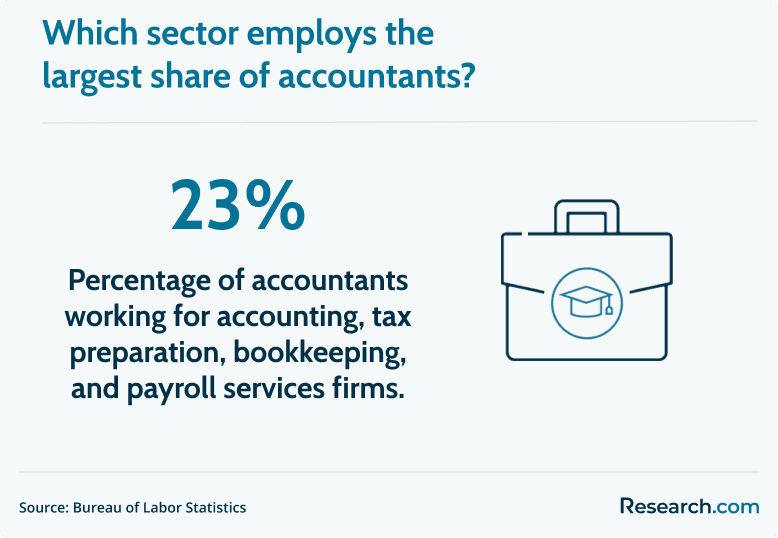
According to BLS (2025), accountants and auditors held about 1.6 million jobs, with the largest employers being accounting, tax preparation, bookkeeping, and payroll services at 23%, government at 8%, finance and insurance at 8%, management of companies and enterprises at 6%, and self-employed workers at 5%. For candidates specifically targeting investment accounting, finance and insurance and management of companies may be especially relevant areas to watch.
The strongest candidates are likely to combine accounting fundamentals with investment product knowledge, systems experience, reconciliation expertise, and the ability to work with large datasets. Automation may reduce some manual processing, but it increases the importance of accountants who can validate outputs, design controls, investigate exceptions, document assumptions, and explain results to auditors and decision-makers.
What are the biggest challenges Investment Accountants face?
Investment accounting can be demanding because it combines strict deadlines, complex instruments, multiple data sources, changing rules, and high expectations for accuracy. The hardest part is often not recording routine entries; it is identifying exceptions, resolving breaks, documenting valuation issues, and maintaining compliance under time pressure.
- Changing accounting standards and regulations. Investment accountants must stay current with Generally Accepted Accounting Principles (GAAP), International Financial Reporting Standards (IFRS), U.S. Securities and Exchange Commission (SEC) rules, and employer-specific policies.
- High-volume reconciliations. Portfolios may include stocks, bonds, derivatives, alternative assets, income accruals, fees, corporate actions, foreign currency activity, and cash movements. Reconciling data from multiple systems and third parties can be time-consuming and prone to exceptions.
- Valuation complexity. Publicly traded securities may be easier to price than illiquid or alternative assets. Private equity, venture capital, derivatives, and impact investments can require additional judgment, review, documentation, and support.
- Technology and automation pressure. Accountants must adapt to accounting systems, portfolio platforms, reporting tools, workflow automation, and data validation processes. Technology can improve efficiency, but it also requires stronger exception-management and control skills.
- Tight reporting cycles. Month-end close, quarter-end reporting, fund reporting, audits, and fiscal year-end deadlines can create intense workloads. Accuracy must remain high even when timelines are compressed.
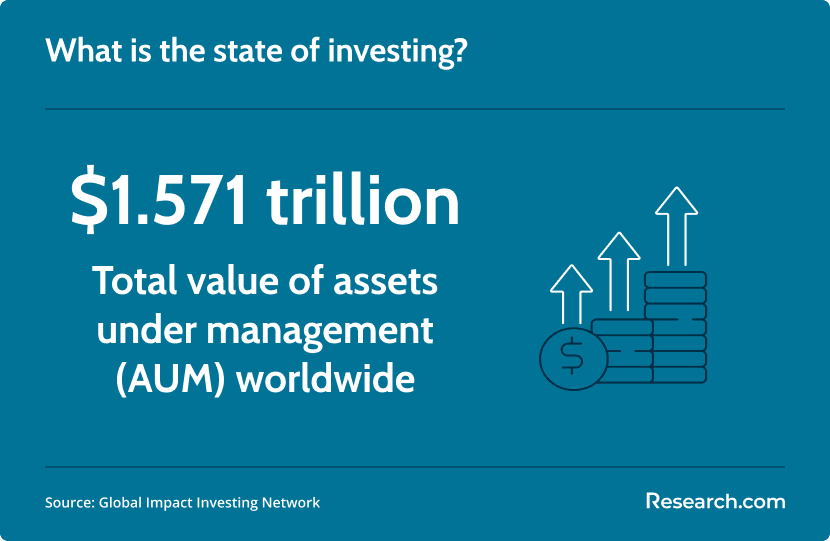
- Impact investing and specialized reporting. The growing impact investing sector adds complexity. With over 3,907 organizations managing $1.571 trillion in assets under management (AUM) worldwide, investment accountants may need to understand unique reporting standards, performance metrics, and compliance requirements tied to socially responsible and impact investments (Global Impact Investing Network, 2024).
Professionals can manage these challenges by building repeatable reconciliation routines, documenting assumptions clearly, understanding the systems behind reported numbers, maintaining strong audit trails, and staying current on accounting guidance and regulatory expectations.
Key Findings
- Investment accountants focus on accuracy, controls, compliance, and portfolio reporting. Their work supports reliable investment records, reconciliations, financial statements, audits, regulatory reports, and management decisions.
- A bachelor’s degree in accounting, finance, or a related field is the usual starting point. Accounting coursework, investment knowledge, systems experience, internships, and exposure to portfolio reporting can make candidates more competitive.
- Core skills include reconciliation, financial reporting, GAAP and IFRS knowledge, attention to detail, systems fluency, and communication. Technical accuracy matters, but so does the ability to explain discrepancies and work with auditors, fund managers, custodians, brokers, and compliance teams.
- Specializations can shape long-term career options. Common paths include fund accounting, portfolio accounting, private equity and venture capital accounting, investment performance, regulatory reporting, and risk management accounting.
- The role differs from financial analysis. Investment accountants make sure records are accurate and compliant; financial analysts interpret data, build forecasts, model scenarios, and make recommendations.
- Salary estimates vary by source, title, location, and responsibility level. Reported figures include approximately $60,203 per year from Zippia (2025), $83,067 annually from ZipRecruiter (2025), and base salaries between $56,000 and $96,000 from Payscale (2025), with bonuses ranging from $2,000 to $18,000 annually.
- Credentials can improve advancement prospects. The CPA is valuable for accounting leadership, the CFA for investment-focused roles, the CMA for management accounting, and graduate degrees for broader leadership or technical specialization.
- The broader accountant and auditor job outlook is positive. The U.S. BLS (2025) projects 5% growth from 2024 to 2034 and roughly 124,200 job openings per year.
Other Things You Need to Know About Becoming an Investment Accountant
To succeed as an investment accountant in 2027, you need strong analytical skills to interpret financial data, proficiency in financial software, a keen understanding of market trends, and excellent communication skills to convey complex information to clients and colleagues.
Certifications like the CFA (Chartered Financial Analyst) and CPA (Certified Public Accountant) are highly beneficial for investment accountants in 2027, enhancing expertise and job prospects. These credentials demonstrate proficiency in financial analysis, accounting principles, and regulatory standards crucial for career advancement in this field.
Investment accounting can be stressful due to the complex nature of financial regulations and the significant financial responsibilities. However, effective time management and organizational skills can help mitigate stress, making the job rewarding for those skilled in analytical thinking and finance.
References
- Data USA. (n.d.). Accountants & auditors: Occupational profile. Retrieved October 29, 2025, from https://datausa.io/profile/soc/accountants-auditors
- U.S. Bureau of Labor Statistics. (2025, August 29). Occupational Outlook Handbook: Accountants and Auditors. https://www.bls.gov/ooh/business-and-financial/accountants-and-auditors.htm
- PayScale. (2025). Investment accountant salary. Retrieved October 29, 2025, from https://www.payscale.com/research/US/Job=Investment_Accountant/Salary
- ZipRecruiter. (2025). Investment accountant salary. Retrieved October 29, 2025, from https://www.ziprecruiter.com/Salaries/Investment-Accountant-Salary
- Zippia. (2025. Fund accountant jobs: Skills. Retrieved October 29, 2025, from https://www.zippia.com/fund-accountant-jobs/skills/
- Zippia. (2025. Fund accountant salary. Retrieved October 29, 2025, from https://www.zippia.com/salaries/fund-accountant/


