
2027 How to Become a Mechanic in Georgia: Requirements & Certification

Co-Founder and Chief Data Scientist
Becoming a mechanic in Georgia is a practical career choice for people who want hands-on work, faster training than a four-year degree, and a path into automotive repair, fleet maintenance, diagnostics, or specialized vehicle technology. The decision is not as simple as enrolling in the nearest trade school, however. You need to understand which training path fits your goals, when certification matters, what costs to expect, and how Georgia-specific requirements such as emissions inspection licensing may affect your options.
The need for skilled technicians is real: nearly 20% of automotive service jobs in Georgia remain unfilled, creating pressure on repair shops, dealerships, fleet operators, and service centers. At the same time, newer vehicles require stronger skills in electronics, diagnostic software, hybrid systems, and electric vehicle service. This guide explains how to become a mechanic in Georgia, how long it can take, what programs and credentials to compare, how much the path may cost, and how to position yourself for better jobs.
Quick answer: How do you become a mechanic in Georgia?
To become a mechanic in Georgia, you generally need a high school diploma or equivalent, automotive training through a technical college or vocational program, hands-on shop experience, and optional but highly valued ASE certification. Georgia does not require a statewide license for general auto mechanics, but you need a Georgia emissions inspection license if you perform state emissions testing. Most accredited mechanic training programs in Georgia take between 12 to 24 months to complete, combining classroom instruction with practical repair experience.
- Georgia's mechanic job market is projected to grow by 8% over the next decade, compared with the national average growth rate of 6%.
- The median annual salary for automotive service technicians in Georgia is approximately $42,500, while experienced mechanics may earn upwards of $55,000.
- Certificate and diploma programs can lead to entry-level work, while associate degrees, ASE credentials, and specializations can improve long-term mobility.
- What are the steps to become a mechanic in Georgia?
- What training and education options are available in Georgia?
- Do you need certifications to work as a mechanic in Georgia?
- How long does it take to become a mechanic in Georgia?
- How much does it cost to become a mechanic in Georgia?
- What job opportunities are available for mechanics in Georgia?
- What additional certifications can expand your career opportunities in Georgia?
- Is cross-training in electrical systems beneficial for mechanics in Georgia?
- How can business acumen enhance a mechanic’s career in Georgia?
- What alternative technical careers can complement a mechanic’s expertise in Georgia?
- How are industry trends impacting mechanic careers in Georgia?
- How much do mechanics make in Georgia?
- What tools and skills do mechanics need to succeed?
- What are the career growth opportunities for mechanics in Georgia?
- What are the pros and cons of becoming a mechanic in Georgia?
What are the steps to become a mechanic in Georgia?
The most reliable route into automotive repair in Georgia is to combine formal training with supervised work experience. Some people start as helpers or lube technicians and learn on the job, while others complete a certificate, diploma, or associate degree before applying to repair shops or dealerships. The right sequence depends on your budget, schedule, prior mechanical experience, and whether you want general repair work or a specialized role.
1. Finish high school or earn an equivalent credential
Most employers and technical colleges expect applicants to have a high school diploma or GED. Courses in math, physics, electronics, computer applications, and shop-related subjects can help, but they are not a substitute for automotive training. If you are still in school, look for dual-enrollment, career and technical education, or local workforce programs that provide early exposure to vehicle systems.
2. Choose an automotive training pathway
Georgia students can study automotive technology through technical colleges, vocational schools, community-based programs, and employer training. Schools such as Gwinnett Technical College, Georgia Piedmont Technical College, and West Georgia Technical College are examples of institutions offering automotive-related training. Certificate programs may take 6–12 months, while associate degree options generally require more time and include broader technical coursework.
3. Get shop experience as early as possible
Hands-on work is essential because employers want technicians who can diagnose, repair, document, and communicate under real shop conditions. Entry-level roles may include lube technician, tire technician, service assistant, apprentice mechanic, or general maintenance technician. Aim to build at least two years of relevant experience if you plan to pursue ASE certification.
4. Pursue ASE certification when you are ready
ASE certification is not a Georgia legal requirement for general mechanics, but it is one of the clearest ways to show employers that your skills meet recognized industry standards. Technicians can test in areas such as engine repair, brakes, suspension, electrical systems, and engine performance. Maintaining certification through periodic retesting also shows that you keep up with vehicle technology.
5. Add Georgia emissions credentials if the job requires them
If you want to conduct state emissions inspections, you must complete the required training and pass the Georgia state-administered exam. This credential matters most for technicians working in areas where emissions testing is part of routine vehicle service.
6. Build a specialty instead of staying general forever
Modern vehicles rely heavily on sensors, control modules, advanced driver assistance features, and computerized diagnostics. Specializing in electric vehicles, hybrid systems, diesel engines, drivability, electrical diagnostics, or manufacturer-specific platforms can make you more competitive than relying only on basic maintenance skills.
| Step | Why it matters | Best move for students |
| Earn a diploma or GED | Meets basic school and employer requirements | Take math, electronics, and technical courses when available |
| Complete automotive training | Builds structured knowledge of engines, brakes, electrical systems, and diagnostics | Compare certificate, diploma, and associate degree options before enrolling |
| Gain paid shop experience | Turns classroom learning into job-ready skill | Apply for lube, tire, apprentice, or entry-level technician roles while studying |
| Earn ASE credentials | Improves credibility with many employers | Start with the specialty areas most relevant to your current work |
| Add Georgia emissions authorization if needed | Required for emissions inspection work | Confirm whether local employers require this license before paying for training |
| Continue advanced training | Keeps your skills current as vehicles become more electronic | Prioritize EV, hybrid, diagnostics, and manufacturer training |
What training and education options are available in Georgia?
Georgia offers several training routes for future mechanics. The best option depends on how quickly you want to work, how much you can spend, whether you want a broad credential, and how much hands-on lab time the program provides. A short certificate may be enough for basic entry-level work, while an associate degree can be useful if you want stronger diagnostic training, advancement options, or a foundation for technical leadership.
Common automotive education options in Georgia include:
- Technical certificate programs in Automotive Chassis, Climate Control, Electrical/Electronic Systems, Engine Performance, Engine Repair, and Transmission/Transaxle Technician Specialist.
- Electric Vehicle Professional certificates at some institutions for students who want to prepare for hybrid and electric vehicle service.
- Diploma programs such as Automotive Fundamentals and Automotive Technology, which combine core repair theory with shop-based practice.
- Associate degree programs in Automotive Technology for students seeking broader training in diagnostics, repair systems, and technical problem-solving.
- Programs aligned with ASE Education Foundation standards, which can help students identify training that reflects industry expectations.
- Multi-campus access at schools such as West Georgia Technical College’s CEC Instructional Site, Douglas Campus, and LaGrange Campus, which can matter if commuting distance affects your enrollment decision.
| Training option | Typical fit | Strengths | Trade-offs |
| Short certificate | Students who want a faster route into entry-level work | Focused, practical, usually shorter than a degree | May not cover advanced diagnostics in depth |
| Diploma program | Students who want structured training without committing to a full associate degree | Balances classroom instruction and hands-on repair practice | May still require additional experience for higher-level roles |
| Associate degree | Students seeking a broader credential and stronger long-term mobility | More comprehensive technical coursework and general education | Takes longer and may cost more than a certificate |
| Apprenticeship or employer training | Career changers who learn best on the job | Provides direct shop exposure and may include wages | Quality depends heavily on employer mentorship |
| Specialty certificate | Working technicians who want to move into EV, hybrid, diesel, or diagnostics | Targets higher-demand skill areas | Usually works best after foundational mechanical training |
When comparing Georgia automotive technology programs, do not choose only by convenience. Check whether the program has enough shop hours, modern diagnostic tools, qualified instructors, employer partnerships, transfer options, and clear outcomes for graduates. If you are weighing trades against other career paths, Research.com’s guide to high-paying trade school jobs can help you compare earnings potential across skilled occupations.
Do you need certifications to work as a mechanic in Georgia?
You do not need a statewide mechanic license to perform general automotive repair in Georgia. However, certifications can make a major difference in hiring, pay negotiations, and advancement. Employers often use ASE certification as a signal that a technician has verified knowledge, relevant experience, and commitment to professional standards.
The usual starting point is a high school diploma or equivalent, followed by technical training in automotive systems. Many students choose programs aligned with ASE expectations because these programs teach core areas such as engine repair, brakes, electrical systems, emissions control, and diagnostics. Some programs typically last 6 to 12 months, while longer programs provide broader preparation.
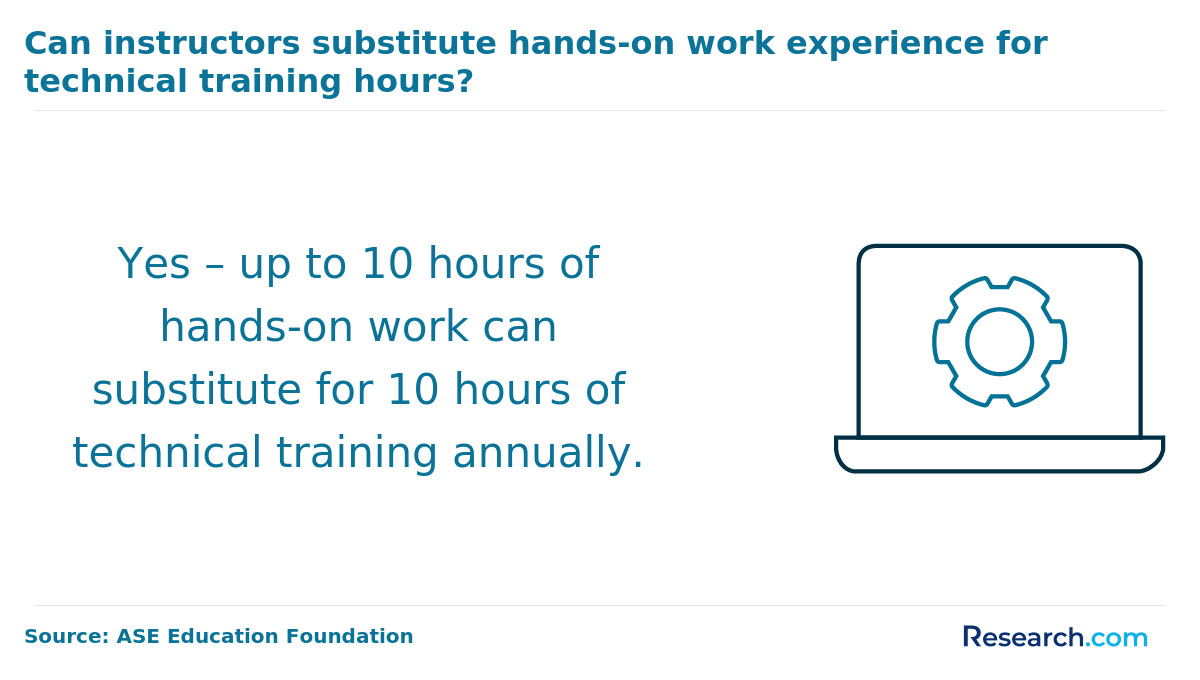
ASE certification generally requires passing the appropriate exam and documenting at least two years of relevant work experience. Completing an approved training program may reduce the experience requirement by up to one year. ASE credentials must be renewed through recertification every five years. Technicians who pass multiple advanced exams may work toward ASE Master Technician status.
Georgia has one important job-specific requirement: mechanics who perform emissions inspections must obtain the appropriate Georgia emissions inspection license. This involves specialized training and a state exam. If you plan to work in a metro area where emissions testing is common, ask employers whether this license is expected before you apply.
| Credential | Required in Georgia? | When it helps |
| ASE certification | No for general repair work | Useful for dealership, fleet, diagnostic, and higher-skill technician roles |
| Georgia emissions inspection license | Yes, if you perform emissions inspections | Important for shops that provide state emissions testing |
| Manufacturer training | No statewide requirement | Valuable for dealership service departments and brand-specific repair |
| EV or hybrid training | No statewide requirement | Increasingly useful as more vehicles rely on high-voltage and computerized systems |
For a broader explanation of national education and credential expectations, see Research.com’s guide to the requirements to become an auto mechanic.
How long does it take to become a mechanic in Georgia?
The timeline depends on whether you want the quickest entry-level route or a more complete pathway toward higher-skill work. Some students can enter basic service roles after short training, while others spend several years combining school, work experience, ASE exams, and specialization.
| Path | Estimated time | Best for |
| Entry-level shop role with short training | 6 to 12 months | Students who want to begin with maintenance, tires, lube service, and basic repair |
| Automotive diploma | Often within the same general 6 to 12 month range, depending on the school | Students who want structured foundational training before full-time work |
| Associate degree in Automotive Technology | About two years | Students who want deeper diagnostics and a stronger academic credential |
| Apprenticeship or extensive on-the-job development | 2 to 5 years | Workers who want to progress from helper to skilled technician through supervised practice |
| ASE certification path | Usually tied to two years of relevant experience | Technicians who want recognized proof of skill in specific service areas |
| Master technician development | Often beyond four years | Experienced technicians seeking advanced status across multiple systems |
If you need to start earning quickly, look for programs that combine classroom learning with part-time shop work. If your goal is long-term advancement, do not rush past fundamentals. Strong diagnostic ability, electrical understanding, and communication skills often matter more over time than simply finishing the shortest program available.
Students balancing evening classes, full-time work, and family responsibilities should plan carefully. Fatigue can affect learning and safety in the shop. Before enrolling, ask whether the program offers evening, weekend, hybrid, or part-time options and whether lab schedules are predictable enough for your life.
How much does it cost to become a mechanic in Georgia?
The cost to become a mechanic in Georgia can range from under $10,000 at technical colleges to up to $36,000 at private institutions. Your true cost is not only tuition. You also need to budget for tools, transportation, books, exam fees, uniforms, safety gear, and the income you may lose if you reduce work hours while studying.
- Technical College System of Georgia schools are often among the more affordable options, and some programs may qualify for free tuition through state initiatives.
- Private programs can cost more. For example, US Aviation Academy’s A&P Mechanic course costs under $36,000 and can be completed in 8 to 16 months.
- UEI College in Morrow, GA offers hybrid automotive technician training lasting about 10 months, though tuition details vary.
- Tools can add thousands of dollars if your school does not provide them. US Aviation Academy provides tools during training, which can reduce upfront expenses.
- ASE exam fees and other certification expenses should be included in your plan after training.
- Living costs vary by location, housing situation, transportation needs, and whether you attend full time or part time.
- Completing the FAFSA can help determine eligibility for federal grants, loans, and other aid.
- Georgia-specific workforce programs and apprenticeships may reduce training costs while adding supervised experience.
- Veterans and active military personnel should review GI Bill benefits and other education funding options.
| Cost category | What to ask before enrolling |
| Tuition and fees | What is the full program price, not just the per-credit or advertised rate? |
| Tools and equipment | Are tools included, borrowed during training, discounted, or purchased separately? |
| Certification exams | Are ASE preparation and exam fees included in tuition or paid separately? |
| Transportation | How far is the campus or shop lab, and how often must you attend in person? |
| Schedule impact | Can you keep working while enrolled, or will you need to reduce paid hours? |
| Financial aid | Does the program qualify for federal aid, scholarships, grants, employer sponsorship, or veterans benefits? |
Students comparing mechanic school cost in Georgia should evaluate total return, not sticker price alone. A cheaper program with outdated equipment or weak employer connections may be less valuable than a slightly higher-cost program with strong labs and job placement support. For a wider look at skilled labor pathways, use Research.com’s trades career resource.
What job opportunities are available for mechanics in Georgia?
Mechanics in Georgia can work in more settings than neighborhood repair shops. The strongest candidates are usually those who combine core repair ability with diagnostic skill, professional communication, and credentials that match the employer’s vehicles or services.
Automotive repair shops and dealerships
Independent repair shops and dealerships hire technicians for inspections, diagnostics, preventive maintenance, brake work, drivability issues, warranty-related repairs, and customer-pay service. Dealership roles may require manufacturer-specific training, while independent shops often value technicians who can work across many makes and models.
Fleet, logistics, and commercial vehicle maintenance
Georgia’s transportation and logistics activity creates opportunities for technicians who can maintain delivery vehicles, service trucks, company fleets, and related equipment. Fleet work may appeal to mechanics who prefer scheduled maintenance, repeat vehicle platforms, and employer-owned equipment over retail customer service.
Heavy equipment, diesel, and industrial maintenance
Mechanics with strong diagnostic and mechanical skills can move into heavy equipment, diesel repair, industrial machinery, or plant maintenance. These areas may require additional training, but they can provide alternatives when the local auto repair market is competitive.
Specialized technician roles
Technicians who add training in electric vehicles, computerized diagnostics, diesel systems, HVAC, or advanced electrical work may qualify for more specialized jobs. One practical strategy is to start in general service, identify the repairs your shop struggles to staff, and then train in that niche.
| Work setting | Typical work | Who it fits |
| Independent repair shop | General diagnostics, maintenance, brakes, engine repair, customer-pay work | Technicians who like variety and problem-solving across brands |
| Dealership | Manufacturer-specific service, warranty repairs, brand diagnostics | Technicians who want structured training on specific vehicle lines |
| Fleet maintenance | Preventive maintenance, repeat repairs, service documentation | Technicians who prefer consistent equipment and commercial operations |
| Diesel or heavy equipment | Larger engines, hydraulic systems, commercial or industrial equipment | Mechanics willing to add specialized training beyond passenger vehicles |
| Emissions inspection station | State emissions testing and related service | Technicians who hold or plan to obtain the required Georgia emissions credential |
What additional certifications can expand your career opportunities in Georgia?
Additional credentials can help you move beyond basic repair work and compete for roles that require specialized technical knowledge. Useful areas include digital diagnostics, hybrid systems, electric vehicles, diesel repair, climate control, and manufacturer-specific service training. HVAC-related knowledge can also support automotive work because vehicles increasingly rely on sophisticated climate control and energy-efficient systems. If you are interested in a related skilled trade, Research.com explains how to get HVAC license in Georgia.
Is cross-training in electrical systems beneficial for mechanics in Georgia?
Yes. Cross-training in electrical systems is increasingly valuable for mechanics because modern vehicles depend on wiring networks, sensors, battery systems, control modules, and diagnostic software. Electric and hybrid vehicles make this even more important. A mechanic who understands electrical theory, safe testing procedures, and battery management systems can often diagnose problems that a basic maintenance technician cannot. If you want to understand the broader electrical trade pathway, see Research.com’s guide on how to become an electrician in Georgia.
How can business acumen enhance a mechanic’s career in Georgia?
Business skills matter if you want to become a lead technician, service manager, shop foreman, mobile mechanic, or owner of an independent repair business. Technical ability may get you into the field, but management roles require pricing judgment, customer communication, inventory control, scheduling, compliance awareness, marketing, and basic financial planning. Mechanics considering ownership or leadership may benefit from learning how formal business education is structured through resources on top business schools in Georgia.
What alternative technical careers can complement a mechanic’s expertise in Georgia?
Mechanics develop transferable abilities: troubleshooting, precision, equipment operation, safety awareness, documentation, and hands-on problem-solving. These skills can support moves into industrial maintenance, aviation maintenance, diesel technology, HVAC, electrical work, equipment repair, or other technical fields. Some career changers also compare automotive repair with healthcare technology roles that require equipment knowledge and certification discipline. For one example outside the automotive field, review Research.com’s guide to Georgia ultrasound technician requirements.
How are industry trends impacting mechanic careers in Georgia?
Mechanic careers in Georgia are being reshaped by vehicle electronics, electric and hybrid systems, digital diagnostics, changing emissions expectations, and employer demand for technicians who can learn continuously. Basic maintenance skills still matter, but long-term employability increasingly depends on the ability to interpret scan tool data, read wiring diagrams, work safely around high-voltage systems, and communicate technical findings to customers or service advisors.
The same broad trend affects many technical careers: equipment is becoming more computerized, documentation is more important, and credentials can help workers prove competence. If you are comparing automotive repair with another technical profession, Research.com’s overview of how to become a radiology technician in Georgia shows how training, certification, and technology also shape healthcare technician pathways.
How much do mechanics make in Georgia?
Mechanics in Georgia earn an average hourly wage between $21.22 and $23.49, with full-time annual salaries typically ranging from $44,000 to $49,000. Entry-level roles may start around $10.55 per hour, while experienced mechanics can earn up to $31.66 per hour. The median annual salary for automotive service technicians in Georgia is approximately $42,500, and experienced mechanics may earn upwards of $55,000.
Pay varies by location, employer type, productivity model, specialty, certifications, and experience. For example, power mechanics at major companies can earn over $33 per hour, while structural and plant maintenance mechanics often earn between $21 and $32 per hour. Urban centers may offer more openings and higher wages, but living costs and competition may also be higher.
| Factor | How it can affect pay |
| Experience | New technicians usually start lower; experienced diagnostic technicians can command more |
| ASE certification | Can strengthen applications and support advancement discussions |
| Specialization | EV, hybrid, diesel, electrical, and drivability skills may improve marketability |
| Employer type | Dealerships, fleets, independent shops, and industrial employers may use different pay structures |
| Location | Urban areas may have more openings, but wages should be compared with commute and living costs |
| Tool ownership | Some roles expect technicians to own tools, which can affect take-home value |
Salary outcomes are never guaranteed. Before accepting a job, ask whether compensation is hourly, flat rate, commission-based, or a mix. Also ask about overtime, tool allowances, paid training, benefits, certification reimbursement, and advancement criteria.
What tools and skills do mechanics need to succeed?
Successful mechanics need more than strength and basic tool use. The best technicians combine mechanical reasoning, electrical understanding, diagnostic discipline, documentation habits, and customer communication. As vehicles become more computerized, the ability to test before replacing parts becomes especially important.
| Skill or tool area | Why it matters |
| Diagnostic equipment | Helps identify faults accurately instead of relying on guesswork |
| Mechanical systems knowledge | Supports engine, transmission, brake, steering, and suspension repairs |
| Electrical and electronic systems | Essential for sensors, modules, wiring, batteries, and computerized controls |
| Technical manuals and wiring diagrams | Allow technicians to follow correct specifications and repair procedures |
| Hand and power tools | Required for safe, efficient removal, installation, measurement, and adjustment |
| Communication | Helps explain findings, repair options, and maintenance needs clearly |
| Attention to detail | Reduces comebacks, safety risks, and missed inspection items |
| Time management | Important in shops where multiple vehicles and deadlines compete for attention |
| Safety and environmental practices | Protects workers, customers, vehicles, and the shop from avoidable hazards |
| Continuous learning | Keeps technicians current as vehicles, tools, and repair procedures change |
Students should ask schools what tools are included, whether students train on current diagnostic platforms, and how much lab time is built into each course. New technicians should also learn how to document inspections, write clear notes, and explain recommendations without overselling repairs.
What are the career growth opportunities for mechanics in Georgia?
A mechanic career in Georgia can grow in several directions. You can become a more advanced technician, move into a specialty, supervise other technicians, work for a fleet or dealership, become a service advisor, or eventually open your own shop. Advancement usually depends on proven skill, reliability, certifications, and the ability to solve complex problems without repeated supervision.
Start with strong technical fundamentals
Build a base in engines, brakes, suspension, electrical systems, diagnostics, and safety. Programs at technical colleges such as Georgia Piedmont Technical College can provide structured lab experience, but school is only the beginning. Keep a record of completed courses, certifications, shop experience, and specialty training.
Use certifications strategically
Do not pursue credentials randomly. Start with ASE areas tied to the work you actually perform, then add specialties that match your desired role. For example, a technician working in diagnostics may prioritize electrical systems and engine performance, while someone in fleet maintenance may focus on preventive service, diesel, or drivability.
Seek mentors and structured shop experience
Entry-level jobs are more valuable when senior technicians explain diagnostic reasoning, not just assign repetitive tasks. When interviewing, ask how apprentices are trained, whether the shop pays for certification, and how technicians advance from basic service to diagnostic work.
Keep up with vehicle technology
Hybrid and electric vehicles, advanced driver assistance systems, and networked electronics are changing the work. Continuing education, manufacturer training, and diagnostic courses can protect your career from becoming limited to basic maintenance.
Build a local professional network
Relationships with instructors, employers, parts suppliers, trade organizations, and experienced technicians can lead to job leads that are never widely advertised. Local job fairs, technical school events, and industry groups can be especially useful for students entering the field for the first time.
| Career stage | Possible role | What helps you move forward |
| Entry level | Lube technician, tire technician, apprentice mechanic | Reliability, safety habits, basic tools, willingness to learn |
| Early career | General service technician | Certificate or diploma, shop experience, first ASE exams |
| Skilled technician | Diagnostic technician, brake specialist, engine performance technician | ASE credentials, electrical knowledge, strong documentation |
| Advanced or specialized | EV technician, diesel technician, fleet technician, master technician | Specialized training, manufacturer courses, broader experience |
| Leadership or ownership | Shop foreman, service manager, mobile mechanic, business owner | Business skills, customer service, scheduling, pricing, team leadership |
What are the pros and cons of becoming a mechanic in Georgia?
Becoming a mechanic in Georgia can be a strong choice if you want practical work, a shorter education path, and a skill that applies across many employers. It is not the right fit for everyone. The work can be physically demanding, tools can be expensive, and staying current requires ongoing training.
| Pros | Cons |
| Training can be completed faster than a bachelor’s degree. | Entry-level wages can be modest without experience or certifications. |
| Georgia has repair shops, dealerships, fleets, and transportation-related employers that need technicians. | The work may involve lifting, awkward positions, noise, chemicals, heat, and safety risks. |
| ASE credentials and specializations can create advancement opportunities. | Technicians may need to buy or maintain their own tools, depending on the employer. |
| Skills can transfer into diesel, fleet, industrial, equipment, or shop leadership roles. | Vehicle technology changes quickly, so continuing education is not optional for long-term growth. |
| Hands-on learners may prefer this path over a classroom-heavy academic route. | Competition can be stronger in desirable urban markets and higher-paying shops. |
Who should consider becoming a mechanic in Georgia?
- People who enjoy hands-on troubleshooting and mechanical systems.
- Students who want a career path that may not require a four-year degree.
- Workers willing to keep learning as vehicles become more electronic.
- Career changers who want a trade with options in shops, dealerships, fleets, and related technical fields.
- People who can handle physically active work and safety-focused environments.
Who may want to consider another path?
- People who want mostly desk-based work with little physical strain.
- Students who are not willing to study electronics, diagnostics, and software-based systems.
- Workers who need high starting pay immediately and cannot spend time building experience.
- People who do not want to invest in tools, certifications, or continuing training.
- Applicants who prefer predictable office hours over shop schedules that may vary by employer.
What do mechanics say about their careers in Georgia?
-
: "
The state vocational program helped me understand repairs in a way books alone never could. Working on engines and transmissions in the shop gave me confidence before I applied for automotive jobs in Georgia. – Sol
"
-
: "
A local nonprofit training program gave me mentorship and early practice with real repair tasks. That made the trade feel reachable, and I now take pride in helping keep vehicles safe on Georgia roads. – Tyler
"
-
: "
The Georgia mechanics program mixed classroom instruction with plenty of workshop time. Applying the lessons every day made the career feel practical and worthwhile. – George
"
Common mistakes to avoid when choosing a mechanic program in Georgia
Many students choose an automotive program too quickly because they want to start working. That urgency is understandable, but a poor program choice can cost time, money, and job opportunities. Use the checklist below before enrolling.
| Mistake | Better approach |
| Choosing only by the lowest tuition | Compare total cost, lab quality, tool policies, job placement support, and employer relationships |
| Ignoring accreditation or industry alignment | Ask whether the curriculum follows recognized automotive training standards, including ASE-related expectations |
| Assuming online-only training is enough | Look for substantial hands-on lab time because automotive repair is a practical trade |
| Not asking about tools | Confirm whether tools are included, loaned, discounted, or purchased separately |
| Waiting too long to gain work experience | Seek part-time shop work, apprenticeships, or internships while studying |
| Assuming certification guarantees a high salary | Treat credentials as one factor alongside experience, specialization, location, and employer type |
| Overlooking emissions requirements | If you want inspection work, verify Georgia emissions licensing expectations before applying |
| Relying only on rankings or advertisements | Visit the campus, talk with instructors, ask employers, and review actual program outcomes |
Questions to ask before enrolling in a Georgia mechanic school
- Is the program a certificate, diploma, or associate degree, and how does that credential match my career goal?
- How many hours are spent in a real shop or lab environment?
- What diagnostic tools, scan tools, lifts, and training vehicles will students use?
- Are EV, hybrid, diesel, emissions, or advanced electrical topics included?
- Does the school help students prepare for ASE exams?
- Are tools, uniforms, books, safety gear, and exam fees included in tuition?
- Can I use federal aid, scholarships, workforce funding, apprenticeships, or veterans benefits?
- Does the school have relationships with local repair shops, dealerships, or fleet employers?
- What percentage of students complete the program, and what types of jobs do graduates enter?
- Can I attend part time, at night, or through a hybrid schedule if I need to keep working?
Key Insights
- Georgia does not require a statewide license for general auto mechanics, but emissions inspectors need the proper Georgia emissions credential.
- The fastest training options may take 6 to 12 months, while associate degrees generally take about two years and apprenticeship-style development can take 2 to 5 years.
- ASE certification is optional but widely useful because it helps employers evaluate technical skill and work experience.
- Costs vary widely, from under $10,000 at technical colleges to up to $36,000 at private institutions, before considering tools, transportation, exam fees, and living costs.
- Technicians who understand electrical systems, diagnostics, hybrid vehicles, and electric vehicles are better positioned for long-term career growth.
- The best program is not always the cheapest or shortest. Look for hands-on lab time, modern equipment, employer connections, certification preparation, and transparent costs.
- Salary depends on experience, certifications, employer type, location, and specialty. Do not assume any program can guarantee a specific wage.
- Start building experience early. A combination of training, supervised shop work, ASE preparation, and continuous learning is the strongest path into Georgia’s automotive service field.
Related Articles for Nearby States
- 2027 How to Become a Mechanic in South Carolina: Requirements & Certification
- 2027 How to Become a Mechanic in Florida: Requirements & Certification
- 2027 How to Become a Mechanic in Alabama: Requirements & Certification
- 2027 How to Become a Mechanic in Tennessee: Requirements & Certification
- 2027 How to Become a Mechanic in North Carolina: Requirements & Certification
- 2027 How to Become a Mechanic in Mississippi: Requirements & Certification
- 2027 How to Become a Mechanic in Kentucky: Requirements & Certification
- 2027 How to Become a Mechanic in Virginia: Requirements & Certification
- 2027 How to Become a Mechanic in Louisiana: Requirements & Certification
- 2027 How to Become a Mechanic in West Virginia: Requirements & Certification
References:
- Georgia Department of Public Safety mechanic information: https://dps.georgia.gov/mechanic
- Auto mechanic school information for Georgia: https://automechanicschools.com/georgia/
- Mike The Mechanic in Woodstock and Kennesaw, GA: https://www.mikethemechanic.com/
- Pete's Mobile Mechanic in Athens, GA: https://mobilemechanicathensga.com/
- Georgia Tire Company of Vidalia auto repair information: https://www.georgiatirevidalia.com/Auto-Repair
- Employee training duration discussion from Knowledge Anywhere: https://knowledgeanywhere.com/articles/finding-the-ideal-duration-how-long-should-your-employee-training-be/
- Apprenticeship training time and existing knowledge resource: https://www.apprenticeships.gov.uk/employers/apprentices-existing-knowledge-can-reduce-training-time
- New hire time-to-productivity training strategies: https://www.eidesign.net/tips-strategies-shorten-new-hire-time-to-productivity-employee-onboarding-training/
- New hire training length discussion by Jeff Toister: https://www.toistersolutions.com/blog/how-long-should-new-hire-training-last-for-customer-service-employees
- Employee training effectiveness discussion from Axonify: https://axonify.com/blog/how-long-should-employee-training-be/
Other Things You Should Know About Becoming a Mechanic in Georgia
To enroll in a mechanic training program in Georgia, you typically need a high school diploma or GED. Some programs may have additional requirements such as a completed application form or a basic mechanical aptitude assessment.
In 2027, mechanic certifications in Georgia, like ASE certifications, typically require renewal every five years. Mechanics must accumulate necessary Continuing Education Units (CEUs) and pass the recertification test to maintain their credentials.
Yes, you can get paid while training to become a mechanic in Georgia, primarily through paid apprenticeships, entry-level jobs, or vocational school partnerships that offer paid internships. To maximize your earnings, target formal apprenticeship programs with established employers, focus on metropolitan areas like Atlanta or Athens where pay tends to be higher, and explore opportunities where employers cover certification costs. Additionally, consider union apprenticeships or government programs that provide structured, paid training.


