
2027 How To Become a Phlebotomist in Colorado

Co-Founder and Chief Data Scientist
Colorado's healthcare sector is growing rapidly, with employment for phlebotomists expected to rise by 15% over the next decade. This demand offers rewarding opportunities for individuals seeking stable, well-paid careers. Becoming a phlebotomist in Colorado not only provides a chance to contribute meaningfully to patient care but also offers competitive wages and flexible work environments across urban and rural areas.
This article, prepared by career planning experts, guides aspiring phlebotomists through each step of the process in Colorado. Readers will find clear information on certification, training programs, and career prospects to confidently launch their future in this vital healthcare role.
Key Things to Know About Becoming a Phlebotomist in Colorado
- Complete a state-approved phlebotomy training program, typically lasting 4 to 8 months, to gain hands-on skills and meet Colorado's educational standards.
- Obtain national certification from recognized bodies like ASCP or NHA, boosting job prospects in Colorado's growing healthcare sector.
- Leverage Colorado's strong demand for phlebotomists, with employment projected to grow 15% by 2030, ensuring vibrant career opportunities and competitive salaries.
- What are the education requirements to become a phlebotomist in Colorado?
- What subjects are taught in phlebotomy classes in Colorado?
- Do you need a state license to work as a phlebotomist in Colorado?
- What phlebotomy certifications are recognized in Colorado?
- Where can you find accredited phlebotomy training programs in Colorado?
- How much does phlebotomy training cost in Colorado?
- What skills are required to become a successful phlebotomist in Colorado?
- Where do phlebotomists typically work in Colorado?
- What is the average salary for phlebotomists in Colorado?
- What are the best ways to grow your phlebotomy career in Colorado?
What are the education requirements to become a phlebotomist in Colorado?
Proper education and training form the foundation for phlebotomists to perform blood collection with precision, safety, and respect for patients in both clinical and laboratory settings. This strong preparation ensures professionals maintain high standards of infection control, technical skill, and ethical conduct.
Below are the key education requirements aspiring phlebotomists must meet to succeed in Colorado's healthcare environment.
- High School Diploma or Equivalent: A foundational step is obtaining a high school diploma or GED. This equips candidates with essential skills in reading, writing, and basic math, enabling them to grasp medical terminology and laboratory calculations effectively.
- Completion of a State-Approved Phlebotomy Training Program: Enrolling in a Colorado-approved certificate program, often available at community colleges, is crucial. These programs focus on developing core venipuncture techniques, patient communication, and laboratory procedures within one semester.
- Classroom and Clinical Instruction Hours: Structured programs combine theoretical coursework with hands-on clinical experience. For example, some require around 120 to 135 hours of supervised internships, helping students apply skills in authentic healthcare settings.
- Background Check, Drug Screening, and Immunizations: To protect patient safety, programs mandate completion of background checks, drug tests, and proof of current immunizations before clinical participation.
- National Certification Eligibility: Graduates who complete required coursework and clinical hours become eligible to sit for certifications like the CPT or RPT. Although not always compulsory under Colorado law, certification is highly valued and can enhance employment opportunities.
For those exploring educational pathways, understanding how long educational programs take and their structure is vital-similar to insights on how long is a medical billing and coding course-which helps in planning an efficient career path.
What subjects are taught in phlebotomy classes in Colorado?
Mastering the subjects taught in phlebotomy classes in Colorado is vital for preparing students to confidently and safely collect blood, protect patient well-being, and guarantee accurate laboratory results. These courses build a strong foundation, combining theory and practice to ensure graduates possess the skills needed to excel in healthcare settings.
Below are the core topics typically covered in the phlebotomy course curriculum in Colorado that empower students to become proficient professionals.
- Anatomy and Physiology: This subject explores the structure and function of the human circulatory system, emphasizing veins and arteries important for blood collection. Understanding these basics helps students identify the best sites for venipuncture and enhances patient safety.
- Venipuncture and Capillary Collection Techniques: Students gain hands-on training in drawing blood using both venipuncture and capillary methods. Regular practice in controlled environments builds accuracy, confidence, and technical competence essential for daily phlebotomy duties.
- Infection Control and Safety Procedures: This area teaches methods to prevent disease transmission, including using personal protective equipment and following strict hygiene protocols. Mastery of these practices safeguards both patients and healthcare workers.
- Specimen Processing and Handling: Proper labeling, storage, and transport of blood samples are covered to maintain specimen integrity. These skills directly contribute to producing reliable test results critical for medical diagnosis.
- Medical Terminology: Students learn the specialized language used in labs and clinical settings to communicate clearly with healthcare teams and document information precisely.
- Quality Control and Laboratory Computer Systems: Training includes ensuring accuracy through quality assurance routines and using lab information systems to track specimens efficiently in modern healthcare environments.
- Patient Communication and Professionalism: Emphasis is placed on developing empathetic communication skills, managing patient concerns, and adhering to ethical standards to create a trustworthy healthcare experience.
- Legal and Ethical Considerations: This component covers important regulations such as patient privacy laws and ethical responsibilities, ensuring phlebotomists comply with all professional standards.
- Hands-on Clinical Experience (Internship): Many programs offer internships where students apply their classroom knowledge in real medical settings. This immersive practice sharpens skills and prepares students for the workflow of hospitals and clinics.
For those comparing certification paths after completing their training, understanding the cpc vs cbcs certification similarities and differences can be beneficial in choosing the right career advancement options in healthcare.
Do you need a state license to work as a phlebotomist in Colorado?
No state-issued license is required to work as a phlebotomist in Colorado. Unlike some states that have strict licensing mandates, Colorado relies on employer-based standards and encourages nationally recognized certification to maintain high professional standards. This means that while you won't need to navigate a state licensing process, holding a certification from reputable organizations like the National Healthcareer Association or the American Society for Clinical Pathology gives you a significant advantage.
Employers in hospitals, clinics, and laboratories often prefer or require certification to ensure quality and safety in patient care, which can open doors to more rewarding job opportunities and potential for career growth.
Knowing how Colorado regulates phlebotomy allows you to align your training and credentials with market expectations, maximizing your employability across the state's diverse healthcare settings. The emphasis on certification and employer requirements fosters a flexible yet competent workforce, empowering you to build a career with confidence.
Understanding this framework not only guides you toward the right educational choices but also prepares you to meet the professional standards that employers value most. Embracing these standards equips you to contribute meaningfully to patient care and thrive in Colorado's vibrant healthcare community.
What phlebotomy certifications are recognized in Colorado?
Certification plays a vital role for phlebotomists in Colorado, helping candidates meet employer expectations, boost job prospects, and establish professional credibility. Holding a recognized credential reassures healthcare providers and patients alike that skills and knowledge are up to the highest standards. For those aiming to succeed in the competitive healthcare environment, these credentials serve as essential proof of expertise.
Below is a list of the primary certifications valued throughout Colorado's medical community.
- National Healthcareer Association (NHA) - Certified Phlebotomy Technician (CPT): This certification is widely accepted across Colorado and often recommended for graduates of formal training programs. Candidates must complete an approved course and pass a national exam covering blood collection, safety, and patient care. The NHA CPT is recognized for its rigorous standards and enhances opportunities for entry-level phlebotomists seeking employment in the state.
- American Society for Clinical Pathology (ASCP) - Phlebotomy Technician (PBT): ASCP's PBT credential is respected nationwide and highly sought after by hospitals and labs in Colorado. It requires successful completion of a training program and passing the ASCP board exam, designed to ensure advanced competence in specimen handling and laboratory procedures. This certification is often preferred for those aiming for specialized roles within clinical settings.
- American Medical Technologists (AMT) - Registered Phlebotomy Technician (RPT): Recognized by Colorado employers and educational programs, the AMT's RPT credential demands graduation from an accredited program and passing a comprehensive exam. It highlights skills in blood collection, specimen preparation, and infection control, making it a mark of reliability and professional excellence in healthcare facilities across the state.
- National Center for Competency Testing (NCCT) - National Certified Phlebotomy Technician (NCPT): The NCPT is a nationally acknowledged certification that confirms proficiency in phlebotomy and ethical practice. It appeals to new graduates and experienced professionals alike by focusing on practical knowledge and safety standards. Many clinics and labs in Colorado recognize this credential as a sign of well-rounded expertise.
- National Phlebotomy Certification Examination (NPCE) - Certified Phlebotomy Technician (CPT): Increasingly accepted by Colorado healthcare employers, the NPCE CPT certification offers flexible online options for those pursuing their national phlebotomy certification Colorado. Candidates complete training and pass an exam emphasizing technical skill and patient care. This certification supports diverse health workers seeking accessible and reputable credentials. For additional skill-building, consider the kaiser free medical billing and coding course as a valuable complement to your training.
Where can you find accredited phlebotomy training programs in Colorado?
Enrolling in an accredited phlebotomy training program is key to gaining top-quality education that meets industry standards, helping you become eligible for national certification and greatly enhancing your job prospects in Colorado's healthcare field. Accredited programs ensure you learn the essential skills through a combination of classroom instruction, hands-on practice, and clinical experience.
Below are common places where you can find reputable phlebotomy training programs in Colorado.
- Community Colleges: Institutions such as Front Range Community College and Pueblo Community College offer semester-long phlebotomy certificate programs combining theory, lab practice, and clinical internships, geared toward preparing students for certification exams. Accreditation can be confirmed on the college websites or through the Colorado Department of Higher Education.
- Vocational and Technical Schools: Schools like Phlebotomy Training Specialists provide concentrated, short-term courses focused on practical skills and certification readiness. Students should verify state approval or recognition by national agencies such as the National Healthcareer Association to ensure program validity.
- Hospitals and Healthcare Systems: Some large healthcare facilities offer internal phlebotomy training programs, often targeting current employees but sometimes open to external applicants. Prospective trainees should contact hospital education departments to confirm accreditation and eligibility requirements.
- Private Career Institutes: Schools such as Colorado Phlebotomy School offer specialized instruction with guaranteed certification prep. Verifying recognition by national certifying bodies and state approval is important to secure eligibility for employment and certification.
When I asked a phlebotomist from Colorado about where to find accredited programs, he reflected on his own experience graduating from a local community college. He recalled the challenge of sorting through various options and the relief of discovering a program that was both well-regarded and officially recognized.
"It was reassuring to know the program met state standards and that I would be prepared for the certification exam," he said. The hands-on clinical internship was particularly valuable, boosting his confidence and practical skills. He emphasized how the clear accreditation details available on the school's website helped him make an informed decision, paving the way for his successful entry into the healthcare workforce.
How much does phlebotomy training cost in Colorado?
Phlebotomy training costs in Colorado vary widely depending on whether you enroll in a community college, private institute, or university program. The length of the program and the public or private status of the institution also play significant roles in determining the total investment. These factors give you the flexibility to choose a path that fits both your career goals and budget.
Here are the key cost components to consider when pursuing phlebotomy training in Colorado:
- Tuition and Fees: Tuition is typically the largest expense and can range from a few hundred to several thousand dollars. Community colleges often offer affordable semester-long courses, while private institutes may have shorter, intensive programs at lower or comparable costs. Additional fees such as lab, application, or administrative charges also contribute to the total tuition.
- Books and Supplies: Textbooks and study guides are essential for mastering theory and exam preparation. These materials often cost around $50 or more, ensuring you have the necessary resources for success.
- Uniforms and Equipment: Clinical rotations require appropriate attire, such as scrubs, which usually cost between $40 and $80 for a set. Some programs also request basic tools like gloves or stethoscopes, helping you gain practical skills in a professional setting.
- Certification Exam Expenses: Earning certification involves exam fees that range from $45 to $200 depending on the testing organization. These exams are critical milestones that validate your skills and enhance your employability in the healthcare field.
What skills are required to become a successful phlebotomist in Colorado?
Excelling as a phlebotomist in Colorado means mastering several vital skills that ensure patient comfort, uphold strict safety standards, and guarantee accurate blood collection for reliable lab results. These skills form the foundation for delivering compassionate care while supporting the state's rapidly growing healthcare industry.
Here are the essential abilities that empower phlebotomists to thrive in Colorado's medical settings:
- Technical Proficiency: Skilled handling of needles and collection techniques minimizes patient discomfort and prevents complications, ensuring every blood draw is both efficient and safe.
- Attention to Detail: Precise patient identification and proper labeling prevent errors that could impact diagnosis and patient care reliability.
- Communication Skills: Clear, empathetic communication eases patient anxiety and fosters teamwork with healthcare professionals.
- Professionalism: Upholding confidentiality, ethics, and integrity builds trust and respect throughout the care process.
A phlebotomist from Colorado, who graduated from a local school, shared that the journey of developing these skills required persistence and hands-on practice. She recalled the initial challenge of performing multiple unaided blood draws, which was daunting at first but ultimately strengthened her confidence.
"Each successful draw made me more comfortable communicating with patients," she reflected, emphasizing how her training helped her balance technical accuracy with genuine care. The ongoing growth in both skill and empathy made her proud to contribute meaningfully to her community's health every day.
Where do phlebotomists typically work in Colorado?
Phlebotomists serve a critical function in Colorado's healthcare system by expertly collecting blood samples that drive accurate diagnostic testing, patient care, and medical research. Their skill and dedication help ensure smooth clinical workflows and support a wide range of medical services.
Here are the primary work environments where phlebotomists contribute their expertise across the state:
- Hospitals: Hospital phlebotomist jobs in Colorado often place professionals in fast-paced, dynamic units such as emergency rooms, surgical wards, and pediatric departments. These roles demand precision and adaptability to deliver timely blood collection that aids urgent diagnosis and treatment.
- Diagnostic Laboratories: Many phlebotomists find rewarding careers in independent or hospital-based diagnostic labs, where they manage specimen collection, labeling, and preparation. Their careful handling supports the advanced testing technologies critical to accurate medical results and research.
- Blood Donation Centers: Working at blood banks and donation facilities, phlebotomists help ensure a safe and steady blood supply by collecting whole blood and plasma from voluntary donors. Their work directly benefits hospitals and trauma centers statewide by supporting life-saving transfusions.
- Outpatient Clinics: In specialty clinics and urgent care centers, phlebotomists serve diverse patient populations, performing routine and specialized blood draws that contribute to preventive care and chronic condition management. Their role fosters ongoing health and early diagnosis through accessible services.
- Physician's Offices: Many practices employ phlebotomists to collect blood samples during routine visits, streamlining diagnosis for both acute and long-term conditions. This convenience strengthens patient care by offering quick and reliable testing on-site.
- Mobile and Travel Assignments: Mobile phlebotomy positions in Colorado enable professionals to provide on-site blood collection at nursing homes, workplaces, and rural clinics. This flexibility expands healthcare access, especially for patients facing mobility challenges or living in remote areas.
For those interested in complementary healthcare careers, Colorado offers valuable resources such as a free medical billing and coding course, enhancing skills that support medical operations beyond phlebotomy.
What is the average salary for phlebotomists in Colorado?
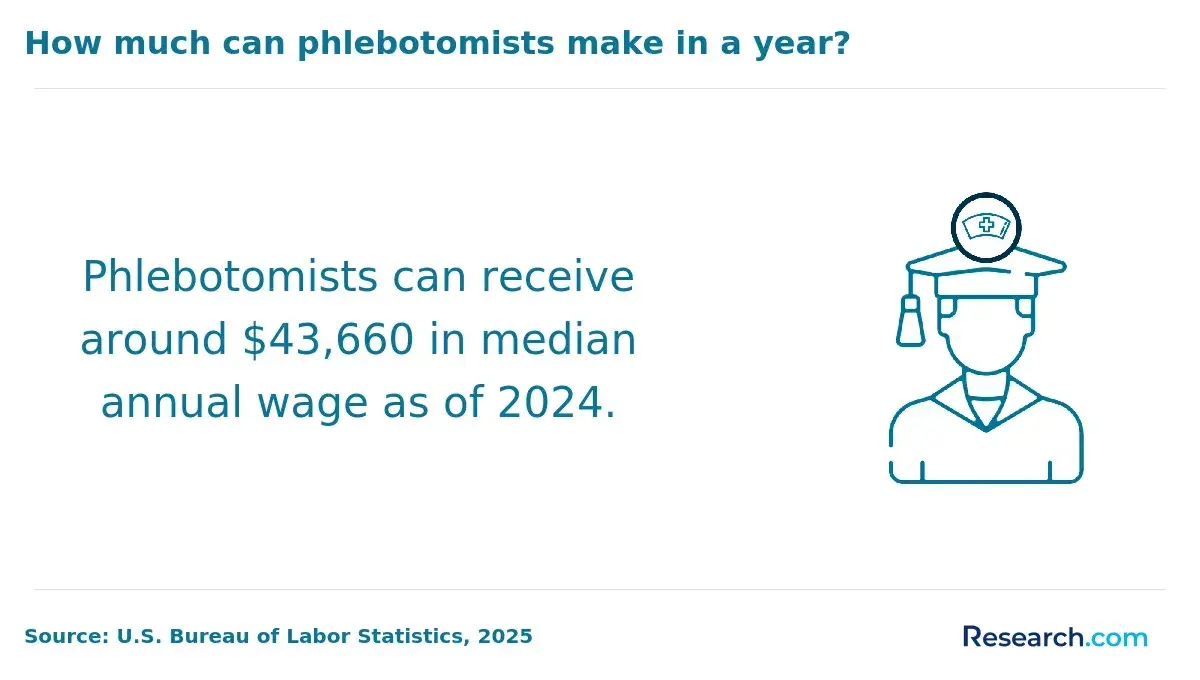
Phlebotomist salaries in Colorado can vary depending on several important factors, including geographic location, experience level, and type of employer. These variations mean that while the average phlebotomist salary in Colorado provides a useful benchmark, individual earnings often reflect unique circumstances and career choices. Exploring these influences can help those wondering how much do phlebotomists make in Colorado better understand the pay potential.
Here are the key factors that shape their salaries:
- Years of Experience: Entry-level phlebotomists generally start with salaries closer to $33,484 annually. With time and skill development, especially through gaining specialized capabilities or taking on supervisory roles, salaries can rise significantly, sometimes reaching up to $50,090.
- Workplace Setting: Hospitals often offer competitive wages, averaging around $20.05 per hour, with top positions paying up to $29.07. Private clinics, diagnostic labs, and blood donation centers may offer varied pay based on size, specialization, and benefits.
- Geographic Region: Urban centers like Denver or Colorado Springs tend to provide higher salary opportunities due to greater healthcare demand and living costs. Rural areas might offer lower pay, with salaries ranging from about $30,170 to $48,510 according to location and employer type.
- Additional Certifications: Earning certifications such as Certified Phlebotomy Technician (CPT) can increase hourly wages, often elevating pay into the $21.94 to $25.05 range compared to non-certified peers. These credentials also open doors to more advanced job opportunities.
For those preparing for this career path, combining practical skills with proper education is essential-exploring options like medical billing and coding classes online financial aid can also support a broader understanding of healthcare operations and improve job prospects.
What are the best ways to grow your phlebotomy career in Colorado?
Growing your phlebotomy career in Colorado is an exciting journey that blends education, certification, networking, and smart career moves. Elevate your qualifications by earning advanced national certifications like those from the NHA or ASCP, which are highly valued by Colorado employers.
Continuing education is key-participate in workshops and specialized courses offered at community colleges to refine your skills and stay current. Engage actively with local professional groups such as the Colorado Clinical Laboratory Society to build meaningful connections and access exclusive job opportunities. Career advancement abounds in hospitals, diagnostic labs, and private clinics, with paths toward supervisory or trainer roles.
Additionally, experienced phlebotomists can explore teaching positions at local institutions like Front Range Community College. Take advantage of Colorado's regional scholarships and workforce programs to support your education and practical experience. By combining these strategies, you'll build a strong foundation for a rewarding and progressive phlebotomy career in Colorado's thriving healthcare landscape.
What Do Phlebotomists in Colorado Say About Their Career?
Completing my phlebotomy certification at the Colorado Technical Academy was a turning point in my life. The hands-on training prepared me well to start my career in a local school, where I could immediately apply my skills with young students. What I love most about working here is seeing the relief and comfort we provide during their health screenings, helping them feel safe and cared for. Colorado's diverse communities give me a deep sense of purpose and connection beyond just the job itself. Every day brings the opportunity to grow professionally and personally in ways I hadn't anticipated. Andre
Starting my career as a phlebotomist within a local academic institution presented both unique challenges and rewarding moments. The environment demands precision and empathy, especially when working with nervous students getting their first blood draw. Reflecting on my journey from the Denver Medical Training Center, I'm grateful for the comprehensive education that paved my way to this steady and fulfilling career. Living in Colorado adds a vibrant backdrop of nature and culture, making every day in this field feel meaningful. I feel proud knowing my work contributes directly to the health and well-being of our youth. Liang
Choosing phlebotomy as a career after studying at the Rocky Mountain Health Institute has opened doors I never expected. The role offers significant opportunities for advancement while providing a chance to positively impact my community's health in Colorado. Working here means more than just drawing blood; it's about educating and reassuring families about their health. The state's commitment to healthcare innovation and investment means ongoing professional growth, which keeps me motivated and engaged. This career truly blends my passion for science with my desire to give back. Josefina
Related Articles for Nearby States
- 2027 How To Become a Phlebotomist in Wyoming
- 2027 How To Become a Phlebotomist in Nebraska
- 2027 How To Become a Phlebotomist in Kansas
- 2027 How To Become a Phlebotomist in New Mexico
- 2027 How To Become a Phlebotomist in Utah
- 2027 How To Become a Phlebotomist in Oklahoma
- 2027 How To Become a Phlebotomist in Arizona
- 2027 How To Become a Phlebotomist in Texas
- 2027 How To Become a Phlebotomist in South Dakota
- 2027 How To Become a Phlebotomist in Nevada
References
- Training to Career Pathways | Colorado Department of Human Services https://cdhs.colorado.gov/training-to-career-pathways
- Assessment of the Number of Phlebotomists in a Newly Established Sample Collection Center https://pmc.ncbi.nlm.nih.gov/articles/PMC10493005/
- Is a Phlebotomist Career the Right Fit for You? https://www.mycareersunlimited.com/blog/phlebotomist-career-outlook/
- Phlebotomy | Morgan Community College https://www.morgancc.edu/area-of-study/phlebotomy/
- Phlebotomist I in Denver, Colorado, United States https://careers.uchealth.org/jobs/16459634-phlebotomist-i
- Phlebotomy Technician Certificate Program https://pmi.edu/on-campus-programs/certificate/phlebotomy-technician/
- Average Phlebotomist Salary (Annually & Hourly) https://www.stepful.com/post/phlebotomist-salary
- Medical Laboratory Technology (MLT) https://www.arapahoe.edu/academics-programs/programs/medical-laboratory-technology-mlt
- Colorado Division of Professions and Occupations Online Services https://apps2.colorado.gov/dora/licensing/lookup/licenselookup.aspx
- Phlebotomy Tech: 7 Common Myths Debunked https://calregional.com/blog/phlebotomy-tech-7-common-myths-debunked/
Other Things You Should Know About Becoming a Phlebotomist in Colorado
To become a phlebotomist in Colorado in 2027, certification is not mandated by the state. However, obtaining a national certification, like those from the National Phlebotomy Association or the American Society for Clinical Pathology, can enhance job prospects and demonstrate your proficiency in the field.
Yes, it is possible to take hybrid or part-time phlebotomy programs in Colorado, making the path to certification flexible for working adults or those with other commitments. Many community colleges and technical schools offer programs that combine online theoretical coursework with in-person clinical training, allowing students to balance their schedules more easily. Part-time options are also available, helping students complete their training at a pace that suits their needs without sacrificing quality. These flexible formats provide convenient opportunities to gain the skills and certifications required to work as a phlebotomist in Colorado.
To enroll in a phlebotomy program in Colorado, you typically need a high school diploma or GED. Courses in biology, chemistry, and health sciences can be beneficial and may be required by certain programs, providing a solid foundation for the coursework ahead.


