
2027 How To Become a Phlebotomist in Iowa

Co-Founder and Chief Data Scientist
Phlebotomy offers a promising career path in Iowa, where the healthcare sector is expanding steadily. The state projects a 12% growth in phlebotomy jobs over the next decade, reflecting increasing demand for skilled professionals. Iowa's median annual wage for phlebotomists is competitive within the Midwest, offering financial stability and local employment opportunities. This makes phlebotomy a practical choice for individuals seeking quick entry into the healthcare field with manageable training requirements.
This article explains the essential steps to become a phlebotomist in Iowa, from necessary certifications to finding accredited programs. Prepared by career planning experts, it delivers reliable, actionable guidance to help readers navigate education, licensure, and job placement efficiently.
Key Things to Know About Becoming a Phlebotomist in Iowa
- Complete a state-approved phlebotomy training program, typically lasting 4-8 weeks, covering both classroom instruction and clinical practice.
- Obtain national certification from recognized bodies like the American Society for Clinical Pathology to improve employment prospects in Iowa's healthcare facilities.
- Gain practical experience through internships or entry-level positions, as Iowa's demand for trained phlebotomists is growing due to increased healthcare services and an aging population.
- What are the education requirements to become a phlebotomist in Iowa?
- What subjects are taught in phlebotomy classes in Iowa?
- Do you need a state license to work as a phlebotomist in Iowa?
- What phlebotomy certifications are recognized in Iowa?
- Where can you find accredited phlebotomy training programs in Iowa?
- How much does phlebotomy training cost in Iowa?
- What skills are required to become a successful phlebotomist in Iowa?
- Where do phlebotomists typically work in Iowa?
- What is the average salary for phlebotomists in Iowa?
- What are the best ways to grow your phlebotomy career in Iowa?
What are the education requirements to become a phlebotomist in Iowa?
Proper education and training are critical for phlebotomists to collect blood samples safely and accurately, which directly impacts patient diagnosis and treatment in clinical and laboratory environments. To meet professional standards and ensure competence, candidates must complete specific educational steps.
The following are essential components of phlebotomy training requirements in Iowa.
- High School Diploma or GED: Applicants must have a high school diploma or equivalent, which ensures foundational skills in reading, writing, and math needed for phlebotomy education and practice.
- Completion of a State-Approved Phlebotomy Training Program: Candidates must enroll in a formal phlebotomy program recognized by Iowa, usually offered at community colleges or vocational schools. These programs cover blood collection techniques, infection control, anatomy, and patient care within a few months.
- Classroom and Clinical Instruction Hours: Training includes 40-80 hours of classroom theory and 20-100 supervised clinical hours where students gain hands-on experience performing blood draws, essential for developing technical skills and confidence.
- Health and Background Prerequisites: Many programs require proof of immunizations, physical exams, background checks, and sometimes additional certifications like CNA to ensure safety for patients and learners in clinical settings.
- National or State Certification (Recommended): While Iowa phlebotomist education prerequisites do not mandate certification, obtaining credentials from national agencies improves job prospects and validates skills. Certification typically involves completing training, documenting blood draws, and passing competency exams.
For those considering this career path, understanding how long is medical billing and coding online school programs take can offer insights into the duration of comparable healthcare training courses.
What subjects are taught in phlebotomy classes in Iowa?
Knowing the subjects covered in Iowa phlebotomy training is key to equipping students with the skills needed for accurate blood collection, patient safety, and laboratory precision.
A well-rounded phlebotomy course curriculum in Iowa ensures graduates are prepared to meet the demands of healthcare settings by mastering both theoretical knowledge and practical techniques. The following list highlights essential subjects taught in these programs, focusing on developing competent and confident phlebotomists.
- Anatomy and Physiology: This area teaches students about the circulatory system, emphasizing veins, arteries, and the vascular anatomy crucial for blood collection. Understanding these structures helps students select appropriate venipuncture sites and adapt to patient differences, reducing the risk of complications.
- Venipuncture and Skin Puncture Techniques: Instruction covers hands-on methods for drawing blood through veins or capillaries using needles and collection devices. Mastery of these techniques minimizes patient discomfort and ensures the collection of quality specimens for testing.
- Infection Control and Safety: Students learn about hygiene protocols, personal protective equipment, and standard precautions to prevent the spread of bloodborne diseases. This training protects both the phlebotomist and patients while maintaining compliance with healthcare regulations.
- Specimen Collection and Processing: This subject includes proper labeling, handling, and transportation of blood samples to preserve specimen integrity. Accurate processing is vital for reliable lab results that inform patient diagnoses.
- Medical Terminology: Familiarity with medical language related to anatomy, procedures, and lab tests enables clear communication with healthcare teams and accurate interpretation of orders.
- Patient Communication and Interpersonal Skills: Training emphasizes professional interaction strategies, patient reassurance, and confidentiality to build trust and cooperation during blood draws.
- Legal and Ethical Issues: Students study confidentiality laws such as HIPAA, informed consent, and professional ethics to navigate legal responsibilities and protect patient rights.
- Clinical Practicum or Externship: Practical experience in healthcare settings allows students to apply skills under supervision, fostering confidence and competence before entering the workforce.
- Basic Laboratory Operations: This includes training on point-of-care testing, specimen storage, and equipment maintenance to ensure efficiency and accuracy in laboratory environments.
Additionally, those interested in healthcare may want to explore related roles; for example, you can learn about medical billing and coding position roles and duties to broaden your understanding of the medical field.
Do you need a state license to work as a phlebotomist in Iowa?
Iowa does not require a state license to work as a phlebotomist. Unlike some states that mandate formal state-level licensure, Iowa relies primarily on employer-based standards for regulating phlebotomy practice. Hospitals, clinics, and laboratories typically establish their own hiring criteria and often prefer candidates who hold national certification from recognized organizations such as the American Society for Clinical Pathology (ASCP) or the National Phlebotomy Association (NPA).
This approach means that while a state license is not legally necessary, obtaining national certification can significantly enhance your job prospects and professional standing within Iowa's healthcare system.
Knowing Iowa's stance on licensing helps clarify the best path forward in your phlebotomy career. Since the state leaves credentialing decisions mostly to employers, focusing on earning nationally recognized certifications improves your competitiveness across healthcare settings. This strategy not only broadens access to employment opportunities but also aligns you with industry standards valued by employers.
Understanding this framework helps avoid unnecessary obstacles and supports informed decisions about training investments that will be most effective in securing employment in Iowa's healthcare facilities.
What phlebotomy certifications are recognized in Iowa?
Certification is essential for phlebotomists in Iowa, as it aligns with employer expectations, boosts job prospects, and establishes professional credibility within healthcare settings. Most employers prefer or require candidates to hold a recognized credential, which confirms the individual's skills in safe and effective blood collection techniques.
Achieving a nationally recognized phlebotomy certification in Iowa helps candidates stand out and meet rigorous standards of patient care and laboratory compliance.
Several key certifications are widely accepted by Iowa healthcare employers:
- Certified Phlebotomy Technician (CPT) from the National Healthcareer Association (NHA): This credential is popular among Iowa phlebotomy candidates and requires a high school diploma, recent training, and documented practical experience performing venipunctures and capillary sticks. The two-hour exam can be taken in person or remotely, making it highly accessible.
- Phlebotomy Technician (PBT) certification from the American Society for Clinical Pathology (ASCP): The ASCP phlebotomy certification Iowa programs often prepare students for is respected for its alignment with the latest Clinical and Laboratory Standards Institute guidelines. It covers comprehensive knowledge of blood collection, specimen handling, and infection control, making it a valuable credential in clinical laboratory environments.
- Registered Phlebotomy Technician (RPT) from American Medical Technologists (AMT): Though less commonly referenced in Iowa-specific programs, the AMT's RPT certification is nationally recognized and demonstrates both theoretical knowledge and practical skill in phlebotomy procedures accepted by many employers.
- National Certified Phlebotomy Technician (NCPT) from National Phlebotomy Solutions or National Phlebotomy Certification Exam (NPCE): These options provide flexible certification routes at competitive prices, complete with study materials and multiple exam attempts. They offer candidates additional nationally recognized credentials that Iowa employers respect.
For those interested in complementary healthcare fields, it can be helpful to understand related certifications such as what is medical billing and what is medical coding, which can enhance career versatility beyond phlebotomy.
Where can you find accredited phlebotomy training programs in Iowa?
Enrolling in an accredited phlebotomy training program in Iowa ensures you receive quality education that aligns with industry standards, making you eligible for national certification exams and improving your job prospects in the healthcare sector.
Accredited programs signal to employers and certifying bodies that you have met essential training requirements. Below are common places where you can find accredited phlebotomy training programs in Iowa:
- Community Colleges: These institutions, including Des Moines Area Community College and Iowa Western Community College, offer structured certificate programs combining classroom instruction, lab practice, and clinical experience. Students can confirm accreditation through the college's health sciences department or the National Accrediting Agency for Clinical Laboratory Sciences (NAACLS).
- Vocational and Technical Schools: Focused on short-term, practical phlebotomy training, these schools prepare students for entry-level roles through hands-on labs and clinical rotations. Accreditation status is often verified via the Iowa Department of Education or by requesting documents from the institution.
- Hospitals and Healthcare Systems: Some hospitals partner with colleges or run their own programs, emphasizing real-world clinical training. Accreditation or state approval can be confirmed by directly contacting the hospital or related regulatory agencies.
- Private Career Institutes: Institutes like Phlebotomy USA offer accelerated courses with practical skills and exam preparation. Students should check for recognized accrediting bodies or confirm eligibility for certification exams such as those from the National Phlebotomy Association.
A phlebotomist from Iowa shared that finding an accredited program wasn't always straightforward. "I started by researching local community colleges but wanted hands-on experience, so I reached out to a nearby hospital program," he explained. He recalled the challenge of verifying accreditation details but emphasized the importance of asking questions directly to schools and instructors.
Graduating from a local community college, he appreciated the blend of classroom knowledge and clinical practice, which helped him feel confident entering the workforce. "Knowing the program was accredited made a big difference when I applied for jobs-I knew I met the standards employers expected," he reflected, highlighting that thorough research and persistence were key steps in his journey.
How much does phlebotomy training cost in Iowa?
Phlebotomy training costs in Iowa vary depending on the type of institution-public community colleges are generally more affordable than private schools-and the length of the program, which can range from just a few weeks to several months.
Program fees typically cover different aspects like instruction and clinical placements, but total expenses also include supplies, uniforms, exams, and health requirements. Below are the main cost components to consider when planning your investment in phlebotomy training.
- Tuition and Program Fees: Tuition usually represents the largest expense, with community colleges charging between $999 and $1,695 for complete certificate programs. These fees include classroom instruction, lab access, and coordination of clinical rotations, but longer programs or those with more clinical hours tend to cost more.
- Books and Supplies: Required textbooks and materials for anatomy, medical terminology, and blood collection add to the cost. Some schools include these in their fees, but if not, expect to pay several hundred dollars separately for these essential resources.
- Uniforms and Clinical Equipment: Students must purchase professional attire such as scrubs and closed-toe shoes, plus personal protective equipment. Additional items like penlight tools and watches with second hands are often required for clinical training, contributing to upfront costs.
- Certification Exam Expenses: After training, passing a national certification exam is necessary. The cost for exams like the National Phlebotomy Solutions certification is around $200 and may include study materials. Many students also invest in the ASCP certification exam, which some Iowa programs specifically prepare for.
What skills are required to become a successful phlebotomist in Iowa?
Success as a phlebotomist in Iowa depends heavily on mastering skills that ensure patient comfort, uphold strict safety standards, and guarantee precise blood collection. These abilities not only foster trust with patients but also support healthcare teams by delivering dependable results.
Developing a well-rounded skill set is crucial for standing out, especially since Iowa does not require state licensing for phlebotomists. Key skills to focus on include:
- Attention to Detail: Carefully following blood draw protocols and accurately labeling specimens prevents errors that could affect patient diagnosis or treatment.
- Technical Proficiency: Gaining hands-on experience with venipuncture and capillary techniques builds confidence and efficiency in every blood collection.
- Communication Skills: Explaining procedures clearly and empathetically helps reduce patient anxiety and improves cooperation during draws.
- Professionalism: Maintaining ethical standards, punctuality, and respect strengthens teamwork and patient trust.
A phlebotomist from Iowa, who graduated from a local program, shared that learning to stay calm during difficult draws was initially challenging. She emphasized how guided clinical rotations helped her build patience and improved her ability to communicate with nervous patients.
"Each successful collection boosted my confidence and refined my technique," she reflected, noting how continuous practice and feedback shaped her into the reliable professional she is today. This personal journey highlights the importance of combining practical skill development with emotional resilience to thrive in Iowa's healthcare environment.
Where do phlebotomists typically work in Iowa?
Phlebotomists play a crucial role in Iowa's healthcare system by supporting accurate diagnostic testing, patient care, and medical research through professional specimen collection. Their expertise ensures that physicians and laboratories receive quality samples necessary for effective diagnosis and treatment.
The following outlines the primary work environments where phlebotomists typically serve in Iowa.
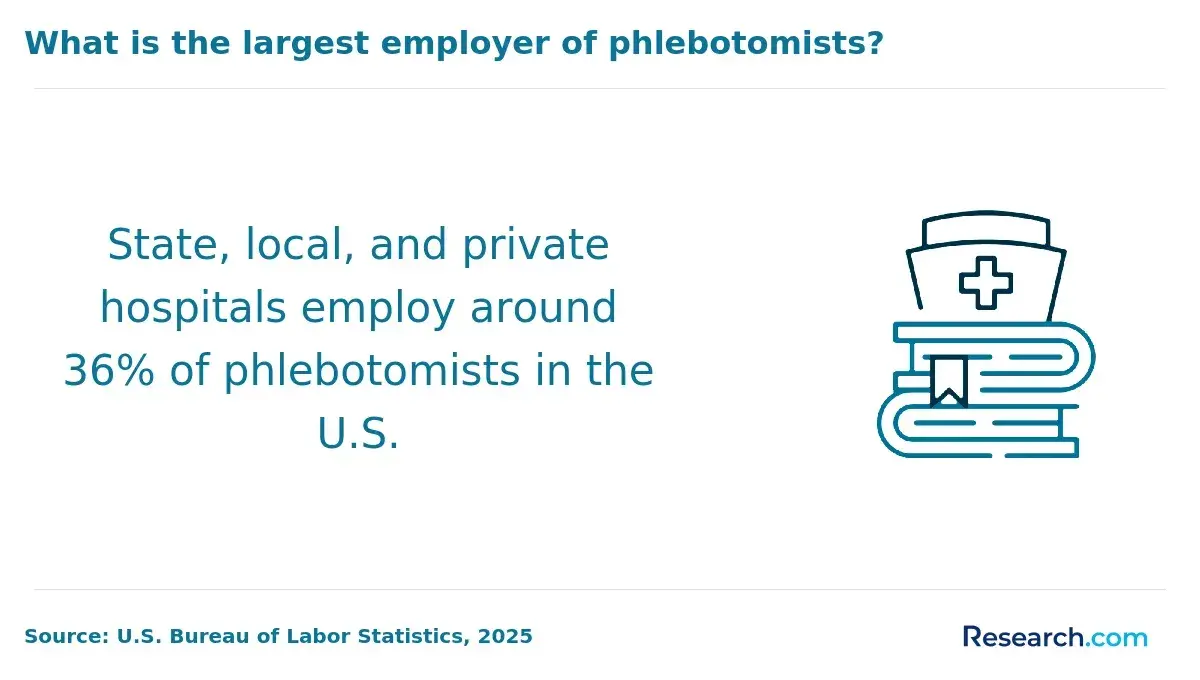
- Hospitals: Hospital phlebotomist jobs in Iowa involve collecting blood samples from patients in emergency rooms, inpatient wards, and outpatient areas. Phlebotomists collaborate with nursing staff and physicians to provide timely specimen collection essential for patient diagnosis and ongoing care.
- Diagnostic Laboratories: Many phlebotomists work in both independent and hospital-based labs, focusing on specimen collection, labeling, and preparation for testing. Their diligence directly supports lab operations, impacting the accuracy of test results crucial to medical decisions.
- Blood Donation Centers: Blood centers, including facilities like LifeServe Blood Center, depend on phlebotomists to collect blood from healthy donors for transfusions and medical use. These professionals also contribute to mobile blood drives at schools and community events, increasing donor accessibility.
- Outpatient Clinics: Phlebotomists in outpatient clinics perform blood draws during routine screenings and chronic disease management. Their multitasking abilities facilitate efficient workflows, enhancing service delivery in specialty and primary care centers.
- Physician's Offices: Smaller medical practices often employ phlebotomists to manage specimen collection for both in-house and external laboratory tests. They develop ongoing patient relationships, which is valuable in family or internal medicine settings where personalized care matters.
- Corporate Health Screenings and Mobile Units: Some phlebotomists operate in flexible roles, conducting workplace health screenings and home visits. These positions require strong communication skills to accommodate diverse populations efficiently across Iowa.
For individuals interested in related healthcare roles, exploring medical coding online classes can provide additional skills that complement phlebotomy expertise and open further career opportunities.
What is the average salary for phlebotomists in Iowa?
Salaries for phlebotomists in Iowa vary based on several important factors including location, experience level, and employer type. Those wondering how much do phlebotomists make in Iowa can expect a range of pay influenced by these conditions. The following points highlight key aspects that shape the average salary for phlebotomists in Iowa:
- Years of Experience: Entry-level phlebotomists typically start closer to the lower end of the salary spectrum, around $29,250 annually. As experience grows, pay can increase significantly, with seasoned phlebotomists earning upward of $45,745 due to enhanced skills and potential supervisory roles.
- Workplace Setting: Employment in large hospitals or diagnostic labs generally leads to higher wages compared to smaller clinics or physician offices. Hospitals may offer premium pay for demanding shifts and specialized unit assignments.
- Geographic Region: Urban areas such as Des Moines and Iowa City offer higher average wages, with local hourly rates sometimes exceeding $22, reflecting region-specific healthcare demand and living costs.
- Additional Certifications: Obtaining certifications beyond basic phlebotomy credentials increases job opportunities and earning potential, as certified professionals can perform a broader range of tasks and require less oversight.
For those exploring training options, there are several online schools for medical billing and coding with financial aid that may complement a phlebotomy career path by expanding healthcare knowledge and coding skills.
What are the best ways to grow your phlebotomy career in Iowa?
To grow your phlebotomy career in Iowa, start by earning advanced certifications such as the Certified Phlebotomy Technician (CPT) or Certified Clinical Medical Assistant (CCMA), which are highly valued by employers statewide.
Enroll in continuing education courses offered by institutions like Eastern Iowa Community Colleges and Iowa Valley Continuing Education to stay current with evolving techniques and safety standards.
Networking is essential-join professional associations like the American Society for Clinical Pathology (ASCP) or local healthcare groups to access job leads, mentorship, and industry updates.
Explore career advancement opportunities by seeking supervisory roles in hospital laboratories or specializing in areas such as pediatric phlebotomy. Additionally, consider transitioning into allied health roles or teaching phlebotomy at community colleges, leveraging your experience.
Iowa's supportive regional programs and steady job demand provide a strong foundation for ambitious phlebotomists to build rewarding and dynamic careers.
What Do Phlebotomists in Iowa Say About Their Career?
- Completing the phlebotomy program at Cedar Valley Technical Institute was a game-changer for me. The hands-on training and supportive instructors gave me the confidence to start my career working in a local school, where I quickly realized how much my role impacts the health and well-being of young students. I love being part of a community that values healthcare education and allows me to grow professionally while making a difference every day. Iowa's stable demand for skilled phlebotomists means I have great job security and opportunities. The rewarding feeling of helping students stay healthy keeps me enthusiastic about this career. Darius
- After finishing my certification at Hawkeye Community Academy, I began working as a phlebotomist in a local school. The experience has been incredibly fulfilling, especially because I get to connect with the community and positively impact children's health on a daily basis. Iowa's environment encourages close-knit relationships and teamwork, which has helped me develop personally and professionally. It's been inspiring to see how this career supports not only the students but also the broader community. This thoughtful, steady work fits perfectly with my passion for lifelong learning and service. Linda
- Training at Des Moines Medical Training Center opened doors for me that I never imagined. Starting a career as a phlebotomist in an Iowa academic setting presented unique challenges like adapting to diverse student needs and the rural healthcare landscape, but those challenges pushed me to develop critical skills and resilience. The professional growth opportunities here are substantial, from mastering advanced techniques to moving into supervisory roles. I take pride in contributing to the care systems that support young learners' health across the state. This career has strengthened my sense of purpose and commitment. Tariq
Related Articles for Nearby States
- 2027 How To Become a Phlebotomist in Minnesota
- 2027 How To Become a Phlebotomist in Wisconsin
- 2027 How To Become a Phlebotomist in Illinois
- 2027 How To Become a Phlebotomist in Nebraska
- 2027 How To Become a Phlebotomist in South Dakota
- 2027 How To Become a Phlebotomist in Missouri
- 2027 How To Become a Phlebotomist in Kansas
- 2027 How To Become a Phlebotomist in Indiana
- 2027 How To Become a Phlebotomist in North Dakota
- 2027 How To Become a Phlebotomist in Michigan
References:
- Phlebotomy Certification Iowa City Iowa — NPS https://npscerts.com/phlebotomy-certification-iowa-city-iowa/
- Phlebotomy Tech: 7 Common Myths Debunked https://calregional.com/blog/phlebotomy-tech-7-common-myths-debunked/
- Top Phlebotomist Skills You Need to Succeed - Precision Labs https://precisionlabtesting.com/2025/03/07/top-phlebotomist-skills-you-need-to-succeed/
- Des Moines Phlebotomy Courses - Phlebotomy USA https://www.phlebotomyusa.com/iowa/des-moines-phlebotomy-school-classes/
- Online Certified Phlebotomy Technician (Vouchers and Lab Included) from Iowa Central Community College https://careertraining.iowacentral.edu/training-programs/certified-phlebotomy-technician-lab-and-voucher/
- 77 phlebotomist Jobs in Iowa, October 2025 | Glassdoor https://www.glassdoor.com/Job/iowa-phlebotomist-jobs-SRCH_IL.0,4_IS2733_KO5,17.htm
- Phlebotomy Services, Medical Center North Liberty https://uihc.org/locations/medical-center-north-liberty/phlebotomy-services-medical-center-north-liberty
- Indian Hills Community College | Phlebotomy Technician https://www.indianhills.edu/academics/health/phlebotomy.php
- Phlebotomy Certificate https://programs.scciowa.edu/current/pathways/health/phlebotomy-certificate.aspx
- Phlebotomy Certification in Iowa City Iowa with NPCE https://www.npce.org/phlebotomy-certification-iowa-city-iowa
Other Things You Should Know About Becoming a Phlebotomist in Iowa
To enroll in a phlebotomy program in Iowa, applicants generally need a high school diploma or GED. Some programs may also require a background check, immunizations, and basic healthcare certifications like CPR. It's advisable to check the specific requirements of each program before applying.
Yes, phlebotomy jobs are in demand in Iowa in 2027. With an aging population and ongoing advancements in healthcare, the need for skilled phlebotomists is increasing. The field offers stable career opportunities, especially in hospitals, clinics, and diagnostic labs across the state.


