
2027 Nurse Anesthetist Salary

Co-Founder and Chief Data Scientist
Few roles in healthcare pay as well as being a nurse anesthetist. These advanced practitioners handle the critical task of managing anesthesia during surgeries and procedures. Their work demands precision, and their pay reflects it.
Earnings in this field go far beyond a flat number on a paycheck. Location, education, experience, and workplace setting all shape how much nurse anesthetists take home. Knowing these factors can help future professionals map out their earning potential.
In this guide, I will break down what nurse anesthetists really make. You’ll see how pay shifts across states, cities, degree levels, specialties, and career stages. By the end, you’ll know what drives their earning power and how to reach it.
Key Things to Know About Nurse Anesthetist Salaries
- Top salaries of nurse anesthetists can exceed $200,000, reflecting the advanced skills and high responsibility the role demands (ZipRecruiter, n.d.)
- Employment of nurse anesthetists is projected to grow 35% from 2024 to 2034, offering strong job security and abundant opportunities (BLS, 2025).
- Soaring demand for surgical care is driving salaries higher, putting nurse anesthetists on a powerful upward earnings trajectory.
- How much does a nurse anesthetist typically make? Average Salary
- What are the factors that influence a nurse anesthetist's salary? Salary Drivers
- How does a nurse anesthetist’s salary compare with other nursing specialties? How does a nurse anesthetist’s salary compare with other nursing specialties?
- What is the wage gap of nurse anesthetists by degree level? Wage Gap by Degree
- How does a nurse anesthetist's salary compare to the national average wage in the US? How does a nurse anesthetist's salary compare to the national average wage in the US?
- What are currently the top-paying US companies for nurse anesthetists? Top Employers
- What are the highest-paying states for nurse anesthetists? Highest-Paying States
- What are the highest-paying cities for nurse anesthetists? Highest-Paying Cities
- How can nurse anesthetists increase their earning potential? Salary Boosters
- What is the job outlook for nurse anesthetists? Job Outlook
How much does a nurse anesthetist typically make?
A nurse anesthetist earns some of the highest salaries in nursing, reflecting the advanced training and critical expertise their role requires. Their income can vary widely, but even those on the lower end earn well above the national average for registered nurses.
Here’s a breakdown of what nurse anesthetists typically make at different earning levels:
- Top Earners: Around $200,000 annually for the most experienced and specialized professionals.
- 75th Percentile: About $169,500, often achieved by nurse anesthetists with several years of experience in high-demand settings.
- Average: Approximately $138,690, representing the overall typical earnings in the field.
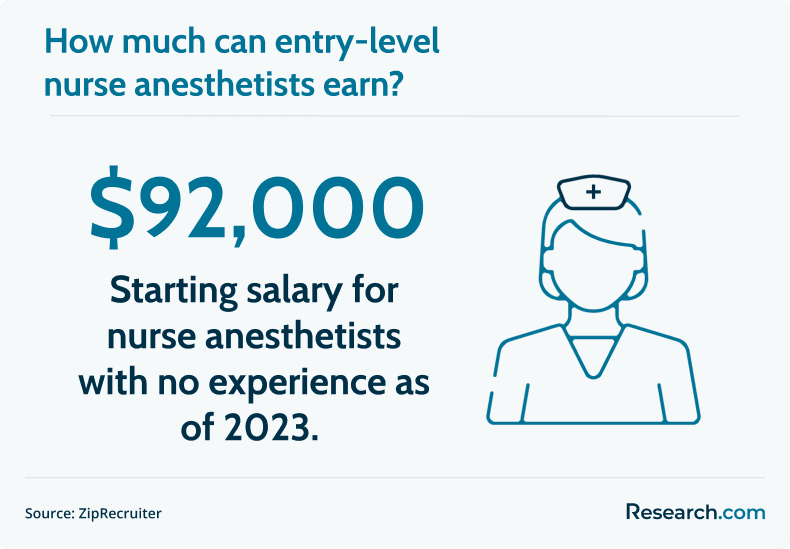
- 25th Percentile: Around $92,000, common for those just starting out or working in lower-paying regions.
If you’re still exploring your path in healthcare, starting with a foundational role can help you gain experience and build confidence. Many professionals begin their journey through affordable CNA programs online, which offer a flexible and accessible way to enter the field and work toward higher-paying careers like nurse anesthesia.
What are the factors that influence a nurse anesthetist's salary?
A nurse anesthetist’s salary depends on more than just years on the job; it’s shaped by where they work, what procedures they handle, and how specialized their training is. These factors can create large pay gaps even among equally qualified professionals.
Here are the key factors that directly affect nurse anesthetist salaries:
- Type of Healthcare Facility: Nurse anesthetists in hospitals and surgical centers often earn more than those in physician offices or rural clinics.
- Case Complexity: Handling high-risk or specialized surgical cases typically comes with higher pay.
- Geographic Demand: States with greater shortages of nurse anesthetists tend to offer higher salaries to attract talent.
- On-Call Requirements: Roles that include overnight or weekend on-call duties often come with additional compensation.
- Advanced Medical Certifications: Earning credentials in subspecialties like pediatric or cardiac anesthesia can boost salary potential.
- Education Level: Completing a Doctor of Nursing Practice (DNP) or Doctor of Nurse Anesthesia Practice (DNAP) can open doors to top-paying positions and leadership roles.
Pursuing advanced degrees like a DNP not only increases your earning power but also expands your career options. If you're asking: what can you do with a DNP? Our guide on Doctor of Nursing Practice career paths explores how this degree can unlock leadership roles, policy influence, and higher-paying nurse anesthetist positions.
How does a nurse anesthetist’s salary compare with other nursing specialties?
A nurse anesthetist consistently earns more than most other advanced nursing roles, reflecting the specialized expertise their work requires. Professionals with healthcare management certifications may find additional opportunities to advance or diversify their careers, making salary comparisons across nursing specialties even more relevant.
Seeing how their salaries stack up can highlight just how competitive this career path is. It can also help you weigh your options if you’re exploring different advanced nursing specialties.
Here’s how average salaries compare across key roles:
- Nurse Anesthetist: Average salary: $138,690 — Provides anesthesia care during surgical, diagnostic, and therapeutic procedures, often serving as the sole anesthesia provider.
- Nurse Practitioner: Average salary: $130,295 — Delivers primary and specialty care, diagnoses illnesses, and prescribes treatments across diverse patient populations.
- Certified Nurse Midwife: Average salary: $116,247 — Offers prenatal, childbirth, and postnatal care, focusing on women’s reproductive health and wellness.
- Nurse Educator: Average salary: $102,263 — Teaches and mentors nursing students or practicing nurses in academic and clinical settings.
- Clinical Nurse Specialist: Average salary: $94,545 — Provides advanced expertise in specific clinical areas, guiding care teams and improving patient outcomes.
- Nurse Administrator: Average salary: $84,334 — Manages nursing staff, budgets, and policies within healthcare organizations to ensure efficient operations.
If you’re aiming for one of these advanced roles, building the right educational foundation is key. Programs like an accelerated nurse midwifery MSN degree online can help you fast-track your qualifications and move more quickly toward higher-paying, specialized nursing careers.
What is the wage gap of nurse anesthetists by degree level?
Degree level can dramatically impact a nurse anesthetist’s salary. Those with a bachelor's degree earn about $181,568, which is strong but still below advanced-degree peers. Professionals pursuing dual master degree programs in social work or other advanced degrees may see similar benefits, as climbing the education ladder can unlock much higher pay.
A master's degree pushes average earnings to $218,603, reflecting the added clinical depth and leadership training. Many nurses also explore top online MHA programs to gain management expertise that boosts their value in complex care settings. This combination often leads to faster promotions and higher salaries.
At the top are those with a doctorate, earning around $230,810 on average. They qualify for elite clinical, academic, and policy roles that command top pay. Doctoral preparation places them at the peak of the nurse anesthetist salary scale.
Here’s a visual breakdown of this wage gap for your reference:
How does a nurse anesthetist's salary compare to the national average wage in the US?
The average salary for a nurse anesthetist clocks in at an impressive $138,690, more than double the national average wage of $66,622 in the United States. That means while most workers are earning five figures, nurse anesthetists are comfortably operating in six-figure territory. It’s a financial leap that highlights just how valuable their specialized skills are.
This massive pay gap underscores the premium placed on advanced medical expertise. While the average worker may need decades to hit this income level, nurse anesthetists can reach it relatively early in their careers. Their earning power reflects the intense education, training, and responsibility their role demands.
If you’re looking for a profession that pays far above the norm, this one’s in a league of its own. See the glaring gap on the chart below:
What are currently the top-paying US companies for nurse anesthetists?
If you’re aiming to maximize your earning potential as a nurse anesthetist, choosing the right employer can make all the difference. Some healthcare organizations are willing to pay well above the industry average to attract and retain top talent. Professionals with certifications for nurse practitioner subspecialties may have an added advantage when negotiating salaries or accessing top-paying positions.
Here are the current top-paying companies for nurse anesthetists in the United States:
- Trinity Health: Offers an average annual salary of $278,811. As one of the largest not-for-profit health systems in the country, Trinity operates hospitals and clinics across multiple states.
- Houston Methodist: Pays around $241,677 annually. This Texas-based academic medical center is nationally recognized for cutting-edge research, innovative care, and a strong emphasis on employee development.
- St. Luke's Hospital: Provides an average salary of $227,321. St. Luke’s is a respected regional healthcare network in Pennsylvania known for its patient-first philosophy and supportive workplace culture.
- Alameda Health System: Offers $227,303 per year. Based in California, this public healthcare system serves diverse communities and is committed to equitable, high-quality care.
- Mayo Clinic: Pays about $226,650 annually. Renowned worldwide, Mayo Clinic is a nonprofit academic medical center in Arizona known for groundbreaking research and exceptional patient outcomes.
If you’re an RN aiming to break into higher-paying advanced practice roles like nurse anesthetist, earning your MSN is a critical next step. Transitioning from RN to MSN equips you with the specialized skills and credentials needed to compete for top-paying positions. Exploring the shortest RN to MSN online nursing programs can help you make this leap faster and more efficiently.
What are the highest-paying states for nurse anesthetists?
Where you practice has a huge impact on how much you earn as a nurse anesthetist. Certain states offer significantly higher salaries thanks to factors like cost of living, demand for healthcare services, and the concentration of major medical centers. Understanding what is a nurse consultant salary can also provide useful context when comparing advanced nursing roles. If you’re aiming to maximize your income potential, relocating to one of these states could be a smart career move.
Here are the top-paying states for nurse anesthetists right now:
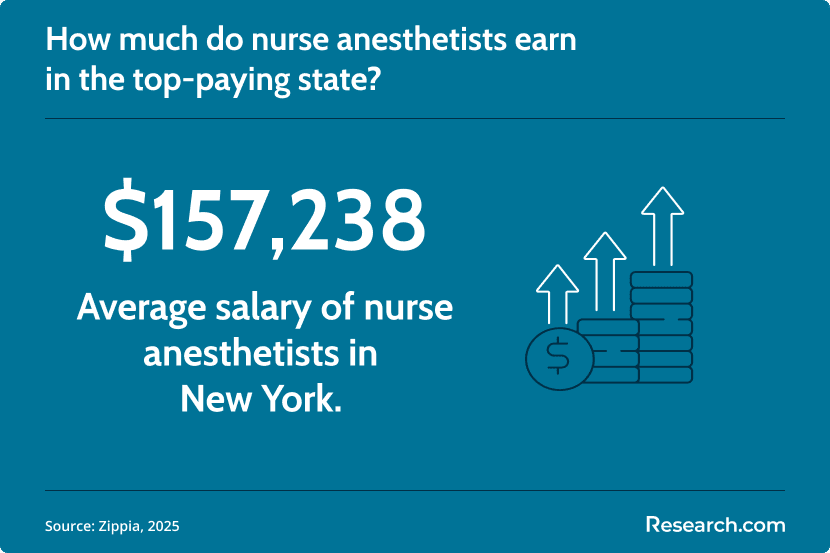
- New York: Offers an average annual salary of $157,238 ($75.60/hour), driven by high demand in its dense metropolitan areas and world-renowned hospitals.
- Oregon: Pays about $157,009 annually ($75.49/hour) with strong opportunities across both urban centers and underserved rural communities.
- California: At $155,860 annually ($74.93/hour), this state offers high pay alongside a competitive and fast-paced healthcare landscape.
- Maryland: With an average of $154,697 annually ($74.37/hour), Maryland benefits from its proximity to federal healthcare institutions and research hospitals.
- Minnesota: Offers about $152,535 annually ($73.33/hour), supported by a strong healthcare network and nationally ranked hospitals.
If you’re considering a move to boost your earnings, exploring state-specific licensing requirements and opportunities can help you make a smooth transition into one of these high-paying markets.
What are the highest-paying cities for nurse anesthetists?
Just like states, some cities stand out for offering salaries well above the national average. These hotspots often compete for top nurse anesthetist talent by offering premium pay and generous incentives. Positioning yourself in one of these cities can unlock faster salary growth and access to high-profile clinical opportunities.
Here are the current top-paying cities for nurse anesthetists:
- Oakland, California: Offers an average salary of $178,976 ($86.05/hour), fueled by its large healthcare networks and competitive market.
- Salem, Oregon: Pays about $174,763 annually ($84.02/hour), with growing demand in both hospital and outpatient settings.
- Duluth, Minnesota: Provides around $172,477 annually ($82.92/hour), supported by a strong regional healthcare system and steady patient demand.
- Rochester, New York: Offers $170,351 annually ($81.90/hour), home to major hospitals and a thriving medical research community.
- Bangor, Maine: Pays about $161,386 annually ($77.59/hour), driven by high demand for specialized providers in more rural areas.
If you’re looking to elevate your income, exploring opportunities in these top-paying cities can be a powerful way to advance your career as a nurse anesthetist.
How can nurse anesthetists increase their earning potential?
Boosting your income as a nurse anesthetist goes beyond simply gaining years of experience; it requires targeted steps that increase your expertise and market value. By building specialized skills and seeking out high-demand opportunities, you can position yourself at the top of the pay scale.
Here are some ways to boost earning potential as a nurse anesthetist:
- Specialize in High-Risk Anesthesia Cases: Handling complex surgeries such as cardiac or trauma procedures often comes with higher pay due to the advanced skill and precision required.
- Work in High Paying Cities: Relocating to the top-paying cities like Oakland, California and Salem, Oregon is key to have an advantage in maximizing your earning potential.
- Take Extra On-Call or Overtime Shifts: Many facilities offer premium rates for CRNAs who cover nights, weekends, or holiday shifts.
- Move Into Independent Practice Settings: Practicing in states with full practice authority allows nurse anesthetists to operate without physician oversight, often leading to higher income potential.
- Pursue a Doctor of Nursing Practice (DNP): Advancing your degree can qualify you for leadership roles, faculty positions, and top-tier salaries in clinical practice.
These targeted strategies can help nurse anesthetists steadily push their earnings well beyond the national average.
What is the job outlook for nurse anesthetists?
The future looks bright for nurse anesthetists, with demand rising steadily across the healthcare landscape. As surgical volumes grow and the need for advanced care providers increases, opportunities for CRNAs are expected to surge well above the national average for all occupations. This strong outlook makes it one of the most stable and rewarding nursing career paths.
Here are key trends shaping the job outlook for nurse anesthetists:
- Rapid Employment Growth: Overall employment of nurse anesthetists is projected to grow 35% from 2024 to 2034, far outpacing most other professions.
- Thousands of Annual Openings: About 32,700 job openings are expected each year, largely due to retirements and workers transitioning to other roles.
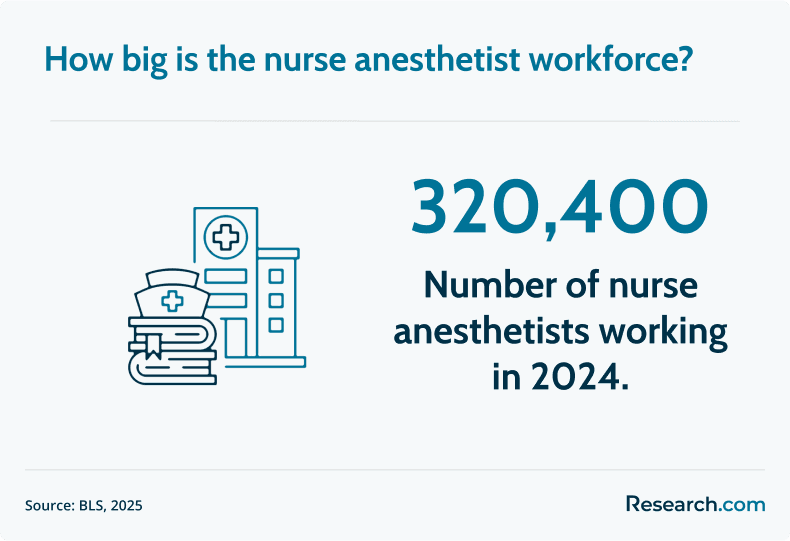
- Expanding Workforce: Nurse anesthetists held about 320,400 jobs in 2024, showing how critical they’ve become to the U.S. healthcare system.
This fast-growing demand signals a strong and secure career path for anyone entering or advancing within the nurse anesthetist field.
Key Findings
- As of 2025, the starting salary for nurse anesthetists with no experience is $92,000.
- Nurse anesthetists with a bachelor’s degree earn about $181,568, compared to $218,603 with a master’s and $230,810 with a doctorate.
- The average salary for a nurse anesthetist clocks in at an impressive $138,690, more than double the national average wage of $66,622 in the US.
- New York offers an average annual salary of $157,238 ($75.60/hour), driven by high demand in its dense metropolitan areas and world-renowned hospitals.
- Oakland, California offers an average salary of $178,976 ($86.05/hour), fueled by its large healthcare networks and competitive market.
- About 32,700 job openings are expected each year, largely due to retirements and workers transitioning to other roles.
References:
- Social Security Administration. (n.d.). Average wage index. Ssa.gov. Retrieved 17 September 2025.
- US Bureau of Labor Statistics. (n.d.). Nurse anesthetists, nurse midwives, and nurse practitioners. U.S. Department of Labor. Bls.gov. Retrieved 17 September 2025.
- ZipRecruiter. (n.d.). Certified nurse midwife salary. Ziprecruiter.com. Retrieved 17 September 2025.
- ZipRecruiter. (n.d.). Clinical nurse specialist salary. Ziprecruiter.com. Retrieved 17 September 2025.
- ZipRecruiter. (n.d.). Nurse administrator salary. Ziprecruiter.com. Retrieved 17 September 2025.
- ZipRecruiter. (n.d.). Nurse anesthetist salary. Ziprecruiter.com. Retrieved 17 September 2025.
- ZipRecruiter. (n.d.). Nurse educator salary. Ziprecruiter.com. Retrieved 17 September 2025.
- ZipRecruiter. (n.d.). Nurse practitioner salary. Ziprecruiter.com. Retrieved 17 September 2025.
- ZipRecruiter. (n.d.). Nurse practitioner salary. Ziprecruiter.com. Retrieved 17 September 2025.
- Zippia. (n.d.). Nurse anesthetist salaries. Zippia.com. Retrieved 17 September 2025.
Other Things You Should Know About Nurse Anesthetist Salaries
In 2027, a nurse anesthetist's compensation package generally includes health insurance, retirement plans, paid time off, and sometimes continuing education allowances. Other benefits may include disability insurance and professional liability coverage, enhancing the overall compensation beyond the base salary.
In 2027, overtime can significantly boost nurse anesthetist earnings. With regular pay often set hourly, being eligible for time-and-a-half rates during overtime can lead to increased annual income, especially for those working in high-demand environments like hospitals and surgical centers.
Salary increases typically occur annually for nurse anesthetists. Raises are often tied to performance reviews, experience milestones, and market adjustments. Additional certifications or advanced degrees can also trigger pay increases sooner.


