2027 Steps to Become a Registered Dietitian in Ohio

Co-Founder and Chief Data Scientist
Ohio faces a growing demand for registered dietitians as chronic diseases linked to poor nutrition affect nearly 35% of adults statewide. This shortage challenges healthcare providers and highlights the need for qualified dietitians to improve public health outcomes.
As such, pursuing a career as a registered dietitian in Ohio offers promising opportunities, with employment expected to grow by 11% over the next decade and competitive salaries above the national average.
This article, prepared by career planning experts, outlines the essential steps to becoming a registered dietitian in Ohio. It contains the information you need to successfully navigate this evolving healthcare field.
Key Things to Know About Becoming a Registered Dietitian in Ohio
- Complete a minimum of a bachelor’s degree in nutrition or dietetics accredited by the Accreditation Council for Education in Nutrition and Dietetics (ACEND), with Ohio seeing a steady increase in program offerings to meet workforce demand.
- Undertake a supervised dietetic internship, typically 1,200 hours, which Ohio hospitals and clinics increasingly integrate with telehealth practices, enhancing future career flexibility.
- Pass the national Registered Dietitian Nutritionist (RDN) exam and apply for Ohio state licensure, where evolving telepractice regulations may expand opportunities beyond traditional settings.
- What degree is required to become a registered dietitian in Ohio?
- How many supervised practice hours are needed to become a registered dietitian in Ohio?
- What are the eligibility requirements for the dietetic registration exam in Ohio?
- How can you get a license after passing the dietetic registration exam in Ohio?
- What types of dietitian specializations can you pursue in Ohio?
- What is the average salary of a registered dietitian in Ohio?
- What digital innovations are shaping dietetics practices in Ohio?
- How can expanding your skillset with allied health certifications benefit your dietetics career in Ohio?
- What do you need to keep your dietitian registration active in Ohio?
- How long does it take to become a registered dietitian in Ohio?
- Can international students qualify to become registered dietitians in Ohio?
- What career paths can registered dietitians pursue in Ohio?
What degree is required to become a registered dietitian in Ohio?
The trajectory toward becoming a registered dietitian in Ohio is evolving alongside shifts in educational standards and healthcare needs. Future trends suggest increasing emphasis on advanced degrees and integrated practical experiences. Here are the degree requirements for becoming a registered dietitian in Ohio:
- Bachelor’s Degree in Nutrition or Dietetics: This foundational degree provides essential knowledge in food science, nutrition, and health, serving as a prerequisite for graduate studies and professional certification.
- Master’s Degree for Registered Dietitian: A master’s degree is increasingly becoming the standard, deepening expertise and aligning with national credentialing trends to enhance clinical and community nutrition skills.
- Coordinated Program or Didactic Program Completion: Completion of accredited programs combining coursework and supervised practice hours prepares candidates for the rigor of dietetics registration exams and real-world application.
- Supervised Practice Experience: Extensive, supervised hands-on training remains critical, often requiring 1,200 hours to meet the competency standards for credentialing and licensure.
- Emerging Focus on Interdisciplinary Education: Future dietetics degree requirements in Ohio may integrate broader healthcare collaboration and technology proficiency, reflecting the growing role of dietitians in multidisciplinary teams.
For those considering their next steps, exploring what is the best career to pursue with a nutrition masters degree can provide valuable insight into how educational pathways align with evolving professional opportunities.
How many supervised practice hours are needed to become a registered dietitian in Ohio?
To become a registered dietitian in Ohio, candidates must complete between 1,000 and 1,200 supervised practice hours, depending on the program and current national standards. These hours are crucial to qualify for the Commission on Dietetic Registration exam and state licensure.
Below is an outline of the key standards and state-specific factors governing supervised practice hours in Ohio:
- Accredited Pathways: All practice hours must be completed through ACEND-accredited Coordinated Programs, Didactic Program plus Dietetic Internship pathways, or equivalent, ensuring compliance with national registration requirements.
- Hour Requirements: Recent updates reflect a trend toward a minimum of 1,000 hours in many Ohio programs, though some traditional pathways still require up to 1,200 hours.
- Practice Settings: Supervised hours span multiple professional settings, including clinical, community, and food service management, to provide a broad, practical experience.
- Doctoral Flexibility: Holders of a relevant doctoral degree may qualify with at least 900 hours under a state-approved planned program, highlighting flexibility for advanced professionals.
- State Requirements: Ohio does not impose additional supervised practice hour requirements beyond ACEND standards, but mandates a background check and application fee for licensure.
- Program Access: The state supports access to these requirements through multiple accredited coordinated programs and dietetic internships available statewide.
The chart below shows the work settings for registered dietitian nutritionists in the U.S. The largest distribution, which is 27%, belongs to acute-care inpatient setting.
What are the eligibility requirements for the dietetic registration exam in Ohio?
Eligibility for the dietetic registration exam in Ohio involves meeting both national and state-specific standards. These requirements ensure candidates possess the necessary education and credentials to practice as registered dietitians. The process reflects evolving standards that may continue to adapt with emerging trends in nutrition education and licensure.
- Minimum Graduate Degree Requirement: Candidates must hold at least a master’s degree from an accredited institution or an equivalent foreign degree, regardless of the subject area, to qualify for the exam.
- Completion of ACEND-Accredited Coursework: Applicants need to finish nutrition-related courses through an ACEND-accredited program such as a Didactic Program in Dietetics, Coordinated Program, or Graduate Program, aligning with Ohio’s recognized pathways.
- Program Director Submission to CDR: After coursework and supervised practice completion, the program director submits verification of eligibility to the Commission on Dietetic Registration via the Registration Eligibility Processing System, enabling exam registration.
- Registration for and Passage of the National Exam: Passing the national Registration Examination for Dietitians, administered by the CDR, is mandatory for earning the Registered Dietitian Nutritionist credential and state licensure in Ohio.
- State Licensure Pathways and Variations: Ohio mandates licensure through the State Medical Board, recently adding pathways like reciprocity for out-of-state license holders or active practitioners; however, passing the CDR exam remains essential.
As the field progresses, Ohio’s dietetic registration system may further integrate technology-driven credential verification and streamlined pathways, reflecting national trends in healthcare licensure.
Prospective candidates should also consider the broader nutrition job requirements to align their education and experience with future industry demands. The state’s recognition of ACEND-accredited dietetics programs in Ohio supports candidates in meeting these evolving eligibility criteria while maintaining rigorous professional standards.
How can you get a license after passing the dietetic registration exam in Ohio?
To move from passing the dietetic registration exam to earning your license in Ohio, consider these key steps that shape the process and hint at future evolutions in credentialing.
- Confirm Eligibility: Verify completion of your accredited degree, supervised practice, and exam success to meet state standards that may soon integrate digital credential verification.
- Gather Documentation: Assemble transcripts, registration proof, and IDs efficiently, anticipating more streamlined electronic submissions in upcoming licensing systems.
- Demonstrate Good Moral Character: Provide attestation and background information, as evolving policies might incorporate enhanced data security and automated checks.
- Complete Online Application: Use Ohio’s portal to submit your license request, with potential future upgrades to improve user experience and reduce processing times.
- Pay Application Fee: Submit the current $225 plus transaction fee, while future models could explore flexible payment methods or tiered fees linked to expedited services.
- Submit CDR Registration Verification: Present proof of your Registered Dietitian status, a step likely to become more automated through inter-agency data sharing.
- Await Review: Respond promptly to Board inquiries during review, as AI-driven tools may soon assist in verifying applications faster and more accurately.
- Receive License Approval: Once approved, you gain legal practice rights, with potential for digital licenses stored on mobile devices for easy verification.
- Maintain License via Continuing Education: Provide proof at renewal, a process expected to incorporate real-time tracking of professional development activities.
A registered dietitian from Ohio who graduated locally shared how navigating licensure without reciprocity posed distinct challenges. “Because Ohio doesn’t fully recognize licenses from other states, I had to carefully follow each step here, which felt daunting at times,” she reflected.
Yet, she appreciated how this thorough process ensured her credentials were respected and allowed her to build trust within the Ohio healthcare community. “The detailed requirements made me confident in my role and helped me understand the value of maintaining ongoing education,” she added, highlighting that while the path was complex, the clarity and rigor ultimately benefited her practice and professional growth.
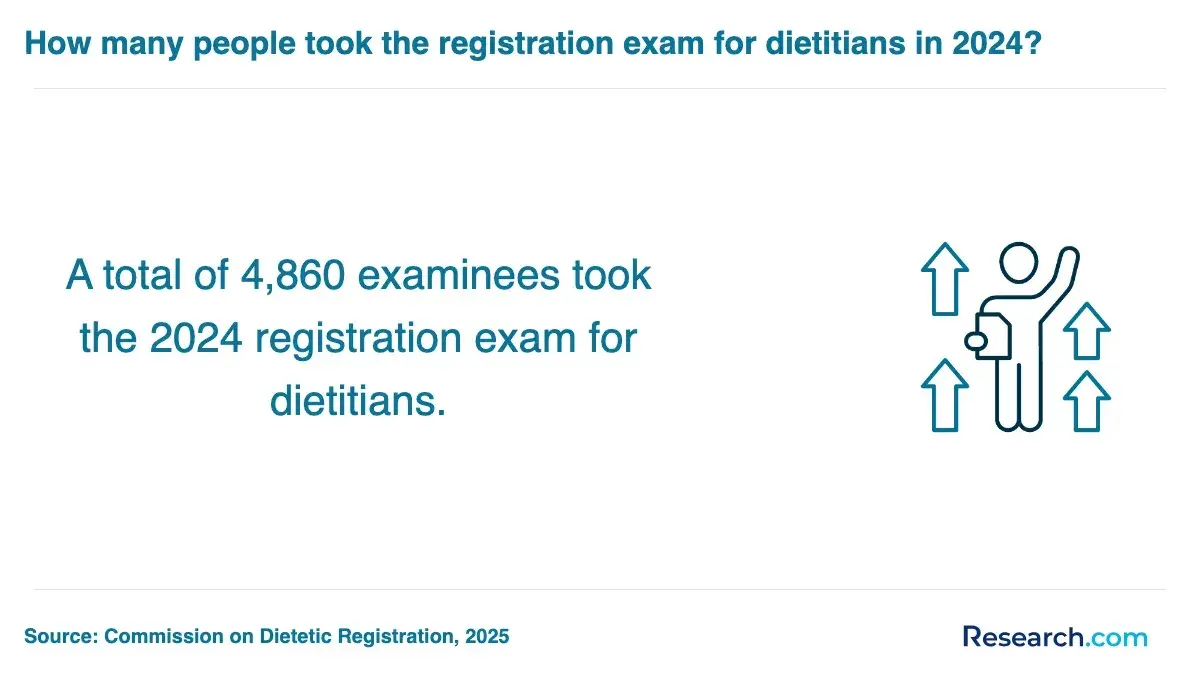 Number of 2024 examinees for dietitian registration exam" width="1200" height="680" loading="lazy">
What types of dietitian specializations can you pursue in Ohio?
Dietitians in Ohio have a growing array of specialization opportunities that reflect evolving healthcare needs and research advancements. These specializations allow professionals to tailor their skills to diverse populations and emerging nutrition challenges. Below are some key dietitian specialization options to consider in Ohio’s dynamic healthcare environment:
- Clinical Dietitian: Provides targeted medical nutrition therapy in hospitals and clinics, managing complex conditions like diabetes and cancer.
- Community Dietitian: Develops nutrition education and wellness programs aimed at improving public health and addressing food insecurity.
- Pediatric Dietitian: Focuses on nutrition for infants and children, supporting growth and managing childhood diseases in specialized care settings.
- Geriatric Dietitian: Addresses nutritional challenges of aging, including chronic disease and malnutrition, in nursing homes and community programs.
- Sports Dietitian: Designs nutrition plans to enhance athletic performance and recovery for athletes and active individuals.
- Food Service Management Dietitian: Oversees large-scale meal planning and food service operations in institutions, ensuring compliance with nutrition standards.
- Research Dietitian: Advances nutrition science through studies in academic or industry settings, exploring the impact of diet on health outcomes.
- Consultant Dietitian: Provides expert advice on wellness programs and nutrition policies to organizations and individuals on a contractual basis.
- Public Health Dietitian: Leads policy development and advocacy at local or state levels to improve population-wide nutrition and health.
- Dietetic Technician, Registered (NDTR): Supports registered dietitians by delivering basic nutrition care under supervision, typically after completing accredited training and practice hours.
What is the average salary of a registered dietitian in Ohio?
The average salary of a registered dietitian in Ohio is approximately $69,970 per year, with an hourly wage around $34.14 as of May 2024. This figure is below the national average salary of $77,430 per year, placing Ohio dietitians among the lower earners nationwide. Despite this, several factors influence salary variations across the state, shaping earning potential and future growth opportunities.
- Location within Ohio: Dietitians in major metro areas like Columbus, Cincinnati, and Cleveland earn higher salaries, averaging above $71,700 annually.
- Experience Level: Entry-level dietitians start near $61,320, while seasoned professionals can earn $89,450 or more, reflecting strong salary growth with experience.
- Work Setting: Positions in hospitals, research, and government agencies generally offer higher pay compared to community or educational roles.
- Demand and Job Market: The current low hiring activity in Ohio may limit immediate salary growth, though specialization could open new opportunities.
Regional salary trends suggest urban centers will continue to provide the best compensation, while rural areas may lag behind. Looking ahead, Ohio's registered dietitian salaries are expected to grow steadily, driven by increased demand for specialized skills and potential relocation to higher-paying metropolitan markets.
The chart below shows the industries where dietitians and nutritionists in the U.S. enjoy the highest wages.
What digital innovations are shaping dietetics practices in Ohio?
Recent advancements in digital health are transforming how registered dietitians in Ohio deliver care and manage patient outcomes. Telehealth platforms, mobile applications, and electronic health records are enabling real-time monitoring and personalized nutrition counseling. Moreover, the integration of data analytics and wearable technology supports evidence-based dietary interventions, while online professional development tools streamline certification maintenance. For additional career insights and pathways, discover how to become a nutritionist in Ohio.
How can expanding your skillset with allied health certifications benefit your dietetics career in Ohio?
Diversifying professional expertise can position registered dietitians to meet the evolving demands of integrated healthcare services. Acquiring complementary certifications and targeted training enhances patient care, facilitates interdisciplinary collaboration, and opens pathways to leadership roles. For instance, pursuing programs that cover allied health competencies—such as how to become a medical assistant in Ohio—can provide practical skills that augment traditional dietetic practices. Embracing these opportunities may lead to broader career options and a more resilient professional portfolio in Ohio’s competitive healthcare landscape.
What do you need to keep your dietitian registration active in Ohio?
Maintaining an active dietitian registration in Ohio ensures you remain qualified to practice legally and uphold professional standards. As regulations evolve, staying current with renewal and education requirements protects public health and your career opportunities.
- License Renewal Frequency: Renew your Ohio dietitian license every two years through the State Medical Board’s online portal, with reminders sent well in advance.
- Renewal Fees: Pay a biennial fee of $183.50, covering licensure and transaction costs.
- Continuing Education: Complete at least 75 CE credits every five years for CDR registration, plus one hour of ethics or dietetic law CE every two years for Ohio licensure; non-RDs require 30 hours biennially.
- Approved CE Activities: Ensure all CE credits come from CDR, Academy of Nutrition and Dietetics, or Ohio Academy of Nutrition and Dietetics–approved programs.
- Documentation and Attestation: Keep accurate CE records and attest to compliance during license renewal.
- Ohio Jurisprudence Course: Complete a required CE unit on Ohio Dietetics Jurisprudence each renewal period.
- Notification of Changes: Promptly update the Medical Board with any personal information changes to receive all communications timely.
A registered dietitian from Ohio, who graduated from a local university, shared that navigating reciprocity was a significant part of his early career. “Because I started here, renewing felt straightforward, but I’ve seen colleagues from other states struggle with Ohio’s specific jurisprudence requirements and timely CE documentation,” he reflected.
He appreciated Ohio’s clear renewal reminders and the chance to combine ethics credits for both state and national registration, which eased his compliance burden. “It’s a balancing act, but staying organized and proactive about changes really helps maintain your registration without stress,” he noted, emphasizing the importance of understanding Ohio’s distinct rules early on.
How long does it take to become a registered dietitian in Ohio?
The journey to becoming a registered dietitian in Ohio generally spans five to seven years, reflecting a blend of academic study and practical experience. As requirements evolve, prospective dietitians may find opportunities to accelerate their path through integrated programs that combine coursework and supervised practice. This evolving landscape encourages a strategic approach to managing time and educational commitments.
Considering how many years it takes to become a registered dietitian in Ohio involves recognizing the impact of recent mandates such as the master’s degree requirement, which adds to the typical timeline. The overall duration depends on individual choices, including whether one pursues degrees sequentially or through coordinated programs that shorten the process. Future trends might introduce more flexible or hybrid learning models that could influence this timeline further.
When evaluating dietitian education and internship length in Ohio, it is important to consider that the required supervised practice hours remain a significant component of training. Innovative internship structures and online options may emerge, providing greater accessibility and efficiency.
For students exploring cost-effective routes, reviewing a list of cheapest nutrition and dietetics online degree programs can be a valuable starting point. To give further context, the image below highlights the median tuition costs for dietetics programs across the U.S.

Can international students qualify to become registered dietitians in Ohio?
International students have the opportunity to become registered dietitians in Ohio by fulfilling specific additional criteria designed to align their foreign education and experience with U.S. standards. These steps ensure readiness for professional practice and successful integration into Ohio’s healthcare environment.
- Degree Equivalency Evaluation: Foreign academic degrees must be evaluated for equivalency to a U.S. regionally accredited bachelor’s or master’s degree by a credential evaluation service or an ACEND-accredited program director, which may also highlight any additional coursework needed.
- Completion of ACEND-Accredited Education: International candidates are required to complete coursework and supervised practice within an ACEND-accredited program in the U.S., such as a Didactic Program in Dietetics, Coordinated Program, Graduate Program, or International Dietitian Education program.
- Supervised Practice Requirement: A minimum of 1,200 hours of supervised practice must be completed through an ACEND-accredited dietetic internship or coordinated program, regardless of prior experience abroad.
- English Language Proficiency: Demonstrating proficiency in English is generally expected, often through standardized testing or successful completion of relevant coursework and internships conducted in English.
- Verification Statement: Upon fulfilling educational and practice requirements, students must obtain a verification statement from their ACEND-accredited program director, confirming eligibility to take the CDR exam.
- Pass the CDR Registration Examination: All candidates must pass the national CDR exam to earn the Registered Dietitian Nutritionist credential necessary for Ohio licensure.
Ohio’s expanding network of accredited dietetics programs and a growing demand for dietitians create promising prospects for international students. Exploring pathways such as part-time Ph.D. in economics may also complement career advancement in related fields, broadening future professional opportunities.
What career paths can registered dietitians pursue in Ohio?
Registered dietitians in Ohio have a variety of career paths that reflect evolving healthcare needs and wellness trends. Exploring these opportunities reveals promising roles with strong job outlooks and competitive salaries across multiple settings.
- Clinical Dietitian: Provides medical nutrition therapy in hospitals and outpatient clinics, with Ohio salaries around $71,800 and growing demand due to an aging population.
- Community and Public Health Dietitian: Works in schools and nonprofit organizations educating communities, offering steady employment with average pay near $69,970.
- Food Service Management Dietitian: Oversees nutrition and compliance in healthcare or corporate cafeterias, earning up to $89,450 and advancing into leadership roles.
- Private Practice Dietitian or Consultant: Offers personalized nutrition counseling and coaching, often exceeding state average salaries depending on expertise and clientele.
- Research and Academic Dietitian: Engages in nutrition research or teaching at universities, contributing to scientific knowledge with variable compensation.
- Sports Nutritionist: Supports athletes and fitness programs, with pay reflecting experience and employer size in diverse community or private settings.
- Corporate Wellness Dietitian: Develops workplace health programs, aligning salaries with state averages while promoting employee well-being.
- Long-Term Care and Geriatric Dietitian: Specializes in nutrition for older adults in nursing homes, sustaining demand and salary comparable to clinical roles.
- Health Educator: Designs nutrition education for public health campaigns and schools, providing stable roles with consistent pay.
- Nutrition Policy or Regulatory Specialist: Works on nutrition policies in government or advocacy, requiring experience and advanced degrees with varied compensation.
As the demand for qualified professionals grows, those exploring career opportunities for registered dietitians in Ohio can also consider enhancing credentials through jobs you can get with a online nutrition masters degree to expand options and potential income in this dynamic field. Overall, the jobs for licensed dietitians in Ohio offer a solid foundation for a rewarding career with multiple avenues for growth and specialization.
What do registered dietitians in Ohio say about their careers?
- Completing my dietetics program at Ohio State University gave me the foundational knowledge and confidence to thrive. Starting my career in a local school setting allowed me to directly influence children’s eating habits and witness the positive impact on their health and academic performance. Ohio’s diverse communities and rich agricultural resources make nutrition education both challenging and rewarding. The stability of this career combined with the chance to nurture young minds keeps me passionate every day. Gerry
- Graduating from Kent State University opened doors to incredible professional growth opportunities in Ohio’s academic environment. Working as a registered dietitian in local schools has been a journey of learning and adapting to unique cultural and socioeconomic factors that influence student nutrition. It’s deeply fulfilling to contribute to community health and see the ripple effects of our programs beyond the classroom. This career has helped me develop both personally and professionally in ways I never anticipated. Alena
- After finishing my program at Cleveland State University, I embraced the challenges and rewards of working as a registered dietitian in Ohio’s schools. The state’s strong emphasis on wellness and educational support provides a platform to address childhood obesity and nutrition disparities head-on. It’s inspiring to be part of a profession that shapes the well-being of future generations, and Ohio’s commitment to health innovation makes career advancement exciting and attainable. Devi
Related Articles for Nearby States
- 2027 Steps to Become a Registered Dietitian in Indiana
- 2027 Steps to Become a Registered Dietitian in Kentucky
- 2027 Steps to Become a Registered Dietitian in West Virginia
- 2027 Steps to Become a Registered Dietitian in Pennsylvania
- 2027 Steps to Become a Registered Dietitian in Michigan
- 2027 Steps to Become a Registered Dietitian in Illinois
- 2027 Steps to Become a Registered Dietitian in Virginia
- 2027 Steps to Become a Registered Dietitian in Tennessee
- 2027 Steps to Become a Registered Dietitian in North Carolina
- 2027 Steps to Become a Registered Dietitian in Missouri
References:
- Become a Nutritionist. (n.d.). Becoming a Registered Dietitian in Ohio. becomeanutritionist.org.
- Become a Nutritionist. (n.d.). Ultimate Guide to Becoming a Registered Dietitian. becomeanutritionist.org.
- Case Western Reserve University School of Medicine - Nutrition. (n.d.). Becoming a Registered Dietitian Nutritionist (RDN). case.edu.
- Commission on Dietetic Registration. (n.d.). Registered Dietitian (RD) Examination - Eligibility Requirements. CDRNET.org.
- Commission on Dietetic Registration. (n.d.). Registered Dietitian (RD) or Registered Dietitian Nutritionist (RDN) Certification. CDRNET.org.
- NutritionED.org. (n.d.). Steps to Become a Registered Dietitian in Ohio. nutritioned.org.
- State Medical Board of Ohio | Licenses & Certifications. (n.d.). Dietitian (LD). State Medical Board of Ohio.
Other Things You Should Know About Becoming a Registered Dietitian in Ohio
In Ohio, it is possible to major in fields other than dietetics or nutrition and still fulfill the prerequisites required to become a registered dietitian, provided that the necessary coursework is completed. Many students choose related majors such as biology, chemistry, or food science and supplement their degree with the specific dietetics-related classes required by the Commission on Dietetic Registration (CDR).
However, simply majoring in an unrelated field without completing these prerequisite courses will not qualify a candidate for registration. Therefore, careful planning is essential to ensure all required nutrition, biochemistry, and foodservice management courses are included, regardless of the chosen major, to meet Ohio’s eligibility standards for dietetics programs and the RD exam.
The first step to becoming a Registered Dietitian in Ohio in 2027 is to complete a bachelor’s degree in dietetics or a related field accredited by the Accreditation Council for Education in Nutrition and Dietetics (ACEND). This foundational education is necessary to proceed to further steps such as supervised practice and the registration exam.
Yes, scholarships and financial aid are available for dietetics students in Ohio to help offset the costs of education and training. Many universities with accredited dietetics programs offer merit-based and need-based scholarships specifically for nutrition and dietetics majors.
Additionally, organizations like the Ohio Academy of Nutrition and Dietetics provide scholarships to support students pursuing registered dietitian credentials. Federal financial aid, including grants and student loans, is also accessible for qualifying students through the Free Application for Federal Student Aid (FAFSA). Exploring these options early can significantly reduce the financial burden of becoming a registered dietitian in Ohio.