
2027 How to Earn Your Doctorate Online: Flexible Options

Co-Founder and Chief Data Scientist
Earning a doctorate is one of the most significant academic and professional milestones, and today’s online programs make that achievement more accessible than ever.
In 2027, advancements in digital learning platforms, interactive tools, and flexible scheduling have opened doors for working professionals, educators, and researchers to pursue doctoral study without putting their careers or personal responsibilities on hold.
In this guide, we’ll explore the flexible options available for earning your doctorate online, from accelerated formats and hybrid learning to part-time pathways. You’ll also learn what to expect from online doctoral programs, how they compare with traditional routes, and the benefits they can offer for long-term career growth.
What are the benefits of earning a doctorate online?
- A doctorate can open doors to advanced careers such as university professor, senior researcher, healthcare administrator, or executive leadership roles.
- Professionals with doctoral degrees often earn significantly higher salaries, with median earnings ranging from $90,000 to $120,000 per year, depending on the field.
- Online programs provide flexibility for working adults, allowing students to balance their studies with professional and personal commitments.
- Many online doctoral programs reduce overall costs by eliminating expenses for campus housing, commuting, and in-person fees.
What are the most common online doctorate degree programs?
Ph.D. in Counseling and Psychological Studies
This program is designed for individuals aiming to advance their expertise in mental health, counseling, and psychology. It covers advanced theories and practices in counseling, psychological assessment, and mental health intervention, preparing graduates for leadership roles in clinical and educational settings.
Online PhD in Counselor Education and Supervision
An online PhD in counselor education and supervision prepares students for a career in counseling, counselor education, clinical supervision, program direction, teaching, administration, consultancy, and research. The exact cost of taking this program will depend on some variables, such as whether you are attending a private or public institution and how long your dissertation will be completed. For instance, it costs $415.88 per credit for resident students in Michigan State University.
Online MSN to DNP Doctor of Nursing Practice
Depending on the particular online MSN-to-DNP degree, classes may be in a synchronous or asynchronous format. In addition to specialties, namely nurse anesthesia, family practice, or psychiatric mental health nursing, you can also enroll to this program for nurse leaders, clinical nurse specialists, or nurse educators. In the latest data, nurse educators’ salary is $84,180, psychiatric mental health nurse practitioners’ is $119,156, and nurse anesthetists’ is $205,770.
Doctor of Occupational Therapy
A doctor in occupational therapy program centers on advanced training for occupational therapists. Common courses encompass advanced clinical practice, healthcare policy, leadership, and evidence-based interventions. Students engage in fieldwork and research, with a focus on applying theoretical knowledge to practical settings. The curriculum emphasizes emerging trends, ethical considerations, and interdisciplinary collaboration. The program culminates in a doctoral project, integrating academic learning with hands-on experience in occupational therapy.
Online PhD in General Psychology Cognition and Instruction (Qualitative Research)
An online PhD in general psychology with an emphasis in cognition and instruction aims to help students who want to work with adult educational populations that are culturally and economically diverse. In Grand Canyon University, this program amounts to $725 per credit or $605,901 per year. Interested students are required to earn a master’s degree or doctorate from an accredited school.
Online Ed.D. Educational Leadership (Non-Licensure)
An online doctorate in educational leadership is worthwhile for those who want to lead educational organizations and make positive changes in the education system. These programs are in high demand, and while the cost varies depending on the institution and program, the average is $32,846 annually (Thompson, 2023). Factors such as state residency and required credits may also impact the cost.
Online PhD in Pharmaceutical Sciences
A PhD in pharmaceutical sciences focuses on the study of drug development, delivery, and pharmacology. Students engage in extensive laboratory work, exploring the interactions between drugs and biological systems, and developing new therapeutic compounds. The program typically includes coursework in medicinal chemistry, pharmacokinetics, and molecular biology, alongside original research culminating in a dissertation. Graduates are prepared for careers in academia, pharmaceutical industry research, and regulatory agencies, contributing to the advancement of medical treatments and drug safety. Pharmacists earn an impressive median annual salary of $136,030.
Online Doctorate in Social Work (DSW)
Online Doctorate in Social Work (DSW) programs offer specializations in clinical practice, social work administration, policy analysis, and research. Coursework typically includes advanced social work theory, leadership in social work, policy development, and evidence-based practice. These programs usually take 3-5 years to complete. Graduates can pursue roles such as clinical social work directors, policy advisors, social work educators, and researchers, with a median salary of $124,550 based on BLS data.
Online Doctorate in Cybersecurity
Online Doctorate in Cybersecurity programs offer specializations in areas such as information assurance, cybersecurity policy, network security, and cyber defense. Coursework typically includes advanced topics in risk management, cryptography, ethical hacking, and cybersecurity governance. These programs generally take 3-5 years to complete. Graduates can pursue roles such as chief information security officer (CISO), cybersecurity consultant, security architect, and academic researcher, with a median salary of $131,000 based on data from the U.S. Bureau of Labor Statistics (BLS).
Online PhD in Business Administration
Online PhD in Business Administration programs provide advanced expertise in areas such as strategic management, finance, marketing, and organizational leadership. Coursework typically includes business analytics, global economics, leadership theory, and quantitative research methods. These programs generally take 3-5 years to complete. Graduates often pursue careers as university professors, business consultants, corporate executives, and research analysts, with a median salary of $105,000, according to the U.S. Bureau of Labor Statistics (BLS).
- What doctorate degrees can you pursue online? Types of Doctorates
- What flexible options are available for earning a doctorate online? Flexible Options
- How can students prepare for online doctoral programs? Doctorate Preparation
- Do you need certification or licensure after completing an online doctorate? Certication
- Will I get an ROI from an online doctorate? Doctorate ROI
- What admission requirements do online doctoral programs typically have? Admission Requirements
- How long does it take to complete an online doctorate? Timeline
- How much can professionals with a doctorate earn in different fields? How much can professionals with a doctorate earn in different fields?
- What are the challenges of completing an online doctorate? What are the challenges of completing an online doctorate?
- What alternative paths to advanced education exist besides a doctorate? What alternative paths to advanced education exist besides a doctorate?
- What factors should I consider when choosing an online doctorate program? What factors should I consider when choosing an online doctorate program?
What doctorate degrees can you pursue online?
Online learning has expanded access to a wide range of doctoral programs, making it possible to pursue advanced study across many fields without relocating or pausing your career.
For example, many professionals start with specialized graduate programs, like a fast-track sports analytics masters online, before moving on to doctoral-level study in business, education, or health.
Some of the most common online doctorate degrees include:
- Doctor of Education (Ed.D.): Focused on leadership in schools, universities, and training organizations, preparing graduates for roles in administration, curriculum design, and policy.
- Doctor of Nursing Practice (DNP): Designed for advanced nursing professionals who want to move into leadership, specialized practice, or healthcare management.
- Doctor of Business Administration (DBA): Equips business professionals with advanced management, strategy, and research skills for executive and consulting roles.
- Doctor of Psychology (Psy.D.): Prepares graduates for applied practice in clinical psychology, counseling, or organizational psychology settings.
- Ph.D. Programs: Available across disciplines such as education, engineering, public health, computer science, and social sciences, focusing heavily on original research and academic scholarship.
What flexible options are available for earning a doctorate online?
One of the biggest advantages of pursuing a doctorate online is the flexibility built into most programs. Universities recognize that doctoral students are often balancing full-time careers, family obligations, and research commitments, so they design multiple pathways to fit different lifestyles. Common flexible options include:
- Asynchronous Learning: Students can complete lectures, assignments, and discussions on their own schedule, making it easier to balance study with work or family.
- Part-Time Enrollment: Many programs allow students to extend their coursework over several years, reducing the weekly workload while still progressing toward the degree.
- Accelerated Programs: Some online doctorates offer condensed courses or year-round study, allowing motivated learners to finish in less time than traditional programs.
- Hybrid Models: Certain degrees blend online coursework with short in-person residencies or weekend seminars, giving students both flexibility and valuable face-to-face networking.
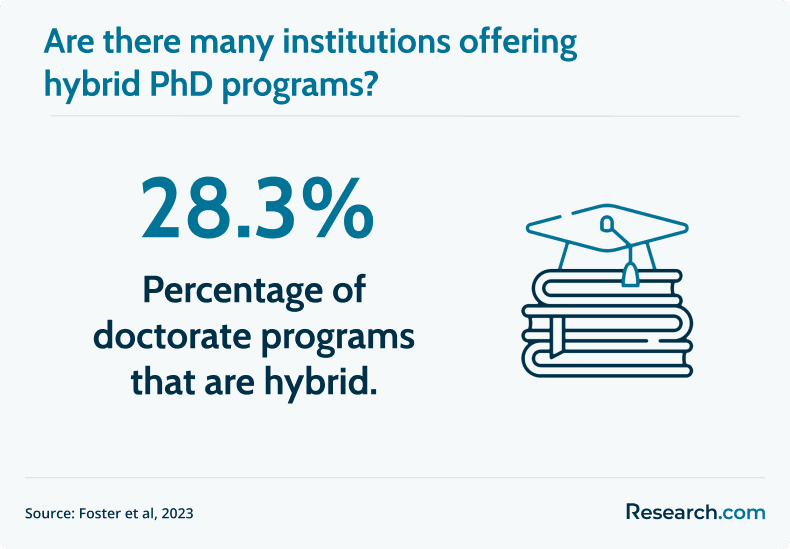
According to a recent study by Foster et al., about 28% of available PhD programs offered a hybrid format.
For educators looking to advance into leadership or academic roles, understanding how to get a doctorate degree in education can help in selecting the right online program format. Many EdD programs now offer similar flexibility—allowing professionals to complete coursework remotely while conducting research directly within their schools or districts. This makes it possible to pursue advanced credentials without stepping away from current teaching or administrative positions.
How can students prepare for online doctoral programs?
Doctoral study requires more than just academic readiness—it also calls for careful planning and the right mindset. Students considering an online doctorate can set themselves up for success by taking the following steps:
- Strengthen Time-Management Skills: Online programs demand consistent self-discipline. Building a structured schedule for coursework, research, and personal obligations helps students stay on track.
- Develop Research Readiness: Doctoral programs emphasize original research. Reviewing academic writing, research methods, and citation practices beforehand gives students a strong foundation.
- Ensure Technology Preparedness: Reliable internet access, updated software, and familiarity with online learning platforms are essential for smooth participation in courses.
- Seek Support Systems: Building a network of mentors, academic advisors, family, and peers provides accountability and encouragement during challenging phases of the program. This is a common strategy in the fastest online fashion merchandising degree programs, where collaboration and networking enhance student success.
Do you need certification or licensure after completing an online doctorate?
Whether certification or licensure is required after earning an online doctorate depends on the field of study and the career path you intend to pursue. While many doctoral programs prepare graduates for leadership, research, or academic roles that don’t require additional credentials, some professions mandate post-degree licensing.
- Healthcare and Clinical Fields: Degrees like the Doctor of Nursing Practice (DNP) or Doctor of Psychology (Psy.D.) often require state licensure or national certification to practice independently.
- Education and Counseling: An Ed.D. may not require licensure, but school administrators, counselors, and specialists may need state certification for specific roles.
- Business and Research: Doctorates such as a Ph.D. in Business or a Doctor of Business Administration (DBA) generally don’t require certification, though some industries value professional memberships or credentials.
- STEM Fields: Ph.D. holders in engineering, computer science, or natural sciences typically work in academia, R&D, or industry roles without needing licensure, unless entering specialized regulated areas.
In short, licensure and certification depend on your chosen field and location. Prospective students should research state and industry requirements before enrolling in a program.
Much like students who seek the shortest sports management online bachelor's degree for efficiency, business doctoral candidates often prioritize programs that align with career goals without unnecessary credentialing barriers.
Will I get an ROI from an online doctorate?
The return on investment (ROI) from an online doctorate depends on your field of study, career goals, and how you leverage the degree after graduation. In many cases, the payoff can be substantial—both financially and professionally.
- Higher Earning Potential: According to the U.S. Bureau of Labor Statistics, professionals with doctoral degrees earn a median weekly salary of about $2,083, compared to $1,493 for master’s degree holders. That difference adds up to more than $30,000 annually.
- Career Advancement: A doctorate can unlock senior leadership roles, tenure-track faculty positions, or specialized professional pathways that are not accessible with lower degrees.
- Professional Credibility: Doctoral credentials enhance your authority in research, consulting, academia, or clinical practice, giving you an edge in competitive fields.
- Flexibility and Savings Online: By studying online, students often save money on relocation, housing, and commuting, which helps balance the overall cost of the degree.
While tuition costs for doctoral programs can be high, graduates often see long-term ROI through increased earnings, career security, and professional recognition.
According to Indeed, the top highest paying doctorates are in STEM, with organic chemistry, biology, environmental science and statistics topping the list.
For healthcare professionals, it’s also important to understand what kind of doctor is a DNP, as Doctor of Nursing Practice graduates represent a growing segment of doctoral-level clinicians. DNPs focus on applying research to patient care, leading healthcare teams, and improving systems outcomes—demonstrating that not all “doctors” work in academia or research, but many drive innovation directly in clinical practice.
What admission requirements do online doctoral programs typically have?
Admission into an online doctoral program is competitive, and schools look for applicants who are academically prepared and professionally experienced. While requirements vary by institution and field, most programs ask for:
- Master’s Degree or Equivalent: Many doctoral programs require a completed master’s degree in a related field, though some offer direct-entry options for bachelor’s degree holders.
- Professional Experience: Certain doctorates, like the Ed.D. or DNP, prefer or require several years of relevant work experience. Similar to those pursuing an accelerated online hospitality management degree, applicants are often expected to bring real-world knowledge that complements their academic training.
- Academic Records: Official transcripts showing strong academic performance at the graduate level are essential.
- Letters of Recommendation: Faculty, supervisors, or professional mentors provide references attesting to the applicant’s academic ability and leadership potential.
- Statement of Purpose: Applicants usually submit an essay outlining their research interests, career goals, and reasons for pursuing the doctorate.
- Standardized Test Scores (Sometimes): While many schools are test-optional, some still request GRE, GMAT, or other relevant scores.
Some programs may also require writing samples, research proposals, or interviews to assess readiness for doctoral-level work. Additionally, those considering research-oriented programs should take time to review PhD admission requirements, which may differ from professional doctorates. These often place greater emphasis on prior research experience, faculty alignment, and academic publications—key factors that determine eligibility and potential success in a PhD program.
How long does it take to complete an online doctorate?
The timeline for completing an online doctorate varies widely depending on the field of study, program structure, and whether students enroll full-time or part-time. On average, most online doctoral programs take three to seven years to finish.
- Accelerated Programs: Some universities offer intensive formats that allow students to graduate in as little as three years, especially for professional doctorates like the Ed.D. or DBA.
- Traditional Pace: Many students complete their degrees in four to five years, balancing coursework, research, and dissertation requirements.
- Part-Time Options: For working professionals, stretching the program to six or seven years provides more flexibility but extends the completion timeline.
- Field-Specific Differences: Research-heavy Ph.D. programs (in sciences or humanities) often take longer than professional doctorates focused on applied practice.
This flexibility is similar to what students experience in a fast-track online bachelor's degree in entertainment business, where program length can be tailored to fit individual goals and schedules.
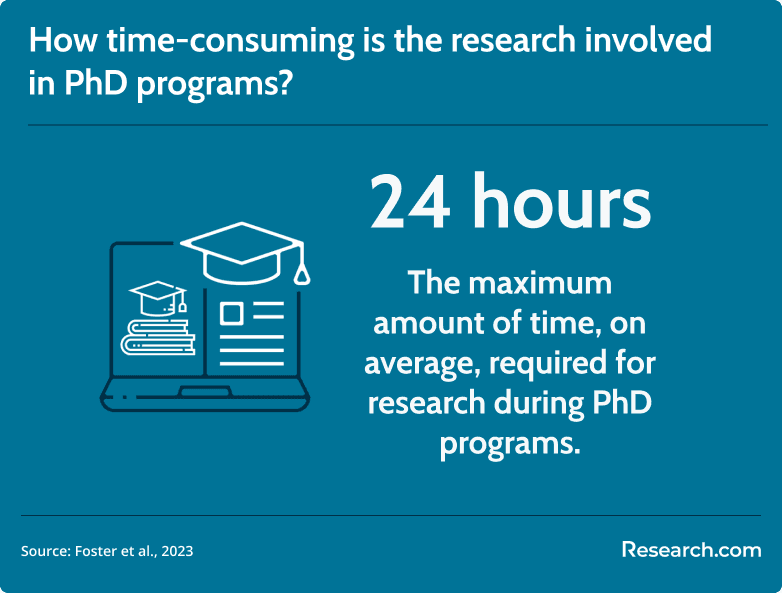
Factors like dissertation progress, transfer credits, and residency requirements can also influence the duration. The usual time it takes to complete a PhD dissertation differs, but a recent study found that PhD programs require up to 24 hours of research.
How much can professionals with a doctorate earn in different fields?
Doctoral degrees can significantly boost earning potential, but salaries vary depending on industry, specialization, and job role. According to the U.S. Bureau of Labor Statistics and industry reports, here are some examples of average salaries for professionals with doctorates:
- Education (Ed.D., Ph.D. in Education): Postsecondary education administrators and professors earn an average of $100,000 per year, with senior administrators often earning more.
- Nursing and Healthcare (DNP, Ph.D. in Nursing, Psy.D.): Nurse anesthetists with a DNP earn around $203,000 annually, while psychologists average $106,000 per year.
- Business (DBA, Ph.D. in Business): Senior executives and consultants with doctoral credentials often earn between $120,000 and $180,000 annually, depending on the role and industry.
- STEM Fields (Ph.D. in Engineering, Computer Science, or Natural Sciences): Median pay ranges from $110,000 to $140,000 per year, with higher earnings in data science, engineering management, and research roles.
- Social Sciences and Humanities (Ph.D. in Sociology, History, or English): Average salaries are lower, typically between $70,000 and $90,000 per year, though tenure-track faculty positions may pay more with experience.
Doctoral degree holders consistently out-earn those with master’s or bachelor’s degrees, and many also benefit from increased job security and access to leadership positions.
For those pursuing advanced studies in religion or ministry, the best online doctorate in theology programs offer not only flexibility but also pathways to higher education, nonprofit leadership, or pastoral training roles—fields where earnings may vary but personal and professional fulfillment often go hand in hand.
What are the challenges of completing an online doctorate?
While online doctoral programs offer flexibility and accessibility, they also come with unique challenges that students should be prepared for:
- Time Commitment: Doctoral programs require years of intensive study, research, and writing. Balancing this workload with jobs and family responsibilities can be overwhelming.
- Self-Discipline and Motivation: Without regular in-person classes, students must stay motivated and manage deadlines independently, which can be difficult over several years.
- Research Demands: Completing a dissertation or capstone project requires advanced research skills, persistence, and the ability to work independently with limited face-to-face faculty guidance.
- Technology Reliance: Online learners depend heavily on stable internet access, reliable devices, and digital platforms. Technical issues can disrupt progress if not well-managed.
- Isolation: Compared to on-campus study, online students may feel disconnected from peers and faculty, making it important to actively seek networking and support opportunities.
What alternative paths to advanced education exist besides a doctorate?
While a doctorate represents the highest level of academic achievement, it isn’t the only option for advancing your career. Depending on your goals, there are several alternatives that may be more cost-effective, faster to complete, and better aligned with professional needs:
- Master’s Degrees: Advanced programs in fields like business, education, public health, or engineering can provide leadership opportunities and higher salaries without the extended timeline of a doctorate.
- Graduate Certificates: Short, focused programs allow professionals to gain specialized expertise in areas like data science, healthcare administration, or instructional design.
- Professional Licenses and Certifications: Credentials such as CPA (accounting), PMP (project management), or board certifications in healthcare can boost career prospects and credibility.
- Post-Master’s Programs: Options like specialist degrees (Ed.S. in education) or advanced nursing certificates can expand expertise without requiring a full doctoral dissertation.
- Continuing Education and Microcredentials: Online platforms and universities now offer stackable microcredentials, workshops, and skill-based courses that enhance employability and adaptability in evolving industries.
These alternatives often provide quicker returns on investment and allow professionals to remain competitive in their fields without committing to the time and financial demands of a doctorate.
What Graduates Say About Earning Their Doctorate Online
- Berna: "Earning my doctorate online gave me the flexibility to keep working full-time while completing my research. The ability to study on my own schedule meant I didn’t have to sacrifice my career or family life, and I still gained the same rigorous training as on-campus programs."
- Andeth: "Studying online pushed me to become more disciplined and independent, which are essential skills for a doctoral student. I appreciated the digital tools and virtual collaboration with peers around the world—it made the experience both practical and inspiring."
- Steala: "The online format made my doctorate achievable without relocating or pausing my life. I saved on commuting and housing costs, while the program still connected me with mentors and opportunities that advanced my career. It was challenging but incredibly rewarding."
What factors should I consider when choosing an online doctorate program?
When evaluating an online doctorate program, verify its accreditation from recognized agencies to ensure academic and professional legitimacy. Assess faculty credentials, available research opportunities, and curriculum relevance to current industry needs, as these factors directly influence the quality of education. Consider the technological infrastructure and learner support systems offered, which are essential for a seamless digital experience. In addition, examine career services, alumni outcomes, and financial planning details to gauge potential ROI. For further insights on reputable options, review online degrees that pay well.
Key Findings
- Nearly a third of institutions offer hybrid learning.
- Doctorates in the statistics field can offer graduates an average of $87,655 in yearly compensation.
- PhD programs require, on average, 24 hours of research.
- PhD graduates can expect high earnings in the business field of up to $180,000.
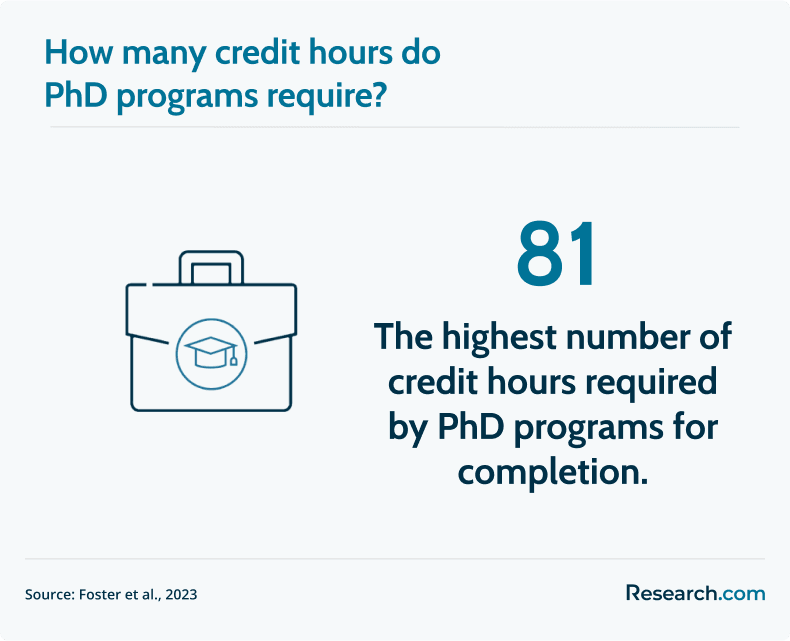
- PhD programs usually require between 48 and 81 credit hours.
References:
- US BLS. (2024). Psychologists: Occupational Outlook Handbook. U.S. Bureau of Labor Statistics. https://www.bls.gov/ooh/life-physical-and-social-science/psychologists.htm
- US BLS. (2024). Nurse Anesthetists, Nurse Midwives, and Nurse Practitioners: Occupational Outlook Handbook. U.S. Bureau of Labor Statistics. https://www.bls.gov/ooh/healthcare/nurse-anesthetists-nurse-midwives-and-nurse-practitioners.htm
- US BLS. (2024). “Psychologists, All Other” wage data — U.S. Bureau of Labor Statistics. https://www.bls.gov/oes/2023/may/oes193039.htm
Other Things You Should Know About Pursuing A Doctorate Online
In 2027, many online doctorate programs offer flexible scheduling options, allowing students to study at their own pace. These programs typically have asynchronous courses, enabling learners to adapt their studies to fit personal and professional commitments, although specific deadlines must still be met.
Online doctorate degrees are increasingly respected, especially when earned from accredited and well-known universities. Accreditation ensures academic quality, while reputable institutions often deliver online programs identical in rigor and curriculum to on-campus versions.
Employers in fields like business, nursing, and education recognize that online doctoral students must balance demanding coursework with professional responsibilities, which can enhance credibility.
However, perceptions vary by industry. Research-heavy fields may favor traditional Ph.D. programs, while applied fields often embrace online doctorates. Ultimately, program reputation, accreditation, and demonstrated expertise matter most in how respected the degree will be.
To enroll in online doctorate programs in 2027, students need a reliable high-speed internet connection, a personal computer with updated software, access to specific virtual learning platforms, and a webcam for virtual meetings and exams.


