
2027 MD/MPH Dual Degree: Benefits, Career Paths & Salary

Co-Founder and Chief Data Scientist
Healthcare today demands professionals who can address both clinical needs and broader public health challenges. Many medical students and practitioners struggle to choose between patient care and leadership in health policy, research, or community health. An MD/MPH dual degree bridges this gap, combining medical training with public health expertise.
According to the U.S. Bureau of Labor Statistics (BLS), employment in healthcare occupations is projected to grow from 2024 to 2034, adding about 2 million new jobs—an opportunity for graduates with advanced credentials.
What are the benefits of getting an MD/MPH dual degree?
- Graduates can pursue roles in clinical practice, health policy, epidemiology, hospital administration, and global health organizations.
- Physicians with dual degrees often earn six-figure incomes, with median salaries exceeding $200,000 depending on specialty and setting.
- Combining medicine and public health provides a competitive edge in leadership, research, and policymaking roles.
What can you do with an MD/MPH dual degree?
With an MD/MPH dual degree, graduates can work at the intersection of patient care and population health. This unique credential allows them to diagnose and treat individual patients while also addressing larger systemic issues such as disease prevention, health disparities, and healthcare policy.
Professionals with this background often pursue leadership roles in hospitals, government health agencies, academic research institutions, and nonprofit organizations. By combining the medical expertise of an MD with the public health perspective of an MPH, graduates are well-positioned to improve both individual and community health outcomes.
Where can you work with an MD/MPH dual degree?
Graduates of an MD/MPH dual degree program often work in hospitals, clinics, and medical centers where they combine clinical practice with administrative or public health responsibilities. They may also find opportunities in federal agencies such as the Centers for Disease Control and Prevention (CDC), the National Institutes of Health (NIH), or local health departments focusing on policy development and disease prevention.
Others enter global health organizations, nonprofits, and academic institutions. In these environments, they may lead community health initiatives, conduct epidemiological research, or teach the next generation of public health professionals. Pharmaceutical companies and healthcare consulting firms also seek MD/MPH professionals for roles involving health systems strategy and medical research.
How much can you earn with an MD/MPH dual degree?
Salary outcomes for those holding an MD/MPH dual degree vary depending on specialization and sector. Physicians practicing clinically often earn median salaries above $200,000 annually, while those in preventive medicine or academic medicine may see earnings closer to $150,000. The public health component often enhances earning potential by opening doors to administrative and leadership positions.
- What is an MD/MPH dual degree and how does it work? MD/MPH Overview
- What are the main benefits of earning an MD/MPH dual degree? Benefits
- What courses are included in a typical MD/MPH curriculum? Courses
- Do MD/MPH graduates have an advantage in residency placements? Do MD/MPH graduates have an advantage in residency placements?
- What skills do students gain from an MD/MPH program? Skills
- Do MD/MPH programs cost more than a regular MD program? Program Cost
- What career paths are available for MD/MPH graduates? Career Paths
- What is the average salary for MD/MPH graduates in 2027? Salaries
- How does MD/MPH salary compare to bachelor’s degree salary? How does MD/MPH salary compare to bachelor’s degree salary?
- How do MD/MPH graduates contribute to public health policy? How do MD/MPH graduates contribute to public health policy?
What is an MD/MPH dual degree and how does it work?
An MD/MPH dual degree is a combined academic program that allows students to earn both a Doctor of Medicine (MD) and a Master of Public Health (MPH). This pathway is designed for students who want to integrate clinical training with a broader understanding of public health, epidemiology, and healthcare systems.
Instead of completing the two degrees separately, a dual program typically reduces the total time needed, often allowing students to graduate in five years instead of the six or more years it would normally take. Understanding trends in accounting jobs in demand can also help MD/MPH graduates who move into healthcare administration or hospital management make informed financial and staffing decisions.
Students in an MD/MPH track often complete the core medical curriculum alongside specialized coursework in public health, such as biostatistics, health policy, and community health. Some universities also provide flexible or hybrid learning options similar to programs like the best online MSN in public health nursing, which help students balance rigorous schedules while gaining a multidisciplinary skill set.
What are the main benefits of earning an MD/MPH dual degree?
The MD/MPH dual degree offers unique advantages for those who want to combine direct patient care with population-level health strategies. The benefits extend beyond clinical practice, enabling graduates to serve in leadership and policymaking roles.
Key benefits include:
- Broader career opportunities – Graduates can enter diverse fields such as epidemiology, health policy, global health, and hospital administration. Many also work in academic medicine or nonprofit organizations. This flexibility provides alternatives to pursuing only clinical specialties, some of which are among the least competitive medical specialties.
- Competitive earning potential – Physicians with dual training often qualify for high-paying roles that combine clinical work with leadership or administrative duties.
- Public health impact – With training in both medicine and public health, graduates are positioned to reduce health disparities, improve access to care, and shape policy at local, national, or global levels.
What courses are included in a typical MD/MPH curriculum?
The MD/MPH dual degree curriculum is designed to combine foundational medical courses with advanced public health training. Students typically start with core medical school subjects such as anatomy, physiology, and pharmacology, then progress to coursework focused on population health and healthcare systems.
Similar to an MBA MHA dual degree, this program merges two fields of study to equip graduates with both specialized expertise and the broader leadership skills necessary to excel in healthcare management and administration.
Common MPH-related courses include:
- Biostatistics and Epidemiology
- Environmental and Occupational Health
- Health Policy and Management
- Social and Behavioral Sciences in Public Health
- Global Health and Disease Prevention
Many programs also offer electives in leadership, healthcare systems, and management, which overlap with professional fields like easy healthcare administration degrees.
Interestingly, a significant percentage of healthcare leaders bring diverse academic backgrounds into the field; about 28% of health services managers major in nursing, with business and healthcare administration also being common undergraduate paths. This shows how valuable it is for MD/MPH graduates to combine medical expertise with broader administrative skills.
Do MD/MPH graduates have an advantage in residency placements?
An MD/MPH dual degree often provides applicants with a competitive edge when applying for residencies, particularly in specialties that value public health, research, and community engagement. Similar to how students pursuing the best online MBA programs leverage their degree to demonstrate leadership and strategic thinking, residency directors may view the MPH component as evidence of a candidate’s commitment to addressing broader healthcare challenges beyond clinical practice.
For students weighing professional paths, the choice between CFA or MBA programs highlights a similar consideration: selecting a degree that best aligns with career goals and industry demands, just as MD/MPH graduates leverage their dual training for residency advantages.
In addition, completing the MPH segment demonstrates strong analytical and leadership skills, qualities that align well with advanced healthcare leadership roles. Professionals who pursue related credentials, such as a certification in healthcare management, often enjoy similar benefits, as programs emphasize both technical expertise and organizational decision-making.
For MD/MPH graduates, this dual training can open doors to residency placements in preventive medicine, internal medicine, pediatrics, and global health–oriented specialties.
What skills do students gain from an MD/MPH program?
Graduates of an MD/MPH dual degree program acquire a combination of clinical and leadership skills that extend their capabilities beyond standard medical practice. These skills prepare them not only to treat patients but also to analyze population health data, manage healthcare systems, and influence public health policy.
Core skills gained include:
- Patient-centered and clinical care – Integrating medical training with public health enhances the ability to address both individual and community health needs.
- Behavioral and mental health insights – Training includes exposure to mental health, behavioral health, and social work, reflecting the interconnected nature of healthcare delivery.
- Healthcare system navigation – Skills in managing health services, improving patient care, and enhancing service delivery mirror competencies developed in programs like healthcare administration certification.
- Communication and leadership – Graduates are equipped with strong customer service and community engagement skills, critical for effective leadership in public health settings.
This combination mirrors data from healthcare management roles, where the most common competencies include working with patients, behavioral health, and managing service delivery. Collating these into the MD/MPH context shows how the dual program builds versatile professionals prepared for diverse roles.
Do MD/MPH programs cost more than a regular MD program?
Pursuing an MD/MPH dual degree often comes with additional costs compared to a traditional MD program, as students are completing coursework for two advanced degrees. However, many universities structure the program to reduce tuition overlap, meaning the overall cost may be less than completing the MD and MPH separately. Students should also factor in additional living expenses and the possibility of extended study time.
Despite the higher upfront investment, the long-term return can be significant. MD/MPH graduates typically qualify for well-paying positions in medicine and public health, which enhances their career flexibility.
The investment can be compared to pursuing other advanced public health credentials, such as preparing for MSN public health jobs, where graduates also weigh upfront costs against long-term earning potential. Ultimately, the additional cost is offset by the increased career opportunities and salary ranges that MD/MPH professionals command.
What career paths are available for MD/MPH graduates?
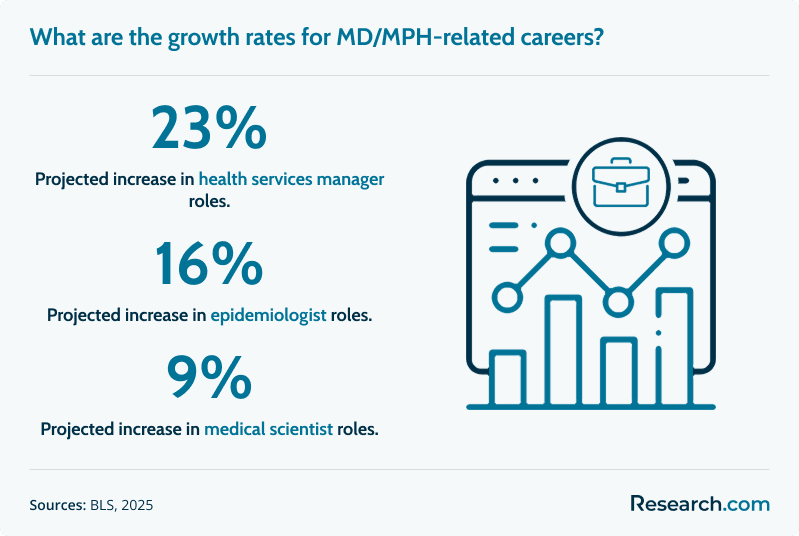
Graduates of an MD/MPH dual degree program are prepared for a wide range of career opportunities that merge medicine with public health. Many enter leadership roles as medical and health services managers, a field expected to grow by 23% between 2024 and 2034. This demand is driven by the need to manage healthcare systems and implement policies that improve patient outcomes and population health.
Other MD/MPH graduates pursue research and academic careers. For example, the demand for medical scientists is projected to grow by 9% from 2024 to 2034, while employment for epidemiologists is expected to increase by 16% during the same period, reflecting heightened global attention to public health crises.
Additionally, biostatisticians—who analyze complex medical data—are also in demand, with employment growth projected at 7% or more over the next decade. These trends show that MD/MPH professionals can build impactful careers in clinical settings, research, data analysis, and public health leadership.
What is the average salary for MD/MPH graduates in 2027?
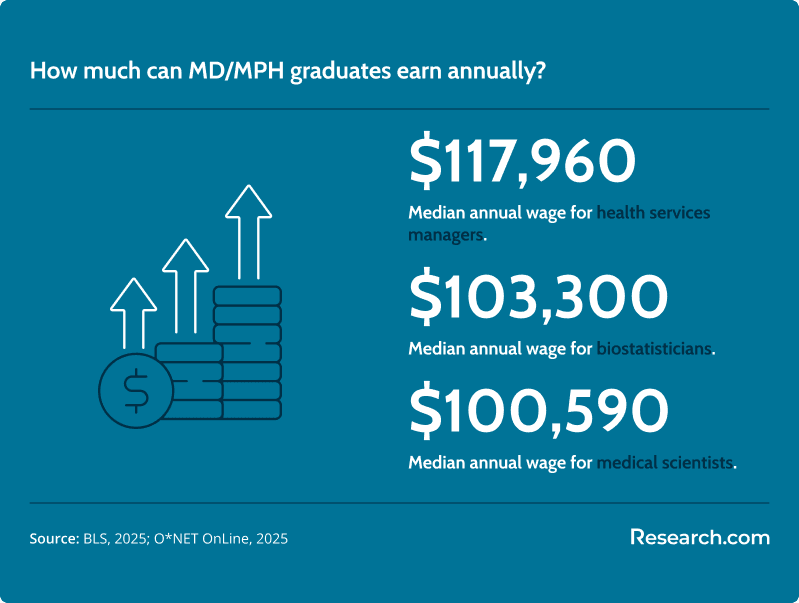
Salaries for those holding an MD/MPH dual degree vary depending on the career path and area of specialization, but the figures consistently highlight the strong return on investment for this credential. For instance, medical and health services managers earned a median annual salary of $117,960 in May 2024, underscoring the value of leadership roles in healthcare organizations.
Similarly, medical scientists reported a median annual salary of $100,590, while biostatisticians earned approximately $103,300 per year. Epidemiologists, who often work on disease surveillance and prevention, received a median annual wage of $83,980 in 2024. Combined with clinical practice opportunities available to MD holders, these numbers suggest that MD/MPH graduates can access both stable and high-paying careers in a variety of settings.
How does MD/MPH salary compare to bachelor’s degree salary?
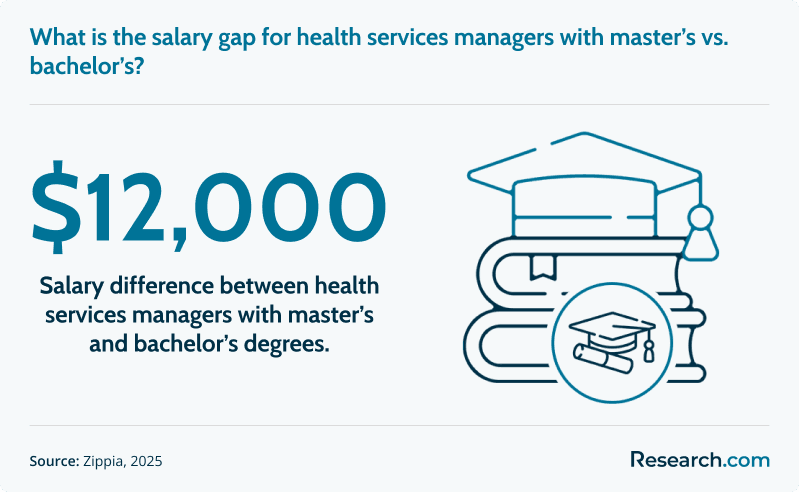
One advantage of pursuing an MD/MPH dual degree is the higher earning potential compared to professionals with only a bachelor’s degree. For example, health services managers with a master’s-level education earn around $12,000 more per year than their peers who hold only a bachelor’s degree. This salary gap reflects how advanced education leads to greater leadership responsibilities and higher compensation.
For MD/MPH graduates, the income differential is even more pronounced, since their dual training qualifies them for both medical and public health positions. This makes the degree an attractive option for individuals seeking long-term financial stability and upward mobility within healthcare systems.
How do MD/MPH graduates contribute to public health policy?
An MD/MPH dual degree equips graduates with the tools to influence public health policy on multiple levels. These professionals understand both the clinical realities of patient care and the systemic factors that shape healthcare delivery. As a result, they are often involved in developing and implementing policies that address pressing issues such as healthcare access, disease prevention, and health equity.
Graduates may work with government agencies, nonprofit organizations, or international health bodies to design strategies that improve public health outcomes. They can also advocate for legislative reforms, lead community-based interventions, and use data-driven research to guide policy decisions. By bridging medicine and public health, MD/MPH professionals help ensure that policies are grounded in both scientific evidence and real-world healthcare needs.
Here’s What Graduates Have to Say About Their MD/MPH Dual Degree
- Rachel: "Completing an MD/MPH dual degree gave me the ability to balance clinical care with public health leadership. During my residency, program directors consistently noted how my MPH training set me apart in terms of data analysis and population health knowledge. It also allowed me to join projects on community health disparities that directly impacted local policy. I’ve seen firsthand how the combination of medicine and public health can shape patient care beyond the hospital."
- Ricky: "My MD/MPH dual degree opened doors to global health opportunities I never imagined. I was able to participate in an epidemiology fellowship that focused on disease prevention in underserved countries. The MPH component gave me critical skills in research and policy, while the MD provided credibility in the medical field. Now, I work for a government health agency designing initiatives that protect entire populations."
- Alyssa: "As someone interested in leadership, I found the MD/MPH dual degree invaluable. The program trained me not only to treat patients but also to manage health services at a systems level. The salary outcomes have been competitive, with options in both clinical medicine and administrative leadership. I feel prepared for a career that is financially rewarding and deeply impactful on healthcare delivery. "
Key Findings
- An MD/MPH dual degree combines medical training with public health expertise, preparing graduates for careers in clinical practice, research, and policy.
- Employment opportunities are strong, with projected growth of 23% for health services managers and 16% for epidemiologists from 2024 to 2034.
- Salaries are competitive, ranging from $83,980 for epidemiologists to over $117,960 for medical and health services managers, with physicians often earning above $200,000 annually.
- Graduates gain versatile skills in clinical care, data analysis, healthcare management, and public health leadership, positioning them as leaders in healthcare systems.
- Compared to bachelor’s-level professionals, master’s-trained health services managers earn about $12,000 more per year, underscoring the value of advanced credentials.
References:
- BLS. (2025, August 28). Epidemiologists. bls.gov.
- BLS. (2025, August 28). Healthcare occupations. bls.gov.
- BLS. (2025, August 28). Medical and health services managers. bls.gov.
- BLS. (2025, August 28). Medical scientists. bls.gov.
- O*NET OnLine. (2025). 15-2041.01 - Biostatisticians. onetonline.org.
- Zippia. (2025, January 8). Health Services Manager skills for your resume and career. zippia.com.
Other Things You Should Know About MD/MPH Dual Degree Programs
Applicants typically need a bachelor's degree and must meet the MD program's prerequisites, including coursework in biology, chemistry, and physics. MPH prerequisites may vary but generally require prior coursework in public health or related fields for 2027 enrollment.
In 2027, MD/MPH dual degree graduates have excellent job prospects, with opportunities in public health, policy, healthcare leadership, and research. The integration of medical and public health skills enhances their appeal in roles that focus on population health management and preventative strategies.
MD/MPH graduates in 2027 have diverse career paths, including clinical practice, public health leadership, policy development, epidemiology, and academic research. They can assume roles as public health advisors, hospital administrators, and healthcare consultants, contributing both in clinical settings and the broader public health sector.


