
2027 COAMFTE vs. CACREP vs. WASC Accreditation: Explaining the Difference

Co-Founder and Chief Data Scientist
Counseling and psychology professionals provide invaluable services to many vulnerable individuals and communities. The success of their patients and clients relies on the quality and effectiveness of their offered services. Thus, quality education and training from degree programs and academic institutions are of utmost importance.
Aspiring professionals can pursue the fields assured that their programs meet the highest standards of excellence thanks to their COAMFTE accreditation, CACREP accreditation, or WASC accreditation. To help you learn more accreditation, I created this in-depth guide to programmatic and institutional accreditors.
Key Things You Should Know about COAMFTE, CACREP, and WASC Accreditation
- The Commission on Accreditation for Marriage and Family Therapy Education (COAMFTE) is the only accrediting body recognized by the Council on Higher Education Accreditation (CHEA) for graduate degree and clinical training programs in marriage and family therapy in the US and Canada.
- The Council for Accreditation of Counseling and Related Educational Programs (CACREP) is a programmatic accreditor for graduate degrees in counseling and its specialties in the US and around the globe.
- The Accrediting Commission for Schools—Western Association of Schools and Colleges (ACS WASC) is a globally recognized regional accrediting commission in the US.
- What is accreditation in higher education? What is accreditation?
- How does programmatic accreditation differ from institutional accreditation? Programmatic vs Institutional Accreditation
- What are the major programmatic accrediting agencies for counseling, psychology, and marriage and family therapy in the US? COAMFTE vs. CACREP vs. WASC
- What are the main differences that COAMFTE accreditation, CACREP accreditation, and WASC accreditation have? Main Differences
- Which programs have COAMFTE accreditation, CACREP accreditation, and WASC accreditation? Accredited Programs
- How can students verify if a program is legitimately accredited? How to Verify Accreditation
- Is program accreditation required for licensure? Is program accreditation required for licensure?
- What are the benefits of completing programs that have COAMFTE accreditation, CACREP accreditation, or WASC accreditation? What are the benefits of completing programs that have COAMFTE accreditation, CACREP accreditation, or WASC accreditation?
- Which accreditation is better for aspiring clinical mental health counselors? Which accreditation is better for aspiring clinical mental health counselors?
- Does accreditation affect eligibility for federal financial aid? Does accreditation affect eligibility for federal financial aid?
- How do accredited counseling programs compare in cost and value? How do accredited counseling programs compare in cost and value?
What is accreditation in higher education?
Colleges, universities, and academic programs undergo accreditation processes to ensure that they provide quality education and meet established standards of excellence. Accrediting agencies review different criteria, such as curriculum, faculty qualifications, student support, and institutional resources, to confirm that students receive a rigorous, credible education.
Accreditation comes in two main types: institutional accreditation and programmatic accreditation. Institutional accreditation validates the overall quality of an academic institution, while programmatic accreditation focuses on specific programs, such as counseling, psychology, or marriage and family therapy, as well as the best health science majors to pursue.
For students, accreditation is important as it may impact eligibility for federal financial aid, credit transfer, licensure, and employer recognition.
How does programmatic accreditation differ from institutional accreditation?
Programmatic accreditation and institutional accreditation serve different but complementary roles in higher education. While both ensure quality, they focus on distinct aspects of a student’s academic journey:
- Scope of Evaluation: Institutional accreditation assesses the entire college or university, including governance, finances, and student services. Meanwhile, programmatic accreditation evaluates the quality of a specific degree program, such as counseling, nursing, or law.
- Impact on Licensure and Careers: Programmatic accreditation is often tied directly to professional licensure requirements. For example, counseling students usually need a CACREP- or COAMFTE-accredited program, whereas institutional accreditation primarily affects credit transfers and degree recognition.
- Level of Assurance: Institutional accreditation assures overall credibility and stability of the school, while programmatic accreditation provides assurance that the training in a specialized field meets industry and professional standards. This distinction is also important when evaluating accelerated online master's in industrial organizational psychology programs.
What are the major programmatic accrediting agencies for counseling, psychology, and marriage and family therapy in the US?
Several key accrediting agencies oversee counseling, psychology, and marriage and family therapy programs in the US. These programmatic or specialized accreditors ensure academic quality, licensure readiness, and professional recognition for individuals entering these fields.
COAMFTE accreditation
The Commission on Accreditation for Marriage and Family Therapy Education (COAMFTE) develops, assesses, and revises the accreditation standards and policies for academic degree programs in marriage and family therapy. The commission is responsible for the accreditation of master’s, doctoral, and post-graduate academic degree programs in the field.
Notably, COAMFTE is the only accrediting body recognized by the Council on Higher Education Accreditation (CHEA) for graduate degree and clinical training programs in marriage and family therapy in the US and Canada.
CACREP accreditation
The Council for Accreditation of Counseling and Related Educational Programs (CACREP) is a programmatic accreditor for graduate degrees in counseling and its specialties in the US and around the globe. Notably, CACREP-accredited academic institutions must also be institutionally accredited. The council is also recognized by the CHEA, demonstrating the legitimacy of the standards, processes, and policies of CACREP as an accrediting body.
WASC accreditation
The Accrediting Commission for Schools—Western Association of Schools and Colleges (ACS WASC) is a globally recognized regional accrediting commission in the US and works with the Office of Overseas Schools under the Department of State. It assists academic institutions in several locations and territories, such as California, Hawaii, Guam, American Samoa, the Federated States of Micronesia, and Asia.
ACS WASC provides services to an estimated 5,500 academic institutions, including public, charter, online, proprietary pre-K-12, and adult schools. The commission also collaborates with other organizations, such as the California Department of Education and the Association of Christian Schools International.
These accrediting bodies play an important role in maintaining educational quality and professional standards, particularly through psychology program accreditation.
What are the main differences that COAMFTE accreditation, CACREP accreditation, and WASC accreditation have?
COAMFTE, CACREP, and WASC accreditations are essential to providing quality higher education. However, they differ in scope, purpose, and impact on students’ career paths. The following are the three main differences:
- Type of Accreditation: COAMFTE and CACREP provide programmatic accreditation by evaluating specific graduate programs in marriage and family therapy or counseling. In contrast, WASC offers institutional accreditation by assessing the overall quality of an entire college or university.
- Professional Focus: COAMFTE focuses exclusively on marriage and family therapy programs, while CACREP accredits a broader range of counseling specializations, such as clinical mental health and school counseling. WASC does not focus on a profession but ensures that academic institutions meet academic and administrative standards. Students interested in technology or science fields may want to explore easy STEM majors to identify accessible, accredited programs with strong career prospects.
- Impact on Licensure and Recognition: COAMFTE and CACREP accreditation often directly affect licensure eligibility and career opportunities in therapy and counseling. However, WASC accreditation is essential for credit transfer, federal financial aid, and overall degree credibility.
Which programs have COAMFTE accreditation, CACREP accreditation, and WASC accreditation?
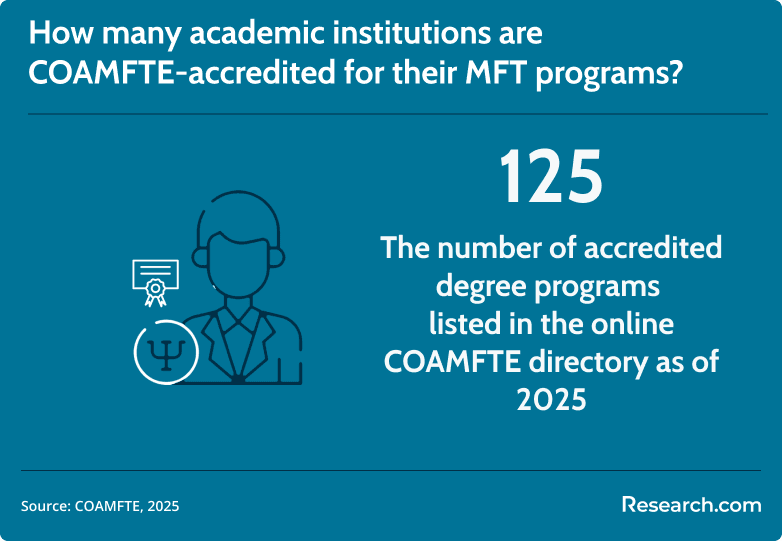
As of 2025, 125 accredited degree programs are listed in the online COAMFTE directory. These include marriage and family therapy programs offered by the following academic institutions:
- Alliant International University
- California State University
- Colorado State University
- Florida State University
- Indiana Wesleyan University
- Lewis and Clark College
- Michigan State University
- Northern Illinois University
- Purdue University Northwest
- Saint Louis University
- Seattle University
- Texas A&M University, Central Texas
- University of Alabama
- University of Georgia
- University of Minnesota
- University of Oregon
- University of Southern Mississippi
- University of South Florida
- Utah State University
- Wheaton College Graduate School
Meanwhile, 979 accredited degree programs are listed in the online CACREP directory as of 2025. These include the counseling programs offered by the following academic institutions:
- Adams State University
- Alabama State University, College of Education
- Central Connecticut State University
- Florida International University
- Georgia State University
- Idaho State University
- Kansas State University
- University of Alabama
- University of Arizona
- University of Central Florida
- University of Colorado
- University of Detroit Mercy
- University of Houston
- University of Kentucky
- University of Massachusetts
- University of Memphis
- University of Nebraska
- University of New Orleans
- University of North Carolina
- University of Oklahoma
Moreover, academic institutions accredited by ACS WASC include public schools, private schools, religious schools, charter schools, adult education centers, supplementary education centers, online schools, and corporate centers. Students may explore the ACS WASC directory of schools for the academic year 2023–2024 for more information.
How can students verify if a program is legitimately accredited?
Students must confirm the accreditation status of a degree program before enrolling, as it may impact licensure, financial aid, and career opportunities. The following are three reliable ways to verify accreditation:
- Check the accrediting agency’s official website. COAMFTE, CACREP, and WASC maintain searchable directories of accredited programs and academic institutions to ensure that students can confirm legitimacy directly from the source.
- Review the school’s accreditation page. Accredited academic institutions usually list their accreditations on their websites. Students should cross-check this information with the accrediting agency’s database for accuracy.
- Contact state licensing boards. Since many boards require degrees from accredited programs, contacting the licensing authority can confirm if a specific program meets state licensure standards.
Is program accreditation required for licensure?
Program accreditation is often an important requirement for licensure in counseling and marriage and family therapy. However, specifics vary by state.
Many states mandate that applicants graduate from a CACREP-accredited counseling program or a COAMFTE-accredited marriage and family therapy program to be eligible for licensure. These accreditations ensure that students have completed coursework and clinical training aligned with national professional standards.
In some states, graduates of non-accredited programs may still pursue licensure, but this usually involves additional coursework, supervised hours, or credential evaluations. Students interested in tech-focused careers can also explore an artificial intelligence bootcamp to gain in-demand skills quickly and complement their professional credentials.
Overall, attending an accredited program may expedite the licensure process, reduce barriers, and strengthen career opportunities in counseling and therapy.
The chart below provides a visualization of the employment levels of professionals in the fields of counseling and psychology in 2024, according to 2025 data from the US BLS.
What are the benefits of completing programs that have COAMFTE accreditation, CACREP accreditation, or WASC accreditation?
Completing a program with COAMFTE, CACREP, or WASC accreditation offers significant advantages that impact both academic and professional opportunities. However, some students who are parents or have childcare responsibilities may also want to consider colleges with childcare on campus to balance education with family needs.
The following are three key benefits upon program completion:
- Licensure Eligibility: Graduating from a CACREP- or COAMFTE-accredited program ensures that students meet the educational requirements for licensure in most states. Accreditation may decrease the risk of additional coursework or delays.
- Educational Quality and Credibility: Accreditation signals that a program or academic institution has undergone rigorous evaluation. WASC accreditation strengthens the overall credibility of a school, while programmatic accreditation confirms the curriculum meets industry standards.
- Financial Aid and Career Mobility: Accreditation often determines eligibility for federal financial aid and scholarships. It also enhances employability since employers, licensing boards, and other institutions recognize accredited degrees as trustworthy and professionally valuable, particularly for those seeking the best psychology jobs.
Which accreditation is better for aspiring clinical mental health counselors?
CACREP accreditation may generally be the best choice for aspiring clinical mental health counselors. For students asking what accreditation is for counseling, CACREP specifically accredits master’s and doctoral programs in counseling, including clinical mental health counseling. The accreditation ensures that they meet professional and academic standards.
Many states now require or strongly prefer CACREP-accredited degrees for licensure, which makes it the most direct path to becoming a licensed professional counselor (LPC). Moreover, CACREP accreditation can improve access to national certifications and expand employment opportunities.
While institutional accreditation, such as WASC, is important for overall degree recognition, CACREP’s programmatic focus provides the specialized training and licensure alignment most relevant to future clinical mental health counselors.
Does accreditation affect eligibility for federal financial aid?
Accreditation significantly affects eligibility for federal student aid in the US. To qualify for federal grants, loans, or work-study programs, students must attend an academic institution with recognized institutional accreditation, such as WASC or another regional accreditor. Without this accreditation, many students cannot access federal student aid, regardless of program quality.
While programmatic accreditation, such as CACREP or COAMFTE, does not directly determine financial aid eligibility, it often complements institutional accreditation by ensuring that students meet professional and licensure standards. Students pursuing careers in criminal justice can also enhance their credentials with a certificate in criminal justice to boost employability and specialized knowledge.
Choosing an accredited academic institution is essential not only for financial aid but also for long-term degree recognition, credit transfer, and career opportunities in counseling and therapy.
The chart below provides a visualization of the median annual wages of professionals in the fields of counseling and psychology in 2024, according to 2025 data from the US BLS.
How do accredited counseling programs compare in cost and value?
When evaluating accredited counseling programs, cost is a crucial factor that complements academic quality and licensure benefits. Prospective students should analyze tuition, fees, and financial aid opportunities in tandem with accreditation standards to ensure a sound return on investment. Metrics such as in-state versus out-of-state tuition discrepancies and associated expenses during clinical training are important in determining overall affordability. For detailed comparisons and economical options without compromising educational excellence, consider exploring the cheapest online counseling degree.
Key Findings
- Colleges, universities, and academic programs undergo accreditation processes to ensure that they provide quality education and meet established standards of excellence.
- As of 2025, 125 accredited degree programs are listed in the online COAMFTE directory, while 979 accredited degree programs are listed in the online CACREP directory.
- ACS WASC provides services to an estimated 5,500 academic institutions, including public, charter, online, proprietary pre-K-12, and adult schools.
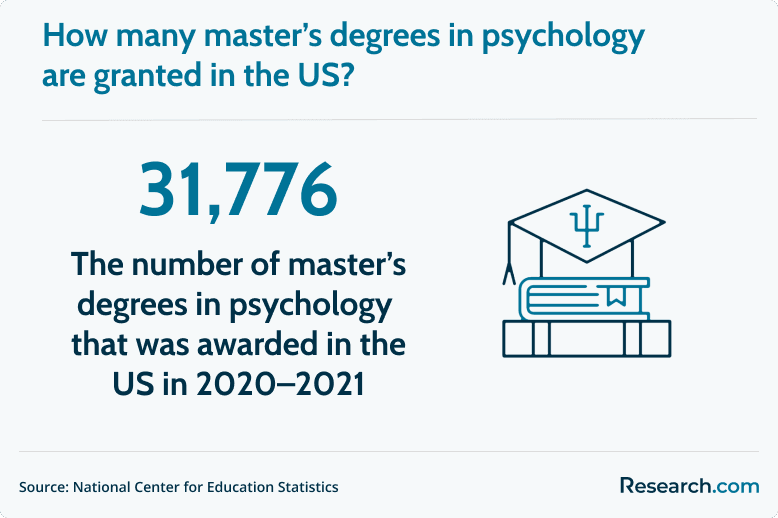
- In the academic year 2020–2021, 31,776 master’s degrees in psychology were awarded in the US (National Center for Education Statistics, 2022).
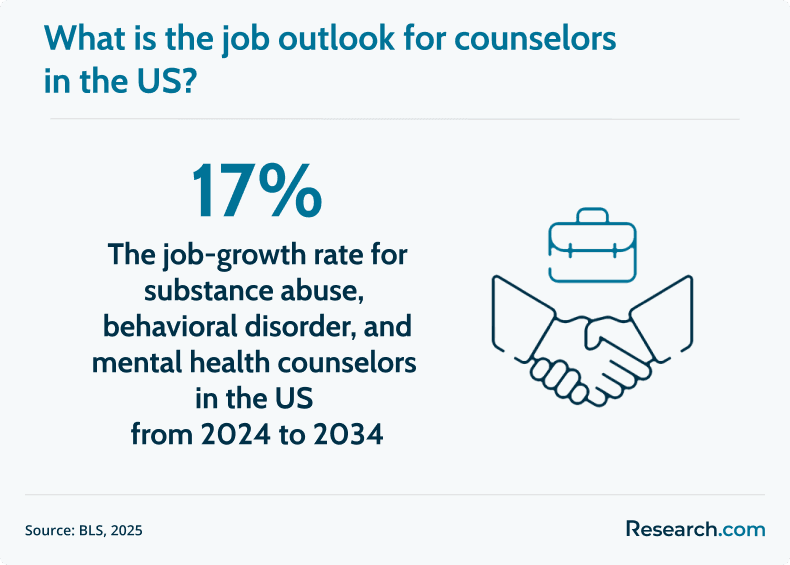
- From 2024 to 2034, the job-growth rate for substance abuse, behavioral disorder, and mental health counselors in the US is 17% (US BLS, 2025).
References:
- National Center for Education Statistics. (2022, September). Table 325.80. Degrees in psychology conferred by postsecondary institutions, by level of degree and sex of student: Selected academic years, 1949-50 through 2020-21. Digest of Education Statistics. https://nces.ed.gov/programs/digest/d22/tables/dt22_325.80.asp
- US Bureau of Labor Statistics. (2025, August 28). Marriage and Family Therapists. Occupational Outlook Handbook. https://www.bls.gov/ooh/community-and-social-service/marriage-and-family-therapists.htm
- US Bureau of Labor Statistics. (2025, August 28). Psychologists. Occupational Outlook Handbook. https://www.bls.gov/ooh/life-physical-and-social-science/psychologists.htm
- US Bureau of Labor Statistics. (2025, August 28). Substance Abuse, Behavioral Disorder, and Mental Health Counselors. Occupational Outlook Handbook. https://www.bls.gov/ooh/community-and-social-service/substance-abuse-behavioral-disorder-and-mental-health-counselors.htm
Other Things You Should Know about COAMFTE, CACREP, and WASC Accreditation
COAMFTE specializes in Marriage and Family Therapy programs, CACREP accredits counseling programs, while WASC focuses on institutional accreditation in the Western U.S. Each meets different educational and regulatory standards relevant to their fields.
No single accreditation is universally superior for counseling programs. The best choice depends on the program's focus and career goals. CACREP focuses on counseling education, COAMFTE specializes in marriage and family therapy, while WASC offers regional accreditation. Each provides distinct benefits based on the field of study.
In 2027, COAMFTE accredits Marriage and Family Therapy programs, CACREP focuses on counseling programs, and WASC accredits institutions broadly in the western U.S. Each serves different academic and professional objectives within counseling and human services education.


