
2027 Clinical Nutritionist vs. Dietitian: Explaining the Difference

Co-Founder and Chief Data Scientist
Choosing between clinical nutrition and dietetics is not just a question of job title. The two careers both use nutrition science to improve health, but they differ in credentialing, legal scope of practice, clinical authority, education requirements, and career flexibility. Those differences matter if you want to work in hospitals, bill for medical nutrition therapy, open a private practice, specialize in wellness, or move across state lines.
In general, dietitians follow a more standardized and regulated path. They complete accredited education, supervised practice, and a national exam to qualify for recognized professional credentials. Clinical nutritionists may also have advanced training and certification, but requirements vary more by state, employer, and credentialing body. That variability can create flexibility, but it can also limit clinical roles in some settings.
This guide compares what clinical nutritionists and dietitians do, the skills each role requires, salary expectations, job outlook, advancement paths, stress factors, transition options, and how to decide which route fits your goals. Use it to evaluate not only which career sounds appealing, but which one gives you the legal authority, employment options, and long-term stability you want.
Key Points About Pursuing a Career as a Clinical Nutritionist vs a Dietitian
- Clinical Nutritionists often focus on holistic approaches, while dietitians require board certification and licensure requirements.
- The job outlook for both professions is projected to grow 5.5% through 2034, faster than the average profession.
- Dietitians typically work in clinical or hospital settings providing evidence-based medical nutrition therapy, while Clinical Nutritionists may have broader roles including wellness coaching and preventive care.
What does a Clinical Nutritionist do?
A clinical nutritionist helps clients or patients use food, nutrients, and lifestyle changes to support health goals, manage nutrition-related concerns, and improve overall wellness. The role often includes nutrition assessment, individualized meal planning, supplement review, health education, and ongoing follow-up. In some settings, clinical nutritionists focus on prevention and wellness; in others, they support people dealing with chronic conditions or recovery needs.
The exact responsibilities depend heavily on education, credentials, employer expectations, and state law. Some clinical nutritionists work in private practice or wellness clinics, while others work in outpatient centers, long-term care facilities, integrative health practices, community organizations, or nutrition companies. In more medical environments, they may review health histories, discuss lab results with appropriate supervision, and coordinate with physicians, nurses, or other healthcare professionals.
Common responsibilities
- Nutrition assessments: Reviewing food intake, symptoms, health goals, medical history, and lifestyle factors to identify nutrition priorities.
- Personalized nutrition plans: Creating practical recommendations that fit a client’s health status, preferences, culture, budget, and daily routine.
- Client education: Explaining how diet patterns, nutrient intake, hydration, and behavior changes may support health outcomes.
- Progress monitoring: Adjusting plans based on changes in symptoms, weight, lab values when available, adherence, and client feedback.
- Collaboration: Working with healthcare providers when clients have medical diagnoses, medications, or complex care needs.
The key issue for students is scope of practice. A clinical nutritionist may have strong nutrition knowledge, but the ability to provide medical nutrition therapy, work independently in hospitals, or use certain protected titles depends on state regulations and credentials. Before choosing this path, check the rules in the state where you plan to practice.
What does a Dietitian do?
A dietitian is a credentialed nutrition professional trained to provide evidence-based nutrition care across clinical, community, food service, research, education, and wellness settings. Registered dietitians use nutrition assessment, diagnosis, intervention, monitoring, and evaluation to help patients and clients manage health conditions, improve eating patterns, and meet specific nutrition goals.
Dietitians are especially important in medical settings because they are trained to provide medical nutrition therapy. This may involve creating nutrition care plans for people with diabetes, kidney disease, gastrointestinal disorders, cardiovascular disease, cancer, eating disorders, pregnancy-related nutrition needs, or recovery after surgery. They often work as part of an interdisciplinary healthcare team and document care in medical records.
Common responsibilities
- Medical nutrition therapy: Designing nutrition interventions for diagnosed conditions and coordinating care with physicians and other clinicians.
- Patient counseling: Translating clinical nutrition science into realistic meal planning, behavior change, and long-term adherence strategies.
- Menu and food service oversight: Managing nutrition quality, safety, and compliance in hospitals, schools, long-term care facilities, and institutions.
- Community nutrition: Leading public health programs, nutrition education workshops, and disease prevention initiatives.
- Specialized practice: Focusing on areas such as pediatric nutrition, sports nutrition, renal nutrition, oncology nutrition, or public health.
The dietitian path is more structured than the broader nutritionist path. Students must be prepared for accredited coursework, supervised practice, and a national exam. The benefit is a widely recognized credential that can open doors in hospitals, clinics, public health agencies, schools, corporate wellness programs, and leadership roles.
What skills do you need to become a Clinical Nutritionist vs. a Dietitian?
Clinical nutritionists and dietitians need a strong foundation in nutrition science, human physiology, communication, and ethical practice. The difference is emphasis. Clinical nutritionists often need flexibility, client-centered coaching, and the ability to navigate varied practice settings. Dietitians need deeper familiarity with regulated healthcare environments, medical nutrition therapy, documentation, and interdisciplinary care.
Core skills for clinical nutritionists
- Applied nutrition knowledge: Understanding how nutrients, dietary patterns, digestion, metabolism, and lifestyle factors influence health.
- Client assessment: Gathering information about diet, symptoms, goals, health history, medications, supplements, and barriers to change.
- Personalized planning: Creating nutrition strategies that are realistic, safe, and tailored to the client rather than copied from generic diet templates.
- Communication and coaching: Explaining complex nutrition topics clearly and helping clients stay motivated through gradual behavior change.
- Research interpretation: Evaluating nutrition studies, separating evidence from trends, and avoiding unsupported claims.
- Business and practice management: For those in private practice, managing scheduling, marketing, client retention, compliance, and professional boundaries.
Core skills for dietitians
- Clinical judgment: Assessing nutrition-related problems in the context of diagnoses, medications, lab results, symptoms, and treatment plans.
- Medical nutrition therapy: Developing nutrition interventions for specific diseases and monitoring outcomes over time.
- Regulatory and ethics knowledge: Following healthcare laws, facility policies, accreditation expectations, privacy rules, and professional standards.
- Interdisciplinary collaboration: Working effectively with physicians, nurses, pharmacists, speech-language pathologists, social workers, and other care team members.
- Documentation: Maintaining accurate patient records that support continuity of care, reimbursement, quality review, and legal compliance.
- Data analysis: Interpreting intake records, anthropometric data, lab trends, nutrition risk scores, and clinical progress indicators.
Skill comparison
| Skill area | Clinical Nutritionist | Dietitian |
| Primary emphasis | Personalized nutrition, wellness, prevention, integrative or specialty counseling | Medical nutrition therapy, clinical care, food service systems, public health nutrition |
| Documentation burden | Varies by employer and setting | Often extensive, especially in hospitals and long-term care |
| Regulatory knowledge | Important because state laws vary | Essential because practice is more standardized and regulated |
| Client interaction | Often counseling-heavy and relationship-based | Often combines counseling with clinical assessment and care coordination |
How much can you earn as a Clinical Nutritionist vs. a Dietitian?
Earnings for clinical nutritionists and dietitians depend on credentials, state regulations, work setting, experience, specialization, and location. Dietitians often have clearer access to clinical roles and institutional employment, while clinical nutritionists may have more variable income, especially in private practice or wellness-focused roles.
The salary comparison is not perfectly straightforward because some labor data group nutritionists and dietitians together, while other salary sources separate the titles. The BLS reports same median wages for both, $73,850. Other sources report average annual salaries for clinical nutritionists at $71,314, with entry-level roles starting near $31,500. Some clinical nutritionists who specialize in areas such as sports nutrition or build successful private practices can earn upwards of $83,000, but that outcome is less common and often depends on business development, reputation, and market demand.
Dietitians may see stronger earning potential in regulated clinical and institutional roles. Median annual wages are around $76,000. Entry-level dietitians begin closer to $37,000, while experienced professionals in federal government, wholesale distribution, or academic institutions can exceed $90,000 and sometimes surpass $100,000. Advanced credentials such as the RDN, specialized practice experience, and employment in urban areas can improve earning potential.
Salary factors to compare before choosing a path
- Credential recognition: The RDN credential may carry more consistent employer recognition in hospitals and clinical organizations.
- State laws: Nutritionist income can be affected by whether a state restricts who may provide certain nutrition services.
- Setting: Hospitals, government agencies, universities, private practice, wellness companies, and sports organizations may pay differently.
- Specialization: Renal, oncology, pediatric, sports, and other specialty areas may support higher compensation when paired with experience.
- Business model: Private practice can raise income potential but also adds marketing, billing, and client acquisition responsibilities.
If your goal is to enter the workforce faster, compare program length, accreditation, transfer policies, supervised practice requirements, and total cost before choosing a degree. Some students also review fast track degree programs online to understand whether an accelerated format fits their career timeline.
What is the job outlook for a Clinical Nutritionist vs. a Dietitian?
The job outlook for both clinical nutritionists and dietitians is supported by several long-term trends: chronic disease management, preventive care, an aging population, interest in wellness, and expanded use of telehealth. However, the strength of the outlook depends on the type of role you want. Dietitians may have more predictable demand in healthcare systems, while clinical nutritionists may see opportunities in wellness, private practice, digital health, and integrative care.
Clinical nutritionists may find opportunities in outpatient wellness centers, private clinics, community health organizations, corporate wellness, sports and performance settings, supplement companies, and telehealth platforms. Growth can be strong where consumers seek personalized nutrition support, but employment stability may vary. State regulations can affect whether clinical nutritionists can provide certain services, use protected titles, or work independently in medical contexts.
Dietitians, particularly registered dietitian nutritionists (RDNs), are commonly needed in hospitals, outpatient clinics, long-term care, dialysis centers, public health programs, schools, food service operations, and insurance-related nutrition services. Demand is tied to the need for medical nutrition therapy for conditions such as diabetes and heart disease. Rural areas may experience shortages in clinical positions, while some urban markets may be more competitive.
Where opportunities may differ
| Career factor | Clinical Nutritionist | Dietitian |
| Most predictable demand | Wellness, private practice, integrative health, coaching, telehealth | Hospitals, outpatient clinics, long-term care, schools, public health |
| Regulatory impact | High; rules vary widely by state | High but more standardized through recognized dietetics credentials |
| Competition | Can be high in wellness markets with many non-licensed providers | Can be high in urban clinical markets but stronger where shortages exist |
| Best fit for job stability | Credentialed roles with clear employer requirements | Clinical and institutional roles with established credential expectations |
What is the career progression like for a Clinical Nutritionist vs. a Dietitian?
Career progression in nutrition depends on how your credentials match the roles you want. Clinical nutritionists often build advancement through specialization, certification, client outcomes, research, or entrepreneurship. Dietitians usually move through a more formal ladder that can include clinical specialization, management, program leadership, teaching, research, or healthcare administration.
Typical career progression for a Clinical Nutritionist
- Education and certification: Earn a relevant degree and obtain certification, commonly the Certified Nutrition Specialist (CNS) credential, which requires 1,000 hours of supervised practice.
- Entry-level roles: Begin in wellness centers, private consulting, community organizations, supplement companies, non-profits, laboratories, or health education roles.
- Practice development: Build skill in assessment, counseling, client retention, referral relationships, and evidence-based program design.
- Specialization: Focus on areas such as sports nutrition, human performance, integrative health, metabolic health, or nutrition research.
- Advanced opportunities: Move into senior consulting, research, academic teaching, leadership, entrepreneurship, or ownership of a nutrition-focused practice or business.
Typical career progression for a Dietitian
- Education and licensing: Complete a bachelor's degree, an ACEND-accredited internship (900-1,200 hours), pass the Registration Examination for Dietitians, and earn a graduate degree.
- Entry-level clinical or community roles: Provide medical nutrition therapy in hospitals, outpatient clinics, long-term care, schools, or public health programs.
- Specialty credentials: Pursue advanced practice in sports, pediatric, renal, oncology, diabetes, critical care, or other specialty areas.
- Supervisory roles: Manage dietetic technicians, nutrition teams, food service operations, community programs, or quality improvement initiatives.
- Leadership and salary growth: Direct nutrition programs, manage departments, teach, conduct research, or move into administrative roles, with experienced RDs earning over $101,000 annually depending on specialty and location.
Both professions show strong growth projections of 6-7% through 2034, reflecting increased demand in healthcare and wellness. If you already hold a degree and need graduate-level preparation, reviewing the easiest master's programs to get into may help you identify accessible options, but admissions ease should not be the only factor. Accreditation, supervised practice eligibility, cost, and licensing relevance matter more for long-term career value.
Can you transition from being a Clinical Nutritionist vs. a Dietitian (and vice versa)?
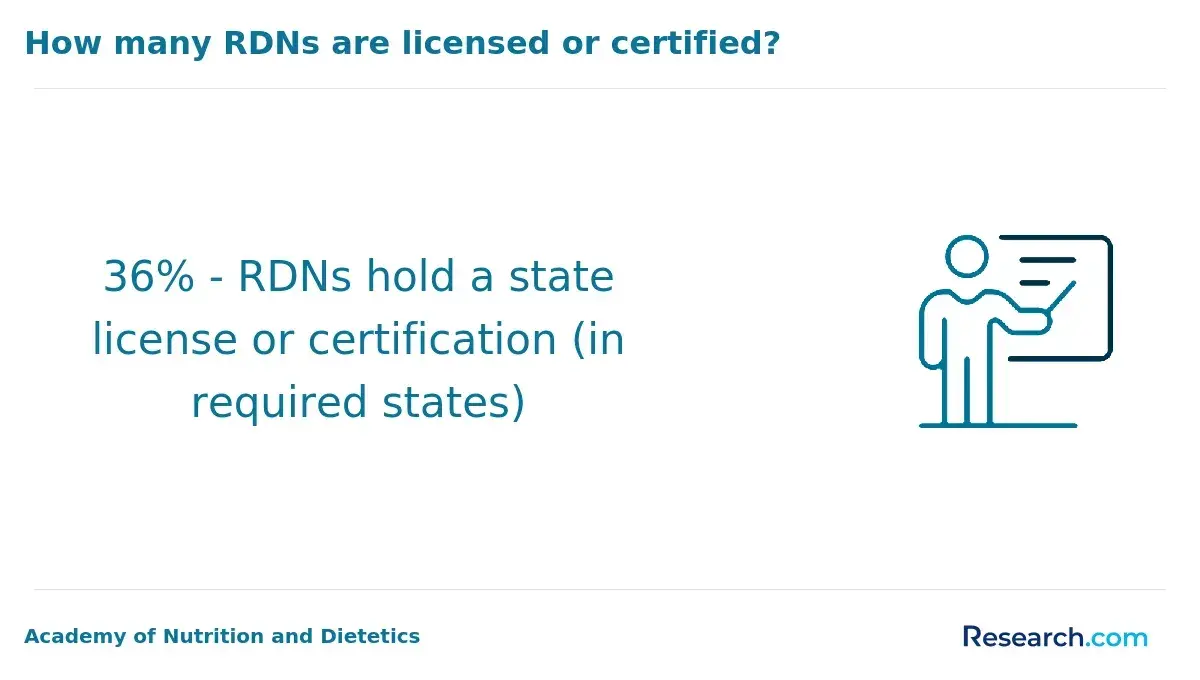
Yes, you can transition between the two paths, but the process is not equal in both directions. Moving from clinical nutritionist to dietitian usually requires meeting dietetics-specific education, supervised practice, examination, and state licensure requirements. Moving from dietitian to nutritionist is typically easier because dietitians often already meet or exceed many nutrition credential standards.
Transitioning from clinical nutritionist to dietitian
A clinical nutritionist who wants to become a registered dietitian generally must complete a bachelor's and master's degree from an ACEND-accredited program, complete at least 900 hours of supervised dietetic internship, and pass the Commission on Dietetic Registration (CDR) exam. Prior nutrition coursework or experience may be useful, but it does not automatically replace accredited dietetics requirements.
This transition is most worthwhile if you want access to hospital roles, medical nutrition therapy positions, clinical leadership, insurance-recognized services, or dietitian-protected job titles. Even nutritionists with strong experience or credentials such as the CNS may need additional coursework and supervised practice to qualify for dietetics registration and state licensure.
Transitioning from dietitian to nutritionist
A dietitian moving into a nutritionist role usually has a simpler path. Registered dietitians often satisfy many education and supervised practice expectations for nutrition-related licensure or certification in many states. This can make it easier to expand into private practice, holistic nutrition, corporate wellness, sports nutrition, consulting, education, or the supplement industry.
Before making either transition, verify state laws, credential rules, program accreditation, supervised practice requirements, and whether your target employers require the RDN, CNS, or another credential. If graduate study is the missing step, a quick masters degree may help you compare faster formats, but the program still needs to align with your credentialing goal.
What are the common challenges that you can face as a Clinical Nutritionist vs. a Dietitian?
Both careers can be rewarding, but neither is free of practical challenges. Nutrition professionals must keep up with changing evidence, communicate with people who may be overwhelmed or resistant, and avoid oversimplifying complex health issues. The biggest differences involve regulation, role clarity, workload, and the cost of entry.
Common challenges for clinical nutritionists
- Regulatory variability: State rules differ, which can affect title use, scope of practice, mobility, and the ability to provide certain services.
- Role confusion: Clients and employers may not understand the difference between a clinical nutritionist, health coach, nutritionist, and dietitian.
- Professional recognition: In some healthcare settings, dietitian credentials may be preferred or required, limiting clinical nutritionist opportunities.
- Income variability: Private practice and wellness roles can bring flexibility but may also involve inconsistent client volume and business expenses.
- Evidence standards: Nutrition trends change quickly, so clinical nutritionists must be careful to distinguish credible research from marketing claims.
Common challenges for dietitians
- Education and credentialing demands: The required education, supervised practice, examination, and graduate study can require significant time and money.
- High-stakes clinical work: Dietitians in hospitals, critical care, renal care, oncology, or long-term care may manage complex cases with serious consequences.
- Documentation and compliance: Clinical roles often require detailed charting, audits, policy adherence, and coordination across care teams.
- Workload pressure: Patient volume, staffing shortages, and administrative duties can contribute to burnout.
- Salary expectations: Some dietitians may feel compensation does not fully reflect the education required, workload intensity, or clinical responsibility.
Continuing education is essential in both careers, but more education is not automatically the best solution to every challenge. Before pursuing advanced study, clarify whether it will improve licensure eligibility, qualify you for a specialty, raise earning potential, or support a specific leadership role. Some professionals researching doctoral options may compare one year PhD programs online, but program quality, accreditation, research expectations, and career relevance should be evaluated carefully.
Is it more stressful to be a Clinical Nutritionist vs. a Dietitian?
Neither career is automatically more stressful in every case. Stress depends on the work setting, caseload, credential requirements, income model, employer support, and the type of clients or patients you serve. A hospital dietitian managing complex medical cases may experience a different kind of stress than a clinical nutritionist running a private practice.
Stress factors for clinical nutritionists
Clinical nutritionists often face stress from business uncertainty, role ambiguity, and the need to differentiate themselves in a crowded wellness market. Those in private practice may need to manage marketing, scheduling, client acquisition, billing, and legal boundaries in addition to counseling. They may also need to explain their qualifications clearly because the term “nutritionist” is used inconsistently in many places.
On the other hand, clinical nutritionists may have more control over their schedule, niche, client population, and work environment. For some professionals, that autonomy lowers stress. For others, the lack of a predictable paycheck or formal career ladder increases it.
Stress factors for dietitians
Dietitians often experience stress from clinical responsibility, high patient volume, documentation demands, and coordination with healthcare teams. In hospitals, long-term care, dialysis centers, or critical care, nutrition decisions may be tied to serious diagnoses, treatment plans, and patient safety. The education pathway itself can also be demanding because of supervised practice and exam requirements.
The advantage is structure. Dietitians often work within clearer job descriptions, established credential systems, and recognized scopes of practice. That can reduce uncertainty, even when the clinical workload is intense.
If you prefer structured roles, healthcare teams, and defined credentials, dietetics may feel more manageable despite its clinical pressure. If you prefer autonomy, wellness-focused work, and flexible practice models, clinical nutrition may feel less stressful, provided you are comfortable with business and regulatory uncertainty.
How to choose between becoming a Clinical Nutritionist vs. a Dietitian?
The best choice depends on the kind of work you want to do, where you want to practice, and how much structure you want in your credentialing path. If your goal is hospital-based care, medical nutrition therapy, or a widely recognized clinical credential, dietetics is usually the stronger fit. If your goal is wellness counseling, integrative nutrition, private practice, research, education, or flexible nutrition consulting, clinical nutrition may be a better match.
Key factors to compare
- Education and credentials: Dietitians require at least a bachelor's degree, a 1,200-hour supervised internship, and passing a national exam. A master's degree is now mandatory for new dietitians. Nutritionists usually need a bachelor's or master's degree and the Certified Nutrition Specialist (CNS) credential with 1,000 hours supervised practice.
- Work setting and lifestyle: Dietitians commonly work in hospitals, schools, government agencies, clinics, and institutional settings with more structured roles. Nutritionists may have more flexibility in private practice, wellness centers, education, consulting, or telehealth, but sometimes with less job security.
- Scope of practice: Dietitians generally have stronger legal recognition for medical nutrition therapy and clinical leadership roles. Nutritionists may focus more on wellness, prevention, education, research, and consulting, depending on state law and credentialing.
- Career interests: Choose dietetics if you want to work directly with medical conditions in regulated healthcare settings. Choose clinical nutrition if you are more interested in holistic health, prevention, performance, private practice, or broader nutrition education.
- Income and advancement: Median salaries range from approximately $66,450 to $95,130, with higher pay often linked to advanced credentials and clinical roles. Consider whether you value stable employment, entrepreneurial upside, specialty practice, or leadership opportunities.
Decision guide
| Choose this path if... | Better fit |
| You want to work in hospitals or provide medical nutrition therapy | Dietitian |
| You want the most standardized credentialing route | Dietitian |
| You want a wellness, prevention, or integrative nutrition practice | Clinical Nutritionist |
| You want flexibility to build a private consulting niche | Clinical Nutritionist |
| You want clinical authority and broader employer recognition in healthcare | Dietitian |
| You are comfortable checking state-by-state rules before practicing | Clinical Nutritionist |
Before enrolling, confirm whether the program supports your target credential and state requirements. Accreditation matters, especially if you plan to pursue regulated healthcare roles. Students comparing flexible options can start by reviewing online colleges that are accredited nationally, then verify whether each program also meets the specific standards required for dietetics or clinical nutrition credentials.
What Professionals Say About Being a Clinical Nutritionist vs. a Dietitian
- Truce: "Choosing a career as a Clinical Nutritionist has offered me incredible job stability and a competitive salary, especially with the growing emphasis on preventive healthcare. I appreciate the diversity of work environments, from hospitals to private practices, which keeps each day fresh and rewarding. It's a field where ongoing learning truly pays off, both professionally and personally."
- Jorge: "Working as a Dietitian has been a journey filled with unique challenges and opportunities, particularly in community health programs that demand creative solutions for diverse populations. The role requires adaptability and empathy, which has deeply enriched my interpersonal skills. This career path has also exposed me to cutting-edge nutritional research, keeping me continuously engaged."
- Luca: "The professional growth in Clinical Nutrition is remarkable, with numerous certifications and specializations available to expand expertise and advance my career. The collaborative environment with other healthcare professionals enhances my knowledge and impact on patient outcomes. It's fulfilling to see measurable changes in people's health that come from tailored nutritional plans."
Other Things You Should Know About a Clinical Nutritionist & a Dietitian
In 2027, dietitians often work in hospitals and clinics, focusing on developing meal plans based on patients' medical conditions. Clinical nutritionists, on the other hand, usually emphasize holistic approaches, considering a patient’s lifestyle and dietary supplements to enhance overall well-being.
Yes, dietitians follow a standardized educational pathway involving an accredited degree, dietetic internship, and licensure exam. Clinical Nutritionists often pursue a broader range of educational backgrounds, including degrees in nutrition, biology, or health sciences, followed by specialized certifications. Their training can vary more widely depending on state regulations and certification boards.
References
- Prevalence of emotional burnout among dietitians and nutritionists: a systematic review, meta-analysis, meta-regression, and a call for action https://pmc.ncbi.nlm.nih.gov/articles/PMC11667849/
- Nutritionist vs Dietitian https://www.publichealthdegrees.org/careers/become-registered-dietitian/dietitian-vs-nutritionist/
- Dietitian vs Nutritionist: Key Differences in 2025 https://www.nutritioned.org/dietitian-vs-nutritionist/
- Dietitian vs. Nutritionist: What's the Distinction? https://healthcare.com.sa/what-is-the-difference-between-a-dietitian-and-a-nutritionist/
- What is the difference between a Dietician and a Nutritionist? https://www.ucl.ac.uk/medical-sciences/study/subjects/nutrition-and-dietetics-degrees/what-difference-between-dietician-and-nutritionist
- Clinical Nutritionist vs. Dietitian: What's The Difference? | Northeast College of Health Sciences https://www.northeastcollege.edu/learn/clinical-nutritionist-vs-dietitian-whats-the-difference
- How to Become a Nutritionist: Career Opportunities and How They Differ from Dietitians | UC San Diego Division of Extended Studies https://extendedstudies.ucsd.edu/news-events/extended-studies-blog/how-to-become-a-nutritionist-career-opportunities-and-how-they-differ-from-dietitians
- Accreditation Council for Education in Nutrition and Dietetics. (2024). Program Enrollment Trends 2000-2024. ACEND Data. https://www.eatrightpro.org/-/media/files/eatrightpro/acend/about-acend/acend-data/program-enrollment-trends.pdf
- Commission on Dietetic Registration. (2026, January 26). Registered Dietitian (RD) and Registered Dietitian Nutritionist (RDN) by Region. Retrieved January 2026, from https://www.cdrnet.org/registry-statistics?id=6926&actionxm=All
- National Center for Health Workforce Analysis. (2025, December). State of the U.S. Health Care Workforce, 2025. https://bhw.hrsa.gov/sites/default/files/bureau-health-workforce/data-research/State-of-US-Health-Care-Workforce-2025.pdf
- U.S. Bureau of Labor Statistics. (2025, August 28). Occupational projections and worker characteristics. Retrieved January 2026, from https://www.bls.gov/emp/tables/occupational-projections-and-characteristics.htm
- ZipRecruiter. (2026). Dietitian Salary. Retrieved February 2026, from https://www.ziprecruiter.com/Salaries/Dietitian-Salary
- ZipRecruiter. (2026). Clinical Nutritionist Salary. Retrieved February 2026, from https://www.ziprecruiter.com/Salaries/Clinical-Nutritionist-Salary
- Academy of Nutrition and Dietetics. (2024). Compensation & Benefits Survey of the Dietetics Profession 2024 (biennial). https://www.cdrnet.org/vault/2459/web//Compensation%20Benefits%20Survey%20of%20the%20Dietetics%20Profession%202024-TOC_Exec%20Sum.pdf


