
2027 Is Nursing a STEM Profession? What You Need to Know

Co-Founder and Chief Data Scientist
Despite nursing's deep roots in science, technology, engineering, and mathematics (STEM), the profession isn't officially recognized as a STEM field by key U.S. government bodies. This lack of recognition creates significant social, political, and economic barriers, including limited funding opportunities, visa restrictions for foreign nurses, and missed chances for professional growth.
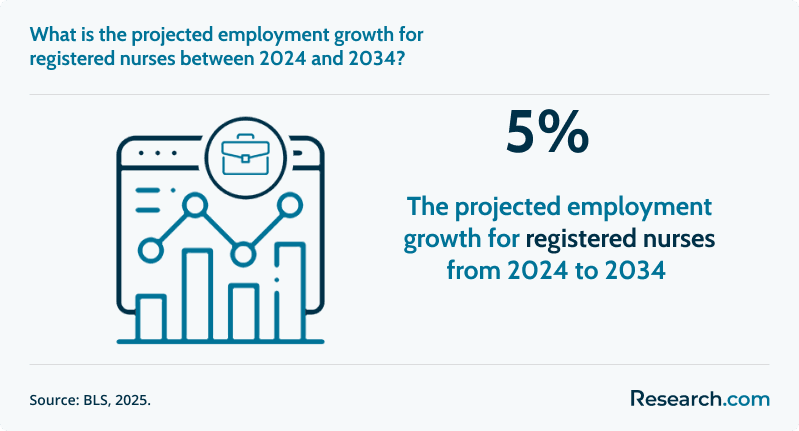
With the employment of registered nurses projected to grow 5% from 2024 to 2034, a rate faster than the average for all occupations, it’s more important than ever to understand the nuances of this profession. With over a decade of experience in career planning, we have compiled this article so you can gain a comprehensive understanding of whether nursing is considered a STEM profession and how the lack of official recognition impacts the field.
Key Things You Should Know About Nursing as a STEM Profession
- Despite a projected 5% growth in registered nurse employment from 2024 to 2034, faster than the average for all occupations, nursing isn't officially classified as a STEM profession by key government bodies, impacting funding, scholarships, and visa opportunities.
- A Bachelor of Science in Nursing (BSN) is a four-year degree with a curriculum that includes core science courses like anatomy and physiology, as well as technology and math courses for medication calculation and using electronic health records.
- For nursing to be recognized as a STEM profession, federal agencies must officially designate it as such, a shift that would unlock financial aid and visa benefits, and advocacy is needed to highlight the profession's clear STEM basis, especially in fields like nursing informatics and for nurse anesthetists.
- Why isn’t nursing considered STEM? Is Nursing STEM?
- How is a nursing degree curriculum structured to include core science, technology, and math courses? Curriculum Structure
- Which U.S. government agencies currently classify nursing as a non-STEM profession, and why? Which U.S. government agencies currently classify nursing as a non-STEM profession, and why?
- What needs to happen for nursing to be recognized as a STEM profession? What needs to happen for nursing to be recognized as a STEM profession?
- What are the educational requirements for a Bachelor of Science in Nursing (BSN) vs. other nursing degrees, and how do they relate to STEM? Educational Requirements
- Can nursing be considered an applied science? Can nursing be considered an applied science?
- How much math does nursing involve? Math in Nursing
- What career paths within nursing, like nursing informatics or nurse anesthetist, are unequivocally STEM-based? Career Paths
- How do continuing education requirements for nurses emphasize the ongoing application of STEM knowledge? How do continuing education requirements for nurses emphasize the ongoing application of STEM knowledge?
- Are there specific scholarships or financial aid opportunities that are only available to STEM students, and how does this affect nursing students? Financial Aid
- How is technology changing the role of nurses? Tech in Nursing
Why isn’t nursing considered STEM?
Nursing is generally not considered a STEM field by many key U.S. government agencies because it is classified differently despite its use of science, technology, engineering, and math principles. It is often regarded more as an applied science or a practice-focused field rather than a pure STEM discipline.
Nursing is sometimes described as a "jack of all trades and master of none," reflecting its broad but applied focus rather than deep specialization in the core STEM areas. This contrasts with other fields, such as those you would find in fast track online bachelors in mathematics degree programs, which are often seen as pure STEM because they prioritize deep theoretical knowledge and specialization.
Moreover, the STEM movement has a strong emphasis on innovation, economic growth, and product or technology development, which differs somewhat from nursing’s human-centered healthcare mission.
How is a nursing degree curriculum structured to include core science, technology, and math courses?
A nursing degree curriculum is structured to include core science, technology, and math courses to equip students with foundational knowledge and skills required for effective nursing practice. Understanding how programs are structured is important, much like prospective students asking “can you transfer MBA programs” need to grasp the requirements and sequence of courses before making a transition.
Core science courses
Nursing programs typically require courses in human anatomy and physiology, microbiology, chemistry, and nutrition. These courses provide an understanding of the body's functions, disease mechanisms, and biological processes crucial for patient care.
Technology courses
Technology is integrated through courses in nursing informatics, healthcare technology, and clinical simulation. These classes teach the use of electronic health records, medical devices, data management systems, and digital tools to support evidence-based nursing practice and healthcare delivery. Some programs include courses like "Living in the IT Era," which focus on ICT (Information and Communication Technology) skills relevant to healthcare.
Math courses
Math in nursing curricula often includes statistics, dosage calculation, and algebra to ensure accurate medication administration and data interpretation. Basic math proficiency courses are required to support clinical calculations, pharmacology dosing, and quantitative reasoning.
Which U.S. government agencies currently classify nursing as a non-STEM profession, and why?
The U.S. government agencies that currently classify nursing as a non-STEM profession include the Department of Commerce’s Economics and Statistics Administration, the Department of Homeland Security (DHS), and U.S. Immigration and Customs Enforcement (ICE).
This classification contrasts with fields like a robotics engineer degree, which is universally recognized as STEM due to its intensive focus on engineering, computer science, and applied technology.
Reasons for Non-STEM Classification
- Applied Science Focus: Nursing is often viewed as an applied science, practicing evidence-based care rather than a traditional STEM discipline focused on scientific innovation or engineering development.
- Variability in Nursing Programs: Not all nursing degrees include extensive research or technology coursework; associate degrees or diploma programs may be less STEM-intensive than advanced university-level programs.
- Government Classification Lag: Despite the healthcare advances, nursing has not been added to official governmental STEM lists during updates, even though agencies such as the National Institutes of Health recognize nursing research as STEM.
- Policy and Economic Impact: This classification impacts access to federal STEM funding, scholarships, and visa extensions for noncitizen nursing students and professionals.
- Perception and Historical Factors: Some attribute nursing’s exclusion partly to historical and social perceptions, including gender biases within STEM fields.
What needs to happen for nursing to be recognized as a STEM profession?
For nursing to be recognized as a STEM profession, several key actions and changes need to happen:
- U.S. Government Recognition: The federal government, especially agencies like the DHS, must officially designate nursing as a STEM field. This is crucial because such recognition would unlock federal funding, scholarship opportunities, and visa benefits for nursing students and professionals.
- Advocacy and Awareness: Nurses and proponents must actively spread awareness about nursing as a STEM career. This includes using STEM-related language in public discourse and emphasizing nursing’s use of science, technology, engineering, and math in daily practice and research.
- Nurse Innovation and Collaboration: Nurses need to embrace their roles as innovators in healthcare, engaging in evidence-based practice and technological improvements. Collaboration with other STEM fields, like engineering, can further highlight nursing’s STEM relevance.
- Academic Institution Changes: Universities and nursing schools, including programs like the GCU nursing program, should consistently categorize nursing within STEM or STEAM education across undergraduate and graduate levels to reflect the profession’s scientific underpinnings.
- Representation and Inclusion: Nurses should seek leadership roles in government, educational statistics bodies, healthcare organizations, and STEM funding decision-making. Inclusion in STEM-funding discussions ensures nursing’s needs and contributions are recognized.
- Coalition and Petition Efforts: Organized groups like the Nursing is STEM Coalition are working to petition federal agencies such as DHS to reclassify nursing as STEM, which could inspire broader recognition by other agencies.
What are the educational requirements for a Bachelor of Science in Nursing (BSN) vs. other nursing degrees, and how do they relate to STEM?
The educational requirements for a Bachelor of Science in Nursing (BSN) differ from other nursing degrees primarily in program length, content depth, and professional preparation.
A BSN is typically a four-year degree from a college or university that includes comprehensive nursing education, plus a variety of liberal arts courses, physical and social sciences, communication, leadership, and critical thinking training.
Many of the largest online universities now offer BSN programs, making it easier for students to access STEM-aligned nursing education remotely while balancing work or personal commitments.
In contrast, an Associate Degree in Nursing (ADN), which is the minimum educational requirement to become a registered nurse, generally takes two years and focuses more directly on technical nursing skills and foundational sciences.
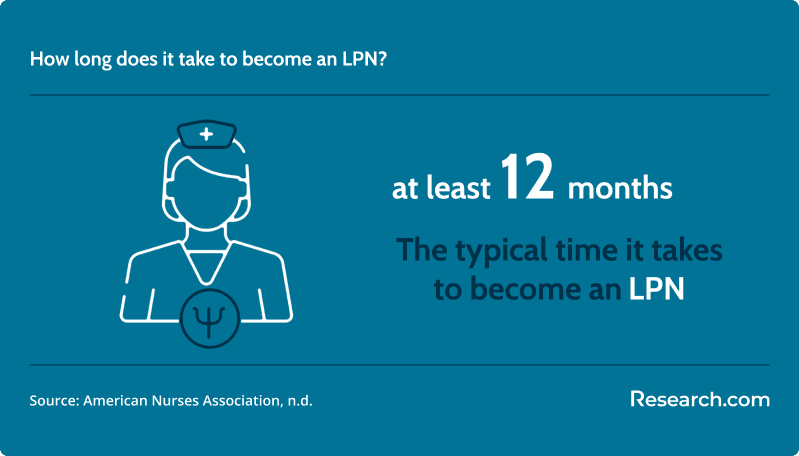
Licensed Practical Nurse (LPN) programs are shorter, often 12–18 months, with a more limited scope and focus on basic nursing tasks. The differences in requirements for ADN, AAD, AAS, and other nursing degrees often reflect the depth of scientific knowledge and clinical practice they cover.
STEM concepts in nursing education
Nursing education incorporates strong foundational STEM elements such as chemistry, biology, microbiology, anatomy and physiology, pharmacology, statistics, informatics, and technology. These courses are core to the BSN curriculum and involve applying scientific principles and mathematical concepts in clinical settings.
While some agencies and authorities recognize nursing as a STEM field, others omit it due to varying definitions of STEM. Nonetheless, professional nursing education and practice heavily engage with STEM disciplines, particularly in evidence-based care, healthcare technology, and biomedical sciences.
The differences in educational requirements and focus among these degrees are reflected in the current prevalence of each type among nurses, as shown in the following chart.
Can nursing be considered an applied science?
Yes, nursing can be considered an "applied science." Applied sciences are fields of study that take scientific knowledge and principles from natural or formal sciences and apply them to solve practical, real-world problems.
Nursing fits this definition as it applies scientific knowledge, especially from biology, chemistry, physiology, pharmacology, and related sciences, to provide healthcare, promote patient wellbeing, and improve clinical outcomes. It is focused on the practical implementation of scientific understanding in clinical settings.
The difference between applied science and natural science lies in their purpose and approach:
- Natural science (also called pure science) seeks to understand the fundamental principles and laws of nature through observation, experimentation, and theory, without necessarily aiming for an immediate practical application. Examples include physics, chemistry, and biology in their basic forms.
- Applied science uses the knowledge obtained from natural sciences and other areas to develop practical applications, technologies, and solutions to specific problems. It is oriented toward tangible and actionable outcomes. Examples include nursing, engineering, medicine, pharmacology, and environmental science.
How much math does nursing involve?
Nurses rely on several types of math, but the skills are less about advanced calculus and more about practical, precise calculations. The most critical math for a nurse is the ability to accurately calculate drug dosages and perform conversions. This involves using basic arithmetic like multiplication and division, along with ratios and proportions. A single miscalculation can have severe consequences for a patient, making this a non-negotiable skill.
In addition to dosage calculations, nurses must be highly proficient in unit conversions. This means being able to quickly and accurately convert between different measurement systems, such as converting a patient's weight from pounds to kilograms, or changing a medication's volume from ounces to milliliters.
They also must understand how to apply these conversions to calculate intravenous (IV) drip rates to ensure patients receive the correct amount of fluid over a given time.
Beyond the patient's bedside, nurses also use math in a broader context. Statistics is a fundamental skill for interpreting medical research and contributing to evidence-based practice. This allows them to critically analyze data from studies to stay current on the best clinical procedures.
Furthermore, nurses in administrative roles, such as nurse managers, use math for budgeting, scheduling, and allocating resources, demonstrating that a strong quantitative foundation is valuable throughout a nursing career.
What career paths within nursing, like nursing informatics or nurse anesthetist, are unequivocally STEM-based?
Certain nursing careers are unequivocally STEM-based, particularly those that deeply integrate science, technology, engineering, and math principles in their practice.
Nursing Informatics
Nursing informatics is explicitly STEM-oriented because it combines nursing science with computer science, information technology, and data analytics. Nurse informaticists design, implement, and optimize health information systems like electronic health records (EHRs) to improve patient care and healthcare workflows.
This field requires specialized knowledge in IT systems, data management, and software used in healthcare, making it a clear applied STEM career within nursing.
Nurse Anesthetist
Nurse anesthetists (Certified Registered Nurse Anesthetists, CRNAs) are also classified as STEM professionals by some federal and labor agencies. Their role involves advanced clinical practice heavily grounded in biology, physiology, pharmacology, and technology, including the use of complex anesthetic machines and patient monitoring systems.
These positions require graduate-level education and scientific expertise to safely administer anesthesia and manage patient responses during surgical procedures.
Clinical Nurse Researcher
Research-oriented nurses design and conduct studies, relying on biology, statistics, and methodology to improve patient care. Their role requires deep engagement with the scientific process, from hypothesis testing to data analysis, placing them in the STEM field.
To become a clinical nurse researcher, students typically need at least a Master of Science in Nursing with a research focus, though many pursue a Doctor of Philosophy in Nursing or a Doctor of Nursing Practice with a research emphasis.
Other STEM-Based Nursing Careers
Other advanced nursing specialties, such as nurse midwives, nurse practitioners, and clinical nurse specialists, also involve STEM fundamentals, often integrating biology, pharmacology, diagnostics, and clinical technologies, but may vary in how explicitly they are classified as STEM by official agencies.
Before pursuing any of these paths, students should be aware of the educational requirements and the LPN school tuition costs for foundational nursing programs that serve as a prerequisite for these advanced roles.
Meanwhile, the chart below shows the percent change in employment among nurse anesthetists, nurse midwives, and nurse practitioners between 2024 to 2034.
How do continuing education requirements for nurses emphasize the ongoing application of STEM knowledge?
Continuing education requirements for nurses emphasize the ongoing application of STEM knowledge by ensuring nurses remain current with advances in medical science, healthcare technology, and evidence-based practices throughout their careers.
Most states require registered nurses to complete a certain number of continuing education hours to maintain licensure, with curricula designed to update and deepen their understanding of biology, pharmacology, anatomy, physiology, and diagnostic technologies.
These continuing education programs specifically incorporate training on emerging healthcare technologies such as telehealth platforms, electronic health records, virtual reality simulations, and artificial intelligence tools. Such technologies require nurses to apply math, data analysis, and scientific methods regularly.
Continuing education also trains nurses in novel clinical techniques and treatments based on the latest biomedical research, helping them safely and effectively deliver patient care.
The emphasis on lifelong learning supports nurses in adapting to rapid technological and scientific developments in healthcare. It prepares them for specialty areas like nursing informatics and advanced practice roles, where STEM competencies are essential.
Are there specific scholarships or financial aid opportunities that are only available to STEM students, and how does this affect nursing students?
There are indeed scholarships and financial aid programs that are specifically available to STEM students, and these can affect nursing students depending on whether nursing is formally recognized as a STEM field in the context of those programs.
Many federal and private scholarships prioritize STEM majors because they aim to encourage careers in fields critical to technological and scientific advancement. For nursing students, this creates a mixed landscape.
However, advocacy efforts and institutional shifts are increasingly recognizing nursing, especially BSN and graduate nursing programs with heavy science, technology, and research components, as a STEM discipline.
Some scholarships explicitly for nursing students are also available regardless of STEM designation, often targeting clinical practice, leadership, or specific nursing specializations. Others are STEM-related scholarships that include nursing under a broader health sciences or interdisciplinary STEM umbrella.
Programs like the Nurse Corps Scholarship Program and some state or institutional scholarships may align with STEM funding or recognize nursing’s scientific rigor, providing financial support similar to STEM fields.
The impact of a formal STEM designation for nursing is significant because it can expand access to scholarships, government grants, research funding, and loan forgiveness programs that are restricted to STEM majors, thereby reducing financial barriers for nursing students.
How is technology changing the role of nurses?
Artificial intelligence and machine learning are poised to significantly transform the future of nursing practice and education by enhancing clinical care, personalizing learning, and improving operational efficiency.
In nursing practice
AI-powered clinical decision support systems will provide nurses with advanced evidence-based insights, improving diagnosis accuracy, treatment decisions, and patient safety. AI enables continuous patient monitoring with real-time alerts for early signs of deterioration, allowing timely interventions that reduce complications and hospital stays.
It will automate routine administrative tasks, streamline care coordination, and reduce nurse workload, freeing nurses to focus more on direct patient care. These technologies will require nurses to develop new technological competencies and critical thinking skills to interpret AI findings and integrate them into holistic care.
This need for new skills highlights the growing importance of rapid, specialized training in the healthcare sector, much like individuals in other fields might seek shortest IT training bootcamps online to quickly gain new proficiencies.
In nursing education
AI-driven platforms will personalize educational experiences by analyzing individual students’ strengths and weaknesses, offering adaptive learning paths, and providing immediate feedback on clinical skills and decision-making. AI-powered simulations will create realistic and interactive clinical scenarios, allowing students to practice complex and rare cases safely.
Competency-based teaching enhanced by AI will monitor progress in real-time and promote mastery of essential skills. Additionally, AI will help develop leadership, ethical reasoning, and innovation skills essential for future nurses in a digital healthcare environment.
This integration of AI into educational programs reflects a broader trend toward leveraging technology for advanced learning, a concept also seen in programs like a fast track online master's degree in education technology.
Incorporating AI into nursing requires addressing data privacy, minimizing algorithmic bias, maintaining clinical judgment, and fostering AI literacy among nurses. Nursing curricula must evolve to include AI and ML education, preparing nurses for technology-enhanced care delivery.
Key Findings
- The employment of registered nurses is projected to grow by 5% from 2024 to 2034, a rate faster than the average for all occupations.
- A Bachelor of Science in Nursing (BSN) is a four-year degree, while an Associate Degree in Nursing (ADN) typically takes two years, and a Licensed Practical Nurse (LPN) program often takes 12 to 18 months.
- Nursing informatics and nurse anesthetists are cited as career paths that are unequivocally STEM-based.
- Some government agencies, such as the Department of Homeland Security and ICE, do not officially recognize nursing as a STEM field.
- There are specific scholarships and financial aid programs that are only available to STEM students, which can affect nursing students' access to funding.
References:
- How to become a licensed practical nurse. (2024, February 6). ANA. https://www.nursingworld.org/content-hub/resources/becoming-a-nurse/how-to-become-a-licensed-practical-nurse
- How to become a nurse: what it is and career path - Zippia. (2025, January 8). https://www.zippia.com/nurse-jobs
- Nurse anesthetists, nurse midwives, and nurse practitioners. (2025, August 28). U.S. Bureau of Labor Statistics. Retrieved September 14, 2025, from https://www.bls.gov/ooh/healthcare/nurse-anesthetists-nurse-midwives-and-nurse-practitioners.htm#tab-6
- Registered nurses. (2025, August 28). U.S. Bureau of Labor Statistics. Retrieved September 14, 2025, from https://www.bls.gov/ooh/healthcare/registered-nurses.htm#tab-6
- Zhou, H. (2025). Relationship between empathy and burnout as well as potential affecting and mediating factors from the perspective of clinical nurses: a systematic review. BMC Nursing, 24(1). https://doi.org/10.1186/s12912-025-02701-0
Other Things You Should Know About Nursing as a STEM Profession
In 2027, nursing is increasingly being recognized for its interdisciplinary approach, integrating technology and data science, which aligns with STEM principles. However, it is not universally classified as a STEM profession. Some nursing programs may incorporate STEM elements, influencing the broader classification debate.
Classifying nursing as a STEM profession in 2026 could provide increased funding opportunities and scholarships earmarked for STEM fields. It may also enhance the professional status of nurses, promote innovation through research, and attract individuals interested in science and technology to the nursing field.


