
2027 Best RN to BSN Programs in Arkansas: Online & Campus

Co-Founder and Chief Data Scientist
Arkansas is seeing a growing need for nurses with bachelor's degrees, as nearly 70% of healthcare employers in the state prefer or require a BSN for nursing roles. This trend makes pursuing an RN to BSN program in Arkansas a smart move for career growth and better job security. Nurses who advance their education often enjoy higher salaries and expanded opportunities across the state's healthcare facilities. Understanding these shifts can help registered nurses make informed decisions about their next steps.
This article dives into what RN to BSN programs in Arkansas offer, comparing online and campus options. Crafted by experts in career planning, it aims to guide readers through what to expect, what to look for, and how to choose the best fit when considering RN to BSN programs in Arkansas. The goal is to make the decision easier and clearer for anyone ready to take this important step.
Key Benefits of RN to BSN Programs in Arkansas
- Most Arkansas RN to BSN programs offer flexible online options, making it easy to juggle work and study, with some programs finishing in as little as 12 months.
- Graduates see a salary boost-Arkansas BSN nurses make about 15% more than RN-only counterparts, opening doors to leadership roles.
- Arkansas schools often have strong hospital connections, giving you hands-on clinical experiences and great job placement rates after graduation.
- What is an RN to BSN program and how does it work in Arkansas? Overview
- What courses are included in RN to BSN programs in Arkansas? Courses
- What are the admission requirements for RN to BSN programs in Arkansas? Requirements
- How long does it take to earn an RN to BSN degree in Arkansas? Duration
- How much does an RN to BSN program cost in Arkansas? Costs
- What are the pros and cons of online vs. on-campus RN to BSN programs in Arkansas? What are the pros and cons of online vs. on-campus RN to BSN programs in Arkansas?
- How do RN to BSN programs in Arkansas support clinical placements? How do RN to BSN programs in Arkansas support clinical placements?
- Which accrediting bodies approve RN to BSN programs in Arkansas? Which accrediting bodies approve RN to BSN programs in Arkansas?
- What career opportunities are available to RN to BSN graduates in Arkansas? Career Opportunities
- What is the average RN to BSN salary increase in Arkansas? Average Salary
What is an RN to BSN program and how does it work in Arkansas?
An RN to BSN program in Arkansas is designed for registered nurses who already have an associate degree or nursing diploma and want to earn their Bachelor of Science in Nursing. These programs focus on enhancing clinical skills, leadership abilities, and evidence-based practice knowledge to help nurses meet today's healthcare demands.
Typically, they offer flexible options, including online and hybrid formats, making it easier for working nurses to balance school with their jobs. Understanding RN to BSN program requirements in Arkansas is key, as these programs aim to help nurses advance their careers and open doors to higher earning potential and leadership roles within the state's healthcare system.
This educational path is perfect for licensed RNs seeking to expand their professional scope or step into management, education, or specialized nursing fields. If you're motivated by career growth, personal development, or meeting employer expectations for BSN-prepared staff, these programs align well with your goals.
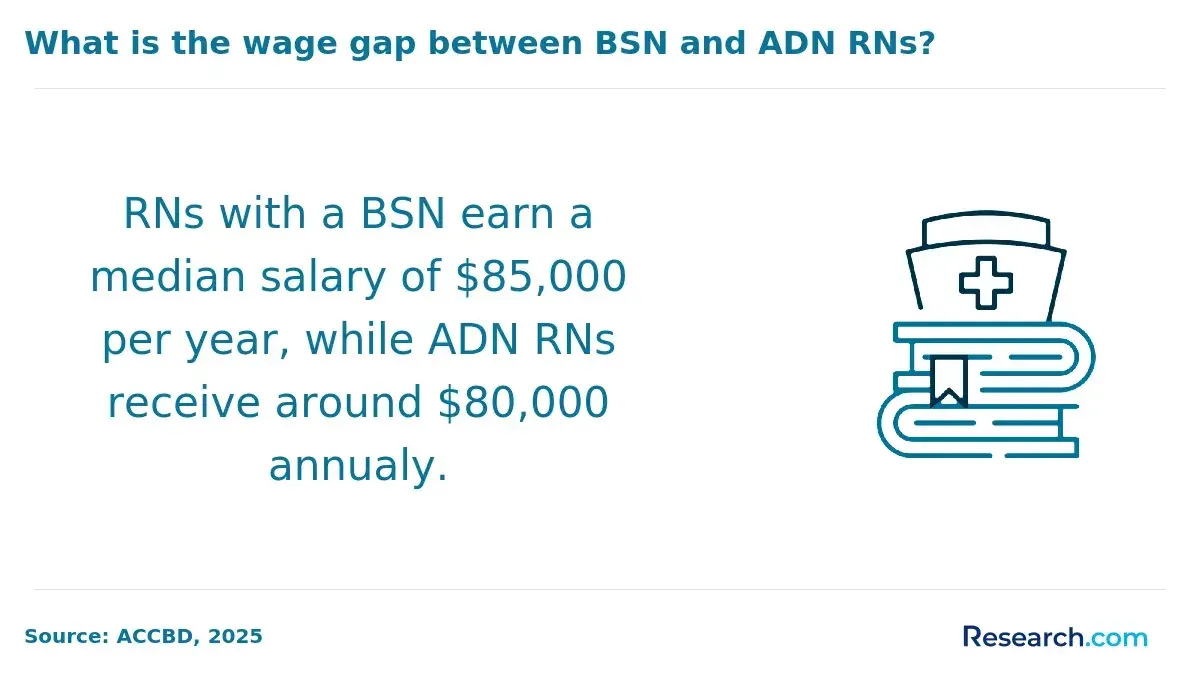
Plus, RNs in Arkansas with a BSN tend to earn more, with a median annual wage of around $66,530 versus $60,000 for those with just an associate degree. The flexibility of how online RN to BSN programs work in Arkansas means nurses can upgrade skills without putting life on hold. For a detailed look at nurse salaries across states, check out this nurse practitioner job salary by state.
What courses are included in RN to BSN programs in Arkansas?
Here's a quick look at the core and specialized courses you'll find in most RN to BSN programs in Arkansas. These classes are designed to build on your existing nursing experience and help you grow into a more skilled and knowledgeable professional.
Below is a handy list of some key courses and focus areas typically included in the RN to BSN curriculum in Arkansas.
- Transition to Professional Nurse: This course helps you shift from an ADN to a BSN role by focusing on professional identity, ethics, and lifelong learning. It sets the stage for leadership and evidence-based care.
- Health Assessment: Learn advanced techniques to perform thorough physical, psychological, and social assessments. This course sharpens your clinical judgment and patient care planning skills.
- Pathophysiology: Dive into how diseases affect the body, linking symptoms to underlying causes. Understanding this helps you make informed decisions for both acute and chronic patient care.
- Nursing Informatics: Get comfortable with healthcare technology, managing electronic records, and using data to improve quality and privacy. These skills are essential for modern nursing leadership.
- Health Promotion Across the Lifespan: Focus on strategies to prevent illness and promote wellness in diverse populations, preparing you to lead community health initiatives.
- Nursing Research and Evidence-Based Practice: Explore how to critically evaluate and apply research findings to improve patient outcomes and enhance your professional growth.
- Leadership and Management in Healthcare: Develop skills in team coordination, resource management, and conflict resolution to prepare for supervisory roles.
- Healthcare Policy and Advocacy: Understand how policies affect nursing and learn to advocate effectively for patients and the profession at different levels.
- Community and Population Health Nursing: Study public health concepts like epidemiology and social determinants of health to lead and respond to community health challenges.
- Professional Nurse Synthesis/Capstone: This final project ties together theory, research, and clinical practice, proving your readiness as a BSN-prepared nurse.
General education courses in statistics, psychology, and humanities also support development of critical thinking and communication skills through the program. If you're curious about related nursing careers, you might want to explore how long does it take to become a forensic nurse for another interesting path.
What are the admission requirements for RN to BSN programs in Arkansas?
If you're considering advancing your nursing career in Arkansas, it's helpful to know the typical qualifications and materials you'll need to apply successfully to RN to BSN programs. To give you a clearer picture, here's a rundown of the common RN to BSN admission requirements in Arkansas you can expect across most schools.
- Active RN License: You'll need a current, unencumbered registered nurse license from Arkansas or another approved state. This ensures you already have hands-on nursing experience, which these programs build upon.
- Associate Degree or Diploma: Completion of an ADN or hospital diploma from an accredited nursing program is essential since it proves you have the foundational nursing knowledge required for BSN-level coursework.
- Minimum GPA: Most programs ask for at least a 2.5 cumulative GPA. Some flexibility exists if you've demonstrated strong performance in nursing-specific courses, showing you're prepared for advanced studies.
- Official Transcripts: You'll have to submit transcripts from all colleges you've attended. This step confirms your academic history and whether you've completed the necessary prerequisites.
- Prerequisite Courses: Completion of classes like writing, psychology, anatomy & physiology with labs, microbiology, statistics, and humanities with a grade of "C" or higher is usually required to make sure you're ready for upper-level nursing material.
- Work Experience (Varies): Some programs want to see recent nursing work experience-often about 1,000 hours within the past year-especially if you finished your ADN over a year ago. This keeps your clinical skills fresh.
- University Admission: Before starting the RN to BSN program, you must be officially admitted to the university, giving you access to campus resources and financial aid.
- Background Check and Drug Screening: These are standard to meet clinical placement safety requirements and protect patients.
- Health and Immunization Records: Proof of immunizations and health clearances is often needed for clinical participation.
- CPR Certification: Most programs require current Basic Life Support (BLS) certification to ensure you're ready to handle emergencies in clinical settings.
- Application Fee and Program Forms: Expect to submit an application fee and any program-specific forms, such as work verification or health assessments.
Meeting these Arkansas RN to BSN program prerequisites can really set you up for success in both your application and your career ahead. If you're exploring further nursing education options, you might also want to check out this handy list of best direct entry nurse practitioner programs for future pathways.
How long does it take to earn an RN to BSN degree in Arkansas?
If you're thinking about going back to school for your BSN in Arkansas, it helps to know how long these programs usually take. Here's a quick rundown of the typical timeframes based on different ways you might approach the program.
- Full-Time Programs: These can often be wrapped up in about 10 to 12 months, especially if you choose an accelerated online option. They're great for nurses who can devote a lot of time each week and want to move up quickly.
- Part-Time Programs: Taking it slower? Part-time tracks usually last between 18 and 24 months, letting you balance work, family, and school by taking fewer courses each term.
- Accelerated Programs: Some schools offer sped-up formats that let you finish sooner if you can handle a heavier course load, perfect for highly motivated students aiming to jumpstart their careers.
- Self-Paced Options: These flexible paths let you progress at your own speed, with multiple start dates and the ability to adjust based on your schedule. Ideal for nurses with unpredictable hours or other commitments.
How much does an RN to BSN program cost in Arkansas?
Let's break down the typical costs you can expect when pursuing an RN to BSN program in Arkansas, whether online or on-campus. Here's a quick look at the main expenses that tend to shape the overall price tag and what you should keep in mind as you budget for your degree.
Here are the key cost factors for RN to BSN programs in Arkansas to consider:
- Tuition per credit hour: This is usually the biggest chunk of your expenses. Online programs might charge a bit less or the same as on-campus options, but rates generally vary from around $300 to $450 per credit hour depending on the school's prestige and whether you're in-state or out-of-state.
- Total program cost: Most RN to BSN programs require about 30 to 40 credit hours, so multiply that by the cost per credit to estimate the full tuition. Some schools offer flat-rate tuition or package deals, which can help you plan better.
- Additional fees: Beyond tuition, watch out for things like technology fees for online courses, lab fees for campus visits, and costs for textbooks or nurse-specific resources. These can add a few hundred dollars extra each semester.
- Financial aid and employer assistance: Many students get help through scholarships, federal aid, or even employer tuition reimbursement programs, which can significantly cut down what you pay out-of-pocket. It's worth researching and applying early.
I spoke with a nurse from Arkansas who completed a hybrid RN to BSN program at a local school, and he recalled, "Paying for the program felt overwhelming at first, especially with the upfront tuition for online classes and those extra fees that popped up unexpectedly." He said the total cost landed somewhere around $12,000. "Luckily, my employer chipped in through their tuition assistance program, which made a huge difference."
He also mentioned that balancing work, study, and family commitments was challenging but rewarding and that, in the end, the investment in his education opened up new career opportunities. "Looking back, it was definitely worth every penny and effort," he shared thoughtfully.
What are the pros and cons of online vs. on-campus RN to BSN programs in Arkansas?
Choosing between online RN to BSN programs in Arkansas advantages and disadvantages really comes down to your lifestyle and how you like to learn. If juggling work, family, and school is your norm, an online or hybrid setup might be the smoothest fit since it offers more freedom. On the flip side, an Arkansas on-campus RN to BSN program pros and cons include stronger in-person connections and a structured schedule, which can really boost motivation and networking.
Below is a quick rundown highlighting what stands out for each option.
Online or Hybrid RN to BSN Programs
- Pro: Flexibility – Online classes let you study anytime, which is great for working nurses balancing shifts and family life.
- Pro: Often Lower Costs –You save on commuting and housing, plus some schools offer flat tuition rates no matter where you live.
- Con: Limited Face-to-Face Networking – With fewer chances to connect in person, building professional relationships can be tougher compared to campus.
On-Campus RN to BSN Programs
- Pro: In-Person Interaction – Being on campus encourages stronger connections with peers and instructors, which helps with support and career mentorship.
- Pro: Consistent Routine – The fixed class times keep you accountable and can help maintain focus and engagement.
- Con: Higher Costs and Less Flexibility – You'll likely spend more on travel and housing, and it can be harder to fit classes around a busy nursing job.
For those interested in specialized tracks, exploring easy neonatal nurse practitioner online programs to get into can be a smart step after completing a BSN, whether online or on campus.
How do RN to BSN programs in Arkansas support clinical placements?
RN to BSN programs in Arkansas make sure students get solid hands-on clinical experience while juggling work and school. Here's how these programs really support you through the clinical placement process to keep things smooth and manageable:
- Partnerships with Healthcare Facilities: Programs team up with hospitals and clinics across Arkansas, which means you have a variety of clinical sites ready for placement - no scrambling around trying to find a spot yourself.
- Preceptor Matching: You get paired with experienced BSN-prepared nurses who guide you through practical skills and professional growth, making the learning personalized and effective.
- Workplace Flexibility: Many students can complete clinical hours at their current job, helping to save time and money while applying new knowledge directly at work.
- Faculty and Coordinator Guidance: You're never on your own - instructors and coordinators check in regularly to help with paperwork, compliance, and questions, keeping everything on track.
One nurse I spoke with, who recently finished her RN to BSN at an Arkansas school, shared how the program helped her navigate clinical placements while working full-time. She mentioned the extra paperwork was initially overwhelming, but the faculty's support and clear communication made it doable. She appreciated getting matched with a knowledgeable preceptor who encouraged her growth every step of the way.
Plus, being able to complete some clinical hours at her hospital job relieved a lot of stress and helped her balance responsibilities. She called the experience "challenging but incredibly rewarding," noting that the structure truly made the difference in managing clinical requirements alongside work and life.
Which accrediting bodies approve RN to BSN programs in Arkansas?
Accreditation is key to making sure RN to BSN programs in Arkansas meet solid quality and professional standards that both students and employers can trust. Here are the main national and state-level bodies that oversee these programs and keep them in check:
- Arkansas State Board of Nursing (ASBN): This is the main state regulator approving all nursing programs in Arkansas, including RN to BSN tracks. They ensure the curriculum and faculty meet state rules, and their approval is a must for you to get licensed as an RN in Arkansas.
- Accreditation Commission for Education in Nursing (ACEN): ACEN is a nationally recognized agency that accredits nursing programs at all levels. Their stamp of approval means the program meets high national standards for curriculum quality and student support, helping you with career steps and credit transfers.
- Commission on Collegiate Nursing Education (CCNE): CCNE focuses on bachelor's and higher nursing programs, pushing for academic excellence and ongoing improvement. Schools with CCNE accreditation give you a leg up for leadership roles and further education.
- Higher Learning Commission (HLC): While not nursing-specific, HLC accredits the whole university, including where you'd take your RN to BSN courses. This ensures the school meets broad academic and governance standards and is essential for federal financial aid and transferring credits.
What career opportunities are available to RN to BSN graduates in Arkansas?
If you're wondering what career paths open up after earning an RN to BSN in Arkansas, there are plenty of exciting options waiting for you. Let me walk you through some popular roles BSN-prepared nurses often take on in the state, which show just how valuable that BSN degree really is.
Here are some key career opportunities you can explore with your BSN in Arkansas:
- Staff Nurse in Specialized Units: Working in areas like critical care, emergency rooms, or rehab centers, BSN nurses handle more complex patient care with advanced clinical skills. BSN programs sharpen your thinking and communication to meet these challenges confidently.
- Charge Nurse or Nurse Manager: If leadership appeals to you, BSN grads often move into supervisory roles, managing teams and making key decisions. Arkansas hospitals actively look for BSN-prepared nurses to fill these important positions.
- Case Manager: This role involves coordinating patient care across different providers, advocating for patients, and navigating complex health systems - all skills strengthened by the BSN curriculum.
- Public Health Nurse: Here, you focus on preventing disease and promoting wellness at the community level. The BSN broadens your perspective on population health and equips you for teamwork with diverse groups.
- Nursing Informatics Specialist: Combining nursing with tech, this growing field improves healthcare systems through data and electronic health records, and many RN to BSN courses include training to prepare you for it.
- School Nurse: Many school districts in Arkansas look for BSN-prepared nurses to manage student health and lead education programs, putting your communication and leadership skills to good use.
- Clinical or Nurse Educator: Teaching new nurses is another rewarding option, where your BSN provides the foundation you need to mentor effectively.
- Advanced Practice Registered Nurse (APRN) Pathway: While you'll need graduate study to become an APRN, earning your BSN is an essential step that opens the door to these higher-level roles and better salaries.
Many Arkansas nurses balance work and school thanks to flexible online RN to BSN programs, which help them boost their careers without hitting the pause button. For those interested in further specialization, RN to FNP programs online offer a solid next step toward advanced practice roles and higher earning potential.
What is the average RN to BSN salary increase in Arkansas?
Registered nurses in Arkansas without a BSN generally earn about $57,414 annually, but earning that BSN can really boost your salary and career options. Here's a quick look at how salaries compare and what factors come into play for ADN vs. BSN nurses:
- Average Salary Comparison: ADN nurses make roughly $57,400 a year, while BSN-prepared RNs earn about $60,969 annually, showing a solid $3,555 boost right off the bat.
- Healthcare Setting Variations: State government jobs often pay more, with starting salaries around $63,830, plus perks like bonuses for direct-care roles, which can mean even higher earnings for BSN nurses.
- Experience and Leadership: BSN nurses tend to climb the pay ladder faster, especially when moving into leadership or specialized roles, increasing their salary as they gain experience.
- Long-Term Potential: Over time, the BSN salary premium adds up, giving nurses tens of thousands more in lifetime earnings through better job prospects and promotions.
Here's What RN to BSN Graduates in Arkansas Have to Say About Their Degree
- Rodgers: "The flexibility of the online RN to BSN program at Arkansas State University truly changed my life. Balancing work and study was challenging, but the tailored coursework allowed me to apply what I learned directly to my nursing role. Starting my career in a local school, I could immediately see how my expanded knowledge improved my care for children and adolescents. This degree not only enhanced my clinical skills but also deepened my commitment to health education in my community. I feel empowered and prepared for any future nursing challenges Arkansas may bring."
- Alistair: "Choosing the hybrid RN to BSN program at the University of Arkansas provided a perfect balance of in-person and online learning that suited my busy lifestyle. The on-campus sessions encouraged meaningful interactions with faculty and peers, enriching my education beyond textbooks. After graduation, I began working in a nearby school and found my advanced training invaluable for supporting students with complex health needs. Reflecting on my growth, I appreciate how this program sharpened my leadership capabilities and gave me the confidence to advocate for better health resources in schools across Arkansas. "
- Vaughn: "Attending the on-campus RN to BSN program at Harding University was a transformative experience both personally and professionally. Immersed in a supportive academic environment, I gained hands-on expertise that boosted my nursing practice. Starting my career at a local school, I was motivated to contribute positively to the well-being of young people, especially those from underserved backgrounds. The program's focus on community health resonated with my passion for service, inspiring me to pursue further certifications and expand my career opportunities here in Arkansas. "
Related Articles for Nearby States
- 2027 Best RN to BSN Programs in Missouri: Online & Campus
- 2027 Best RN to BSN Programs in Oklahoma: Online & Campus
- 2027 Best RN to BSN Programs in Tennessee: Online & Campus
- 2027 Best RN to BSN Programs in Mississippi: Online & Campus
- 2027 Best RN to BSN Programs in Louisiana: Online & Campus
- 2027 Best RN to BSN Programs in Texas: Online & Campus
- 2027 Best RN to BSN Programs in Kentucky: Online & Campus
- 2027 Best RN to BSN Programs in Kansas: Online & Campus
- 2027 Best RN to BSN Programs in Alabama: Online & Campus
- 2027 Best RN to BSN Programs in Illinois: Online & Campus
References:
- 2025 RN Salary Guide: State-by-State Pay https://nursa.com/salary/rn
- BSN Degree Helps Nurses Earn Career Advancement - A-State Online https://degree.astate.edu/online-programs/healthcare/rn-to-bsn/nursing-career-advancement-arkansas/
- How Much Can I Earn With a BSN? https://www.allnursingschools.com/bsn/salary/
- Program: Nursing, RN-to-BSN Option, BSN - Arkansas State University https://catalog.astate.edu/preview_program.php
- RN to BSN Program Admission Requirements https://catalog.saumag.edu/content.php
- In-Person Vs. Online Nursing Programs: Which Is Right For Me? | NurseJournal.org https://nursejournal.org/resources/in-person-vs-online-nursing-programs/
- RN to B.S.N. Online https://nursing.uark.edu/programs/bsn-options/rn-to-bsn/
- Best Online RN to BSN Degree Programs for 2026 https://www.registerednursing.org/rn-to-bsn/
- RN to BSN Degree Program https://online.uark.edu/programs/registered-nurse-bachelor-science-nursing.php
- RN-to-BSN Completion Programs https://np.edu/degrees-programs/nursing/rn-bsn-completion-programs
Other Things You Should Know About RN to BSN Programs in Arkansas
In 2027, top RN to BSN programs in Arkansas include the University of Arkansas, Arkansas State University, and University of Central Arkansas. These schools offer flexible online and on-campus options, accommodating working nurses while providing excellent academic experiences and resources tailored for advancing nursing careers.
In 2027, it's vital to choose RN to BSN programs in Arkansas accredited by the Commission on Collegiate Nursing Education (CCNE) or the Accreditation Commission for Education in Nursing (ACEN). These accreditations ensure educational quality and are essential for future employment and further education opportunities.


