
2027 Best RN to BSN Programs in Alaska: Online & Campus

Co-Founder and Chief Data Scientist
Alaska's healthcare sector is growing steadily, with employment for registered nurses expected to increase by 12% through 2030, outpacing the national average. This growth highlights the demand for advanced nursing qualifications, making RN to BSN programs in Alaska a strategic choice for career advancement and higher earning potential. Nurses with a BSN often find more diverse opportunities, including leadership and specialized roles within Alaska's unique healthcare settings.
This article explores RN to BSN pathways in Alaska, comparing online and campus options. Prepared by experts in career planning, it aims to clarify what these programs entail. Readers will gain insight into what to expect, essential criteria to consider, and how to navigate selecting the most suitable RN to BSN program based on individual goals and circumstances.
Key Benefits of RN to BSN Programs in Alaska
- Alaska's RN to BSN programs offer flexible online options, allowing working nurses to balance education and job responsibilities effectively.
- Graduates of Alaska programs see a median wage increase of up to 15%, reflecting the state's growing demand for BSN-qualified nurses.
- Many programs include clinical placements in diverse settings, providing valuable hands-on experience in both urban and rural Alaskan healthcare environments.
- What is an RN to BSN program and how does it work in Alaska?
- What courses are included in RN to BSN programs in Alaska?
- What are the admission requirements for RN to BSN programs in Alaska?
- How long does it take to earn an RN to BSN degree in Alaska?
- How much does an RN to BSN program cost in Alaska?
- What are the pros and cons of online vs. on-campus RN to BSN programs in Alaska?
- How do RN to BSN programs in Alaska support clinical placements?
- Which accrediting bodies approve RN to BSN programs in Alaska?
- What career opportunities are available to RN to BSN graduates in Alaska?
- What is the average RN to BSN salary increase in Alaska?
What is an RN to BSN program and how does it work in Alaska?
An RN to BSN program in Alaska is an educational pathway that enables registered nurses with an associate degree to advance their qualifications to a Bachelor of Science in Nursing. These programs focus on expanding clinical expertise, leadership skills, and professional development to better prepare nurses for more complex roles within Alaska's healthcare system. Many programs offer flexible formats, including online options, making it easier for working nurses to continue their employment while studying. The ability to transfer significant nursing credits, such as up to 42 credits at some institutions, helps streamline the process. Understanding RN to BSN program requirements in Alaska can help nurses plan their educational journey effectively and position themselves for broader career opportunities.
RN to BSN programs are designed primarily for working registered nurses who want to further their education without putting their careers on hold. Nurses seeking leadership positions, specialized clinical roles, or wanting to strengthen their qualifications for public health are the main beneficiaries of these offerings. Pursuing this degree supports goals like increased earning potential and improved job security, as many employers now require or prefer a BSN for advancement. For those curious about their career options, knowing is there a difference between agnp and fnp can further clarify specialization pathways. The availability of online RN to BSN programs in Alaska offers the flexibility necessary to balance professional and personal commitments efficiently.
What courses are included in RN to BSN programs in Alaska?
This section provides an overview of the core and specialized courses commonly included in RN to BSN programs in Alaska, giving prospective students insight into the curriculum structure. Below is a list highlighting examples of key courses and focus areas typically offered in these programs to strengthen clinical expertise, leadership skills, and professional development for nurses pursuing their degree.
- Nursing Research and Evidence-Based Practice: This course teaches how to critically evaluate nursing studies, interpret statistical data, and apply research findings to improve patient care. It equips nurses to implement evidence-based interventions, elevating the quality of healthcare delivery.
- Health Assessment: Building on foundational assessment skills, students learn advanced techniques to gather comprehensive health histories and perform detailed physical exams. This course prepares nurses to identify patient needs accurately across diverse populations.
- Nursing Informatics: Focused on healthcare technology, this class covers electronic health records, data management, and information security. Nurses develop competence in utilizing digital tools to enhance clinical outcomes and streamline care processes.
- Ethics in Nursing Practice: Students explore ethical principles, patient confidentiality, and real-world nursing dilemmas. This fosters critical thinking and advocacy skills essential for navigating complex moral challenges in healthcare settings.
- Leadership and Management in Nursing: This course emphasizes leadership theories, quality improvement, and policy implementation. It prepares nurses to lead teams effectively and drive organizational change in various healthcare environments.
- Community and Population Health Nursing: Nurses gain knowledge about health promotion, disease prevention, and social determinants impacting Alaska's populations. The course often includes practicums for hands-on experience in public or community health roles.
- Pathophysiology: Focusing on disease mechanisms, this course deepens understanding of conditions affecting patients throughout the lifespan. It supports nurses in anticipating complications and tailoring patient education and care plans.
- Healthcare Policy and Advocacy: Students examine healthcare laws and policies, learning to advocate for patients and the nursing profession within local and national frameworks.
- Cultural Competency and Alaska Native Health: Special courses address the unique health challenges and cultural considerations of Alaska Native communities, promoting culturally sensitive care.
- Capstone Project or Practicum: Often serving as the program's culmination, this experience allows students to apply knowledge to real-world nursing problems, demonstrating readiness for baccalaureate-level practice.
Many Alaska RN to BSN online course requirements also include general education credits in subjects like statistics and psychology to ensure a well-rounded foundation. Students interested in advancing their careers may also find it valuable to explore how to become a nurse practitioner fast, as this can complement the BSN pathway with advanced clinical roles.
What are the admission requirements for RN to BSN programs in Alaska?
This section outlines the essential qualifications and application materials required for admission to RN to BSN programs in Alaska, helping prospective students prepare a strong application. To meet the Alaska RN to BSN program prerequisites, applicants must carefully review and satisfy several key criteria outlined below.
- Active, Unencumbered RN License: Applicants need a current, unrestricted registered nurse license from Alaska, which confirms their eligibility for advanced academic credit and clinical placement within the program.
- Associate Degree or Diploma in Nursing: Completion of an accredited ADN or nursing diploma is required, demonstrating foundational nursing knowledge and skills necessary for BSN-level coursework.
- Minimum GPA: A cumulative GPA of 2.0 or higher is typically required to show readiness for university-level study and program rigor.
- Official Transcripts: Submission of transcripts from all colleges attended verifies prerequisite coursework and qualification for transfer credits, shortening the time needed to finish the BSN.
- Application and Fees: Completing the application process, often through NursingCAS, and paying applicable fees ensures formal consideration by the admissions committee.
- Letters of Recommendation: Some programs request up to three letters, usually from clinical supervisors or educators, to assess professional skills and suitability for advanced study.
- Completion of Prerequisite Courses: Required prerequisite classes such as anatomy, physiology, and microbiology must be completed with a grade of C or better to prepare students for upper-division coursework.
- Background Check and Immunizations: Passing a criminal background check and providing immunization records are necessary to meet clinical site policies and protect patient safety.
- Proof of High School Graduation or GED: Some programs require this documentation to fulfill general university admission standards despite prior nursing education.
Choosing an accredited RN to BSN program recognized by the Alaska Board of Nursing and organizations like the CCNE or ACEN ensures your degree meets professional standards and opens paths to advanced nursing roles. For those considering advanced practice options, exploring online acute care pnp programs may provide valuable insight into future career steps.
How long does it take to earn an RN to BSN degree in Alaska?
This section provides a clear overview of the typical duration required to complete an RN to BSN degree in Alaska. The following breakdown highlights average completion times based on various learning formats and enrollment options to help prospective students choose the program that fits their schedule and goals.
- Full-Time Programs: Most full-time RN to BSN programs in Alaska can be completed within 12 to 18 months. This option is ideal for those who can dedicate significant time to their studies and want to advance quickly, often finishing in as few as three to five semesters depending on transfer credits.
- Part-Time Programs: Part-time options usually take 18 to 24 months, allowing students to balance coursework with work and family commitments. This paced approach suits nurses needing flexibility while progressing steadily toward the BSN.
- Accelerated or Self-Paced Options: Some schools offer shorter modules or online formats that enable motivated learners to finish in about 12 months if they maintain a heavy course load. This fast-track path works best for disciplined students who can handle an intensive workload.
How much does an RN to BSN program cost in Alaska?
Costs for RN to BSN programs in Alaska vary depending on whether students choose online or on-campus formats, and understanding these expenses helps in effective planning. Below is a breakdown of key cost components to consider when evaluating your options.
Here are the main expenses associated with these programs:
- Tuition per credit hour: Tuition typically ranges based on delivery format, with on-campus credits often costing more due to facility usage and resources, while online courses may offer slightly lower rates, but sometimes include technology fees. Rates vary between institutions but expect to pay between $300 and $600 per credit.
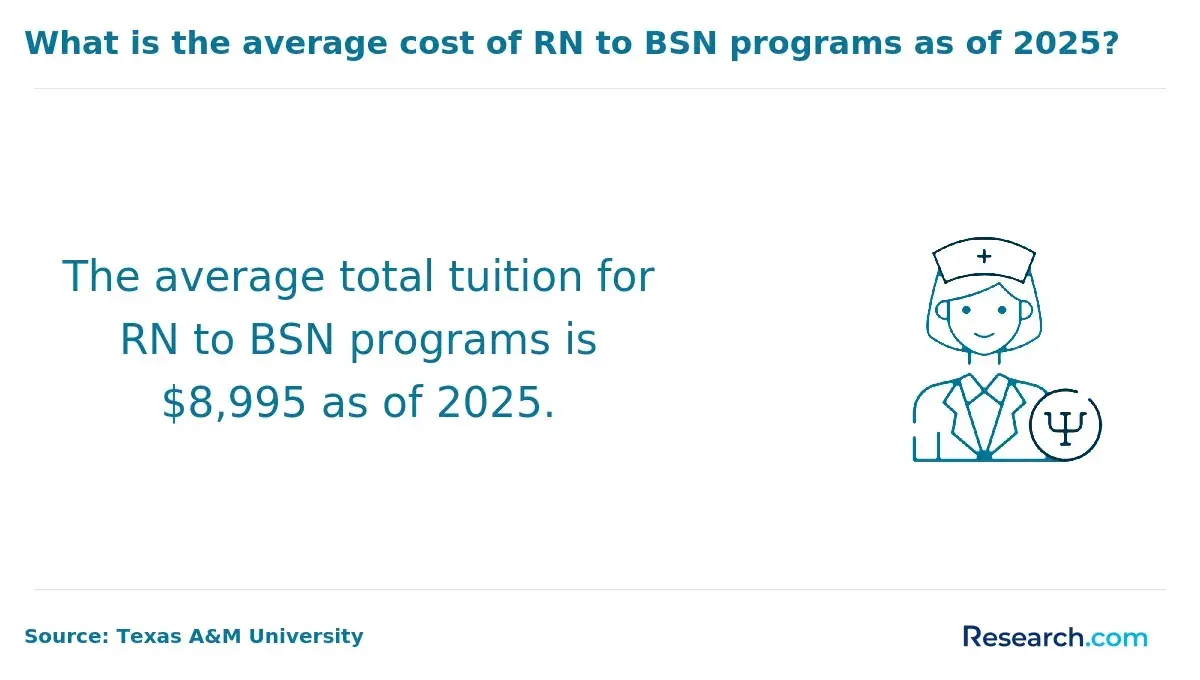
- Total program cost: Most RN to BSN programs require 30 to 40 credit hours, so total tuition can range from $9,000 to $24,000. Costs can fluctuate based on credit requirements, residency status, and additional program fees.
- Additional fees: Online students might face extra charges for technology access, learning platform use, or proctoring exams, while on-campus students may pay for campus services, lab fees, or parking. These fees generally add a few hundred dollars to the overall budget.
- Financial aid and employer assistance: Many students qualify for federal aid, scholarships, or state grants, which can significantly reduce out-of-pocket expenses. Some employers in Alaska also offer tuition reimbursement programs for continuing education in nursing.
A nurse from Alaska, who completed a hybrid RN to BSN program through a local university, shared that affordability initially seemed daunting but turned out to be manageable. "The total cost was just over $15,000, which included some additional fees I hadn't anticipated," he explained. Balancing work, family, and school wasn't easy, but financial aid and employer tuition assistance helped ease the burden. He recalled feeling uncertain about the investment at first but reflected, "Looking back, the degree opened doors for advancement that made every dollar worthwhile." This experience shows that while costs require careful budgeting, support systems exist to make RN to BSN degrees achievable in Alaska.
What are the pros and cons of online vs. on-campus RN to BSN programs in Alaska?
Choosing between online, hybrid, or on-campus RN to BSN programs in Alaska depends largely on your personal circumstances, including your work schedule, financial situation, and career aspirations. Each format offers distinct benefits and challenges that affect your study flexibility, networking potential, and hands-on learning experiences. Carefully evaluating these factors will help you find a program that fits your lifestyle while advancing your nursing career.
Below is a comparison highlighting the key benefits of online RN to BSN programs in Alaska alongside the campus RN to BSN program advantages and disadvantages in Alaska:
Online or Hybrid RN to BSN Programs
- Pro: Flexible Scheduling Students can access coursework anytime from any location, which is ideal for those balancing shifts and family duties.
- Pro: Cost Savings Eliminating commuting and housing costs makes online programs more affordable, with tuition rates generally ranging between $179-$635 per credit hour.
- Con: Limited Direct Interaction Reduced face-to-face engagement may limit networking opportunities, mentorship, and immediate instructor feedback.
On-Campus RN to BSN Programs
- Pro: In-Person Networking & Support Being physically present allows real-time collaboration with peers and easier access to campus resources such as tutoring and career services.
- Pro: Hands-On Experience On-campus programs often provide enhanced clinical practice opportunities that directly build practical skills.
- Con: Rigid Scheduling & Commute Fixed class times and traveling in Alaska's vast geography can pose logistical and financial challenges.
Most Alaska RNs find accredited online RN to BSN programs a practical path to completion in as little as one year, often leading to increased earnings and broader career options. For those exploring graduate nursing degrees, consider this easy online MSN program to get into as a possible next step.
How do RN to BSN programs in Alaska support clinical placements?
RN to BSN programs in Alaska help students gain hands-on clinical experience and meet requirements through strong support systems tailored to working nurses. Below are key ways these programs provide clinical assistance that enhances student learning and practical exposure.
- Partnerships with Local Healthcare Facilities: These programs connect students with a variety of hospitals and clinics statewide, offering diverse clinical sites that meet Alaska's unique healthcare needs and increasing employment opportunities post-graduation.
- Preceptor or Mentor Matching: Students are paired with experienced nurses who provide supervision and personalized feedback, deepening clinical skills and fostering professional growth.
- Flexibility to Use Current Workplace: Many students can complete clinical hours at their jobs, blending new learning with familiar environments to reduce travel and time conflicts.
- Faculty and Clinical Coordinator Guidance: Dedicated staff assist in site selection, oversee clinical progress, and ensure requirements are met smoothly throughout the program.
Reflecting on her experience, a nurse who completed an RN to BSN program in Alaska shared how the program's proactive support made a real difference during clinical placements. She recalled initial concerns about finding suitable sites in rural areas but found that the faculty's personalized help and connections opened doors she hadn't expected. Using her own workplace for some clinical hours eased stress, allowing her to balance family and work while advancing her skills. "The mentorship was invaluable," she said, emphasizing how having a dedicated preceptor made learning practical and motivating. This tailored support helped transform her uncertainty into confidence, highlighting the program's role in bridging theory with real-world nursing challenges in Alaska.
Which accrediting bodies approve RN to BSN programs in Alaska?
Accreditation is essential for ensuring the quality, credibility, and professional recognition of RN to BSN programs in Alaska, as it guarantees these programs meet rigorous standards to prepare competent and employable nurses. The primary national and state-level accrediting organizations oversee these programs, providing assurance to students and employers about the education's value and legitimacy.
The main accrediting bodies responsible for approving RN to BSN programs in Alaska include:
- Alaska Board of Nursing: This state regulatory authority approves nursing education programs to ensure they comply with Alaska's laws and licensure requirements. It mandates that programs also hold national accreditation, safeguarding educational quality and licensure eligibility within the state.
- Accreditation Commission for Education in Nursing (ACEN): A respected national accreditor, ACEN evaluates nursing programs on curriculum quality, faculty credentials, and student outcomes. Its approval signifies that graduates are well-prepared for advanced nursing roles and further education across the country.
- Commission on Collegiate Nursing Education (CCNE): Focused on baccalaureate and higher-degree nursing programs, CCNE reviews program missions, resources, and student success. CCNE accreditation enhances access to federal aid, certification, and graduate studies, making it highly valued by students and employers.
- Northwest Commission on Colleges and Universities (NWCCU): As the regional institutional accreditor, NWCCU confirms that universities offering nursing programs meet high standards of academic integrity and student support, providing foundational assurance beyond specific program accreditation.
What career opportunities are available to RN to BSN graduates in Alaska?
The career opportunities for RN to BSN graduates in Alaska are diverse and offer numerous paths for professional growth across various healthcare settings. Here are some common roles that highlight the options available to BSN-prepared nurses in the state.
These roles reflect the strong demand for qualified nursing professionals and showcase how RN to BSN jobs in Alaska can open doors to more advanced, leadership, and specialized positions.
- Primary Care RN Case Manager: These nurses work within integrated care teams to coordinate preventive and chronic care, often in clinics such as Southcentral Foundation. The role involves collaboration with multidisciplinary staff and may include occasional travel to rural clinics. BSN coursework prepares nurses with skills in population health and care coordination essential for this job.
- Behavioral Health RN: Behavioral health nurses provide outpatient care for mental health conditions, including medication administration and patient education. They typically work in urban and rural clinic settings, using evidence-based practices and holistic approaches emphasized in BSN programs.
- Addiction Services RN: This role focuses on assessing and educating patients with substance use disorders, often working alongside behavioral health teams. BSN training enhances communication, ethics, and community health knowledge needed for managing complex cases.
- Hospital Staff Nurse (Critical Care, Medical-Surgical): BSN-prepared nurses often qualify for specialized hospital roles such as nurse preceptors or unit educators, benefiting from the advanced clinical reasoning and leadership skills developed during their studies.
- Nurse Supervisor or Manager: Graduates can move into management positions overseeing teams and quality initiatives. BSN programs provide leadership and health systems training that helps nurses succeed in these roles.
- Public Health Nurse: With Alaska's unique geography and underserved areas, public health nurses play a vital role in community prevention and education, often traveling to remote villages and working with tribal organizations.
- Clinical Instructor or Nurse Educator: Nurses interested in teaching can pursue roles as clinical instructors, shaping future professionals while continuing clinical work. A BSN is typically required for these positions.
For nurses weighing advanced nursing paths, understanding the nurse practitioner vs physician assistant key differences may also be useful as they consider further specialization or graduate study options.
What is the average RN to BSN salary increase in Alaska?
In Alaska, registered nurses without a BSN degree typically earn between $45.49 and $77.66 per hour, with variations based on experience and location; earning a BSN can positively impact salaries by unlocking new career opportunities and higher-paying roles. Understanding how this degree influences salary differences can help nurses make informed decisions about advancing their education and careers. Below are key salary insights comparing nurses with an associate degree (ADN) and those who hold a Bachelor of Science in Nursing (BSN):
- Average Salary Comparison (ADN vs. BSN): BSN-prepared RNs generally qualify for higher-paying positions, including leadership and specialized care roles, often exceeding the average RN salary of around $102,675 annually in Alaska.
- Salary Differences by Healthcare Setting: Nurses with a BSN have greater flexibility to work in higher-paying environments such as hospitals or acute care, whereas ADN holders might be more limited to community or long-term care facilities.
- Impact of Experience and Leadership Roles: BSN-prepared nurses are better positioned for promotions and leadership roles that come with increased salaries, benefiting from their broader training and qualifications.
- Long-term Earning Potential: Pursuing a BSN opens pathways to advanced degrees and specialties, improving long-term earnings, especially for roles like nurse practitioners or educators.
Here's What RN to BSN Graduates in Alaska Have to Say About Their Degree
- Completing my RN to BSN program entirely online through Alaska Pacific University was a game-changer. The flexibility allowed me to balance my work and family life seamlessly while advancing my education. Starting my new role as a nurse in a local school, I felt confident in my enhanced skills and knowledge, which made a real difference in the quality of care I provide to the students. The program's focus on community health in Alaska gave me a unique perspective on local challenges and inspired me to be more involved in outreach. I'm grateful for the opportunity to grow professionally without sacrificing personal commitments. Junji
- Choosing the hybrid RN to BSN program at the University of Alaska Anchorage was one of the best decisions I've made. The combination of in-person labs and online coursework gave me hands-on experience along with the convenience I needed. Beginning my nursing career at a local school has been incredibly fulfilling; I'm passionate about helping young people stay healthy and thrive. The program also challenged me to think critically about healthcare disparities in our state, which has deepened my commitment to community service. This journey has shaped me personally and professionally in ways I never imagined. Shane
- Attending an on-campus RN to BSN program at the Providence Alaska Medical Center School of Nursing gave me a strong foundation of knowledge and face-to-face mentorship invaluable to my career. After graduation, I was proud to start working in a local school where I apply advanced nursing concepts every day, improving students' well-being and health education. The program prepared me for leadership roles and opened doors for professional advancement that are crucial in Alaska's evolving healthcare landscape. Reflecting back, the challenge of balancing rigorous study and clinical hours was worth it, as it equipped me to contribute meaningfully to my community's health. Haruto
Related Articles for Nearby States
- 2027 Best RN to BSN Programs in Washington: Online & Campus
- 2027 Best RN to BSN Programs in Oregon: Online & Campus
- 2027 Best RN to BSN Programs in California: Online & Campus
- 2027 Best RN to BSN Programs in Hawaii: Online & Campus
- 2027 Best RN to BSN Programs in Idaho: Online & Campus
- 2027 Best RN to BSN Programs in Montana: Online & Campus
- 2027 Best RN to BSN Programs in Nevada: Online & Campus
- 2027 Best RN to BSN Programs in Utah: Online & Campus
- 2027 Best RN to BSN Programs in Arizona: Online & Campus
- 2027 Best RN to BSN Programs in Wyoming: Online & Campus
References:
- Learn All About Nursing School Accreditation and Why It Matters https://nightingale.edu/blog/accreditation-101.html
- About UAA https://www.uaa.alaska.edu/academics/college-of-health/chp-financial-aid.cshtml
- 2025 RN Salary Guide: State-by-State Pay https://nursa.com/salary/rn
- What Is Accreditation & Why Is It Important? | NurseJournal https://nursejournal.org/resources/what-is-accreditation/
- How Much Can I Earn With a BSN? https://www.allnursingschools.com/bsn/salary/
- RN to BSN Programs Alaska - Nursing Degree Programs https://nursingdegreeprograms.net/rn-to-bsn-programs-alaska/
- 2025 RN to BSN Salary – Learn How Much RN to BSN Graduates Earn? https://www.nursingprocess.org/rn-to-bsn-salary/
- What if My Nursing School Isn’t Accredited? https://www.registerednursing.org/articles/what-if-nursing-school-isnt-accredited/
- RN to BSN https://www.herzing.edu/nursing/rn-bsn-program
- Nursing and Pre-nursing Degree Programs & Certificates| University of Alaska CTC https://www.ctc.uaf.edu/programs/nursing/
Other Things You Should Know About RN to BSN Programs in Alaska
In 2027, top choices for RN to BSN programs in Alaska include the University of Alaska Anchorage and the University of Alaska Fairbanks. Both institutions offer comprehensive programs designed to enhance nursing competencies and provide flexible learning options through both online and in-person classes.
Completing an RN to BSN program online in Alaska in 2027 provides flexibility to balance work and study, allows access to programs regardless of location, and often offers a more affordable option with potentially reduced commuting costs.


