
2027 Best RN to BSN Programs in Minnesota: Online & Campus

Co-Founder and Chief Data Scientist
In Minnesota, 65% of registered nurses hold a Bachelor of Science in Nursing or higher, reflecting the growing demand for advanced qualifications in healthcare. Completing an RN to BSN program in Minnesota not only increases job prospects but also enhances skills needed for leadership roles and higher salaries. The state's healthcare system encourages lifelong learning, making such degrees valuable for career progression and patient care quality.
This article explores the structure and benefits of RN to BSN programs in Minnesota, focusing on both online and on-campus options. Prepared by experts in career planning, it provides a clear understanding of what these programs entail.
Key Benefits of RN to BSN Programs in Minnesota
- Flexible online and campus options accommodate working nurses, with programs averaging 12 to 18 months for completion.
- Minnesota's strong healthcare sector increases BSN graduates' job prospects; 70% of hospitals statewide prefer or require BSN-prepared nurses.
- Affordable tuition rates with financial aid opportunities help minimize debt while accessing accredited programs recognized for quality education.
- What is an RN to BSN program and how does it work in Minnesota?
- What courses are included in RN to BSN programs in Minnesota?
- What are the admission requirements for RN to BSN programs in Minnesota?
- How long does it take to earn an RN to BSN degree in Minnesota?
- How much does an RN to BSN program cost in Minnesota?
- What are the pros and cons of online vs. on-campus RN to BSN programs in Minnesota?
- How do RN to BSN programs in Minnesota support clinical placements?
- Which accrediting bodies approve RN to BSN programs in Minnesota?
- What career opportunities are available to RN to BSN graduates in Minnesota?
- What is the average RN to BSN salary increase in Minnesota?
What is an RN to BSN program and how does it work in Minnesota?
An RN to BSN program in Minnesota is a baccalaureate degree completion pathway designed for licensed registered nurses who already hold an associate degree or diploma in nursing. The program's main purpose is to build on prior nursing education and clinical experience while integrating advanced studies in leadership, healthcare delivery systems, and evidence-based practice. With options available both online and on-campus, these programs offer flexibility to accommodate working nurses balancing professional responsibilities.
Understanding RN to BSN program requirements in Minnesota helps prospective students identify how these programs support career advancement and eligibility for roles such as public health nursing under the Minnesota Board of Nursing. Completing this degree equips nurses with enhanced critical thinking and adaptability skills needed in today's complex healthcare environments.
The RN to BSN program is best suited for practicing nurses looking to expand their professional opportunities, personal fulfillment, or long-term goals like leadership or specialized clinical roles. Nurses who pursue this degree often seek to meet rising employer expectations or prepare for graduate nursing education while improving patient care outcomes.
Additionally, nurses interested in pursuing the highest paying nursing job opportunities will find this degree a valuable investment in their career growth.
What courses are included in RN to BSN programs in Minnesota?
This section offers an overview of core and specialized courses commonly found in RN to BSN programs in Minnesota, helping students gain essential skills for career advancement and clinical expertise. Below is a list highlighting examples of key courses and focus areas typically included to support nursing professionals as they progress through their education.
- Nursing Leadership and Management: This course equips students with leadership skills vital for managing nursing teams, handling conflict, and improving patient care outcomes through evidence-based strategies. It prepares nurses for supervisory and administrative roles within diverse healthcare settings.
- Community and Public Health Nursing: Focusing on population health and disease prevention, this course trains nurses to act as community advocates and educators, addressing health disparities and collaborating with local organizations. This is important for those aiming to serve as Public Health Nurses in Minnesota.
- Nursing Research and Evidence-Based Practice: Students learn to critically analyze medical research and apply findings to improve clinical decisions. This course strengthens analytical skills that support quality improvement initiatives and encourages continual professional growth.
- Healthcare Informatics: Emphasizing the use of technology in healthcare, this course covers electronic health records and data management tools, enhancing nurses' ability to deliver safe, efficient care in today's digital healthcare environments.
- Physical Assessment and Health Promotion: This course enhances skills in conducting thorough health evaluations and creating personalized care plans, with a focus on preventive care and effective patient communication.
- Transcultural and Global Health Nursing: Students develop cultural competence and learn to address health needs in diverse populations, preparing them for work in Minnesota's multicultural communities.
- Professional Issues and Ethics in Nursing: Covering ethical challenges and legal responsibilities, this course teaches nurses to advocate for patient rights and ethical practices within healthcare organizations.
- Nursing in Complex and Rural Environments: Unique to Minnesota, this course addresses healthcare delivery challenges in rural areas, helping nurses adapt to resource limitations and improve access to care.
- Family and Gerontological Nursing: Focused on care across the lifespan, this course builds expertise in managing chronic illnesses, palliative care, and long-term planning for older adults and families.
For those curious about career options after earning their BSN, understanding how long does it take to become a psychiatric nurse practitioner can help map out future goals and advancement opportunities within the nursing field.
What are the admission requirements for RN to BSN programs in Minnesota?
This section provides a practical overview of the qualifications and application materials required to apply for RN to BSN programs in Minnesota. Below is a list of the most common RN to BSN admission requirements Minnesota programs typically expect from prospective students, helping you prepare accordingly.
- Active RN License: Applicants must hold a current, unrestricted registered nurse license in at least one U.S. state, with eligibility for Minnesota licensure often required. This ensures you have the clinical experience and legal practice authority necessary for coursework and clinical placements.
- Official Transcripts: Submission of official transcripts from all post-secondary institutions, including nursing programs, is essential. These transcripts confirm completion of prerequisite courses and support proper credit transfer toward your BSN degree.
- Minimum GPA: Many programs require a cumulative GPA between 2.3 and 2.5 in prior nursing or college coursework. This standard maintains academic quality and helps ensure success in advanced nursing classes.
- Associate Degree or Diploma in Nursing: Completion of an accredited associate degree or diploma in nursing is required, forming the foundation for progression to baccalaureate-level study.
- Prerequisite and General Education Courses: You must have completed courses such as anatomy, physiology, microbiology, psychology, and statistics. These prepare you with the scientific knowledge basis to succeed in upper-level nursing topics.
- Residency Requirements: Some programs expect applicants to reside in Minnesota or neighboring states, impacting eligibility. It's important to verify this with each school you consider.
- Application Materials and Deadlines: Expect to submit both university and specific nursing program applications, along with possible personal statements or references. Timely submission is critical for competitive programs.
- Technology and Online Readiness: For online or hybrid formats, reliable internet and basic computer skills are needed to fully engage with digital coursework and virtual simulations.
For those evaluating options, considering program accreditation and flexibility can also be important. For insights into further nursing education pathways, you can review the ranking of the best bsn to np degree programs.
How long does it take to earn an RN to BSN degree in Minnesota?
This section provides a clear overview of the typical duration required to complete RN to BSN programs in Minnesota, helping prospective students plan their educational journey effectively. The timeline for earning a Bachelor of Science in Nursing as a registered nurse in Minnesota varies substantially depending on the program format and individual circumstances.
- Full-Time Programs: Typically completed in about 12 months, these accelerated tracks are designed for nurses who can commit full-time to their studies. Full-time programs allow you to finish all coursework, including clinical requirements, within one academic year, making it ideal for those seeking swift career advancement.
- Part-Time Programs: Taking approximately 18 to 24 months, part-time options offer flexibility for working nurses juggling employment and education. Students usually take fewer courses per semester, making it easier to balance professional responsibilities while progressing steadily toward their degree.
- Accelerated Programs: Some schools offer accelerated formats that can be completed in as little as 10 months, perfect for nurses with prior credits or substantial experience. These programs focus on intensive study and fast progression to help you return to the workforce quickly with your BSN credential.
- Self-Paced and Flexible Online Programs: Designed for maximum flexibility, these options allow students to control their course load and speed, ranging from 10 months to 2 years for completion. They suit those who need to customize their timeline around work and personal commitments, often leveraging transfer credits to shorten duration.
How much does an RN to BSN program cost in Minnesota?
To help you plan financially for an RN to BSN program in Minnesota, it's important to understand the typical range of tuition and other costs you might encounter. Below is a breakdown of key cost components for both online and on-campus RN to BSN options to give you a clearer picture of what to expect.
- Tuition per credit hour: This is usually the largest expense and can vary widely between institutions. On-campus programs often charge higher tuition rates per credit hour due to facilities and on-site resources, whereas online programs sometimes offer slightly lower rates but may compensate with other fees.
- Total program cost: Calculated by multiplying the tuition per credit by the number of credits required, this varies depending on whether the program is full-time, part-time, or accelerated. Some schools include practicum or clinical fees, which can increase overall expenses.
- Additional fees: These can include technology fees, lab fees, and sometimes distance learning service fees that online students must pay. On-campus students may face expenses related to campus facilities or student activities, which aren't commonly charged for online learners.
- Financial aid and employer assistance: Many students offset costs through scholarships, grants, or federal aid. Some healthcare employers in Minnesota offer tuition reimbursement programs for nurses advancing their education, significantly reducing out-of-pocket expenses.
When I spoke with a nurse from Minnesota about the cost of completing his RN to BSN degree through a hybrid program at a local school, he shared that the total tuition was roughly $18,000. He emphasized that balancing part-time work and class commitments was challenging but manageable. "I was surprised by some of the smaller fees I hadn't anticipated, like technology charges specific to online coursework," he explained. However, support from his employer's tuition reimbursement plan eased the financial burden considerably. Reflecting on the experience, he said, "Knowing what to expect financially upfront helped me stay focused and avoid surprises, which made the entire process more straightforward and rewarding."
What are the pros and cons of online vs. on-campus RN to BSN programs in Minnesota?
Choosing between online or hybrid and on-campus RN to BSN programs in Minnesota involves considering how each format fits your lifestyle, budget, and career goals. While online options can provide significant scheduling freedom, on-campus programs often emphasize direct interaction and hands-on learning. Deciding which pathway matches your priorities requires evaluating the key benefits and limitations of each approach.
Online or Hybrid RN to BSN Programs
- Pro: Minnesota RN to BSN online flexibility allows you to access coursework anytime, enabling you to balance work and study effectively without commuting.
- Pro: Online programs reduce costs related to transportation and housing, which is ideal for full-time nurses seeking to minimize expenses.
- Con: This format requires strong self-discipline and tech skills, and some students might feel isolated due to less immediate interaction with instructors and peers.
On-Campus RN to BSN Programs
- Pro: Minnesota on-campus RN to BSN benefits include real-time feedback, networking opportunities, and direct access to campus resources such as tutoring and career services.
- Con: On-campus classes follow fixed schedules with limited flexibility, which may conflict with demanding nursing shifts and require regular commuting.
- Con: Additional costs like transportation and parking fees can add up, impacting your overall budget.
If you're wondering if an is online MSN program easy to get into, considering how these factors influence your personal situation is a practical first step.
How do RN to BSN programs in Minnesota support clinical placements?
RN to BSN programs in Minnesota provide practical support to help students complete their clinical placements, ensuring they gain essential hands-on experience required for licensure and career advancement. Below are key ways these programs assist students in navigating clinical requirements smoothly while balancing work and study commitments:
- Partnerships with Local Healthcare Facilities: Programs collaborate with a range of hospitals, clinics, and public health agencies throughout Minnesota, allowing students to access diverse clinical environments close to home and build varied nursing skills.
- Preceptor or Mentor Matching: Students are paired with experienced nurse mentors who offer guidance, supervisory support, and professional feedback, enhancing learning outcomes and confidence during clinical hours.
- Flexibility to Use Workplace for Clinical Hours: Many programs permit current RNs to complete clinical requirements at their own job site if those experiences meet academic criteria, reducing disruption and travel while linking education directly to their career.
- Faculty and Clinical Coordinator Guidance: Dedicated staff assist students in selecting appropriate placements, ensuring compliance with standards, and providing personalized advice to overcome challenges during clinical rotations.
When I spoke with a nurse who completed an RN to BSN program from Minnesota, she shared how the ability to coordinate clinical hours at her workplace made all the difference. Initially overwhelmed by balancing shifts, family, and coursework, she found strong support from faculty advisors who helped her map out clinical placements aligned with her schedule and goals. The mentorship she received during clinical work boosted her practical skills and professional confidence. Reflecting on her journey, she noted, "The program made clinical placements manageable and meaningful, turning a potentially stressful part of my education into an exciting step forward in my nursing career."
Which accrediting bodies approve RN to BSN programs in Minnesota?
Accreditation is vital to ensure RN to BSN programs in Minnesota deliver quality education, maintaining credibility and recognition from employers, licensing boards, and federal financial aid providers. The key national and state-level accrediting organizations that oversee RN to BSN programs in Minnesota include the following:
- Minnesota Board of Nursing: This state regulatory authority approves nursing programs essential for graduates to qualify for RN licensure in Minnesota. Its evaluation confirms programs meet state-specific education requirements and prepare students for professional nursing roles, a mandatory step for licensure.
- Commission on Collegiate Nursing Education (CCNE): A national agency specializing in baccalaureate and graduate nursing programs accreditation, including RN to BSN pathways. CCNE ensures programs meet high standards for curriculum quality, faculty expertise, and student outcomes, signaling excellence to both students and employers.
- Accreditation Commission for Education in Nursing (ACEN): Recognized nationally, ACEN accredits various nursing programs, including RN to BSN, focusing on curriculum rigor, faculty qualifications, and student support. Programs with ACEN approval demonstrate adherence to comprehensive standards recognized by the Council for Higher Education Accreditation and the U.S. Department of Education.
- National League for Nursing Commission for Nursing Education Accreditation (CNEA): This accrediting body reviews nursing programs across multiple levels, emphasizing continuous improvement and educational quality. CNEA accreditation reflects a program's commitment to maintaining high teaching and learning standards important for career advancement and licensure.
What career opportunities are available to RN to BSN graduates in Minnesota?
This section provides a clear overview of diverse nursing roles and advancement paths open to RN to BSN graduates in Minnesota, helping readers understand the practical career benefits of completing their degree. Below are some common career opportunities available to BSN-prepared nurses in Minnesota that highlight the scope of professional growth after finishing an RN to BSN program.
- Hospital-Based Nursing Positions: These roles place nurses in specialized units such as critical care, emergency departments, or neonatal intensive care units. BSN education enhances clinical judgment and evidence-based practice skills necessary for working in complex hospital environments.
- Nurse Case Manager: Case managers coordinate patient care and emphasize community health education and care coordination. The population health focus of RN to BSN career opportunities in Minnesota equips nurses for these healthcare system roles.
- Ambulatory Healthcare Services: Nurses in outpatient clinics, urgent care, and surgery centers manage chronic conditions and preventive care while building ongoing patient relationships. BSN-prepared RNs are well-positioned for this growing sector outside traditional hospital settings.
- Public Health Nursing: These roles involve disease prevention, health promotion, and addressing disparities in community health. Minnesota's RN to BSN programs integrate public health experiences that prepare nurses for these important, population-focused positions.
- Academic and Educational Roles: Nurses aiming to teach or enter academic settings use the BSN as a foundation for advanced degrees such as a Master of Science in Nursing or Doctorate of Nursing Practice, paving the way for future educational leadership.
- Leadership and Management Positions: Increasingly required in healthcare organizations, BSN preparation supports nurse managers and leaders in supervising staff, managing operations, and leading quality improvement.
For those curious about the next steps after a BSN, understanding how long to finish nurse practitioner training is key for planning continued career advancement.
What is the average RN to BSN salary increase in Minnesota?
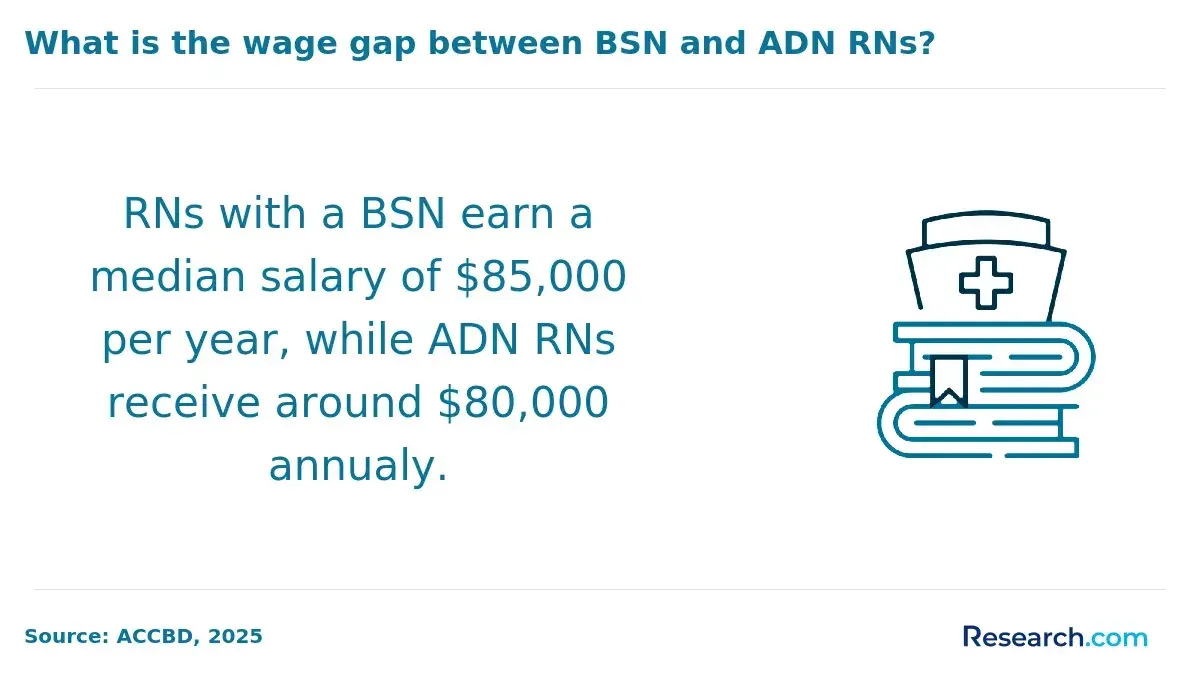
The average registered nurse (RN) in Minnesota without a BSN earns approximately $78,417 to $84,030 annually, but obtaining a Bachelor of Science in Nursing can significantly boost earning potential and career opportunities. Below is a comparison of salary outcomes between nurses with an associate degree (ADN) and those holding a BSN, highlighting practical financial considerations for prospective students.
- Average Salary Comparison (ADN vs. BSN): ADN-prepared RNs typically earn around $37.70 per hour ($78,417 annually), while BSN nurses often command between $40.40 and $47.82 per hour, reflecting a $5,000 to $10,000 annual salary premium.
- Salary Differences by Healthcare Setting: BSN holders are more likely to work in high-paying environments like acute care hospitals and specialized units, with some salaries reaching $99,380 or more annually.
- Impact of Experience and Leadership Roles: BSN credentials open pathways to leadership and educator positions that come with substantial pay increases over bedside roles.
- Long-Term Earning Potential: The initial salary gap tends to widen over time as BSN nurses access advanced certifications and management roles, often resulting in six-figure incomes.
Here's What RN to BSN Graduates in Minnesota Have to Say About Their Degree
- Completing the online RN to BSN program at Metropolitan State University gave me the flexibility I needed to balance work and family. The curriculum deepened my clinical knowledge and helped me gain confidence in leadership roles. Starting my nursing career in a local school environment, I found great joy in promoting the health and well-being of children. The program truly prepared me to make a meaningful impact on my community's health. I feel empowered and ready for new challenges every day. Allana
- Attending the hybrid RN to BSN program at Augsburg University was a transformative experience that allowed me to engage both in-person and online with peers and faculty. The blend of learning formats helped me develop stronger communication skills and adaptability. After finishing the program, I started working in a local school where I'm deeply invested in supporting student wellness. This journey enhanced my sense of professional purpose and the importance of community health nursing in Minnesota's diverse populations. It was challenging but incredibly rewarding. Dwight
- The on-campus RN to BSN program at University of Minnesota Duluth offered rigorous academic training and hands-on clinical experiences that pushed me to grow both personally and professionally. The immersive setting fostered deep connections with classmates and professors that enriched my education. Beginning my career in a local school setting, I've been able to advocate effectively for children's health initiatives and expand my role as a nurse leader. Pursuing my BSN in Minnesota provided unique opportunities to advance my career while giving back to the community I love. Pam
Related Articles for Nearby States
- 2027 Best RN to BSN Programs in Wisconsin: Online & Campus
- 2027 Best RN to BSN Programs in Iowa: Online & Campus
- 2027 Best RN to BSN Programs in North Dakota: Online & Campus
- 2027 Best RN to BSN Programs in South Dakota: Online & Campus
- 2027 Best RN to BSN Programs in Nebraska: Online & Campus
- 2027 Best RN to BSN Programs in Illinois: Online & Campus
- 2027 Best RN to BSN Programs in Missouri: Online & Campus
- 2027 Best RN to BSN Programs in Michigan: Online & Campus
- 2027 Best RN to BSN Programs in Kansas: Online & Campus
- 2027 Best RN to BSN Programs in Indiana: Online & Campus
References:
- In-Person Vs. Online Nursing Programs: Which Is Right For Me? | NurseJournal.org https://nursejournal.org/resources/in-person-vs-online-nursing-programs/
- Nursing B.S. (RN-BS) | Nursing | Bemidji State University https://www.bemidjistate.edu/academics/nursing/nursing-b-s/
- Minnesota RN-BSN Programs: Affordable & Fast Options for 2025 https://www.rntomsn.org/rn-to-bsn-online/minnesota/
- Online RN to BSN Nursing Program in MN - SMSU https://online.smsu.edu/programs/bsn-nursing/
- 2025 RN Salary Guide: State-by-State Pay https://nursa.com/salary/rn
- RN to BSN Programs in Minnesota | 2025 https://nurse.org/education/rn-bsn-programs-minnesota/
- 2025 RN to BSN Salary – Learn How Much RN to BSN Graduates Earn? https://www.nursingprocess.org/rn-to-bsn-salary/
- RN to BS in Nursing | Nursing Degree Program https://www.css.edu/academics/programs/undergraduate/rn-to-bs-in-nursing/
- 2025 Best RN to BSN Programs in Minnesota Online - Fast & Affordable Options https://www.registerednursing.org/rn-to-bsn/minnesota/
- Tuition Reimbursement for Nursing https://www.brighthorizons.com/employers/benefits/tuition-reimbursement-for-nursing
Other Things You Should Know About RN to BSN Programs in Minnesota
When selecting an RN to BSN program in Minnesota for 2027, consider factors like program accreditation, flexibility of class schedules, cost, faculty expertise, and the availability of online versus campus options. These elements will help ensure the program aligns with your professional goals and personal circumstances.
The top RN to BSN programs in Minnesota for 2027 include offerings from the University of Minnesota, Bethel University, and Saint Mary's University of Minnesota. These programs provide online and campus options, with a focus on flexibility, course quality, and career advancement opportunities for nursing professionals.


