
2027 Best RN to BSN Programs in Wyoming: Online & Campus

Co-Founder and Chief Data Scientist
Wyoming's healthcare sector is expanding, with employment for registered nurses projected to grow by 12% through 2030, surpassing the national average. This demand is driven by an aging population and increased healthcare access across rural areas. Consequently, advancing from an RN to a BSN offers significant career advantages, including higher earning potential and expanded clinical responsibilities within the state's evolving medical infrastructure.
This article examines the structure and benefits of RN to BSN programs in Wyoming, focusing on both online and campus-based options. Prepared by experts in career planning, it guides readers through understanding program components, expectations, and key factors to consider. The article aims to assist prospective students in making informed decisions about the optimal RN to BSN program to pursue in Wyoming.
Key Benefits of RN to BSN Programs in Wyoming
- Wyoming offers flexible RN to BSN programs with over 60% of courses available online, accommodating working nurses statewide.
- The state's BSN graduates see a 15% higher median salary than RNs without a BSN, enhancing career advancement opportunities.
- Wyoming's nursing programs emphasize community health, leveraging partnerships with local hospitals, and benefitting students with practical clinical experience.
- What is an RN to BSN program and how does it work in Wyoming? Overview
- What courses are included in RN to BSN programs in Wyoming? Courses
- What are the admission requirements for RN to BSN programs in Wyoming? Requirements
- How long does it take to earn an RN to BSN degree in Wyoming? Duration
- How much does an RN to BSN program cost in Wyoming? Costs
- What are the pros and cons of online vs. on-campus RN to BSN programs in Wyoming? What are the pros and cons of online vs. on-campus RN to BSN programs in Wyoming?
- How do RN to BSN programs in Wyoming support clinical placements? How do RN to BSN programs in Wyoming support clinical placements?
- Which accrediting bodies approve RN to BSN programs in Wyoming? Which accrediting bodies approve RN to BSN programs in Wyoming?
- What career opportunities are available to RN to BSN graduates in Wyoming? Career Opportunities
- What is the average RN to BSN salary increase in Wyoming? Average Salary
What is an RN to BSN program and how does it work in Wyoming?
An RN to BSN program in Wyoming is a degree completion pathway designed specifically for registered nurses who already hold an Associate Degree in Nursing or a nursing diploma. These programs enable nurses to earn a Bachelor of Science in Nursing, which expands their clinical knowledge and prepares them for leadership or advanced practice roles.
In Wyoming, the RN to BSN programs in Wyoming are often offered with flexible learning formats, including both online and on-campus options, to accommodate working professionals. This flexibility allows nurses to continue working while pursuing their degree, minimizing disruption to their careers. By earning a BSN, nurses improve their qualifications, as employers in the state increasingly prefer or require BSN-prepared nurses for specialized or higher-level nursing roles.
The program is ideal for nurses aiming to advance their professional standing or take on specialized positions such as nurse educators or unit managers. It supports those interested in increasing their understanding of evidence-based practices and enhancing confidence in clinical decision-making. Additionally, BSN graduates often receive salary increases, better job satisfaction, and access to career advancement opportunities.
Many healthcare employers in Wyoming encourage nurses to enroll by offering incentives like tuition reimbursement. Nurses pursuing advanced education, including pathways that may lead to better compensation, such as the dnp women's health salary, can also benefit from this degree as a foundational step toward graduate-level roles in nursing.
What courses are included in RN to BSN programs in Wyoming?
This section provides an overview of the core and specialized nursing courses commonly included in the RN to BSN curriculum in Wyoming, designed to deepen clinical expertise and foster leadership among registered nurses. Below is a list highlighting examples of key courses and focus areas typically offered in nursing courses in Wyoming RN to BSN programs that prepare students for advanced roles and professional growth.
- Health Assessment: This course trains students in comprehensive patient evaluations by teaching techniques to collect and interpret health data. Mastery of health assessment enhances the development of effective care plans and improves patient outcomes through detailed analysis of health patterns and risk factors.
- Pharmacology: Students learn about drug classifications, mechanisms of action, and side effects to ensure safe medication management. This knowledge equips nurses to handle complex medication regimens and provide high-quality patient care.
- Nursing Leadership: This course focuses on developing skills in leadership theories, communication, and team coordination, essential for nurses pursuing management or advanced practice roles within healthcare settings.
- Evidence-Based Practice: Emphasizing research methods and critical evaluation, this course enables students to integrate current scientific evidence into clinical decision-making, improving patient care quality.
- Community and Population Health: Students explore epidemiology and public health strategies to address the health needs of diverse populations. This prepares nurses for roles in community health promotion and disease prevention.
- Professional Nursing: Covering ethics, legal issues, and professional standards, this course educates nurses on their evolving role within healthcare systems and the importance of ongoing professional development.
- Nursing Practicum: This hands-on course offers supervised clinical experience, allowing students to apply theoretical knowledge in real-world settings and refine their patient care and leadership skills.
RN to BSN programs in Wyoming often provide flexibility through online or hybrid formats, accommodating working professionals. For those interested in specialized nursing fields, further education options like functional medicine nurse practitioner school may be considered after completing a BSN, reflecting the expanding career pathways enabled by this advanced nursing education.
What are the admission requirements for RN to BSN programs in Wyoming?
This section provides a clear understanding of the qualifications and materials typically required to apply for RN to BSN programs in Wyoming. To help you navigate the application process effectively, below is a list outlining the common admission requirements you can expect when considering Wyoming RN to BSN program prerequisites.
- Active RN License: Candidates must possess an active, unencumbered RN license in Wyoming. This requirement ensures legal authorization to practice nursing within the state and reflects compliance with professional nursing standards.
- Official Transcripts: Applicants need to submit official transcripts from all previous postsecondary institutions, including diploma programs. For international students, transcripts must be evaluated by a NACES member to confirm academic equivalency.
- Minimum GPA: A cumulative GPA of at least 2.8 in prerequisite courses is generally required. This benchmark indicates sufficient academic capability to handle the rigorous coursework of a BSN program.
- University Admission: Before applying to the nursing program, students must be admitted into the university as pre-nursing RN-BSN students by completing the general admission process, including transcript submission and, in some cases, standardized test scores.
- Professional Resume and References: Submission of a detailed professional resume along with references helps admission committees evaluate relevant nursing experience, skills, and the applicant's potential for success.
- Background Check: Most programs mandate a criminal background check to ensure eligibility for clinical rotations and safe patient care compliance, typically coordinated through the university's official vendor.
- Application Deadlines and Process: Deadlines vary by program, with the University of Wyoming offering priority admissions on August 1st, December 1st, and May 1st. Some programs may have rolling admissions; staying current with communications and completing all application steps is essential.
Meeting these RN to BSN admission requirements in Wyoming allows candidates to advance their nursing education and align with career goals effectively. For those interested in continuing education options beyond a BSN, exploring 1 year nurse practitioner programs online can provide accelerated pathways to advanced nursing roles.
How long does it take to earn an RN to BSN degree in Wyoming?
This section provides a clear overview of the typical duration required to complete an RN to BSN program in Wyoming, helping prospective students understand their time commitment based on different learning formats and enrollment options. Below is a breakdown of the average completion times for RN to BSN programs in Wyoming, categorized by common enrollment options:
- Full-Time Online Program: Generally completed within 12 to 18 months, this accelerated option suits students who can dedicate significant time weekly. Programs often feature 8-week courses and accept transfer credits, enabling faster degree completion.
- Part-Time Online Program: Typically requiring 18 to 24 months, part-time study offers flexibility for working nurses balancing professional and personal commitments. Courses are structured in short increments, allowing steady progress without pausing employment.
- Self-Paced or Flexible Enrollment: Completion spans from 12 up to 36 months or more, accommodating nurses with varying schedules. These programs provide asynchronous coursework but usually enforce maximum time limits to maintain progress.
- Hybrid (Online/On-Campus) Options: With durations similar to online programs (12 to 24 months), hybrid formats include occasional in-person sessions. They suit students seeking some face-to-face learning combined with flexible scheduling.
- Accelerated or "Fast-Track" Programs: Rare in Wyoming, these 6-month options demand full-time commitment and substantial prior credits. They are designed for highly experienced nurses ready for an intensive academic pace.
How much does an RN to BSN program cost in Wyoming?
This section outlines the typical tuition range and overall costs associated with completing an RN to BSN program in Wyoming, providing clarity on the financial commitments involved. Students should be aware of several key cost factors that impact the total expenditure for both online and on-campus RN to BSN options in the state, as these elements vary depending on program delivery and institutional policies.
Below are the primary cost components to consider when evaluating RN to BSN programs in Wyoming:
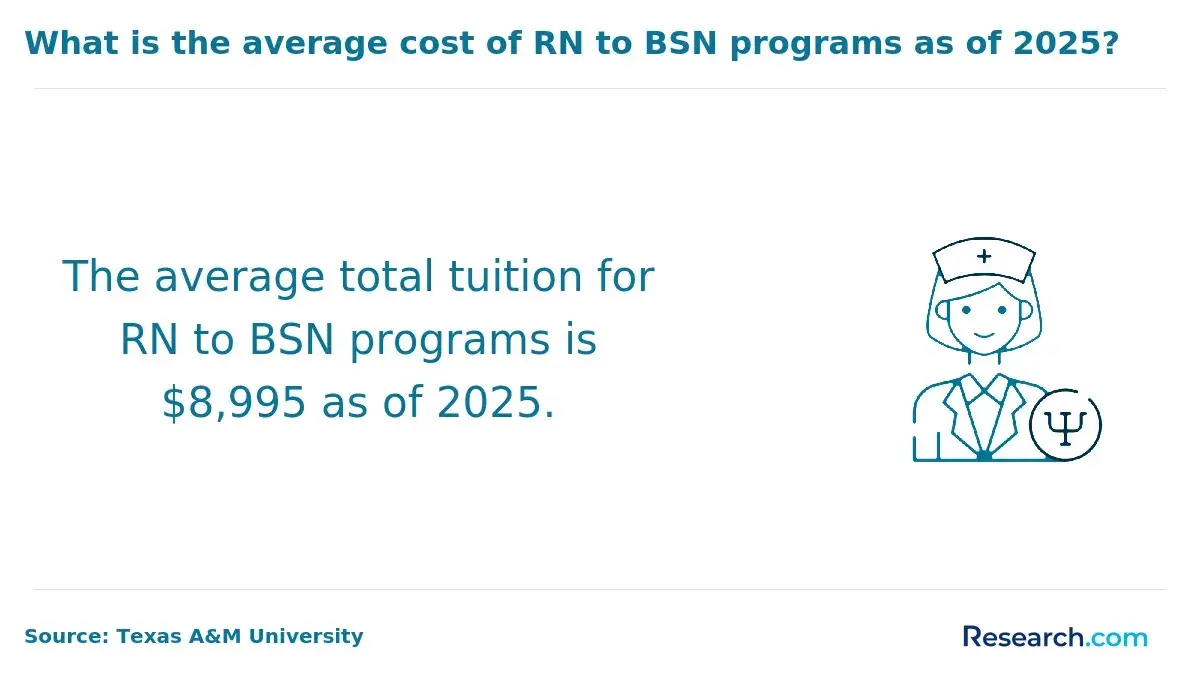
- Tuition per Credit Hour: Tuition rates commonly range from $300 to $450 per credit hour, depending on whether the program is offered by a public university, community college, or private institution. Online programs may have slightly different rates, sometimes including technology fees that influence the per-credit cost.
- Total Program Cost: The full RN to BSN curriculum typically requires between 30 to 40 credit hours, resulting in a total tuition cost generally between $9,000 and $18,000. On-campus programs might incur additional campus facility fees, which can raise the overall cost above that of online options.
- Additional Fees for Online Programs: Online learners often encounter fees related to virtual learning platforms, proctoring services, and digital resource access. These fees are usually modest but can add a few hundred dollars to the total cost, impacting budget planning.
- Financial Aid and Employer Assistance: Many students rely on federal financial aid, scholarships, or employer tuition reimbursement to offset expenses. Availability and eligibility differ widely, and prospective students should factor in such options to reduce out-of-pocket costs.
When asked about the cost of RN to BSN programs in Wyoming, a nurse who completed a hybrid RN to BSN program at a local institution shared a personal perspective. He explained that while the published tuition seemed initially daunting, he managed to navigate the payment process by combining scholarships, employer support, and manageable payment plans. "The total amount I paid was around $12,500, which felt like a significant investment, but it was worthwhile given the flexibility of the hybrid format," he reflected.
He also noted the emotional relief in balancing work, study, and finances, saying, "It wasn't easy, but knowing the cost upfront helped me plan better, and ultimately, earning my BSN opened new career doors that justified every dollar spent." This insight underscores that costs can be substantial but manageable with proper planning and support.
What are the pros and cons of online vs. on-campus RN to BSN programs in Wyoming?
Choosing between online or hybrid and on-campus RN to BSN programs in Wyoming depends on your schedule, financial considerations, and career goals. Each learning format offers unique advantages, whether it's the flexibility and cost savings of online study or the immersive, hands-on training found in traditional settings. Evaluating these factors will help you align your education path with your professional development needs.
Below is a comparison of the benefits of online RN to BSN programs in Wyoming and the traditional campus RN to BSN programs Wyoming pros and cons to guide your decision.
Online or Hybrid RN to BSN Programs
- Pro: Flexibility and Accessibility - Fully online courses allow working nurses to maintain employment while completing their degree, with programs like the University of Wyoming's online option requiring no on-campus visits.
- Pro: Faster and More Affordable Completion - Online programs can be finished in as little as one year, often costing about $6,621 annually for residents, with less expense on commuting or housing.
- Con: Limited Hands-On and Networking Opportunities - Virtual learning lacks in-person clinical experiences and face-to-face networking, requiring strong self-motivation and comfort with independent study.
On-Campus RN to BSN Programs
- Pro: Direct Faculty Support and Peer Interaction - On-campus classes offer richer mentorship, immediate feedback, and stronger connections with local healthcare professionals.
- Pro: Enhanced Clinical and Laboratory Experience - In-person instruction provides supervised skill development and involvement with hospital partners, which can be critical for practical learning.
- Con: Less Flexibility and Higher Associated Costs - Commuting or relocating can disrupt work life and increase expenses, with fixed schedules limiting flexibility for employed nurses.
For those seeking to balance demands effectively while advancing nursing careers, exploring the best online nurse practitioner program options may also offer insights into the broader landscape of flexible nursing education alternatives.
How do RN to BSN programs in Wyoming support clinical placements?
Wyoming RN to BSN programs provide structured support to help students gain essential clinical experience and fulfill state requirements for hands-on practice. These programs leverage multiple strategies to ensure that practical learning is both accessible and relevant for working nurses. Key clinical supports include:
- Partnerships with Local Healthcare Facilities: Programs partner with hospitals and clinics statewide, offering students diverse clinical environments to complete practice hours, which is crucial given Wyoming's rural geography.
- Preceptor or Mentor Matching: Students receive personalized guidance from experienced nurse mentors, enhancing their ability to apply theory and develop leadership and critical thinking skills.
- Flexibility for Working RNs: Many students can count clinical hours from their current workplaces if approved, reducing travel and scheduling challenges while integrating new competencies directly into their jobs.
- Faculty and Clinical Coordinator Guidance: Dedicated advisors assist students in securing placements, ensuring sites meet program and nursing board standards, and addressing any challenges during clinical experiences.
Reflecting on how Wyoming's RN to BSN programs support clinical placements, a nurse who completed a local program shared that securing a clinical site initially felt overwhelming due to time constraints and rural location. She appreciated how the program's clinical coordinator helped identify an approved placement close to her job.
Having a preceptor assigned at her workplace allowed her to integrate BSN skills without disrupting her shifts, which she described as "a game changer for balancing work and study." This mentorship and tailored placement process gave her confidence and motivation to complete the degree, demonstrating the practical benefits of Wyoming's clinical support system.
Which accrediting bodies approve RN to BSN programs in Wyoming?
Accreditation is critical for maintaining the quality, credibility, and recognition of RN to BSN programs in Wyoming, ensuring that these programs meet rigorous educational and professional standards that benefit students and employers alike. The following national and state-level accrediting bodies oversee RN to BSN programs in Wyoming and play vital roles in upholding these standards.
- Commission on Collegiate Nursing Education (CCNE): CCNE is the primary national accrediting agency for baccalaureate and graduate nursing programs, including Wyoming's RN to BSN offerings. It ensures programs meet high benchmarks for curriculum quality, faculty expertise, student support, and learning outcomes, which are crucial for graduates seeking employment or advanced education.
- Wyoming State Board of Nursing (WSBN): This state regulatory body approves all nursing programs operating within Wyoming, including the University of Wyoming's RN to BSN program. WSBN approval verifies compliance with Wyoming-specific rules and confirms that graduates are eligible to maintain active RN licenses, a key requirement for enrollment and career progression.
- Accreditation Commission for Education in Nursing (ACEN): ACEN serves as an alternative national accreditor covering nursing education at all levels. Although Wyoming currently has only CCNE-accredited in-state RN to BSN programs, many nurses pursue ACEN-accredited programs online from other states. Both CCNE and ACEN accreditation fulfill federal financial aid requirements and employer expectations for credible nursing degrees.
What career opportunities are available to RN to BSN graduates in Wyoming?
This section offers an overview of the diverse nursing roles and advancement paths available to RN to BSN graduates in Wyoming, emphasizing the expanded opportunities these professionals can access. Highlighting specific career options helps illustrate how BSN credentials enhance clinical and leadership potential within the state.
Below are common career opportunities for BSN-prepared nurses in Wyoming that showcase their broader scope of practice and increased earning potential:
- Charge Nurse/Supervisor: These roles involve overseeing nursing shifts, managing staff, and ensuring patient care quality in hospitals and long-term care facilities. The leadership training and clinical decision-making skills gained through RN to BSN programs prepare nurses for these supervisory positions.
- Case Manager: BSN graduates often coordinate comprehensive care plans for patients with complex needs in hospitals, insurance providers, or community health settings. Enhanced assessment and communication skills developed during BSN studies are critical in managing care transitions and resource use effectively.
- Nurse Educator: With a BSN, nurses can become educators who provide training within healthcare organizations or academic settings, particularly important in Wyoming's rural communities, where local education boosts care quality.
- Public Health Nurse: These nurses promote wellness and disease prevention through community organizations and local health departments. BSN coursework in population health equips graduates to address chronic disease management and health promotion challenges prevalent in frontier areas.
- Director of Nursing/Managerial Roles: Advanced leadership roles requiring strategic planning and policy development are increasingly accessible with a BSN. These positions exist across hospitals, home health agencies, and large care facilities.
- Nursing Informatics Specialist: As healthcare technology evolves, informatics positions managing electronic health records demand clinical expertise and analytical skills emphasized in BSN curricula.
- Clinical Research Nurse: BSN-prepared nurses support or coordinate research initiatives in academic and clinical settings, applying evidence-based practice principles learned during their programs.
- Preparation for Advanced Practice and Graduate Study: Earning a BSN lays the foundation for further degrees like MSN or DNP, expanding career options and salary prospects. This pathway is recognized as vital for future nurse leaders in Wyoming.
RN to BSN jobs in Wyoming report an average salary of $73,130 as of 2025, reflecting the state's strong demand for BSN-educated nurses in specialized and supervisory roles. For RNs considering further education, programs such as the most affordable online rn to msn degree program provide practical pathways toward advanced credentials and career growth.
What is the average RN to BSN salary increase in Wyoming?
Registered nurses (RNs) in Wyoming without a Bachelor of Science in Nursing (BSN) earn an average salary of $73,130 per year, but obtaining a BSN can substantially increase earning potential and career opportunities. The following points compare salary outcomes for nurses with an Associate Degree in Nursing (ADN) versus those with a BSN, highlighting key factors influencing income growth.
- Average Salary Comparison (ADN vs. BSN): Nurses holding a BSN in Wyoming can earn between $86,800 and $98,300 annually, significantly higher than the ADN average of $73,130. This difference illustrates the financial benefit of advancing education.
- Salary Differences by Healthcare Setting: BSN-prepared nurses often work in specialized environments such as Magnet hospitals, where salaries and benefits are more competitive, enhancing their overall compensation.
- Impact of Experience and Leadership Roles: Experienced BSN nurses are more likely to assume leadership positions-like nurse managers or clinical educators command higher salaries.
- Long-Term Earning Potential: Over time, the salary gap widens, as BSN nurses access roles with greater responsibility and better pay, maximizing return on educational investment.
Here's What RN to BSN Graduates in Wyoming Have to Say About Their Degree
- Kamryn: "Completing the online RN to BSN program at Wyoming Christian University was a game-changer for me. The flexibility allowed me to balance work and family while advancing my education, which felt empowering. After graduation, starting my nursing career in a local school setting gave me the unique opportunity to support children's health and well-being every day. Knowing that I can positively impact young lives in my community fuels my passion to continue growing professionally and personally. "
- Powell: "My experience with the hybrid RN to BSN program at Sheridan College was both challenging and rewarding. Attending some in-person sessions helped me build strong connections with peers and faculty, which was invaluable. Transitioning into a school nurse role after graduation allowed me to bring advanced clinical skills to an environment where students' health directly affects their learning. I feel proud to contribute to a healthier community and confident in my career's upward trajectory because of my BSN education. "
- Khalil: "Choosing to complete my BSN on campus at the University of Wyoming was one of the best decisions I have made. The immersive experience helped me develop critical thinking and leadership skills that are essential in school nursing. Working as a nurse in a Wyoming school, I have witnessed firsthand how my expanded knowledge supports students' physical and emotional needs. Professionally, the BSN has opened doors to new opportunities and broadened my impact far beyond what I had imagined. "
Related Articles for Nearby States
- 2027 Best RN to BSN Programs in Montana: Online & Campus
- 2027 Best RN to BSN Programs in South Dakota: Online & Campus
- 2027 Best RN to BSN Programs in Nebraska: Online & Campus
- 2027 Best RN to BSN Programs in Colorado: Online & Campus
- 2027 Best RN to BSN Programs in Idaho: Online & Campus
- 2027 Best RN to BSN Programs in Utah: Online & Campus
- 2027 Best RN to BSN Programs in North Dakota: Online & Campus
- 2027 Best RN to BSN Programs in Kansas: Online & Campus
- 2027 Best RN to BSN Programs in Iowa: Online & Campus
- 2027 Best RN to BSN Programs in Nevada: Online & Campus
References:
- Online vs. On-Campus RN to BSN Programs: What's the Difference? | Lindenwood https://online.lindenwood.edu/blog/online-vs-on-campus-rn-to-bsn-programs-whats-the-difference/
- 2025 RN Salary Guide: State-by-State Pay https://nursa.com/salary/rn
- How Long is an RN-to-BSN Program? Length of ADN to BSN Programs https://www.onlineeducation.com/nursing/faqs/how-long-is-an-rn-to-bsn-program
- The Wyoming Center for Nursing https://wynursing.org/i-am-a-student
- Learn All About Nursing School Accreditation and Why It Matters https://nightingale.edu/blog/accreditation-101.html
- Cheapest & Fastest Online RN to BSN Programs | 2025 https://nurse.org/education/top-cheap-fast-online-rn-bsn/
- 2025 Best RN to BSN Programs in Wyoming Online - Fast & Affordable Options https://www.registerednursing.org/rn-to-bsn/wyoming/
- RN to BSN Programs in Wyoming | A Call to Action - NursingLicensure.org https://www.nursinglicensure.org/rn-to-bsn/rn-to-bsn-wyoming/
- Nursing https://www.gillettecollege.org/academics/nursing/
- Rural Workforce Scholarship Fund - Blue Cross Blue Shield of Wyoming https://www.bcbswy.com/company_info/community/rural-workforce-scholarship-fund/
Other Things You Should Know About RN to BSN Programs in Wyoming
In 2027, Wyoming's RN to BSN programs offer flexible online and hybrid options designed for working nurses, allowing them to balance their career and education effectively. Many programs accommodate full-time work schedules with part-time study formats and asynchronous coursework.
Yes, many RN to BSN programs in Wyoming offer flexible online courses to accommodate working nurses. These programs are designed with part-time enrollment options, allowing nurses to balance their professional responsibilities with academic advancement.
In 2027, Wyoming RN to BSN programs often offer flexible online or hybrid options. These cater to working nurses, allowing them to balance employment with education. Schools like the University of Wyoming provide asynchronous courses, enabling students to learn on their own schedule.


