
2027 Best RN to BSN Programs in Missouri: Online & Campus

Co-Founder and Chief Data Scientist
Missouri's healthcare sector is growing steadily, with employment for registered nurses projected to increase by 15% through 2030. This growth highlights the rising need for advanced nursing education, making RN to BSN programs an essential pathway for career advancement. Earning a BSN not only opens doors to leadership roles but also aligns with the industry's increasing preference for bachelor's-prepared nurses. Understanding these trends provides a solid foundation for making informed decisions about educational investments in nursing within the state.
This article explores RN to BSN programs in Missouri, focusing on the distinctions between online and campus options. Designed by experts in career planning, it guides readers through key considerations, expectations, and decision-making strategies for selecting the right RN to BSN pathway. The goal is to empower aspiring nurses to navigate their educational journey with clarity and confidence.
Key Benefits of RN to BSN Programs in Missouri
- Flexible online and campus options in Missouri allow working nurses to balance studies and career, with programs averaging 12-18 months to completion.
- Graduates see a notable salary boost, as Missouri BSN nurses earn up to 15% more than those with an RN diploma, enhancing career growth.
- Missouri's RN to BSN programs emphasize clinical leadership skills, preparing students for advanced roles in healthcare settings statewide.
- What is an RN to BSN program and how does it work in Missouri? Overview
- What courses are included in RN to BSN programs in Missouri? Courses
- What are the admission requirements for RN to BSN programs in Missouri? Requirements
- How long does it take to earn an RN to BSN degree in Missouri? Duration
- How much does an RN to BSN program cost in Missouri? Costs
- What are the pros and cons of online vs. on-campus RN to BSN programs in Missouri? What are the pros and cons of online vs. on-campus RN to BSN programs in Missouri?
- How do RN to BSN programs in Missouri support clinical placements? How do RN to BSN programs in Missouri support clinical placements?
- Which accrediting bodies approve RN to BSN programs in Missouri? Which accrediting bodies approve RN to BSN programs in Missouri?
- What career opportunities are available to RN to BSN graduates in Missouri? Career Opportunities
- What is the average RN to BSN salary increase in Missouri? Average Salary
What is an RN to BSN program and how does it work in Missouri?
An RN to BSN program in Missouri is designed to help registered nurses who have an associate degree or diploma advance their education by earning a Bachelor of Science in Nursing. This program enhances their clinical skills and broadens their understanding of leadership, healthcare policy, and evidence-based practice.
Most RN to BSN programs in Missouri are flexible, offering online options that cater to working nurses balancing career and family. These programs ensure nurses develop the expertise needed to thrive in today's complex healthcare environment. By choosing RN to BSN programs in Missouri, nurses gain credentials that are nationally recognized and accredited, opening doors to new career paths and leadership opportunities.
The RN to BSN path is ideal for nurses seeking to expand their professional horizons, whether working in hospitals, community settings, or schools. Many employers prefer BSN-prepared nurses, making this degree a valuable asset for those aiming for leadership roles or advanced nursing positions. It also supports nurses who want to pursue graduate degrees, as a BSN is often required for master's or doctoral programs.
For nurses focused on delivering quality care, this program reinforces lifelong learning and cultural competence, essential for meeting diverse patient needs. If you are considering the differences between fnp bc and fnp c certification, the RN to BSN program is a crucial stepping stone in reaching those advanced nursing certifications and roles.
What courses are included in RN to BSN programs in Missouri?
This section offers an overview of the core and specialized courses you'll typically find in RN to BSN programs in Missouri, designed to elevate your nursing skills and prepare you for advanced roles in healthcare. Below is a list of key courses and focus areas that represent the foundation and growth opportunities within the RN to BSN curriculum in Missouri.
- Role of the Baccalaureate-Prepared Nurse: This course highlights the expanded responsibilities and professional identity of BSN-prepared nurses. You will explore nursing history, ethics, and the broader scope of practice, equipping you to advocate effectively in diverse care settings.
- Nursing Theory for Population Health: Focused on community and public health, this course sharpens your ability to assess health disparities and design wellness interventions that benefit entire populations rather than just individuals.
- Health Assessment for the Professional Nurse: Building on your current skills, you'll learn advanced physical, psychosocial, and cultural assessment techniques that enable more personalized and holistic patient care.
- Nursing Research and Evidence-Based Practice: Critical thinking is at the heart of this course, where you learn to find, evaluate, and apply nursing research to improve patient safety and quality care outcomes.
- Leadership and Management in Nursing: Prepare to take on leadership roles by mastering team dynamics, conflict resolution, and resource management, empowering you to lead interdisciplinary healthcare teams effectively.
- Ethics and Values in Population Health: This course challenges you to navigate complex ethical situations, fostering strong moral reasoning and integrity in your nursing practice.
- Health Policy for the Professional Nurse: Gain insight into health policies at multiple levels and learn how to influence policy changes while understanding legal and financial healthcare systems.
- Community and Population Health Synthesis: Often including clinical experiences, this capstone course lets you apply your knowledge in real community settings, promoting health education and collaborative interventions.
- Health Information Technology: Embrace the digital transformation of healthcare by mastering electronic health records and informatics tools essential for modern patient care coordination.
- Lifelong Learning and Professional Development: This essential course encourages ongoing education, certification, and involvement in professional organizations to support your career growth and specialization.
Whether pursuing online RN to BSN courses Missouri programs or on-campus options, the curriculum is thoughtfully designed to expand your expertise and leadership potential in today's complex healthcare environment. For those interested in specialized fields such as np functional medicine, these foundational courses serve as a springboard for advanced practice and lifelong professional success.
What are the admission requirements for RN to BSN programs in Missouri?
To successfully apply for RN to BSN programs in Missouri, prospective students must meet certain qualifications and submit key materials that demonstrate their readiness for advanced nursing education. Here is an overview of the common admission requirements to help you prepare and confidently navigate the application process for these programs.
Applicants should expect to provide the following:
- Active RN License: Possessing a current, unrestricted Registered Nurse license from Missouri or another U.S. state is essential. This requirement confirms professional eligibility to advance in nursing education and assures programs that students have met foundational standards in the field.
- Associate Degree or Diploma in Nursing: You must have completed an accredited ADN or diploma nursing program, providing the critical clinical background and foundational nursing knowledge that the BSN curriculum builds upon.
- Official Transcripts: Submission of official academic transcripts from all postsecondary institutions attended is required. These documents verify your educational history and allow programs to evaluate transferable credits and prior coursework.
- Minimum GPA Requirement: Most Missouri RN to BSN program prerequisites include maintaining a minimum cumulative GPA, often between 2.0 and 2.7. This standard reflects academic preparedness and the capability to succeed in more rigorous studies.
- Prerequisite Coursework: Completion of required prerequisite courses-such as Anatomy and Physiology, Microbiology, Nutrition, Psychology, Sociology, and Statistics-with grades of "C" or higher is necessary. These courses ensure you have the scientific and analytical foundation to thrive in BSN-level nursing education.
- General Education Requirements: Fulfillment of general education requirements is often a condition of admission or must be completed during the program. These courses foster a broad academic base critical for holistic nursing practice.
- Application Submission: You will need to complete the designated nursing program and university applications, which may involve platforms like NursingCAS. Application fees, which are usually non-refundable, vary by institution.
- Background Check: A criminal background check is commonly required to ensure compliance with patient safety standards and regulatory policies in healthcare settings.
- Proof of Accreditation: All prior nursing education and transfer credits must come from regionally accredited institutions, assuring adherence to accepted quality standards in higher education.
- Resume or Professional Profile: Some programs request a current resume highlighting your nursing experience, employment history, and professional accomplishments, supporting your application with evidence of practical expertise.
Meeting these RN to BSN Missouri admission requirements helps position you for success in your educational journey and career advancement. For those interested in specialized nursing paths, consider exploring the best rated adult gerontology acute care nurse practitioner program, which can further elevate your nursing qualifications and opportunities.
How long does it take to earn an RN to BSN degree in Missouri?
The typical duration of RN to BSN programs in Missouri varies depending on the format and enrollment status, allowing students to choose a path that fits their personal and professional lives. Here's a breakdown of average completion times based on different learning options, each suited to different goals and lifestyles.
- Full-Time Programs: These programs usually take about 12 months to complete, with accelerated course blocks and several start dates annually. Ideal for nurses ready to fully dedicate themselves, they offer rapid career advancement opportunities.
- Part-Time Programs: Designed for working professionals balancing life commitments, part-time tracks typically extend the degree timeline to around two years. This pace allows steady progress without overwhelming students.
- Accelerated Options: Some schools offer expedited plans enabling completion in as little as a year. These require strong motivation and the ability to manage an intensive workload, perfect for driven students aiming for swift advancement.
- Self-Paced Options: Though less common, flexible schedules with multiple start dates let students adjust their pace based on personal needs. This approach supports those who might need breaks or prefer balancing study with other priorities.
How much does an RN to BSN program cost in Missouri?
To help you plan financially for RN to BSN programs in Missouri, here's a clear view of the typical tuition range and key costs involved in completing these degrees, whether online or on-campus. Costs can vary widely based on the program format and institution, so it's important to understand the main expense categories as you explore your options.
Below are the primary cost factors to keep in mind when budgeting for your RN to BSN education:
- Tuition Per Credit Hour: This is usually the largest expense and varies between institutions and delivery formats. Online programs may charge slightly less per credit, but some schools maintain the same rates for both online and on-campus courses. Expect to pay anywhere from $300 to $600 per credit hour depending on the school.
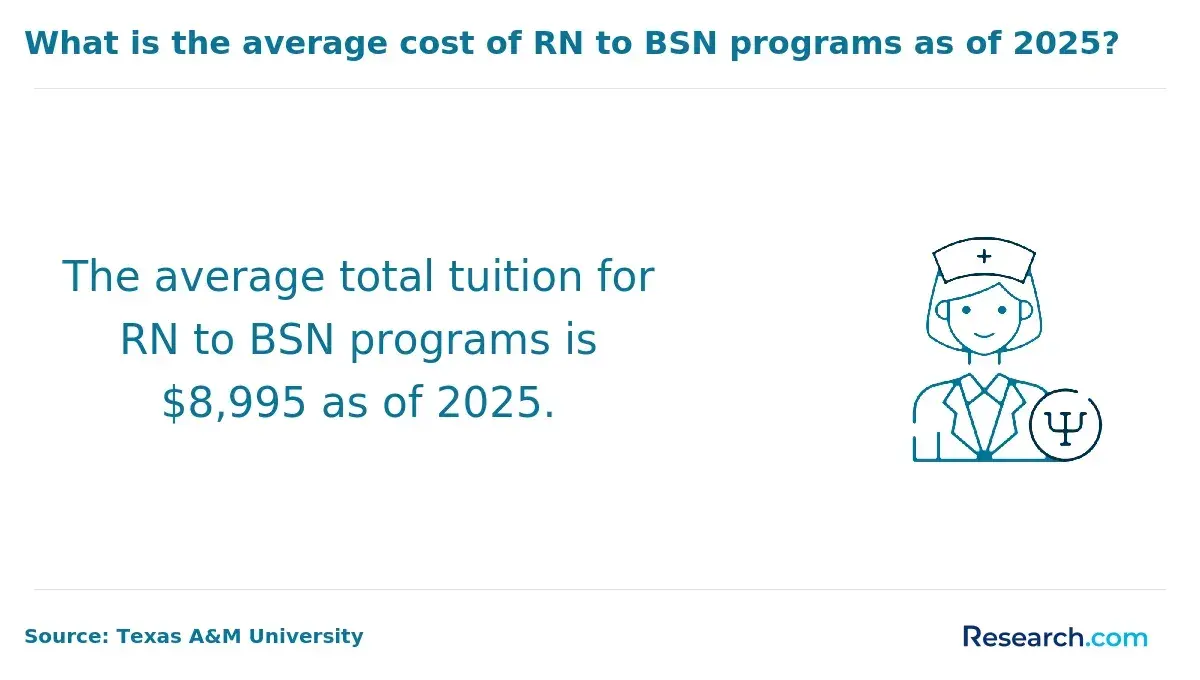
- Total Program Cost: RN to BSN programs typically require 30 to 40 credit hours to complete, so total tuition can range from approximately $9,000 to $24,000. Hybrid programs may fall somewhere in between online and traditional classroom pricing, reflecting their blended nature.
- Additional Fees: Online students might face technology fees, virtual lab costs, or proctoring fees for exams. On-campus learners, in addition to these, should budget for campus facility fees, parking, and possibly higher student activity fees. These can add several hundred to a few thousand dollars to the overall cost.
- Financial Aid and Employer Assistance: Many students access federal loans, grants, or state scholarships to offset expenses. Additionally, several healthcare employers in Missouri offer tuition reimbursement programs or scholarships for nurses seeking BSN advancement, which can significantly reduce out-of-pocket costs.
I recently spoke with a nurse from Missouri who earned his degree through a hybrid RN to BSN program at a local university and found the cost manageable but demanding careful planning. He reflected, "The tuition was around $450 per credit, and with about 35 credits, it definitely added up. I had to balance work and study, so the payment plan the school offered was a lifesaver."
He mentioned additional fees for online testing and occasional campus visits but appreciated the flexibility it gave him. "It wasn't cheap, but with some employer tuition assistance and financial aid, I felt it was a worthwhile investment in my future." His experience shows that while costs are significant, knowing your options and planning ahead can make earning your BSN in Missouri an achievable goal.
What are the pros and cons of online vs. on-campus RN to BSN programs in Missouri?
Choosing between online or hybrid and on-campus RN to BSN programs in Missouri depends on your lifestyle, budget, and career ambitions. Online RN to BSN programs Missouri options offer flexibility that suits working nurses balancing family or job demands, while on-campus programs provide more direct interaction and hands-on experiences. Carefully weighing these factors will help you select the best path toward advancing your nursing career.
Consider the following pros and cons of each format to see which aligns better with your needs:
Online or Hybrid RN to BSN Programs
- Pro: Flexibility and Convenience – These programs allow you to study asynchronously, enabling you to fit coursework into your busy schedule without needing to be on campus.
- Pro: Lower Cost and Accessibility – Online programs often have lower tuition and reduce expenses such as commuting or relocation, making them budget-friendly for many Missouri nurses.
- Con: Limited Face-to-Face Networking – Without in-person interactions, you might miss opportunities to build relationships with faculty and peers that enhance learning and career growth.
On-Campus RN to BSN Programs
- Pro: In-Person Interaction – Learning alongside faculty and classmates supports richer networking and immediate feedback that can deepen understanding.
- Pro: Hands-On Learning Opportunities – Campus settings provide access to clinical simulations and practicums, allowing you to apply skills in real time.
- Con: Rigid Scheduling and Travel Demands – Fixed class times and commuting can challenge those juggling work or family, possibly increasing your overall expenses.
For nurses aiming to further their education with flexibility and quality, exploring the best online bsn to fnp program can serve as valuable inspiration when evaluating online pathways.
How do RN to BSN programs in Missouri support clinical placements?
RN to BSN programs in Missouri open doors for nurses to gain essential hands-on experience while fulfilling clinical requirements through carefully coordinated support. To help you understand the practical ways these programs back clinical placements, consider these key supports they provide students during their studies:
- Partnerships with Local Healthcare Facilities: These agreements ensure students access diverse clinical settings, letting them experience various patient care environments and meet all site-specific prerequisites.
- Preceptor or Mentor Matching: Students are paired with experienced nurses who offer guidance, feedback, and professional growth-helping bridge theory and real-world nursing practice.
- Flexibility for Current RNs to Use Their Workplace: Many programs let working nurses complete clinical hours in their own jobs, saving time and making learning directly applicable.
- Guidance from Faculty or Clinical Coordinators: Dedicated staff support students throughout placement, advising on site choices and ensuring all clinical standards are met.
When I spoke with a nurse who completed an RN to BSN program from Missouri, she reflected on how the program's support eased her clinical journey. "Balancing shifts and study was tough, but being able to do clinical hours at my hospital, where I already felt confident, made all the difference," she shared.
She appreciated the personal mentor assigned to her, saying, "My preceptor didn't just supervise me; she helped me understand complex cases and built my confidence step by step." This hands-on guidance, paired with faculty check-ins to keep everything on track, transformed what could have been an overwhelming experience into a rewarding path toward advanced nursing practice.
Which accrediting bodies approve RN to BSN programs in Missouri?
Accreditation plays a vital role in guaranteeing the quality, credibility, and recognition of RN to BSN programs in Missouri, ensuring that students receive an education that meets rigorous standards respected by employers and licensing boards. The main national and state-level accrediting organizations that approve RN to BSN programs in Missouri include the following key bodies:
- Commission on Collegiate Nursing Education (CCNE): This nationally recognized agency evaluates nursing programs at the baccalaureate and higher-degree levels. It emphasizes curriculum quality, faculty qualifications, and student outcomes, helping graduates become well-prepared for modern nursing roles. CCNE accreditation is essential for eligibility for federal financial aid and often influences employers' hiring decisions.
- Accreditation Commission for Education in Nursing (ACEN): ACEN accredits nursing programs by assessing evidence-based curricula, faculty expertise, and students' success. Its approval assures that the program meets high standards and is respected by healthcare employers and state boards, making it a strong endorsement of educational integrity.
- Missouri State Board of Nursing (MSBN): The MSBN provides state-level approval, ensuring that nursing programs comply with Missouri's specific regulations and standards. This approval is necessary for graduates to obtain licensure and practice safely within Missouri, reinforcing the program's commitment to state healthcare requirements.
What career opportunities are available to RN to BSN graduates in Missouri?
RN to BSN graduates in Missouri unlock a wealth of career advancement for BSN nurses in Missouri, gaining access to diverse roles that expand their impact and responsibilities. Here are some common and promising career opportunities that highlight how a BSN elevates nursing practice and leadership in the state:
- Charge Nurse or Nurse Manager: These leadership roles focus on supervising nursing teams, coordinating patient care, and ensuring smooth operations in healthcare settings. Nurses with a BSN often find that coursework in leadership and evidence-based practice prepares them well for these positions, which employers in Missouri increasingly prefer to fill with bachelor's-educated professionals.
- Community Health Nurse: Working outside hospital walls, these nurses promote wellness and manage care in schools, local agencies, or home health scenarios. The community health focus in many RN to BSN programs equips graduates with skills in assessment and population health, supporting vital public health efforts statewide.
- Specialty Clinical Nurse (NICU, Oncology, Cardiac Care): BSN-prepared nurses qualify for specialized clinical roles requiring advanced reasoning and critical decision-making. Missouri's Magnet hospitals especially favor these nurses for their expertise and ability to deliver high-quality patient care in specialties.
- Case Manager or Care Coordinator: These professionals orchestrate individualized care plans and transitions across settings, using their BSN-trained organizational and communication skills to help patients navigate the healthcare system effectively.
- Nurse Educator: Whether training staff or educating patients, these roles benefit from a BSN foundation in teaching and leadership, with opportunities available in hospitals, clinics, and educational institutions.
- Public Health Nurse: Taking a broader view, public health nurses work on disease prevention and health promotion at a community level, relying on BSN-acquired knowledge in epidemiology and healthcare systems to support Missouri's public health infrastructure.
- Preparation for Graduate Study (MSN, NP, DNP): Completing a BSN opens the pathway to advanced degrees, including nurse practitioner programs. Missouri students can explore a list of easiest pediatric nurse practitioner online programs to get into that simplify the pursuit of higher credentials, leading to some of the highest paying RN jobs in Missouri.
What is the average RN to BSN salary increase in Missouri?
The average salary for a registered nurse (RN) without a BSN degree in Missouri is approximately $59,000 to $65,000 per year, while earning a Bachelor of Science in Nursing (BSN) can significantly increase a nurse's earning potential. To understand the financial benefits, consider these key salary comparisons and factors between nurses with an associate degree (ADN) and those holding a BSN:
- Average Salary Comparison: BSN-prepared nurses typically earn about 6% more than ADN counterparts, translating into an annual advantage of $4,000 to $6,000 and tens of thousands more over a decade.
- Salary Differences by Healthcare Setting: Hospitals and specialized medical centers often prefer BSN nurses, offering salaries ranging from $64,000 to $87,000, whereas ADN-level positions tend to fall between $59,000 and $65,000.
- Impact of Experience and Leadership Roles: BSN credentials open doors to supervisory and specialized positions with salaries reaching $87,000 or higher, reflecting increased responsibilities.
- Long-Term Earning Potential: Over a career, BSN nurses generally enjoy cumulative higher earnings due to promotions, specialty transitions, and sustained employability in competitive markets.
Here's What RN to BSN Graduates in Missouri Have to Say About Their Degree
- Baylor: "Choosing the online RN to BSN program at Missouri State University was one of the best decisions I made for my professional growth. The flexible schedule allowed me to balance work and family while gaining advanced nursing knowledge. After graduation, I started teaching at a local school, and the BSN has given me the confidence and credentials to positively impact young students' health education. The supportive faculty and practical coursework helped me develop skills that go beyond bedside care, preparing me for leadership roles in nursing. I'm truly grateful for how this program shaped my career and my ability to give back to my community. "
- Arabella : "Enrolling in the hybrid RN to BSN program at Saint Louis Community College gave me the perfect blend of in-person interaction and online flexibility. It was challenging at times juggling clinical requirements on campus with online coursework, but the experience was invaluable. Starting my nursing career in a local school setting made me realize how important advanced education is for addressing diverse student health needs. This program helped me grow both personally and professionally, improving my critical thinking and communication skills. I feel equipped to take on more responsibility and advocate effectively for my students' well-being. "
- Murphy: "Attending the on-campus RN to BSN program at the University of Missouri-Kansas City changed my outlook on nursing and my role in community health. The hands-on learning environment fostered a deep connection with professors and peers, enriching my educational experience. After completing the program, I began working as a nurse in a local school, where I applied the leadership and research skills I had enhanced during my studies. I appreciate how Missouri's RN to BSN programs address both theoretical knowledge and practical community challenges, preparing nurses like me to advance professionally and serve our neighborhoods effectively. "
Related Articles for Nearby States
- 2027 Best RN to BSN Programs in Kansas: Online & Campus
- 2027 Best RN to BSN Programs in Iowa: Online & Campus
- 2027 Best RN to BSN Programs in Nebraska: Online & Campus
- 2027 Best RN to BSN Programs in Arkansas: Online & Campus
- 2027 Best RN to BSN Programs in Oklahoma: Online & Campus
- 2027 Best RN to BSN Programs in Illinois: Online & Campus
- 2027 Best RN to BSN Programs in Kentucky: Online & Campus
- 2027 Best RN to BSN Programs in Tennessee: Online & Campus
- 2027 Best RN to BSN Programs in Indiana: Online & Campus
- 2027 Best RN to BSN Programs in South Dakota: Online & Campus
References:
- RN to BSN (RN-BSN) https://www.ccis.edu/degrees/rn-to-bsn
- Careers and Outcomes https://www.missouristate.edu/Nursing/Completion/Careers.htm
- Lincoln University School of Nursing RN - BSN Program https://www.lincolnu.edu/school-of-nursing/nursing-programs/rn-bsn.html
- Bachelor of Science in Nursing https://www.mssu.edu/academics/education/nursing/degree-nursing.php
- What if My Nursing School Isn’t Accredited? https://www.registerednursing.org/articles/what-if-nursing-school-isnt-accredited/
- Discover How to Apply to the Online SSON RN to BSN Program https://nursing.missouri.edu/academic-programs/bachelor-of-science-in-nursing-bsn/overview-of-program-3/how-to-apply/
- Nursing RN to BSN Degree Program https://www.centralmethodist.edu/academics/undergraduate/nursing-rn-to-bsn/
- Average RN Salary In Missouri | NurseJournal.org https://nursejournal.org/state/missouri/rn-salary/
- RN to BSN Completion Programs | Online Versus Traditional RN to BSN Programs - NursingLicensure.org https://www.nursinglicensure.org/rn-to-bsn/online-vs-traditional-rn-to-bsn-programs/
- Missouri RN to BSN Programs Online | 25+ Accredited Schools https://rntobsnprograms.com/schools/missouri
Other Things You Should Know About RN to BSN Programs in Missouri
For the best RN to BSN programs in Missouri in 2027, consider the University of Missouri, Saint Louis University, and Maryville University. These institutions are renowned for their accredited programs, flexibility, and comprehensive curricula that support working nurses advancing their careers.
It is generally possible to complete an RN to BSN program in Missouri while working full-time, especially with the availability of flexible online and evening classes offered by many nursing schools. These programs are designed to accommodate working professionals by allowing asynchronous coursework and part-time enrollment options.
However, balancing work and study requires strong time management skills and may extend the time needed to graduate. For those seeking on-campus programs, selecting schools with evening or weekend classes can also support full-time employment during the degree completion.
In 2027, several Missouri RN to BSN programs offer flexible scheduling options, including online courses at the University of Missouri and hybrid formats at Saint Louis University. These programs cater to working professionals by allowing part-time study and asynchronous learning to accommodate various schedules.


