
2027 How to Become a BSN with a Non-Nursing Associate Degree: Education, Salary, and Job Outlook

Co-Founder and Chief Data Scientist
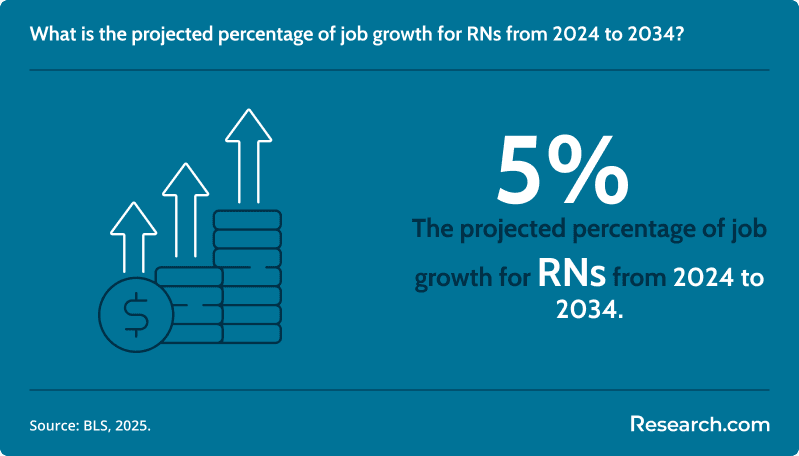
A prospective student with a non-nursing associate degree often struggles to find the most efficient and valuable path to earning a Bachelor of Science in Nursing (BSN) and advancing their career. While the job outlook for registered nurses is strong, projected to grow 5% from 2024 to 2034, individuals need clear guidance to navigate the transition, maximize their transfer credits, and achieve a higher earning potential.
To address this, the Research.com team, leveraging over ten years of expertise in career planning, has compiled this comprehensive guide using only credible sources to ensure accuracy. This article will provide the essential educational steps, current salary data, and job outlook for you to make a confident decision about pursuing a BSN with a non-nursing associate degree.
Key Things You Should Know About How to Become a BSN With a Non-Nursing Associate Degree
- The fastest pathway to a BSN with a non-nursing associate degree is typically through an Accelerated BSN (ABSN) program, which compresses coursework and 700 to 800 clinical hours into approximately 12 to 24 months, allowing graduates to sit for the NCLEX-RN licensure exam.
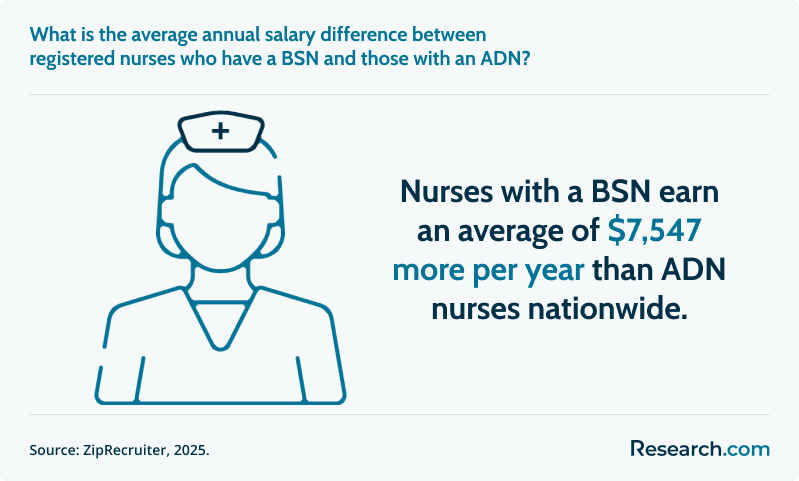
- BSN-prepared Registered Nurses demonstrate a higher earning potential, with an average annual salary of about $87,868, which is an average of $7,547 more per year than ADN nurses, and this degree facilitates career advancement into leadership roles.
- The job outlook for RNs with a BSN is excellent, with employment projected to grow 5% from 2024 to 2034, creating about 189,100 annual openings, with a BSN being the preferred credential for major employers and advanced positions.
- Steps to Earn Your BSN After a Non-Nursing Associate Degree Earning Your BSN
- What is the fastest way to earn a BSN degree with a non-nursing associate degree? What is the fastest way to earn a BSN degree with a non-nursing associate degree?
- How important is CCNE accreditation when choosing a BSN program for career changers? Accreditation Importance
- What is the current NCLEX-RN passing rate for Accelerated BSN graduates? What is the current NCLEX-RN passing rate for Accelerated BSN graduates?
- What are the key differences between traditional BSN and ABSN clinical experiences? BSN vs ABSN
- Can I get federal financial aid if I already have a non-nursing associate degree? Federal Financial Aid
- How can my previous associate's degree in a non-nursing field benefit my nursing career? How can my previous associate's degree in a non-nursing field benefit my nursing career?
- What is the average starting salary for a new BSN-prepared RN? Average Salary
- How does a BSN salary compare to an ADN salary for registered nurses? Salary Comparison
- What is the job outlook for registered nurses with a BSN? Job Outlook
- How does the BSN degree facilitate career advancement into leadership roles? How does the BSN degree facilitate career advancement into leadership roles?
Steps to Earn Your BSN After a Non-Nursing Associate Degree
While your existing degree has already given you a foundation of general education credits, the BSN pathway equips you with specialized nursing knowledge, clinical training, and leadership skills that are essential in today’s competitive job market.
Understanding the steps involved will help you map out a clear plan, maximize the credits you’ve already earned, and move efficiently toward becoming a registered nurse with a BSN.
Here are the steps to earn a BSN with a non-nursing associate degree:
1. Evaluate transfer credits.
The first step in transitioning from a non-nursing associate degree to a BSN program is to carefully review which of your previously earned credits can transfer. For returning students, a good approach is to look at the degree completion programs online offered by various institutions, as these are specifically designed to maximize transfer credits and get you to graduation faster. Many colleges and universities accept general education courses, such as English composition, history, math, psychology, and basic sciences, which can significantly reduce the number of credits required for your BSN.
This evaluation not only saves time but also lowers overall tuition costs by preventing you from repeating courses you’ve already completed. To get the most accurate assessment, request an official transcript review from the nursing school you plan to apply to, and don’t hesitate to ask about articulation agreements or transfer-friendly policies that may maximize your previously earned coursework.
2. Complete prerequisite courses.
Before starting core nursing courses, most BSN programs require you to complete a set of prerequisite classes. If these weren’t part of your associate degree, you’ll need to finish them first. These courses are designed to provide a strong foundation in the sciences and critical thinking skills needed for nursing practice.
Some prerequisite courses include the following:
- Human Anatomy and Physiology I and II
- Human Nutrition
- Psychology
- Statistics
- Microbiology
- Human Growth and Development
- General Chemistry
3. Choose the right BSN pathway.
Once prerequisites are completed, the next step is selecting the BSN pathway that fits your background, goals, and timeline. Different programs are designed for different types of students, so choosing wisely can make the process more efficient and tailored to your needs.
- Traditional BSN: Usually a 4-year program, but may be shortened if some credits transfer.
- Accelerated BSN (ABSN): Designed for those with a non-nursing bachelor's degree, this fast-track program includes intensive nursing coursework plus clinical experiences.
4. Apply to the BSN program and complete nursing coursework.
After choosing the right pathway, you can start applying to accredited BSN programs that align with your career goals. Once accepted, you’ll begin a rigorous combination of classroom learning and hands-on clinical practice.
Coursework often covers key areas such as medical-surgical nursing, pediatrics, obstetrics and maternal care, psychiatric and mental health nursing, and community health.
5. Complete the required clinical experience.
Clinical experience is a critical component of a BSN program and must be completed in person at approved healthcare facilities such as hospitals, clinics, and long-term care centers.
This hands-on training allows students to apply classroom theories to real patient care scenarios under the supervision of licensed nurses and clinical instructors.
BSN programs generally require 700 to 800 clinical hours, during which students gain exposure to diverse patient populations and clinical specialties like pediatrics, obstetrics, geriatrics, and mental health.
This immersive experience sharpens critical thinking, technical skills, and professional communication, preparing students to deliver safe, evidence-based nursing care in complex healthcare environments.
6. Obtain RN licensure.
After completing the BSN degree requirements, graduates must pass the National Council Licensure Examination for Registered Nurses (NCLEX-RN) to obtain licensure and legally practice as registered nurses.
The NCLEX-RN tests knowledge and competency in areas such as safe and effective care environments, health promotion, psychosocial integrity, and physiological integrity.
Passing this exam proves that the nurse is ready to provide entry-level professional nursing care. Once licensed, BSN-prepared nurses can work in various healthcare settings and have opportunities for advanced roles, leadership positions, and further education.
For those interested in the highest level of clinical or research practice, numerous BSN to PhD online programs exist, offering a direct path to a doctoral degree without needing a separate master's degree.
What is the fastest way to earn a BSN degree with a non-nursing associate degree?
The fastest way to earn a BSN with a non-nursing associate degree is typically through an ABSN program designed for students who already hold a bachelor's degree in another field.
These programs usually take between 11 to 18 months to complete, offering an intensive, full-time curriculum that includes necessary nursing coursework and clinical practice.
Accelerated BSN (ABSN) Programs
- ABSN programs are tailored for individuals with a prior non-nursing bachelor's degree, allowing them to leverage their previous academic credits.
- Programs require completion of prerequisite science courses such as anatomy, physiology, microbiology, chemistry, nutrition, and statistics.
- Many ABSN programs require a minimum Grade Point Average (GPA) (often around 2.7 to 3.0) and competency scores on entrance exams.
- The clinical and didactic components are compressed into intensive semesters, enabling completion in about 1 to 1.5 years.
- Some schools also require a CNA (Certified Nursing Assistant) certificate or LPN license before or during the program.
Alternative Path via Associate Degree
- If you only have a non-nursing associate degree, a common approach is to first complete an Associate Degree in Nursing (ADN) or an RN diploma to become a licensed registered nurse.
- Once working as an RN, many pursue an RN to BSN bridge program, which can often be completed online while working.
- While this route takes longer overall, it allows for income generation during the RN phase and may be financially viable.
- For individuals facing unique challenges in their educational journey, it may be helpful to consider what is the best degree for a convicted felon when planning their future studies.
Direct-Entry Options for Non-Nurses
- Some schools offer direct-entry BSN programs for non-nurses without requiring a prior bachelor's degree, but usually require significant prerequisite courses.
- There are also direct-entry MSN programs for those with a non-nursing bachelor's seeking master’s level nursing education.
Keep in mind that while nursing programs, especially ABSN, are fast-paced for their field, other disciplines may offer even quicker completion paths; for instance, you can search for the fastest online anthropology degree programs to find non-clinical fields that prioritize rapid, flexible degree completion.
How important is CCNE accreditation when choosing a BSN program for career changers?
CCNE (Commission on Collegiate Nursing Education) accreditation is very important when choosing a BSN program, especially for career changers. It ensures the nursing program meets nationally recognized standards for quality education, preparing students effectively for the workforce.
Graduating from a CCNE-accredited program boosts career prospects, as employers recognize the rigorous education standards it represents.
Why CCNE Accreditation Matters for Career Changers
- Quality Assurance: CCNE accreditation guarantees the program maintains high educational standards, equipping students with the necessary knowledge and clinical skills to succeed in nursing roles.
- Licensing and Exams: Accreditation is often required for eligibility to sit for the NCLEX-RN licensure exam, which is essential for becoming a registered nurse.
- Financial Aid and Credit Transfer: Attending a CCNE-accredited program is important for access to federal financial aid and ensures that credits may transfer to other accredited institutions.
- Graduate Education: Graduates of accredited programs are better prepared for advanced nursing degrees if they choose to pursue further specialization.
- Employer Recognition: Employers tend to prefer graduates from accredited programs, which can significantly enhance job prospects and professional credibility.
What is the current NCLEX-RN passing rate for Accelerated BSN graduates?
The recent NCLEX-RN pass rate data for ABSN graduates over the last three years show high success rates consistent with or exceeding national averages:
- Nationally, the average first-time NCLEX-RN pass rate for all U.S.-educated candidates is around 88.5% to 91.2% in recent years (2023-2025).
- Some ABSN programs report first-time pass rates at or near 100% for recent graduating classes. For example, West Virginia University's ABSN program reported 100% pass rates in 2023 and 2024.
- Specific schools like Seton Hall have reported a 97.4% first-time pass rate in 2024 for their BSN graduates, including ABSN students.
- State-specific 2023 data from Texas shows an overall RN pass rate of 91.15%, reflecting strong performance among nursing graduates, including accelerated program completers.
The high pass rates highlight the rigorous training provided by these accelerated programs, preparing graduates for a demanding career in nursing.
It is worth noting that while a BSN with a non-nursing associate degree is common, other healthcare fields also offer strong career paths that start with an associate's degree, with numerous respiratory care therapy associate jobs available across the country.
What are the key differences between traditional BSN and ABSN clinical experiences?
The key differences between clinical experiences in traditional BSN and ABSN programs mainly lie in the pace, duration, and intensity of clinical rotations:
Traditional BSN Clinical Experience
- Clinical experiences are integrated gradually across several semesters throughout the four-year program.
- Students have more time to develop and refine nursing skills progressively within diverse healthcare settings.
- Clinical hours are spread out, allowing more opportunity to work with various patient populations and specialty areas.
- This slower pace offers more time for reflection, mentorship, and a broader collegiate experience, including networking and extracurricular activities.
Accelerated BSN Clinical Experience
- Clinical rotations are condensed into an intensive, shorter time frame, typically within 11 to 18 months.
- Students face a compressed schedule requiring rapid acquisition and application of clinical skills.
- There is less downtime between clinical experiences, demanding high adaptability and focus.
- ABSN clinicals aim to ensure students meet all competency requirements, but in a more high-pressure, fast-paced environment.
- Students often must balance full-time clinical hours with rigorous academic coursework simultaneously.
The fast-track nature of the ABSN is appealing for career changers, but the intensity is not for everyone.
For those seeking the quickest possible path to a career in healthcare administration or support, researching the shortest online medical billing and coding associate's degree programs might be a more suitable and less intensive option than the rigors of an accelerated nursing clinical schedule.
Can I get federal financial aid if I already have a non-nursing associate degree?
You can get federal financial aid if you already have a non-nursing associate degree, provided you are enrolled in an eligible nursing program such as a BSN or Accelerated BSN program.
If you plan to get federal aid for a BSN with a non-nursing associate degree need to complete the Free Application for Federal Student Aid (FAFSA) to determine your eligibility for federal grants, loans, and work-study programs.
Key Points on Federal Financial Aid for Nursing Students with Prior Degrees
- Pell Grants and Federal Loans: These are available to undergraduate students, including those pursuing a second bachelor's degree in nursing. Pell Grants are need-based and do not require repayment, while federal loans offer fixed interest rates and income-driven repayment options.
- Eligibility: Having a prior associate degree does not automatically disqualify you. Financial aid eligibility depends more on your current enrollment status, financial need, and program eligibility.
- Scholarships and Grants: Many scholarships target nursing students, including those with prior degrees, to cover tuition and expenses. Some state and institutional aid programs also support ABSN or traditional BSN students.
- FAFSA Completion: Essential for accessing most federal funds, and many aid programs also use FAFSA data for awarding their own scholarships or grants.
How can my previous associate's degree in a non-nursing field benefit my nursing career?
Your previous associate's degree in a non-nursing field can benefit your nursing career in several ways:
Transferable Academic Credits and Accelerated Pathways
- Many nursing programs accept credits from a non-nursing associate degree, such as online bachelor's degree in physics, helping reduce the total time needed to complete a BSN through credit transfer or bridge programs.
- Having prior college credits may make you eligible for Accelerated BSN programs that are designed for career changers, allowing you to earn a BSN faster by focusing only on nursing-specific coursework.
Transferable Skills Valuable in Nursing
- Skills developed in your previous degree and career, such as critical thinking, organization, communication, teamwork, working under pressure, and adaptability, are highly valued in nursing.
- These soft skills help with clinical reasoning, patient communication, time management, and collaboration on healthcare teams, all essential for effective nursing practice.
Broader Perspective and Versatility
- A non-nursing background can provide a broader perspective and unique strengths, such as problem-solving approaches or familiarity with certain industries or populations that benefit patient care or nursing specialties.
- Some non-nursing fields, like psychology, biology, social sciences, or business, can enhance your understanding of patient needs or healthcare operations, adding value in clinical or leadership nursing roles.
Educational and Career Advancement
- With your previous degree, you have a foundation for further graduate nursing education (e.g., MSN, nurse practitioner) since BSN programs for career changers often prepare you well for advanced studies.
- The combination of your non-nursing degree and nursing credentials can increase career flexibility, opening doors to roles in healthcare administration, education, research, or specialized nursing.
If you aspire to teach the next generation of nurses, searching for the best online nursing education MSN programs can help you find a flexible path to a master's degree.
What is the average starting salary for a new BSN-prepared RN?
The average starting salary for a new BSN-prepared RN in the United States is approximately $42 per hour, which translates to an estimated annual salary of about $87,868, assuming full-time hours. For those interested in public service and safety, pursuing a bachelor's in fire science online can also lead to a fulfilling and well-compensated career.
For those entering the field through a BSN with a non-nursing associate degree pathway, this figure highlights the financial payoff of investing the extra time and effort to advance from an unrelated field into nursing.
Entry-level RNs typically start around $30.82 to $42.24 per hour, with pay varying based on factors like geographic location, type of employer, and overall demand for nurses in the region. For instance, RNs working in large metropolitan hospitals or specialty care facilities often earn more than those in rural clinics or long-term care centers.
While the average provides a helpful baseline, understanding how compensation breaks down is key to financial planning. A nurse earning the national average can expect around $7,300 per month before taxes, which equates to roughly $1,680 per week.
Beyond base pay, many employers also offer overtime opportunities, differentials for night shifts or weekends, and comprehensive benefits packages that include health insurance, retirement contributions, and tuition reimbursement. These additional factors can substantially increase total earnings and overall job satisfaction.
The following chart illustrates the typical salary distribution for RNs with a BSN:
How does a BSN salary compare to an ADN salary for Registered Nurses?
The BSN degree typically leads to a higher earning potential compared to the ADN degree, reflecting the value employers place on the BSN’s broader training in leadership, critical thinking, research, and public health, skills that are often required for Magnet hospital status and specialized roles.
On average, nurses with a BSN earn $87,868 annually ($42 per hour), while ADN nurses earn $80,321 annually ($39 per hour). This represents an average annual premium of $7,547 for BSN-prepared nurses nationwide. In addition, the BSN offers a higher earning ceiling, with the top 10% of nurses earning up to $131,000, compared to $118,000 for ADN nurses.
The pay range is also broader for BSN graduates, suggesting more opportunities for specialization, leadership positions, and high-paying roles that require a bachelor’s level education.
While both degrees qualify graduates to become licensed RNs, many hospital systems—particularly those with Magnet recognition—require or strongly prefer a BSN, which can open the door to better job prospects and long-term career growth.
What is the job outlook for Registered Nurses with a BSN?
The job outlook for registered nurses (RNs), including those with a BSN, is projected to remain strong, with growth expected to outpace the average for all occupations. According to the Bureau of Labor Statistics (BLS), employment of RNs is projected to grow by 5% from 2024 to 2034, resulting in approximately 166,100 new jobs during that period.
In addition, there are expected to be about 189,100 openings each year on average, driven not only by new job creation but also by the need to replace nurses who retire or leave the workforce.
This steady demand is fueled by several factors: an aging population requiring more complex healthcare, advancements in medical technology that expand treatment options, and the ongoing emphasis on preventive and outpatient care.
For BSN-prepared nurses in particular, this positive outlook translates into even greater opportunity. Hospitals and healthcare systems increasingly prefer or require BSN degrees for many roles, especially in Magnet-recognized institutions where higher educational standards are emphasized.
As a result, BSN graduates are not only positioned to fill the rising number of RN jobs but also to compete for leadership roles, specialized units, and higher-paying positions that ADN-prepared nurses may not have access to.
The chart below shows the change in employment of RNs from 2024 to 2034.
How does the BSN degree facilitate career advancement into leadership roles?
A BSN degree facilitates career advancement into leadership roles by equipping nurses with essential leadership, critical thinking, communication, and management skills that go beyond basic clinical training.
BSN programs focus on developing competencies in clinical expertise, interdisciplinary collaboration, ethical judgment, healthcare policy, and organizational management, all of which prepare nurses to take on supervisory, administrative, and policy-making roles.
How the BSN Degree Supports Leadership Roles
- BSN-prepared nurses are often eligible for roles such as clinical nurse managers, charge nurses, nurse educators, and healthcare administrators, where they lead teams, manage resources, and impact patient care quality.
- Education helps nurses develop advanced skills, such as decision-making in fast-paced environments, cultural competence, and effective communication with patients, families, and healthcare teams.
- BSN nurses often serve as a bridge between frontline nursing staff and higher-level management, overseeing less-experienced staff and contributing to policy development and quality improvement initiatives.
- The program emphasizes evidence-based practice and research interpretation, enabling BSN nurses to implement quality improvement and advocate for safer, more efficient care.
- Leadership training gained during BSN studies empowers nurses with confidence, resilience, and a sense of purpose that boosts job satisfaction and career growth.
Leadership Roles Linked to BSN Degrees
- Clinical Nurse Manager or Charge Nurse. This role oversees unit operations and nursing staff.
- Nurse Educator or Mentor. These nurses design and deliver training and supporting workforce development.
- Nurse Administrator or Healthcare Executive. They handle administrative duties, policy-making, and strategic planning.
- Coordinators. In this role, nurse leaders manage interdisciplinary care teams and patient treatment plans.
Moving beyond the formal career roles, the BSN curriculum also emphasizes developing specific, highly sought-after clinical and technical skills, which are reflected in the current demand from employers.
Here’s What Graduates Have to Say About Earning a BSN After a Non-Nursing Associate Degree
- Justin: "I didn’t expect that a BSN with a non-nursing associate degree was the key to unlocking better career paths in healthcare administration. The streamlined process saved me significant time, allowing me to enter the workforce faster and start contributing to patient care at a higher level of practice. I now have the credentials to pursue the leadership role I've always wanted."
- Melissa: "Making the jump to a BSN with a non-nursing associate degree was initially intimidating, but it turned out to be the most practical way to transition into nursing while leveraging my prior credits. The focus on evidence-based practice and critical thinking helped me feel truly prepared for the complex demands of a modern hospital setting. I'm much more confident in my ability to advocate for my patients."
- Nick: "My initial associate degree left me feeling limited in my career options, but completing a BSN with a non-nursing associate degree finally gave me a clear, future-proof career path. Studies show BSN-prepared nurses often have greater employment mobility, and that sense of professional security has been incredibly encouraging for my family and me. I’m grateful for the depth of knowledge I gained."
Key Findings
- Accelerated BSN (ABSN) programs typically compress coursework and 700 to 800 clinical hours into approximately 12 to 24 months.
- The average annual salary for a new BSN graduate Registered Nurse is about $87,868.
- Nurses with a BSN earn an average of $7,547 more per year than those with an ADN, reflecting a higher earning potential.
- Employment of registered nurses is projected to grow 5% from 2024 to 2034, which is faster than the average for all occupations.
- This projected growth is expected to create about 189,100 annual openings for registered nurses over the decade.
References:
- ADN nurse salary. (2025). ZipRecruiter. Retrieved October 2, 2025, from https://www.ziprecruiter.com/Salaries/Adn-Nurse-Salary#Yearly
- Assumption University. (2025, August 6). Nursing class of 2023 has 100 percent NCLEX-RN® passing rate - Assumption University. https://www.assumption.edu/news-and-events/news/nursing-class-of-2023-has-100-percent-nclex-rn-passing-rate
- How to become a nurse: what it is and career path - Zippia. (2025, January 8). https://www.zippia.com/nurse-jobs
- NCLEX passing rates for ABSN | School of Nursing | West Virginia University. (n.d.). https://nursing.wvu.edu/students/undergraduate-programs/accelerated-bsn-absn/nclex-passing-rates
- Nursing Graduates Achieve Record-Breaking Pass Rate on NCLEX-RN Exam. (n.d.). https://www.shu.edu/nursing/news/nursing-graduates-earn-best-ever-pass-rate-on-national-exam.html
- Registered nurse salary. (2025). ZipRecruiter. Retrieved October 2, 2025, from https://www.ziprecruiter.com/Salaries/Registered-Nurse-Salary#TableView
- Registered nurses. (2025, August 28). U.S. Bureau of Labor Statistics. Retrieved October 2, 2025, from https://www.bls.gov/ooh/healthcare/registered-nurses.htm#tab-6
- Report of 2023 NCLEX-RN® Examination Pass Rates for Professional Nursing Education Programs. (2024). In https://www.bon.texas.gov. Retrieved October 2, 2025, from https://www.bon.texas.gov/pdfs/board_meetings_pdfs/2024/April/3-2-15.pdf
Other Things You Should Know About How to Become a BSN With a Non-Nursing Associate Degree
Before entering a BSN program in 2027 with a non-nursing associate degree, students typically need to complete prerequisite courses like Human Anatomy, Physiology, and Microbiology. These foundational courses ensure readiness for the nursing curriculum. Each school may have slightly different specific requirements.
The estimated cost for completing a BSN program in 2026 with a non-nursing associate degree typically ranges from $30,000 to $60,000, depending on program specifics and location. This includes tuition, fees, and learning materials but excludes potential financial aid reductions.


