
2027 Best Online Degree Completion Programs for Returning Students

Co-Founder and Chief Data Scientist
Many talented adults with college credits feel their careers have hit a ceiling. The reality is that employers have embraced online education, with reports showing 61% of HR leaders view its quality as equal to or better than on-campus programs. For you, this means finishing your degree is more achievable than ever.
This is more than just a list of schools. Think of this as a comprehensive guide from career planning experts. We've designed it to give you the clarity and confidence you need to select one of the best online degree completion programs and take that next, powerful step in your professional life.
What are the benefits of getting an online degree completion program?
- You gain eligibility for management and leadership roles that are often inaccessible without a bachelor's credential.
- You significantly increase your earning potential, as bachelor’s degree holders earn a median annual wage of $92,260.
- An online degree completion program gives you the flexibility to build a study schedule that fits your existing work and family life.
What can I expect from an online degree completion program?
You can expect a structured and flexible learning environment built for working adults. Coursework is delivered through a modern Learning Management System, or LMS, like Canvas or Blackboard. This is your online hub for lectures, assignments, and discussions.
Most programs are primarily asynchronous, meaning you can log in and complete work on your own schedule. Some may have occasional synchronous sessions, which are live, scheduled classes held over video conference.
Crucially, you're not on your own. The best programs provide you with dedicated academic advisors who understand the challenges of balancing school with a career and family. They are your primary resource for navigating the program and staying on track.
Where can I work with an online degree completion program?
A completed degree opens doors to advancement in major industries, especially in fields like business, healthcare, and technology. In fact, these are the most popular areas of study, with 23% of online students choosing business and another 19% selecting healthcare.
The most powerful career moves happen when you combine your hard-won experience with the new credential. This combination positions you as a valuable expert with both practical skills and a broad strategic understanding.
How much can I earn with an online degree completion program?
Finishing your degree has a clear and direct impact on your earning potential. The average projected starting salary for new bachelor’s degree graduates in the U.S. is $68,680.
It's important to see this as a starting point. That figure is for new graduates, not experienced professionals like you. The degree makes you eligible for higher-paying roles, and your experience helps you command a higher salary within those roles.
Popular College Degrees Worth Considering in 2027
Returning to college isn’t just about finishing a degree — it’s about choosing a field that aligns with your long-term goals and offers strong job potential. Below are some of the most popular online degree paths for returning students in 2027, each combining flexibility, market demand, and career advancement opportunities.
Business Administration
Business administration degrees remain one of the most versatile options for returning students. They provide essential skills in management, finance, and leadership that apply across industries, from small startups to global corporations.
Psychology
An online psychology degree offers a deep understanding of human behavior and mental processes, preparing students for diverse roles in healthcare, education, and business. It’s an excellent foundation for those planning to pursue graduate studies or counseling licensure.
Counseling
Counseling degrees focus on developing empathy, communication, and clinical skills to help individuals navigate emotional and psychological challenges. These programs are ideal for students interested in becoming licensed counselors or working in school, community, or private practice settings.
Nursing
Nursing programs are perfect for returning students who want to build on prior healthcare experience or transition into a high-demand, patient-focused profession. Online RN-to-BSN or bridge programs make it easier for working nurses to advance their qualifications while maintaining full-time employment.
Social Work
Online social work degrees prepare students to make a tangible impact in their communities by addressing issues like mental health, poverty, and family welfare. Graduates are equipped for roles in public agencies, nonprofits, and clinical practice.
- List of the Best Online Degree Completion Programs for Returning Students for 2027 List of Programs
- How long does it take to complete online degree completion programs? Completion Time
- How does an online degree completion program compare to an on-campus program? How does an online degree completion program compare to an on-campus program?
- What is the average cost of an online degree completion program? Program Cost
- What are the financial aid options for students enrolling in an online degree completion program? Financial Aid
- What are the prerequisites for enrolling in online degree completion programs? What are the prerequisites for enrolling in online degree completion programs?
- What courses are typically in an online degree completion program? What courses are typically in an online degree completion program?
- What types of specializations are available in an online degree completion program? Specializations
- How to choose the best online degree completion program for returning students? How to choose the best online degree completion program for returning students?
- What career paths are available for graduates of online degree completion programs? Career Paths
- What is the job market for graduates of an online degree completion program? Job Market
- Is an online degree completion program a sound financial investment? Is an online degree completion program a sound financial investment?
List of the Best Online Degree Completion Programs for Returning Students for 2027
How do we rank the programs?
Recognizing that paying for a degree is a significant investment, our ranking methodology ensures that students can make informed decisions based on comprehensive and transparent information. The ranking draws upon reliable sources such as the IPEDS database, Peterson's database, the College Scorecard database, and The National Center for Education Statistics.
These sources provide a robust foundation of data to evaluate and rank best online degree completion programs for returning students. For more details on our methodology, please visit Research.com's methodology page.
1. University of Massachusetts Amherst - University Without Walls
The University of Massachusetts Amherst’s University Without Walls is an interdisciplinary studies program with a long history of serving adult learners. It offers a highly flexible path to a bachelor's degree by awarding significant credit for prior coursework, professional training, and life experience.
- Program Length: Varies; self-paced
- Required Credits to Graduate: 120
- Cost per Credit: $450
- Accreditation: New England Commission of Higher Education (NECHE)
2. Harvard University - Harvard Extension School
Harvard Extension School provides an accessible and flexible pathway to complete a Bachelor of Liberal Arts degree from a world-renowned university. The program features a unique "earn your way in" admissions model and allows students to transfer up to 64 credits toward their degree.
- Program Length: Varies; part-time
- Required Credits to Graduate: 128
- Tuition: $2,160 per course
- Accreditation: New England Commission of Higher Education (NECHE)
3. University of Pennsylvania - College of Liberal and Professional Studies
The University of Pennsylvania’s College of Liberal and Professional Studies offers a rigorous Ivy League education designed for working adults and nontraditional students. The online bachelor's degree provides world-class academics and comprehensive, holistic support to empower individuals to reach their personal and professional goals.
- Program Length: Varies
- Required Credits to Graduate: 30 course units (c.u.)
- Tuition: $4,036 per course unit
- Accreditation: Middle States Commission on Higher Education (MSCHE)
4. University of Maryland - University of Maryland Global Campus
University of Maryland Global Campus is structured for maximum efficiency, allowing students to transfer up to 90 credits from prior college coursework and experience. The curriculum focuses on career-relevant skills, offering numerous majors in fields like business, cybersecurity, and data analytics to prepare you for the modern workforce.
- Program Length: Varies
- Required Credits to Graduate: 120
- Cost per Credit: $330 (in-state); $499 (out-of-state)
- Accreditation: Middle States Commission on Higher Education (MSCHE)
5. New York University - NYU School of Professional Studies (SPS)
New York University's School of Professional Studies offers career-driven online bachelor's degrees in fields like leadership, social sciences, and information systems. The programs are taught by industry-expert faculty and are designed to immerse you in a digital community with strong networking opportunities.
- Program Length: Varies
- Required Credits to Graduate: 128
- Full-Time Tuition: $19,400 per semester
- Accreditation: Middle States Commission on Higher Education (MSCHE)
6. Northwestern University - Northwestern University School of Professional Studies
Northwestern University's School of Professional Studies provides a top-ranked education through career-focused online bachelor's degree majors like health sciences and strategic communication. You will learn from the same esteemed faculty who teach on-campus, ensuring a rigorous and respected academic experience.
- Program Length: Varies
- Required Credits to Graduate: 45 units
- Cost per Unit: $2,245
- Accreditation: Higher Learning Commission (HLC)
7. University of Virginia - UVA School of Continuing and Professional Studies
The University of Virginia's School of Continuing and Professional Studies offers a flexible and affordable path to complete your degree from a top-ranked public university. The program is designed to support working adults and offers the same tuition rate to all students, regardless of their location.
- Program Length: Varies; part-time
- Required Credits to Graduate: 120
- Cost per Credit: $499
- Accreditation: Southern Association of Colleges and Schools Commission on Colleges (SACSCOC)
8. Purdue University - Purdue Global
Purdue Global is built specifically for working adults, offering a personalized online education with a unique three-week, no-cost trial period. The university excels at awarding credit for prior work and life experience, helping you complete a respected degree faster and more affordably.
- Program Length: Varies
- Required Quarter Credits to Graduate: 180
- Cost per Quarter Credit: $371
- Accreditation: Higher Learning Commission (HLC)
How long does it take to complete online degree completion programs?
For a student with around 60 transfer credits, you can typically finish your degree in about two years of full-time study. If you attend part-time, it will naturally take longer, depending on how many courses you take each semester.
The timeline isn't set in stone. The two biggest factors are the number of credits you can transfer in and the pace you set for yourself.
Factors That Accelerate Your Timeline
Many programs now offer innovative ways to finish faster. Some use a Competency-Based Education (CBE) model, which allows you to move more quickly through material you already know. Others offer Prior Learning Assessment (PLA), giving you college credit for relevant work experience. A word of caution: be realistic about "accelerated" programs that require a heavy weekly time commitment, as this can lead to burnout.
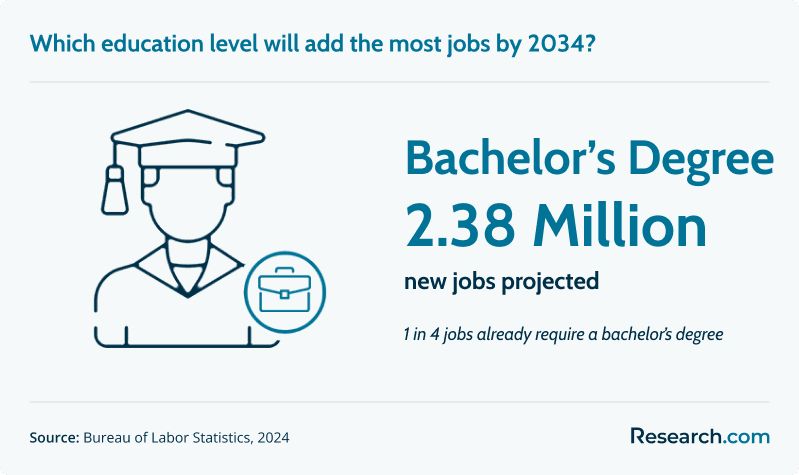
Investing this time pays off, as the number of jobs requiring a bachelor's degree is projected to grow by 2.38 million by 2034. This concept of efficient timelines extends even to graduate studies, with many institutions offering some of the shortest multilingual learner education master's programs available entirely online.
How does an online degree completion program compare to an on-campus program?
An accredited online program is academically the same as its on-campus version. You are taught by the same faculty, follow the same curriculum, and earn the exact same diploma from the university. The diploma will not say "online."
The primary difference is the delivery method. Online programs offer the flexibility to learn from anywhere, on a schedule that works for you, which is a major advantage for working adults. Similar to debates about whether is in person therapy better than online, both learning formats have unique benefits depending on individual needs and preferences.
How Employers View Your Online Degree
Any lingering doubts about employer perception have largely disappeared. A Job Outlook 2024 survey found that 87.4% of employers hired new college graduates with an online degree.
In the modern workplace, where remote and hybrid work are common, employers value the skills you build in an online program. They see graduates as self-motivated, disciplined, and proficient with the digital collaboration tools used in their own companies.
What is the average cost of an online degree completion program?
The total cost for online degree completion programs can vary significantly. Based on our analysis of various programs, the average is around $40,536 at public universities and $63,185 at private ones. However, it is important to note that the programs featured in our rankings may have different costs.
You should also budget for other expenses. Be sure to ask about technology or distance learning fees, which are sometimes added per credit hour, as well as the cost of digital textbooks and software.
Understanding the Investment: Public vs. Private
The main driver of cost difference is the funding model. Public universities receive state funding, which helps subsidize tuition for residents. Private universities rely more heavily on tuition and donations. The chart below illustrates the average tuition costs you can expect.
What are the financial aid options for students enrolling in an online degree completion program?
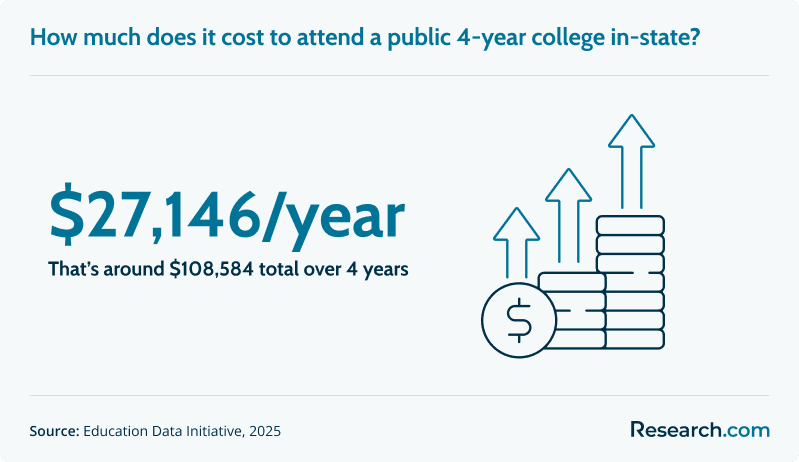
The sticker price is rarely what you actually pay. Several key financial aid options are available specifically for returning adult students. These resources are critical, especially when the average total cost of attendance for an in-state student at a public 4-year college is $27,100 per year.
What are the prerequisites for enrolling in online degree completion programs?
The main requirement for these programs is having a minimum number of transferable college credits, typically between 30 and 60. Most schools also look for a cumulative GPA of 2.0 or higher from your previous coursework.
One of the biggest concerns for returning students is whether their old credits are still valid. You can be confident that credits from a regionally accredited institution do not "expire." If you’re in healthcare and wondering can you get a BSN without an ADN, degree completion programs often provide flexible pathways to reach your goals.
Getting Credit for Your Experience
Many universities recognize that learning doesn't only happen in a classroom. Through a process called Prior Learning Assessment (PLA), you may be able to earn college credit for your professional experience, military training, or industry certifications.
This is a powerful way to reduce the number of courses you need to take, which saves you both time and money. When researching your options, also explore available scholarships for adult students to further lower your total cost. Be sure to ask an admissions counselor if they offer a PLA program when you are exploring different online degree completion programs.
What courses are typically in an online degree completion program?
Your coursework is designed to round out your prior education and provide deep knowledge in your chosen field. It generally falls into three main categories.
- General Education Requirements: These are courses in areas like humanities, social sciences, and math that build foundational skills for any profession.
- Major Core Courses: This is the heart of your degree, consisting of the required, foundational classes for your specific field of study.
- Electives: These are courses you can choose based on your interests, allowing you to either explore a new topic or deepen your expertise in a specific area of your major. To succeed in your program and beyond, it also helps to understand what skills are needed to be a business analyst, especially if your goal is to enter a data-driven or analytical field.
Why General Education Matters for Your Career
It’s easy to dismiss general education courses, but they are a direct investment in your career. These classes are specifically designed to build the "power skills" that employers value most: critical thinking, clear communication, and complex problem-solving. Completing a well-rounded curriculum, such as the fastest online social sciences degree programs offer, makes you a more adaptable and valuable candidate for leadership positions.
What types of specializations are available in an online degree completion program?
While you can find a wide range of options, most degree completion programs are focused on career-oriented fields that are in high demand.
- Business Administration: This is the most popular field, with specializations in areas like marketing, finance, project management, and human resources. Many students pursuing this path aim for leadership positions and want to learn how to become a chief executive officer or advance into other executive roles.
- Healthcare and Nursing: These programs, often called RN-to-BSN or healthcare administration degrees, are designed for professionals looking to move into leadership.
- Technology: With a focus on fields like computer science, cybersecurity, and information technology, these degrees lead to some of the fastest-growing jobs.
- Education: These programs are typically for those who want to work in educational settings outside of traditional K-12 teaching, such as corporate training or curriculum development.
Popular Fields and Emerging Options
As the chart below shows, the most popular fields align directly with major sectors of the economy. Beyond these, the flexibility of online learning is opening up unique fields of study; it's now possible to find an accelerated online bachelor's degree program in space studies and other niche specializations.
Most Popular Fields for Online Study

How to choose the best online degree completion program for returning students?
The "best" program is the one that fits your specific career goals, budget, and life. Use these five key criteria to evaluate your options and make a confident choice.
- Verify Regional Accreditation: This is non-negotiable. Regional accreditation ensures the university meets high academic standards and that your degree will be respected by employers and other institutions.
- Analyze the Credit Transfer Policy: Before you apply, ask for an unofficial credit evaluation to see exactly how many of your previous credits will transfer. A generous policy can save you significant time and money.
- Evaluate Student Support Services: Look for programs with dedicated advisors for adult learners. Strong support systems are crucial for helping you navigate the program and stay on track to graduation.
- Assess Curriculum and Flexibility: Confirm the program offers the specialization you need and a primarily asynchronous format that allows you to schedule coursework around your life.
- Calculate the Total Cost: Look beyond the advertised tuition. Ask about technology fees, online learning fees, and the cost of books and materials to understand the true investment.
What career paths are available for graduates of online degree completion programs?
Finishing your degree positions you for significant career advancement by combining your professional experience with a formal credential. The most common paths include:
- Management and Leadership Roles: A bachelor's degree is often the minimum requirement to move from an individual contributor role into a position as a team lead, project manager, or department supervisor.
- Specialized Professional Roles: The degree qualifies you for roles that are inaccessible without a credential, such as a senior accountant, human resources generalist, or IT security analyst, where a strong web development salary can be achieved.
- Career Pivots: You can leverage your degree to enter a new field. Your previous experience provides valuable transferable skills, and the new degree gives you the subject-matter expertise to make a successful transition.
These online degree completion programs are designed to build on the foundation you've already established in your career.
What is the job market for graduates of an online degree completion program?
The job market for professionals with a bachelor's degree is strong and growing. Projections show that jobs requiring this credential are set to grow faster than the average for all other occupations, creating millions of new opportunities.
Employer acceptance of online degrees is at an all-time high. Companies now recognize the discipline and technical skill required to succeed in an online environment and actively recruit from top programs to find experienced talent.
Your Degree as a Long-Term Asset
Think of your degree as a form of career insurance. During economic downturns, a bachelor's degree can provide stability and make you a more resilient candidate. It qualifies you for a wider range of opportunities, such as those with a competitive applied sciences salary, and makes it easier to pivot industries if needed. The data below clearly shows how education level correlates with job growth.
Here’s What Graduates Have to Say About Their Online Degree Completion Program
- Ginny: "I was in the same role for almost a decade and knew I couldn't move up without a degree. The online program let me keep my job while I studied, and the coursework was immediately relevant to what I was doing. Six months after graduating, I was promoted to a management position that had always been just out of reach. It felt like my years of experience were finally recognized."
- Vlad: "Honestly, my biggest fear was that the credits I earned 15 years ago would be worthless. I was amazed when the university accepted almost all of them. That alone saved me a full year of coursework and thousands of dollars. It was such a relief to know that my past efforts weren't wasted and I could just focus on the classes I had left."
- Aisha: "Finishing my degree was something I had to do for myself, but also for my daughter. I wanted to show her that you can always pick up where you left off and achieve your goals. The support from my academic advisor was incredible; she was a real person who understood my situation and helped me stay on track whenever I felt overwhelmed."
Is an online degree completion program a sound financial investment?
Evaluating the financial impact of an online degree completion program requires analyzing both upfront costs and long-term career benefits. Consider factors such as the payback period, enhanced promotion potential, and overall wage growth that can result from acquiring a new credential. Additionally, comparing earning trajectories against the investment expenses can reveal a favorable return if the completed degree leads to roles that rank among the highest paying online degrees. Assessing these metrics in relation to your current financial situation and career goals can help determine whether the program aligns with your long-term investment strategy.
Key Findings
- Employer acceptance is at an all-time high, with a 2024 survey revealing that 87.4% of companies hired graduates with online degrees, confirming their legitimacy in the modern workplace.
- The long-term value of finishing your degree is clear, as the number of jobs requiring a bachelor's credential is projected to grow by 2.38 million by 2034.
- Graduates significantly increase their lifetime earning potential, with the median annual wage for bachelor's degree holders currently at $92,260.
- The immediate financial return is substantial, with the average projected starting salary for new U.S. bachelor’s degree graduates being $68,680.
- The old stigma against online education has faded, as reports show 61% of human resources leaders now consider the quality of online learning to be equal to or even better than traditional on-campus methods.
- Understanding the investment is crucial, with the average total cost of attendance for an in-state student at a public four-year college being $27,100 per year, which highlights the importance of exploring financial aid.
References:
- Hanson, M. (2024). Average cost of college & tuition. EducationData.org. Retrieved October 7, 2025, from https://educationdata.org/average-cost-of-college
- Hanson, M. (2024). Cost of online education vs. traditional education. EducationData.org. Retrieved October 7, 2025, from https://educationdata.org/cost-of-online-education-vs-traditional-education
- Ma, J., & Pender, M. (2023). Trends in college pricing and student aid 2023. College Board. Retrieved October 7, 2025, from https://research.collegeboard.org/trends/college-pricing/highlights
- National Association of Colleges and Employers. (2024). Employers see online degrees as comparable to in-person degrees. Retrieved October 7, 2025, from https://www.naceweb.org/talent-acquisition/candidate-selection/employers-see-online-degrees-as-comparable-to-in-person-degrees
- National Center for Education Statistics. (2024). Fast facts: Back-to-school statistics. Retrieved October 7, 2025, from https://nces.ed.gov/fastfacts/display.asp?id=76
- University of Illinois Chicago. (2023). Are online degrees respected by employers? Retrieved October 7, 2025, from https://onlineprograms.uic.edu/news-stories/are-online-degrees-respected-by-employers/
- U.S. Bureau of Labor Statistics. (2024, September 4). Employment projections. Retrieved October 7, 2025, from https://www.bls.gov/emp/tables/education-summary.htm
- U.S. Bureau of Labor Statistics. (2024, August 15). Median weekly earnings of full-time workers with only a bachelor’s degree $1,541 in Q2 2024. The Economics Daily. Retrieved October 7, 2025, from https://www.bls.gov/opub/ted/2024/median-weekly-earnings-of-full-time-workers-with-only-a-bachelors-degree-1541-in-q2-2024.htm
- ZipRecruiter. (n.d.). College graduate salary. Retrieved October 7, 2025, from https://www.ziprecruiter.com/Salaries/College-Graduate-Salary
Other Things You Should Know About Online Degree Completion Programs
In 2027, programs like Arizona State University and Southern New Hampshire University offer pathways for students lacking transfer credits. They provide comprehensive support through introductory courses, credit pathways, and flexible options to help students transition smoothly into their degree completion plans.
Students should have a reliable internet connection and a device that meets system requirements, such as a computer with recent operating systems like Windows 11 or macOS Ventura, and appropriate software apps, depending on the program's specific platform requirements.


