
2027 How to Become an Electrician in Rhode Island

Co-Founder and Chief Data Scientist
Rhode Island’s demand for electricians is rising—but too many people hesitate to start because they don’t understand the process. With jobs growing at a consistent 6% rate and average annual wages around $65,000, electricians are well-positioned in a stable trade.
This guide, prepared by career planning experts, breaks down exactly what you need to know—from apprenticeship to licensing—so you can confidently start your career.
Key Things to Know About Becoming an Electrician in Rhode Island
- Electricians in Rhode Island require a state license, typically obtained after completing an approved apprenticeship and passing the journeyman exam.
- The average annual salary for electricians in Rhode Island is approximately $60,000, varying by experience and location within the state.
- Continuing education is essential to maintain licensure and stay updated on Rhode Island’s electrical codes and safety regulations.
- What education is required to become an electrician in Rhode Island?
- How do you get into an electrician apprenticeship program in Rhode Island?
- How much do electricians make in Rhode Island?
- What certifications do electricians need in Rhode Island?
- How long does an electrician apprenticeship take in Rhode Island?
- How much does electrician training cost in Rhode Island?
- Can diversifying into HVAC boost your electrical career in Rhode Island?
- What license do you need to be an electrician in Rhode Island?
- How can experienced electricians transition to business ownership in Rhode Island?
- What additional certifications can complement your technical career in Rhode Island?
- Can electricians explore allied technical careers in Rhode Island?
- How often do you need to renew your electrician license in Rhode Island?
- What are the essential skills needed to be a successful electrician in Rhode Island?
- What is the job outlook for electricians over the next 10 years in Rhode Island?
- What financing options are available for electrician training and certification in Rhode Island?
What education is required to become an electrician in Rhode Island?
To become an electrician in Rhode Island, you need both classroom education and hands-on apprenticeship training. This combination ensures you're prepared for licensing and real-world electrical work. Most people start by enrolling in a vocational program or community college. These programs cover:
- Electrical theory
- Blueprint reading
- Basic electrical math
- National Electrical Code (NEC)
Apprenticeship Training
Rhode Island requires a 4–5 year apprenticeship, which includes:
- At least 8,000 hours of paid, supervised work
- Regular technical instruction alongside job training
- Real-world experience solving electrical problems
Exam Preparation
Before applying for a license, it’s helpful to take:
- Prep courses from groups like the Rhode Island Builders Association
- Workshops on NEC updates and safety rules
- Practice exams and study groups
Recommended Training Programs
Top local training providers include:
- Rhode Island Trade Shop
- Community College of Rhode Island (CCRI)
- Rhode Island Electrical Training Institute
With strong education and apprenticeship experience, you’ll be ready to pass the licensing exam and build a successful career as an electrician in Rhode Island.
How do you get into an electrician apprenticeship program in Rhode Island?
To get into an electrician apprenticeship program in Rhode Island, you must meet specific eligibility requirements and apply through approved organizations. Most programs are offered by groups like the Rhode Island Joint Apprentice Training Committee (RIJATC) and local IBEW chapters.
Basic requirements
- Be at least 18 years old
- Have a high school diploma or GED
- Pass an aptitude test in math and reading
Registration and structure
All apprentices must register with the Rhode Island Department of Labor and Training. This ensures compliance with state rules and access to a structured path to licensure, which includes:
- 8,000 hours of on-the-job training
- 576 hours of classroom instruction
Where to apply
Top programs and support resources include:
- RIJATC apprenticeship program
- IBEW Local 99 and Local 223
- Community colleges and trade schools
- Rhode Island Construction Education Foundation (RICEF)
Tips for success
- Take prep seminars and workshops
- Practice communication and teamwork
- Build relationships with mentors and instructors
Starting an apprenticeship is a critical step toward becoming a licensed electrician in Rhode Island and building a long-term career. For more insight into career prospects in skilled trades, check out the rankings of the best jobs for trade school graduates.
How much do electricians make in Rhode Island?
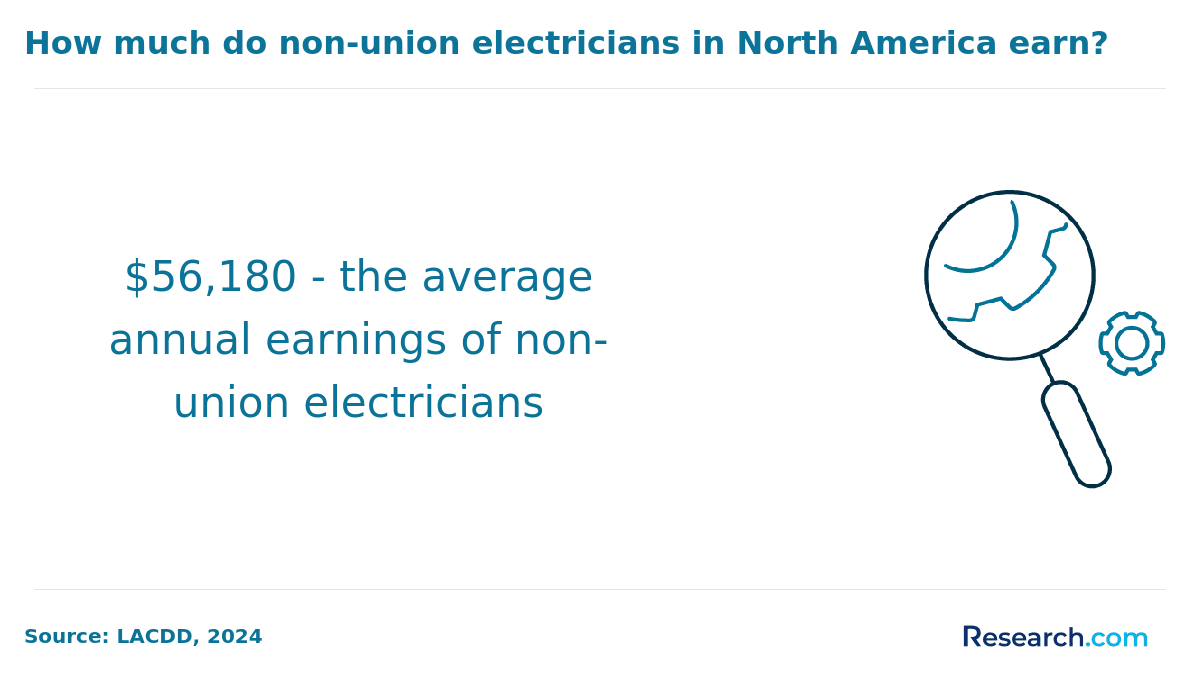
Electricians in Rhode Island earn a solid average annual salary of about $62,000, which breaks down to roughly $5,167 monthly. Entry-level electricians, often fresh from apprenticeship programs, start lower—around $35,000 to $40,000 yearly. Salary progression generally follows a clear trajectory: as electricians gain experience and secure journeyman or master licenses, their earnings can climb to $75,000 or even $85,000 annually, especially for those specializing in high-demand fields like renewable energy or industrial electrical work.
Providence stands out as the highest-paying city in Rhode Island for electricians, with average salaries reaching up to $65,000. Other cities such as Warwick and Cranston offer wages close to the statewide average, supported by steady construction growth. This growth, about 3% in 2023, fuels demand for electricians skilled in energy-efficient systems and green technologies, aligning with the increasing focus on sustainability in construction projects.
For aspiring electricians, leveraging local apprenticeship programs and continuing education is crucial. Additionally, those considering broader academic advancement might explore options like an anchors part-time Ph.D. in economics to deepen their expertise and widen career possibilities in specialized roles.
What certifications do electricians need in Rhode Island?
Electricians in Rhode Island must obtain a state-issued license to work legally. The first required certification is the Journeyman Electrician License, which involves completing at least 8,000 hours of supervised apprenticeship and passing a state licensing exam. This license allows electricians to work under the supervision of a master electrician on residential, commercial, or industrial projects.
Electricians often complete their training through state-approved programs at institutions like the Community College of Rhode Island (CCRI), New England Institute of Technology, or through the Rhode Island Builders Association (RIBA). These programs combine classroom instruction with hands-on learning.
Additional certifications can help electricians specialize and stay competitive. Common options include OSHA safety certifications, NICET technical credentials, and NABCEP certification for solar photovoltaic systems. Rhode Island also requires license holders to complete continuing education to stay current with electrical codes and maintain licensure.
Those interested in expanding their skill set might explore the best online HVAC trade schools and certifications, which can complement electrical expertise with related technical knowledge.
How long does an electrician apprenticeship take in Rhode Island?
Completing an electrician apprenticeship typically spans about 4 to 5 years, combining roughly 8,000 hours of hands-on work with around 576 hours of classroom instruction. This timeframe aligns with the broader electrician license process in Rhode Island, ensuring apprentices gain both practical and theoretical expertise before licensure.
Some apprenticeships may accelerate if offered by organizations like the International Brotherhood of Electrical Workers (IBEW) Local 99, which structures programs to reward skill mastery and allow testing out of certain coursework. Prior relevant experience or certifications can also trim the timeline, as can flexible scheduling or online coursework options.
Factors such as the specific program’s policies, the apprentice’s ability to meet classroom hour requirements, and the availability of on-the-job training slots influence this duration significantly. Navigating these variables effectively is key to managing time spent in apprenticeship. To speed up the process, apprentices should engage actively with both practical tasks and theory, pursue specialty certifications recognized in Rhode Island, and network within local trade groups.
Exploring trade school VS vocational program differences can also help identify pathways that best fit individual learning styles and career goals, potentially reducing time to completion.
How much does electrician training cost in Rhode Island?
Trade schools and technical colleges often charge between $5,000 and $15,000 for certificate or diploma programs lasting six months to a year, while associate degrees in electrical technology through community colleges like the Community College of Rhode Island hover between $10,000 and $20,000 for a two-year full-time commitment.
Another option is apprenticeships, which allow you to earn while you learn, though classroom instruction fees of $1,000 to $3,000 and upfront costs for tools and protective equipment—ranging from $500 to $1,000—add layers to the total investment.
For those seeking alternatives, exploring the best online trade schools can reveal cost-effective paths without sacrificing quality or flexibility.
Can diversifying into HVAC boost your electrical career in Rhode Island?
Electricians in Rhode Island can enhance their career prospects by expanding their technical repertoire into HVAC systems. Cross-training in HVAC not only broadens skill sets but also opens up opportunities to work on integrated building systems, energy efficiency projects, and advanced smart-home installations. This additional qualification can lead to higher income potential and a competitive edge in a multi-disciplinary job market. For professionals considering this pathway, learn more about the transition through reliable resources such as how to become an HVAC technician in Rhode Island.
What license do you need to be an electrician in Rhode Island?
You need either a Journeyman Electrician License or a Master Electrician License, depending on your level of experience and responsibility. The first step is earning the Journeyman License. To qualify, you must complete at least 8,000 hours of hands-on experience through a registered apprenticeship and 576 hours of classroom instruction.
Once these requirements are met, you can apply to take the state licensing exam through the Rhode Island Department of Labor and Training. Passing this exam allows you to work independently under the supervision of a master electrician.
After working as a journeyman for about two years, you can pursue the Master Electrician License, which permits you to supervise other electricians and manage larger projects. This also involves passing a separate, more advanced state exam.
Licenses are issued and regulated by the Rhode Island State Fire Safety Code Board of Appeal and Review, with oversight from the Department of Labor and Training. Additional support comes from industry groups like the Rhode Island Builders Association, which offer training and exam prep resources to guide candidates through the licensing process.
How can experienced electricians transition to business ownership in Rhode Island?
Experienced electricians have the opportunity to leverage years of technical expertise and industry insights to establish their own enterprises. Transitioning into business ownership may involve launching contracting firms, specialty consulting services, or niche electrical ventures. This shift requires a strategic emphasis on business planning, financial management, and leadership development tailored to the electrical industry. For those seeking to bolster their business acumen, exploring courses offered by top business schools in Rhode Island can provide essential skills in areas such as entrepreneurship, marketing, and financial planning.
What additional certifications can complement your technical career in Rhode Island?
Beyond the core electrical certifications, obtaining specialized credentials can diversify your technical expertise and open new career avenues. Advanced certifications in areas such as energy management, smart-home integration, or sustainable systems demonstrate a commitment to staying ahead of emerging industry standards. In a competitive market, these additional qualifications can enhance your profile, attract broader job opportunities, and provide a clear edge during economic fluctuations. Professionals seeking interdisciplinary skills may also explore allied technical fields; for example, learning how to become a radiology technician in Rhode Island to broaden your career portfolio while leveraging your technical aptitude.
Can electricians explore allied technical careers in Rhode Island?
Electricians possess a strong technical foundation that can serve as a springboard into related fields. In today’s dynamic job market, some professionals choose to broaden their expertise by cross-training in specialized technical areas. Such transitions often involve acquiring additional certifications and targeted training that complement their problem-solving and technical skills. For instance, shifting into roles that require precision and technical acumen, like how to become an ultrasound technician in Rhode Island, can provide a viable pathway to diversify one’s career portfolio while mitigating economic fluctuations.
How often do you need to renew your electrician license in Rhode Island?
The Rhode Island Department of Labor and Training (DLT) ensures licensed electricians continue to meet evolving industry standards every two years. Renewal process is primarily all about continuing education. You must complete at least 12 hours of approved coursework tailored to local electrical codes, safety protocols, and emerging technologies. This guarantees that the latest knowledge that keeps your worksite safe is compliant with the National Electrical Code (NEC).
Here’s what you need to do to renew on time:
- Submit your renewal application to the Rhode Island DLT before your license expires.
- Provide documented proof that you’ve completed the 12 hours of continuing education from an approved provider.
- Pay the renewal fee, which varies based on your specific license type.
What are the essential skills needed to be a successful electrician in Rhode Island?
Staying sharp on technical know-how is just the starting point. Here are skills that are essential for any aspiring electrician:
- Technical proficiency: The rise of smart home tech and green energy means you’ll need to keep pace with cutting-edge tools and code updates.
- Problem-solving abilities: Quick, creative troubleshooting keeps projects on track and workplaces safe.
- Attention to detail: Flawless installations prevent hazards and ensure you pass Rhode Island’s strict electrical codes with flying colors.
- Communication skills: Electricians don’t work in isolation. Clear, confident dialogue with clients and crews transforms complex specs into smooth operations.
- Physical stamina and dexterity: Climbing ladders, squeezing into tight spots, and handling tools all day demands fitness and nimble hands.
- Time management: Construction timelines wait for no one. Juggling deadlines with efficiency is important to manage projects efficiently.
What is the job outlook for electricians over the next 10 years in Rhode Island?
The next decade in Rhode Island lights a promising path for electricians, with the U.S. Bureau of Labor Statistics forecasting a steady 7% growth in employment through 2033. This growth mirrors the national pace, signaling a robust and reliable demand for skilled hands in wiring the state’s future.
Providence, Warwick, and Cranston lead in electrician jobs, thanks to their bustling commercial and residential construction scene. Nearly 60% of electrician roles thrive in these urban hubs within the construction sector, while manufacturing and utilities cast a wider net, offering roles that maintain and innovate electrical systems in factories and energy plants.
What financing options are available for electrician training and certification in Rhode Island?
Financing your electrician training requires careful planning. Evaluate federal and state financial aid programs designed for vocational education, including low-interest loans, grants, and scholarships offered through technical schools and union apprenticeship programs. Consider opportunities that provide paid training and employer reimbursement for exam fees and essential tools, while some community colleges and trade schools offer flexible payment plans tailored for tradespeople. Additionally, local workforce development initiatives in Rhode Island can further support your educational investment. For additional insights into alternative career pathways and related financing strategies, refer to our article on how to become a mechanic in Rhode Island.
What Electricians in Rhode Island Say About Their Careers
Completing my apprenticeship through the Rhode Island Electrical Training Center was a game-changer. The hands-on experience combined with knowledgeable instructors helped me build confidence and skill quickly. I truly appreciate the strong sense of community among local electricians and the steady demand for skilled tradespeople here. — Jose
Attending the University of Rhode Island’s electrical engineering program gave me a solid foundation, but it was the real-world challenges in the Ocean State that shaped my career. I take pride in being part of a profession where continuous learning is essential and where I can help protect and improve my community’s infrastructure. — Nelly
Rhode Island’s commitment to green technology has opened doors for me to work on exciting projects like solar panel installations and smart grid upgrades. This career offers stability and growth, and I feel proud to contribute to a cleaner, more resilient environment for future generations. —Ethan
Related Articles for Nearby States
- 2027 How to Become an Electrician in Massachusetts
- 2027 How to Become an Electrician in Connecticut
- 2027 How to Become an Electrician in New York
- 2027 How to Become an Electrician in New Jersey
- 2027 How to Become an Electrician in Vermont
- 2027 How to Become an Electrician in New Hampshire
- 2027 How to Become an Electrician in Pennsylvania
- 2027 How to Become an Electrician in Delaware
- 2027 How to Become an Electrician in Maine
- 2027 How to Become an Electricician in Maryland
References:
- Faraday. (n.d.). Electrician job outlook for 2022.
- NECA-IBEW Local 48. (n.d.). 2025’s job outlook for electrical professionals.
- Prairie Electric. (n.d.). Electrician job outlook in 2025 and beyond.
- TNS Solutions. (n.d.). Rewiring your career path: The journey to becoming an electrician at 30.
- Tesla Training Center. (n.d.). Job outlook for electrical workers.
- U.S. Bureau of Labor Statistics. (2024). Electricians: Occupational outlook handbook.
- U.S. Bureau of Labor Statistics. (2024). Occupational employment and wage statistics.
Other Things You Should Know about Being an Electrician in Rhode Island
To become a licensed electrician in Rhode Island in 2027, start by completing a high school diploma or GED. Next, enroll in an apprenticeship program, accumulating 8,000 hours of work experience under a licensed electrician. Finally, pass the licensing exam to obtain your journeyman license.
To become a licensed electrician in Rhode Island in 2027, complete a state-approved apprenticeship program, pass the journeyman exam, gain sufficient work experience, and then apply for and pass the master electrician exam. Ensure you meet all state-specific requirements.
To become a licensed electrician in Rhode Island in 2027, you typically need a high school diploma or equivalent. Following this, you must complete a state-approved apprenticeship program, which includes both hands-on training and classroom instruction. After completing the apprenticeship, you can apply for the journeyman electrician exam.


