
2027 Most Affordable Cybersecurity Bootcamps Programs

Co-Founder and Chief Data Scientist
Choosing an affordable cybersecurity bootcamp is a practical way to build security skills quickly without committing to a multi-year degree. The decision is not simply about finding the lowest tuition, however. You need to know whether the bootcamp matches your current skill level, prepares you for a credential employers recognize, includes enough hands-on practice, and supports the type of cybersecurity role you want. This guide explains what affordable cybersecurity bootcamps include, how much they cost, which programs are listed for 2027, what career paths they may support, and how to compare them before enrolling.
Quick answer: Are affordable cybersecurity bootcamps worth considering?
Affordable cybersecurity bootcamps can be worth considering if you want short, focused training in areas such as security analysis, penetration testing, cloud security, governance, or certification preparation. They are especially useful for IT professionals, career changers with technical aptitude, and workers who need a faster credential-focused option than a traditional degree. They are not a guaranteed path to employment, and some advanced roles still require experience, a degree, or multiple certifications.
What are the main benefits of enrolling in an affordable cybersecurity bootcamp?
- Cybersecurity bootcamps can help learners prepare for roles connected to information security, network defense, vulnerability testing, and security operations, fields where employers continue to need trained workers.
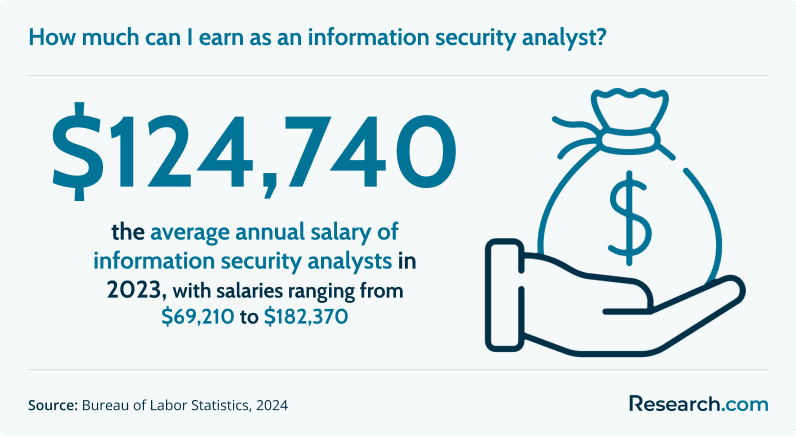
- Cybersecurity salaries can be strong. The average annual income for information security analysts in 2023 was $124,740, though actual pay varies by location, experience, employer, and specialization.
- Online bootcamps can make training easier to fit around work, caregiving, or other responsibilities, especially when they offer live-online instruction, remote labs, or flexible study options.
What can I expect from the most affordable cybersecurity bootcamps programs?
Most affordable cybersecurity bootcamps are short, intensive training programs built around practical skills rather than broad academic study. In this list, many programs run for only a few days, while the longest option runs 12-16 weeks. Learners should expect a concentrated schedule, instructor-led sessions in many cases, technical labs, and a strong focus on exam preparation or role-specific skills.
Common topics include network defense, threat detection, vulnerability assessment, ethical hacking, cloud security, incident response, compliance, and risk management. Some bootcamps are best for beginners preparing for a foundational credential such as CompTIA Security+, while others are designed for professionals pursuing advanced certifications such as CISSP, CISM, CCSP, CGRC™, CySA+, PenTest+, or CEH.
Before enrolling, verify whether the listed tuition includes certification exam vouchers, lab access, retake options, career services, and post-program support. A low price is less useful if you later have to pay separately for the exam, tools, or additional prep materials.
Where can I work after graduating from the most affordable cybersecurity bootcamps programs?
Cybersecurity bootcamp graduates may pursue work in organizations that need to protect networks, systems, data, cloud environments, and regulated information. Common employer types include IT services firms, financial institutions, healthcare organizations, consulting companies, software companies, government agencies, managed security service providers, and large enterprises with internal security teams.
The need for security talent is tied to the scale of cyber risk. According to the FBI, cybercrime complaints in 2023 reached a record high of over 880,000, with losses exceeding $12.5 billion. The finance sector alone experienced more than 20,000 cyberattacks from 2004 to 2023, resulting in losses amounting to $12 billion. These figures help explain why employers continue to hire workers who can monitor threats, investigate incidents, strengthen defenses, and manage security risk.
| Possible work setting | Why cybersecurity skills matter there | Bootcamp preparation that may help |
| IT services and consulting | Clients need security monitoring, incident response, compliance help, and infrastructure protection. | Security operations, vulnerability management, risk management, and certification preparation. |
| Banking and financial services | Financial institutions handle sensitive data and face frequent fraud, phishing, and account compromise risks. | Threat detection, compliance, network defense, and incident response. |
| Government agencies | Public-sector systems often require strict risk management, authorization, and compliance controls. | Governance, Risk, and Compliance training; CGRC™ preparation; incident response skills. |
| Cloud-based organizations | Companies moving workloads to the cloud need professionals who understand secure architecture and access controls. | Cloud security, identity and access management, encryption, and CCSP preparation. |
| Security operations centers | SOCs monitor alerts, investigate suspicious activity, and escalate security incidents. | CySA+, Security+, SIEM concepts, threat analysis, and response workflows. |
How much can I make after completing one of the most affordable cybersecurity bootcamps programs?
A bootcamp is not a degree, and it does not guarantee a specific salary. However, it can help learners build skills for roles connected to information security analysis, cybersecurity operations, penetration testing, network security, and risk management. According to recent data, information security analysts earned an average annual salary of $124,740 in 2023, with salaries ranging from $69,210 to $182,370.
Pay depends heavily on prior IT experience, certifications, technical portfolio, region, industry, and the complexity of the role. A learner with no IT background may need to begin in help desk, junior security operations, or network support before moving into higher-paying security positions. Experienced IT workers who add a targeted security certification may see a faster transition into cybersecurity-focused roles.
- Most Affordable Cybersecurity Bootcamps Programs for 2027
- How long does an affordable cybersecurity bootcamp take?
- Online vs. in-person cybersecurity bootcamps
- Average cost of affordable cybersecurity bootcamps
- Financial aid and payment options for bootcamp students
- Cybersecurity bootcamp prerequisites
- Typical cybersecurity bootcamp courses
- Cybersecurity bootcamp specializations
- When to pursue an academic credential after a bootcamp
- Bootcamps vs. traditional degree programs
- How to choose an affordable cybersecurity bootcamp
- Networking and mentorship in cybersecurity bootcamps
- How emerging technologies affect cybersecurity careers
- Career paths after an affordable cybersecurity bootcamp
- Soft skills developed in cybersecurity bootcamps
- Employer recognition of cybersecurity bootcamp certifications
- Job market outlook for cybersecurity bootcamp graduates
- How cross-industry knowledge can strengthen cybersecurity work
- Career support services in cybersecurity bootcamps
- Advanced academic degrees after bootcamp training
- How bootcamps keep curricula aligned with new threats
10 Most Affordable Cybersecurity Bootcamps Programs for 2027
The programs below focus on short, skills-based cybersecurity training and certification preparation. Use the list as a starting point, not as the only factor in your decision. Compare each bootcamp by cost, exam preparation, included materials, technical level, schedule, lab access, instructor support, and relevance to your target role.
This ranking uses a transparent Research.com methodology that considers data from sources such as the Integrated Postsecondary Education Data System (IPEDS), Peterson's databases including their Distance Learning Licensed Data Set, and the College Scorecard database from the National Center for Education Statistics. Because bootcamps differ from degree programs, students should also verify current tuition, exam-voucher policies, prerequisites, refund rules, and employer recognition directly with each provider.
| Program | Best fit | Length | Cost |
| CompTIA PenTest+ Training Boot Camp | Learners focused on penetration testing and vulnerability assessment | 5 days | $2,995 |
| CompTIA CySA+ Training Boot Camp | Learners pursuing security analysis and threat detection | 5 days | $2,999 |
| EC Council Certified Ethical Hacking Training Boot Camp | Learners preparing for ethical hacking roles | 5 days | $3,199 |
| ISACA CISM Training Boot Camp | Security professionals moving toward management and governance | 5 days | $3,595 |
| Cisco CCNA Associate & Cybersecurity Associate Training Boot Camp | Network professionals adding cybersecurity skills | 7 days | $3,595 |
| ISC2 Governance, Risk, and Compliance Certification (CGRC™) Training Boot Camp | Professionals working with risk, authorization, and compliance | 3 days | $3,999 |
| ISC2 CCSP® Training Boot Camp | IT and security professionals specializing in cloud security | 5 days | $4,199 |
| CompTIA Security+ Training Boot Camp | Entry-level learners seeking a foundational security credential | 5 days | $4,275 |
| ISC2 CISSP® Training Boot Camp | Experienced professionals preparing for enterprise security leadership | 6 days | $4,299 |
| Cybersecurity Analytics Bootcamp | Learners seeking a longer immersive online bootcamp | 12-16 weeks (7 units) | $10,995 (part-time); $11,995 (full-time) |
1. CompTIA PenTest+ Training Boot Camp
The CompTIA PenTest+ Training Boot Camp, delivered by Infosec through the College of the Sequoias (COS) Training Resource Center, is a five-day option for professionals who want concentrated preparation in ethical hacking and penetration testing. The program covers vulnerability scanning, wireless network testing, system hacking, security weakness analysis, scoping, and rules of engagement. It is best suited to learners who already understand basic IT or security concepts and want to prepare for the CompTIA PenTest+ certification exam. An exam voucher is included.
- Institution: College of the Sequoias Training Resource Center (powered by INFOSEC)
- Format: Live-online (instructor-led)+
- Platform: Ed2Go
- Program Length: 5 days
- Program Cost: $2,995
2. CompTIA CySA+ Training Boot Camp
The CompTIA CySA+ Training Boot Camp, offered by Infosec through the COS Training Resource Center, is a five-day live-online program focused on threat detection, vulnerability management, monitoring, incident response, software and systems security, and compliance. It is a strong match for learners who want to work in security operations, threat intelligence, or analyst-focused roles. The course is structured to prepare participants for the CySA+ certification exam and uses practical training with cybersecurity tools.
- Institution: College of the Sequoias Training Resource Center (powered by INFOSEC)
- Format: Live-online (instructor-led)
- Platform: Ed2Go
- Program Length: 5 days
- Program Cost: $2,999
3. EC Council Certified Ethical Hacking Training Boot Camp
The EC-Council Certified Ethical Hacking Training Boot Camp, provided by Infosec through the COS Training Resource Center, is a five-day online program for learners who want hands-on exposure to ethical hacking techniques. Training includes reconnaissance, OSINT, scanning, exploitation, web application attacks, password security, social engineering, physical security, system access, and data exfiltration concepts. Learners work through labs in a cloud-hosted cyber range and receive preparation for the EC-Council Certified Ethical Hacker (CEH) exam, with an exam voucher included.
- Institution: College of the Sequoias Training Resource Center (powered by INFOSEC)
- Format: Live-online (instructor-led)
- Platform: Ed2Go
- Program Length: 5 days
- Program Cost: $3,199
4. ISACA CISM Training Boot Camp
The ISACA CISM Training Boot Camp, offered by Infosec through the COS Training Resource Center, is designed for professionals who manage, assess, or support enterprise information security programs. The live-online course addresses security governance, risk management, security program development and management, and incident response. It is not primarily an entry-level technical bootcamp; it is better for professionals moving toward security management, consulting, or risk-focused work. An exam voucher for the CISM certification exam is included.
- Institution: College of the Sequoias Training Resource Center (powered by INFOSEC)
- Format: Live-online (instructor-led)
- Platform: Ed2Go
- Program Length: 5 days
- Program Cost: $3,595
5. Cisco CCNA Associate & Cybersecurity Associate Training Boot Camp
The Cisco CCNA Associate & Cybersecurity Associate Training Boot Camp, delivered by Infosec through the COS Training Resource Center, is a seven-day program for network engineers, administrators, and technical learners who want Cisco networking knowledge alongside cybersecurity operations skills. Participants practice router and switch configuration in the Networking Cyber Range and study network access, IP connectivity, IP services, automation, and network security. The bootcamp prepares learners for both the Cisco CCNA 200-301 exam and the Cisco Cybersecurity Associate certification exam, with vouchers included.
- Institution: College of the Sequoias Training Resource Center (powered by INFOSEC)
- Format: Live-online (instructor-led)
- Platform: Ed2Go
- Program Length: 7 days
- Program Cost: $3,595
6. ISC2 Governance, Risk, and Compliance Certification (CGRC™) Training Boot Camp (previously CAP®)
The ISC2 Governance, Risk, and Compliance Certification (CGRC™) Training Boot Camp, offered by Infosec through the COS Training Resource Center, is a three-day program for professionals responsible for system authorization, risk controls, compliance, and ongoing information system security oversight. Formerly known as Certified Authorization Professional (CAP®), the training emphasizes the Risk Management Framework (RMF), security authorization, risk assessment, legal and regulatory requirements, and security control implementation. An exam voucher for the ISC2 CGRC™ certification is included.
- Institution: College of the Sequoias Training Resource Center (powered by INFOSEC)
- Format: Live-online (instructor-led)
- Platform: Ed2Go
- Program Length: 3 days
- Program Cost: $3,999
7. ISC2 CCSP® Training Boot Camp
The ISC2 CCSP® Training Boot Camp, provided by Infosec through the COS Training Resource Center, is intended for IT and cybersecurity professionals who need cloud security expertise. The course covers cloud architecture, data security, compliance, risk management, and controls for cloud-based environments. It may be a good fit for security consultants, cloud security architects, and enterprise security administrators who already have technical experience and want to validate cloud security knowledge through the ISC2 CCSP® exam. An exam voucher is included.
- Institution: College of the Sequoias Training Resource Center (powered by INFOSEC)
- Format: Live-online (instructor-led)
- Platform: Ed2Go
- Program Length: 5 days
- Program Cost: $4,199
8. CompTIA Security+ Training Boot Camp
The CompTIA Security+ Training Boot Camp, offered by Infosec through the COS Training Resource Center, is a five-day program built around the CompTIA Security+ SY0-701 exam. The curriculum introduces threat detection, risk management, security architecture, incident response, security operations, and threat mitigation. Because Security+ is often used as an entry-level cybersecurity credential, this bootcamp may be appropriate for learners building a baseline security foundation before applying for junior analyst, IT security, or network administrator roles.
- Institution: College of the Sequoias Training Resource Center (powered by INFOSEC)
- Format: Live-online (instructor-led)
- Platform: Ed2Go
- Program Length: 5 days
- Program Cost: $4,275
9. ISC2 CISSP® Training Boot Camp
The ISC2 CISSP® Training Boot Camp, delivered by Infosec through the COS Training Resource Center, is a six-day program for professionals preparing for enterprise-level security responsibilities. Topics include risk management, security architecture, access control, and other core cybersecurity domains. CISSP is generally associated with experienced security practitioners, so prospective students should review eligibility expectations carefully before enrolling. The program is designed to support preparation for the CISSP exam.
- Institution: College of the Sequoias Training Resource Center (powered by INFOSEC)
- Format: Live-online (instructor-led)
- Platform: Ed2Go
- Program Length: 6 days
- Program Cost: $4,299
10. Cybersecurity Analytics Bootcamp
The Cybersecurity Analytics Bootcamp from Fullstack Academy is a longer live-online program for learners who want a more immersive experience than a short certification bootcamp. The curriculum covers 30+ core cybersecurity topics, including network security, threat analysis, and ethical hacking, and includes practice with Kali Linux, Python, Wireshark, and Metasploit. Career support includes resume guidance, salary negotiation help, and job placement assistance. The program also includes preparation for the CompTIA Security+ certification exam, and graduates have pursued roles at organizations such as Accenture, the IRS, and the Center for Internet Security.
- Institution: Fullstack Academy
- Format: Live-online (instructor-led)
- Platform: Fullstack Academy
- Program Length: 12-16 weeks (7 units)
- Program Cost: $10,995 (part-time); $11,995 (full-time)
How long does it take to complete the most affordable cybersecurity bootcamps programs?
The shortest programs in this guide run 3 days, while several are 5 days, one is 6 days, one is 7 days, and the Fullstack Academy option runs 12-16 weeks. Short bootcamps are typically best for learners who already have related knowledge and want exam-focused preparation. Longer bootcamps may provide more time for beginners to practice tools, complete projects, and prepare for a career transition.
If you need a slower pace, consider certificate-style online training before committing to an intensive bootcamp. Some online cybersecurity courses with certificates can provide a lower-pressure introduction to networking, Linux, security fundamentals, or Python before you invest in a bootcamp.
| Program length | Typical learner fit | Main trade-off |
| 3 to 7 days | Experienced IT workers, certification candidates, professionals needing concentrated review | Fast completion, but limited time to absorb unfamiliar concepts |
| 12-16 weeks | Career changers or learners who need more structured practice | More time for labs and career support, but higher cost and longer commitment |
| Several months in self-paced courses | Working adults who need flexible scheduling or foundational preparation | More flexible, but may require greater self-discipline and may not include live coaching |
How does an online cybersecurity bootcamps compare to an in-person program?
Online cybersecurity bootcamps can work well when they include live instruction, guided labs, instructor access, and structured accountability. They remove the need to relocate or commute and may be easier for working adults to complete. In-person programs may offer stronger face-to-face networking, easier peer collaboration, and more direct access to instructors, but they require a fixed location and schedule.
Students comparing a bootcamp with a formal cyber security degree should think about their timeline and goals. A bootcamp is usually faster and narrower. A degree is broader, takes longer, and may be preferred for some employers, leadership tracks, government roles, or graduate study.
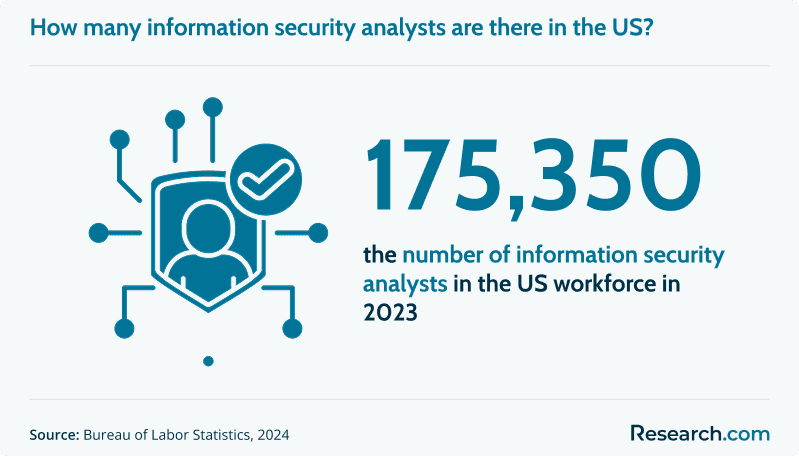
In 2023, there were 175,350 information security analysts in the US workforce employed in various industries, from IT services and consulting to computer hardware manufacturing.
| Option | Best for | Limitations |
| Online bootcamp | Learners who need remote access, short timelines, and certification-focused training | Networking may be weaker unless the provider offers mentorship, cohorts, and alumni access |
| In-person bootcamp | Learners who value classroom structure, live interaction, and local employer connections | Less flexible and may require travel or relocation |
| Cybersecurity degree | Learners seeking broad academic preparation, transferability, and long-term advancement options | Usually takes more time and may cost more than a short bootcamp |
What is the average cost of the most affordable cybersecurity bootcamps programs?
The average tuition for the most affordable online cybersecurity bootcamps in this guide is $3,728, with most listed prices ranging from $2,995 to $4,299. Fullstack Academy is the outlier at $10,995 (part-time) and $11,995 (full-time), but it is also longer than the short certification-focused options.
Compared with a low-cost online cybersecurity degree, a bootcamp may require less time and a smaller upfront commitment. The trade-off is that a bootcamp usually does not provide the same breadth of academic coursework, transfer credit, or degree credential.
To evaluate return on investment, compare total program cost with your realistic career starting point. Information security analysts earned an average annual salary of $124,740 in 2023, with salaries ranging from $69,210 to $182,370, but new bootcamp graduates without IT experience may not immediately qualify for analyst roles at the top of that range.
Costs to check beyond tuition
- Certification exam vouchers and retake fees
- Required hardware, software, labs, or cloud accounts
- Books, practice tests, and study platforms
- Refund deadlines and withdrawal penalties
- Financing fees or interest charges
- Time away from paid work for full-time or intensive schedules
What are the financial aid options for students enrolling in the most affordable cybersecurity bootcamps programs?
Most cybersecurity bootcamps do not operate like traditional colleges with broad access to federal student aid. Instead, they commonly use direct payment, installment plans, private financing, employer reimbursement, scholarships, or veteran benefits when available. Always confirm financing terms before signing an enrollment agreement.
Some online trade school options and career-training providers may offer payment plans through services such as Affirm, allowing students to divide tuition into installments. Depending on the provider, students may also find scholarships, employer-sponsored tuition assistance, or GI Bill eligibility.
| Funding option | What to verify | Best use case |
| Installment plan | Total repayment amount, fees, due dates, and consequences for missed payments | Students who can afford tuition over time but not all at once |
| Employer reimbursement | Eligibility rules, required grade or completion proof, and repayment obligations if you leave the employer | Workers whose current job benefits from cybersecurity upskilling |
| Scholarship | Application deadline, eligibility, award amount, and whether it reduces tuition directly | Students who need non-loan support |
| Veteran benefits | Provider approval, covered costs, housing rules, and benefit limits | Eligible veterans or military-connected learners |
| Private financing | Interest rate, repayment term, origination fees, and total cost | Students who have compared other options and understand the debt risk |
What are the prerequisites for enrolling in the most affordable cybersecurity bootcamps programs?
Prerequisites vary widely. Some programs are marketed to beginners, while others assume IT, networking, systems administration, or security experience. Short certification bootcamps can be difficult for true beginners because they move quickly and often compress a large amount of exam material into a few days.
Before enrolling, review the provider’s recommended background. For foundational training, it helps to understand operating systems, basic networking, command-line tools, and common security terms. For ethical hacking, cloud security, CISSP, CISM, CGRC™, or CySA+ preparation, prior technical experience or earlier certifications such as CompTIA Security+ may be useful or expected.
These bootcamps can prepare learners for industries that employ information security analysts, including IT services, corporate management, banking, and consulting. More than 40,000 information security analysts worked in IT services, with thousands more in financial services and corporate management. Some of these industries also reported competitive average pay, including banking and financial services ($129,610) and IT services ($126,060) per year on average.
Readiness checklist before you enroll
- You can explain basic networking concepts such as IP addresses, ports, protocols, and firewalls.
- You are comfortable using Windows and at least beginning-level Linux commands.
- You understand why authentication, access control, encryption, and logging matter.
- You can commit the required hours during the bootcamp without falling behind.
- You know which certification or job role the program is designed to support.
- You have reviewed exam eligibility requirements for advanced credentials.
What courses are typically in the most affordable cybersecurity bootcamps programs?
Affordable cybersecurity bootcamps usually organize training around either foundational security skills or certification domains. A beginner-oriented program may cover a broad mix of security concepts and tools, while an advanced bootcamp may focus tightly on one exam blueprint.
Common courses and skill areas in cybersecurity bootcamps
- Cybersecurity fundamentals: Introduces the confidentiality, integrity, and availability model; common attack types; basic controls; and security terminology.
- Networking and system security: Covers protocols, network architecture, firewalls, VPNs, intrusion detection, endpoint hardening, and secure configuration.
- Ethical hacking and penetration testing: Trains learners to identify and test vulnerabilities through authorized methods using tools such as Kali Linux, Metasploit, and Wireshark.
- Incident response and digital forensics: Explains how teams detect incidents, contain damage, preserve evidence, investigate systems, and restore operations.
- Governance, Risk, and Compliance: Reviews security frameworks and regulatory requirements, including NIST, ISO 27001, and GDPR concepts.
- Cloud security: Focuses on secure cloud architecture, identity and access management, encryption, data protection, compliance, and shared-responsibility models.
Learners who are not ready for a fast-paced cohort may prefer self-paced online college-style courses or modular training before taking a certification bootcamp.
How bootcamp topics connect to real cyber risks
Cybercrime costs are projected to rise from $8.15 trillion in 2023 to $13.8 trillion by 2028. Bootcamp topics such as incident response, ethical hacking, vulnerability management, and threat analysis are designed to prepare learners for practical problems associated with investment fraud ($4.57 billion), business email compromise ($2.95 billion), and tech support scams ($925 million).
What types of specializations are available in the most affordable cybersecurity bootcamps programs?
Cybersecurity is not a single job. Bootcamps often align with specific career lanes, and choosing the wrong specialization can waste time and money. Match the program to the tasks you want to do every day, not only to the certification name.
| Specialization | What it emphasizes | Example program from this guide | Good fit for |
| Security analysis and threat detection | Monitoring, alert triage, vulnerability management, and incident response | CompTIA CySA+ Training Boot Camp | Future SOC analysts, security analysts, and threat intelligence workers |
| Ethical hacking and penetration testing | Authorized testing, exploitation methods, reporting, and remediation guidance | CompTIA PenTest+ Training Boot Camp; EC Council Certified Ethical Hacking Training Boot Camp | Learners interested in offensive security and vulnerability testing |
| Security management and governance | Risk, policy, enterprise security programs, and compliance oversight | ISACA CISM Training Boot Camp; ISC2 CGRC™ Training Boot Camp | Experienced professionals moving into management, GRC, or consulting |
| Network security and infrastructure protection | Routers, switches, IP services, network access, and secure network operations | Cisco CCNA Associate & Cybersecurity Associate Training Boot Camp | Network administrators and engineers adding security capabilities |
| Cloud security | Cloud architecture, data protection, identity, compliance, and risk management | ISC2 CCSP® Training Boot Camp | Cloud administrators, enterprise security workers, and security consultants |
| Cybersecurity foundations | Core security concepts, risk, architecture, operations, and incident response | CompTIA Security+ Training Boot Camp | Entry-level learners building a baseline credential |
Security Analysis and Threat Detection
This path centers on identifying suspicious activity, reviewing alerts, analyzing vulnerabilities, and helping teams respond before incidents escalate. It is commonly associated with SOC analyst, cybersecurity analyst, and threat intelligence work.
- Example Program:
- CompTIA CySA+ Training Boot Camp: Covers vulnerability management, security operations, monitoring, and incident response.
Ethical Hacking and Penetration Testing
This specialization teaches learners how to test systems legally and responsibly. The goal is to find weaknesses before attackers do and communicate findings clearly enough for technical teams to fix them.
- Example Program:
- Ethical Hacking Dual Certification Boot Camp: Combines EC-Council CEH (Certified Ethical Hacker) and CompTIA PenTest+ training.
Security Management and Governance
Governance-focused training is useful for professionals responsible for security strategy, risk oversight, policies, audits, and regulatory alignment. It is usually better for experienced professionals than for complete beginners.
- Example Programs:
- CISM Training Boot Camp: Focuses on enterprise security program management, risk management, and incident response.
- (ISC)² CGRC Training Boot Camp: Covers governance, risk, compliance, and the Risk Management Framework (RMF).
Network Security and Infrastructure Protection
Network security training is valuable for learners who want to secure routers, switches, firewalls, access controls, and traffic flows. It is especially relevant for IT workers already supporting infrastructure.
- Example Program:
- CCNA & CyberOps Training Boot Camp: Combines Cisco CCNA and CyberOps Associate preparation for learners focused on networking and security operations.
Cloud Security
Cloud security training helps learners understand how to protect applications, identities, workloads, and data in cloud environments. This specialization is increasingly important as organizations move more systems and data outside traditional on-premises infrastructure.
- Example Program:
- CCSP Training Boot Camp: Prepares learners for the Certified Cloud Security Professional (CCSP) exam and covers cloud architecture, compliance, and risk management.
Cybersecurity Foundations and General Security
Foundational programs are appropriate for learners who need a broad introduction before committing to a narrower path. They can also help IT professionals formalize security knowledge they have gained on the job.
- Example Programs:
- CompTIA Security+ Training Boot Camp: Builds baseline knowledge in security principles, risk management, architecture, operations, and incident response.
- CISSP Training Boot Camp: Reviews eight cybersecurity domains and is generally aimed at experienced professionals pursuing broader security leadership knowledge.
Should I pursue further academic credentials after completing a cybersecurity bootcamp?
A bootcamp can help you build job-focused skills, but a degree may be useful if your long-term goals include management, government work, research, teaching, or roles where employers prefer a formal academic credential. Some learners use an accelerated online cybersecurity degree to build on bootcamp training while gaining broader coursework in computing, policy, risk, and systems design.
Further education makes the most sense when it solves a specific career problem. If job postings in your target market regularly request a bachelor's or master's degree, or if you want eligibility for roles beyond technical support and junior analysis, academic study may strengthen your profile.
How do cybersecurity bootcamps compare to traditional degree programs?
Cybersecurity bootcamps and degree programs serve different purposes. Bootcamps are shorter, skills-focused, and often tied to certification preparation. Degree programs are broader and usually include general education, computing theory, projects, electives, and a more structured academic credential. Some accelerated options, including a 1 year computer science degree pathway, may appeal to learners who want a faster academic route than a traditional program.
| Factor | Cybersecurity bootcamp | Traditional degree program |
| Time commitment | Often days to weeks, depending on the provider | Usually much longer and more comprehensive |
| Primary goal | Certification preparation and applied skills | Academic foundation, credentialing, and broader career flexibility |
| Best for | Upskilling, career pivots, targeted exam prep, or filling a specific technical gap | Students who need a recognized degree for long-term advancement or employer requirements |
| Limitations | May not satisfy degree requirements in job postings | May take longer and cost more than narrow training |
How do you choose the best and most affordable cybersecurity bootcamps program?
The best affordable cybersecurity bootcamp is the one that matches your current experience, career target, schedule, and budget. Do not choose based only on the lowest price or the most recognizable certification name. A five-day CISSP or CISM bootcamp, for example, may not be the right fit for a beginner, even if the tuition looks reasonable.
Key factors to compare
- Career fit: Identify whether you want security operations, penetration testing, cloud security, GRC, network security, or management-focused training.
- Skill level: Check whether the bootcamp assumes prior IT, networking, Linux, programming, or security experience.
- Certification alignment: Confirm which exam the program prepares for and whether the exam voucher is included.
- Hands-on practice: Look for labs, cyber ranges, simulations, tool practice, and project-based work.
- Instructor access: Ask how students receive help during and after the program.
- Career services: Review resume support, interview coaching, employer connections, alumni access, and documented outcomes.
- Total cost: Include tuition, financing fees, exam retakes, materials, and time away from work.
- Reputation: Review provider history, student feedback, instructor credentials, and employer recognition.
Questions to ask before enrolling
- What exact certification exam does the program prepare for?
- Is the exam voucher included in tuition?
- What experience should I have before the first day?
- How many hours of live instruction and hands-on lab time are included?
- What tools will I use during the program?
- What happens if I fall behind or fail the certification exam?
- Are career outcomes published, and how are they verified?
- Can I speak with an advisor, instructor, or graduate before enrolling?
Common mistakes to avoid
| Mistake | Why it can hurt you | Better approach |
| Choosing only by lowest tuition | The cheapest option may not include exam fees, labs, or adequate support. | Compare total cost and included services. |
| Ignoring prerequisites | An advanced bootcamp can be overwhelming without prior experience. | Match the program to your current skill level. |
| Assuming certification guarantees a job | Employers also look for experience, projects, communication skills, and technical problem-solving. | Build a portfolio, practice interviews, and apply strategically. |
| Skipping accreditation and provider checks | Some credentials may carry less weight than expected. | Research the provider, certification body, and employer recognition. |
| Overlooking schedule intensity | Short bootcamps can require long days and fast review. | Plan study time before, during, and after the program. |
How do networking and mentorship opportunities boost cybersecurity bootcamp success?
Networking and mentorship can make a bootcamp more valuable because cybersecurity hiring often depends on trust, referrals, practical communication, and evidence that a candidate can work under pressure. Strong programs may offer cohort discussion, instructor office hours, alumni groups, guest speakers, mock interviews, and connections with working professionals.
Mentorship is especially useful for career changers who need help translating previous work experience into cybersecurity language. Learners planning long-term advancement may also compare bootcamp training with broader graduate options such as fast online master's degree programs, especially if leadership or specialized technical roles are part of their plan.
How can emerging technologies further enhance cybersecurity career prospects?
Cybersecurity work increasingly involves automation, data analysis, cloud platforms, identity systems, and AI-supported threat detection. Professionals who understand how these technologies affect attacker behavior, defense workflows, and risk decisions may be better prepared for evolving roles.
Bootcamp graduates can strengthen their profile by learning scripting, log analysis, cloud fundamentals, and responsible use of AI-enabled security tools. Learners who want a deeper academic path in machine learning or automation may compare bootcamp training with an affordable online artificial intelligence degree to understand how AI and cybersecurity skills can complement one another.
What career paths are available for graduates of the most affordable cybersecurity bootcamps programs?
Cybersecurity bootcamps can support several paths within computer and information technology occupations. Your likely path depends on your background. A current network administrator may move toward network security faster than someone with no IT experience. A beginner may need to start with IT support, junior SOC work, or a related technical role before advancing.
| Career path | Typical responsibilities | Helpful bootcamp focus |
| Security analysis and operations | Monitor alerts, investigate threats, document findings, escalate incidents, and support SOC workflows. | Security+, CySA+, threat detection, SIEM concepts, incident response. |
| Ethical hacking and penetration testing | Test systems with permission, identify vulnerabilities, exploit weaknesses safely, and write remediation reports. | PenTest+, CEH, Kali Linux, Metasploit, vulnerability assessment. |
| Cloud security | Secure cloud configurations, manage access, protect data, and support compliance in cloud environments. | CCSP, cloud architecture, IAM, encryption, risk management. |
| Governance, Risk, and Compliance | Support audits, policies, risk assessments, control mapping, and regulatory alignment. | CISM, CGRC™, RMF, NIST, ISO 27001, compliance concepts. |
| Incident response and digital forensics | Investigate breaches, contain incidents, preserve evidence, and help restore operations. | Incident response, forensics basics, malware concepts, logging. |
| Network security and engineering | Secure routers, switches, firewalls, VPNs, and network traffic flows. | CCNA, CyberOps, network access, IP connectivity, firewalls. |
| Security program management | Plan security initiatives, coordinate teams, manage policies, and align security with business needs. | CISM, CISSP, risk management, governance, leadership communication. |
Programming knowledge can also improve cybersecurity work. Graduates who want to automate tasks, analyze logs, write scripts, or understand application security may compare security training with the best coding bootcamps to add practical development skills.
Do Cybersecurity Bootcamps Build Essential Soft Skills?
Good cybersecurity work is not only technical. Analysts and engineers must explain risk, document incidents, work with nontechnical stakeholders, stay calm under pressure, and communicate clearly during high-stakes events. Bootcamps can support these skills through team labs, simulations, reporting exercises, presentations, and interview preparation.
Creative problem-solving also matters, especially in penetration testing, security awareness, and incident response. Some learning methods used in interactive fields such as online game development degree programs show how scenario design, feedback loops, and simulation can improve engagement, though cybersecurity students should prioritize security-specific labs and employer-recognized credentials.
Are Cybersecurity Bootcamp Certifications Recognized by Employers?
Employers are more likely to value a bootcamp credential when it prepares learners for established third-party certifications, includes hands-on evidence of skill, and comes from a provider with credible instructors and transparent outcomes. A bootcamp completion certificate alone may carry less weight than CompTIA, ISC2, ISACA, Cisco, or EC-Council certification preparation combined with projects and relevant experience.
Credential recognition varies by field, employer, and role. The same caution applies when comparing credentials in other academic disciplines, such as reviewing standards for the best online biochemistry degree programs: verify the institution, credential type, outcomes, and whether employers or licensing bodies value the training.
What is the job market for graduates of the most affordable cybersecurity bootcamps programs?
The cybersecurity job market is supported by persistent cyber risk, growing digital infrastructure, cloud adoption, regulatory pressure, and the need to protect sensitive data. The global cost of cybercrime is projected to rise from $9.22 trillion in 2024 to $13.82 trillion by 2028, which reflects the scale of the problem organizations are trying to manage.
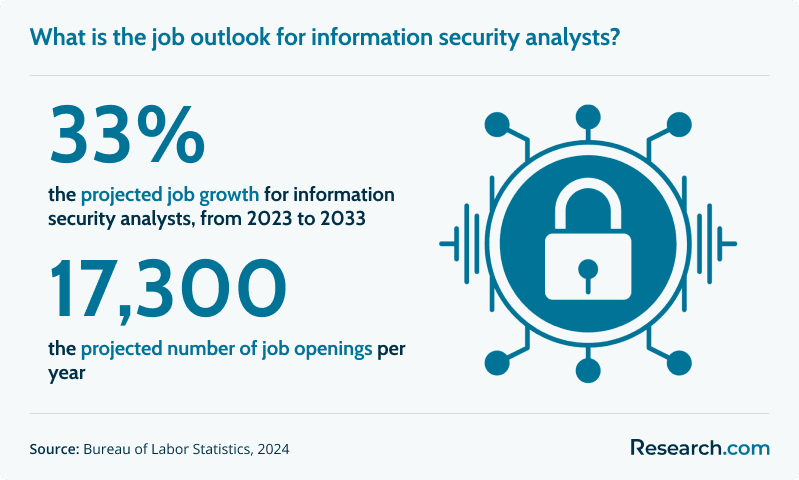
For information security analysts, job growth is projected at 33% from 2023 to 2033, with approximately 17,300 job openings each year. This outlook is favorable, but bootcamp graduates should still expect competition for entry-level cybersecurity positions. Strong candidates usually combine training with labs, certifications, networking, interview preparation, and some form of IT or technical experience.
Can Cross-Industry Expertise Enhance Cybersecurity Effectiveness?
Cross-industry knowledge can help cybersecurity professionals understand how risk differs across sectors. Healthcare, finance, education, manufacturing, and government all face different data types, regulations, operational constraints, and attack patterns. A security analyst who understands the business context can recommend controls that are more realistic and useful.
For example, professionals interested in healthcare data, privacy, and systems risk may explore accelerated online health informatics master's programs to build domain knowledge that complements cybersecurity training.
Do Cybersecurity Bootcamps Offer Robust Career Support Services?
Career support varies significantly by provider. Some bootcamps offer resume reviews, interview coaching, salary negotiation guidance, LinkedIn profile support, employer events, alumni communities, and job-search accountability. Others focus almost entirely on exam preparation. Before enrolling, ask what career services are included, how long you can access them, and whether outcomes are independently verified.
Career support should also match your long-term goals. Learners moving toward technical leadership, project ownership, or security management may eventually compare bootcamp training with options such as an affordable online master's degree in engineering management if they want to combine cybersecurity knowledge with operations and leadership skills.
Can advanced academic degrees complement cybersecurity bootcamp training?
Advanced academic degrees can complement bootcamp training by adding theory, research methods, systems thinking, and leadership preparation. A bootcamp may teach you how to use tools and prepare for certifications; a graduate degree may help you analyze complex systems, design security strategies, lead teams, or work in research-intensive roles.
Learners who want deeper computer science preparation may consider an online master's in computer science after gaining applied cybersecurity experience. This route is most useful when the degree supports a clear goal, such as security engineering, architecture, research, technical leadership, or advanced software security work.
How Do Cybersecurity Bootcamps Update Their Curriculum for Emerging Threats?
Strong cybersecurity bootcamps update content by tracking certification exam changes, employer feedback, new vulnerabilities, attacker techniques, cloud practices, and changes in security tooling. Relevant updates may include AI-supported threat detection, automation in vulnerability management, cloud misconfiguration risks, identity-based attacks, and more realistic incident-response labs.
Ask providers how often the curriculum changes and who reviews it. A bootcamp that still teaches outdated tools or ignores cloud, automation, and current threat patterns may not prepare learners well. Professionals who want to pair cybersecurity with advanced analytics may also compare bootcamp training with online data science master's programs to build stronger skills in data interpretation, modeling, and large-scale analysis.
Key Insights
- Affordable cybersecurity bootcamps can be a fast route to focused security training, especially for certification preparation, but they are not substitutes for experience, projects, or every employer’s degree requirements.
- The programs in this guide range from 3 days to 12-16 weeks, with most short bootcamps costing $2,995 to $4,299 and one longer option costing $10,995 (part-time) and $11,995 (full-time).
- Information security analysts earned an average annual salary of $124,740 in 2023, with salaries ranging from $69,210 to $182,370, but actual outcomes depend on experience, location, certifications, and role fit.
- Cybersecurity demand is supported by rising cyber risk, including projected global cybercrime costs of $13.82 trillion by 2028 and projected information security analyst job growth of 33% from 2023 to 2033.
- The right bootcamp depends on your target path: Security+ for foundations, CySA+ for analysis, PenTest+ or CEH for offensive security, CCSP for cloud security, CGRC™ for compliance, CISM for management, and CISSP for experienced professionals pursuing broader security leadership.
- Before enrolling, confirm prerequisites, exam-voucher inclusion, lab quality, career support, financing terms, refund policies, and whether the credential aligns with job postings in your local or target market.
- A degree may be worth pursuing after a bootcamp if your desired roles require broader academic preparation, leadership training, research ability, or a formal credential beyond certification.
References:
- Bureau of Labor Statistics. (2024). Information security analysts. Retrieved February 14, 2025, from BLS Occupational Outlook Handbook.
- Bureau of Labor Statistics. (2024). Occupational employment and wages, May 2023 - 15-1212 information security analysts. Retrieved February 14, 2025, from BLS Occupational Employment and Wage Statistics.
- FBI Internet Crime Complaint Center. (2024). FBI releases Internet Crime Report 2023. Retrieved February 14, 2025, from IC3 Internet Crime Report.
- Moore, M. (2025). 45 cybersecurity statistics and facts for 2025. Retrieved February 14, 2025, from University of San Diego.
- Zandt, F. (2024). The costliest types of cybercrime. Retrieved February 14, 2025, from Statista cybercrime analysis.
Other Things You Should Know About the Most Affordable Cybersecurity Bootcamps Programs
Many bootcamps offer scholarships, income share agreements, and installment payment plans to ease the financial burden. Additionally, some may accept GI Bill benefits or partner with financing companies to provide loans with favorable terms.
Most affordable cybersecurity bootcamps in 2027 typically require candidates to have basic computer skills and familiarity with programming concepts. Some may also ask for prior experience in IT or related fields, but no formal education is usually necessary.


