
2027 PharmD Accreditation Programs by State

Co-Founder and Chief Data Scientist
Choosing the right PharmD program is a critical step for anyone pursuing a career in pharmacy. With accreditation playing a central role in eligibility for licensure, students often face the challenge of identifying which programs meet recognized academic and professional standards. According to the Accreditation Council for Pharmacy Education (ACPE), there are more than 140 accredited PharmD programs across the United States as of 2027. This article provides a state-by-state overview of accredited PharmD programs, helping students make informed decisions about where to apply.
Key Things You Should Know About PharmD Accreditation Programs
- Accreditation by the ACPE is required for graduates of PharmD programs to sit for the licensure exam.
- Not all PharmD programs are in the same accreditation phase; some may have full accreditation, while others may hold candidate or pre-candidate status.
- Accreditation ensures that PharmD programs meet consistent academic standards across states, giving students confidence that their degree will be recognized nationally.
- Which organizations oversee PharmD accreditation in the U.S.? Accreditation
- Which states have accredited PharmD programs in 2027? States
- What are the common admission requirements for accredited PharmD programs? Admission
- What is the average tuition for an accredited PharmD program in 2027? Tuition
- Are there fully online accredited PharmD programs in 2027? Online Programs
- How do pharmacy schools earn ACPE accreditation? How do pharmacy schools earn ACPE accreditation?
- Does graduating from an accredited PharmD program improve job prospects? Job Outlook
- What is the average salary for graduates of accredited PharmD programs? Salary
- Can international students enroll in U.S.-accredited PharmD programs? Can international students enroll in U.S.-accredited PharmD programs?
- What trends are shaping the future of PharmD program accreditation? What trends are shaping the future of PharmD program accreditation?
Which organizations oversee PharmD accreditation in the U.S.?
PharmD programs in the United States are primarily overseen by the ACPE. ACPE is recognized by the U.S. Department of Education as the national accrediting body responsible for evaluating and granting accreditation to professional pharmacy degree programs. This process ensures that PharmD programs meet academic standards required for licensure and professional practice. Students and professionals should also be aware of CE requirements for nurses, as continuing education is a key component in maintaining licensure and competency across healthcare professions.
In addition to ACPE, regional accrediting bodies such as the Higher Learning Commission (HLC) and the Southern Association of Colleges and Schools Commission on Colleges (SACSCOC) may also play a role in verifying overall institutional quality. Together, these organizations ensure that PharmD programs prepare students with the knowledge, skills, and ethical foundation needed for pharmacy practice.
Students comparing healthcare degree options may also want to review which is the easiest doctor to become, as requirements differ significantly across fields.
Which states have accredited PharmD programs in 2027?
As of 2027, 48 U.S. states have at least one ACPE-accredited PharmD program. In addition, one program is located internationally in Lebanon. This widespread availability ensures that students across the country have access to professional pharmacy education.
States with the highest number of accredited PharmD programs include:
- California – 16 programs
- Texas – 9 programs
- New York – 8 programs
- Illinois – 7 programs
- Ohio – 7 programs
- Pennsylvania – 7 programs
- Florida – 6 programs
- Tennessee – 6 programs
- Virginia – 5 programs
Because pharmacy education can open pathways beyond traditional roles, accredited programs also prepare students for careers in clinical research and advancement opportunities. Accreditation provides assurance that these opportunities remain accessible across diverse regions of the country.
What are the common admission requirements for accredited PharmD programs?
While each institution may have unique criteria, most accredited PharmD programs share a set of standard admission requirements. Applicants are generally expected to demonstrate academic readiness and a strong background in the sciences. Understanding the average wage of a pharmacist can also help prospective students evaluate the potential return on investment of completing a PharmD program.
Typical requirements include:
- Completion of prerequisite coursework in chemistry, biology, anatomy, physiology, and mathematics.
- A minimum GPA, often between 2.5 and 3.0, although competitive programs may require higher.
- Standardized test scores, though many schools no longer require the PCAT.
- Letters of recommendation from academic or professional references.
- Personal statement or interview to assess motivation and communication skills.
Prospective students often compare admissions to other healthcare fields. For example, many wonder whether nurse practitioners can prescribe medication, highlighting the importance of understanding scope of practice alongside educational requirements.
What is the average tuition for an accredited PharmD program in 2027?
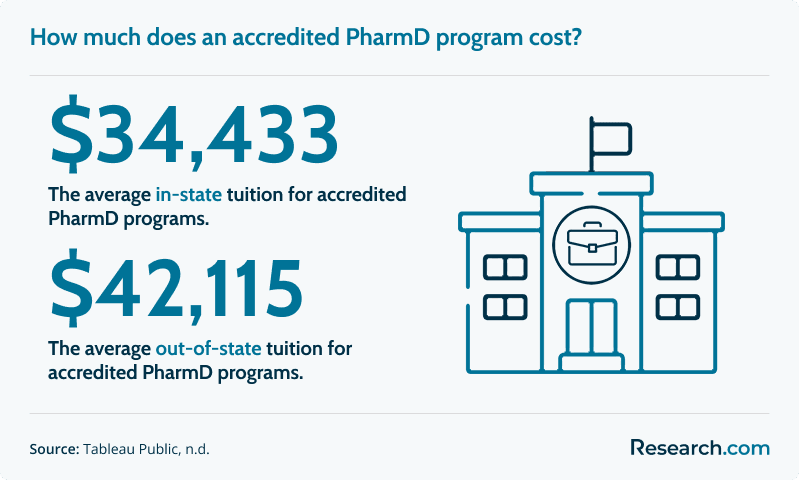
The cost of earning a Doctor of Pharmacy degree varies depending on the institution and state residency. As of 2027, the average tuition for an accredited PharmD program is approximately $34,433 per year for in-state students and $42,115 per year for out-of-state students. These figures do not include additional expenses such as housing, textbooks, and clinical fees, which can significantly increase overall costs. Prospective students may also want to consider pediatric NP salary to compare potential earnings across advanced healthcare roles and assess return on investment.
Given this investment, many students explore funding options such as federal loans, scholarships, and work-study opportunities. Others also evaluate alternative careers for biology majors who may not wish to commit to the financial or time-intensive path of a PharmD. Understanding the tuition landscape helps students make informed decisions about affordability and return on investment.
Are there fully online accredited PharmD programs in 2027?
PharmD programs are highly experiential, requiring students to complete clinical rotations and laboratory work under faculty supervision. Because of this, there are currently no fully online ACPE-accredited PharmD programs in the United States. Instead, some institutions offer hybrid models that combine online coursework with in-person labs and clinical experiences.
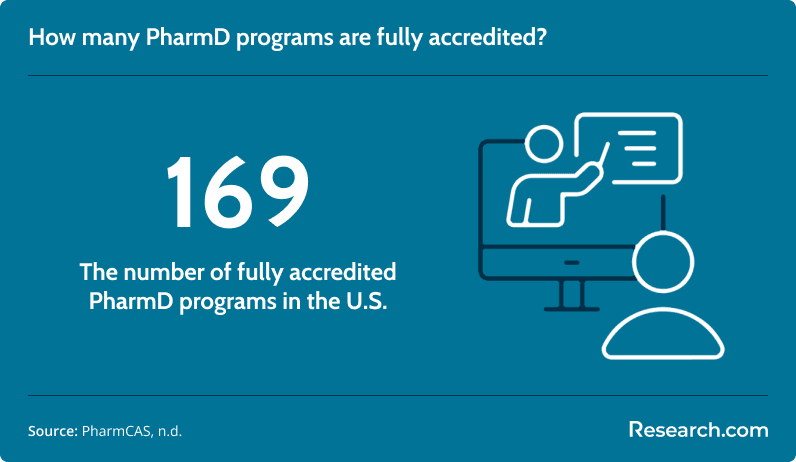
These hybrid programs can provide flexibility for working professionals or students who cannot relocate, but full accreditation requires hands-on training in physical settings. As of 2027, there are 169 fully accredited PharmD programs, but students should verify delivery formats directly with each school. Additionally, knowing what accreditation a nursing school should have can help students compare program quality and understand national standards for professional licensure across healthcare fields.
How do pharmacy schools earn ACPE accreditation?
The process of earning ACPE accreditation is rigorous and multi-phased. Pharmacy schools must submit a comprehensive application that demonstrates compliance with ACPE’s standards, which cover curriculum, faculty qualifications, facilities, student services, and financial resources. Programs typically begin with pre-candidate status, progress to candidate status, and eventually achieve full accreditation after demonstrating ongoing compliance and graduating at least one class.
Accredited PharmD programs must also undergo regular reviews and site visits to maintain their status. Schools are expected to show evidence of continuous improvement, adherence to educational outcomes, and responsiveness to changes in the pharmacy profession. This ensures that students in accredited PharmD programs receive training aligned with the latest standards in patient care, medication management, and pharmacy practice.
Does graduating from an accredited PharmD program improve job prospects?
Graduating from an accredited PharmD program provides a significant advantage in the job market. Accreditation ensures that graduates are eligible to sit for the NAPLEX licensure exam, which is a baseline requirement for nearly all pharmacy positions. Without graduating from an accredited program, individuals may not qualify for licensure, which greatly limits employment opportunities.
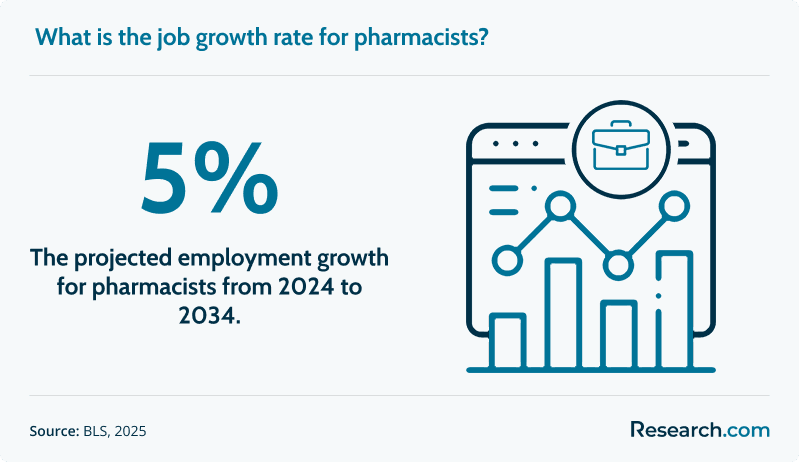
According to labor market projections, employment of pharmacists is expected to grow 5% between 2024 and 2034, a rate faster than the average for all occupations. This growth translates to an estimated 14,200 new pharmacist job openings per year during the decade.
For students planning their careers, completing an accredited PharmD program ensures access to a wide range of jobs for PharmD graduates, from community pharmacies and hospitals to research, academia, and regulatory affairs.
What is the average salary for graduates of accredited PharmD programs?
Pharmacists who complete accredited PharmD programs have strong earning potential compared to many other healthcare and science-related careers. As of May 2024, the median annual wage for pharmacists was $137,480. The distribution shows that the lowest 10% earned less than $86,930, while the highest 10% earned more than $172,040. This wide range reflects factors such as work setting, geographic location, and years of experience.
These figures place pharmacy among the higher-paying health professions, particularly when compared to fields such as engineering and other science-based careers. For example, the average biomedical engineer salary is considerably lower than the typical earnings of pharmacists. This comparison highlights the value of completing an accredited PharmD program, as graduates enter a field with consistent demand and competitive salaries.
Can international students enroll in U.S.-accredited PharmD programs?
International students may apply to U.S.-accredited PharmD programs, provided they meet admission requirements and visa regulations. Schools typically require international applicants to demonstrate proficiency in English through exams such as TOEFL or IELTS. Additionally, foreign transcripts must be evaluated for equivalency to U.S. undergraduate coursework, particularly in prerequisite science and math subjects.
International students admitted into accredited PharmD programs gain the same eligibility for licensure as U.S. students, although visa requirements and work authorization must also be addressed. Some programs offer specialized support services for international students to help with the transition, including academic advising and career guidance. Because accreditation ensures standardization across programs, graduates—whether domestic or international—are prepared for licensure examinations and entry into the pharmacy workforce.
What trends are shaping the future of PharmD program accreditation?
The future of PharmD program accreditation is shaped by evolving healthcare needs, technology integration, and educational reforms. Several trends stand out:
- Expansion of Hybrid and Technology-Enhanced Learning: While no fully online PharmD programs exist, more schools are adopting hybrid formats with digital coursework combined with in-person labs and clinical training.
- Increased Focus on Interprofessional Education: Accreditation standards are emphasizing collaboration across health professions, ensuring pharmacy graduates can work effectively with physicians, nurses, and other providers.
- Greater Emphasis on Outcomes Assessment: Accrediting bodies are placing stronger focus on how well programs prepare students for real-world practice, licensure exams, and post-graduate training such as residencies.
- Inclusion of Emerging Healthcare Topics: PharmD curricula are increasingly integrating content on precision medicine, digital health tools, and population health management to reflect shifts in patient care.
- Globalization of Accreditation Standards: With growing international interest in U.S. pharmacy education, accrediting bodies are engaging with programs abroad, expanding the reach of ACPE standards worldwide.
Here’s What Graduates Have to Say About PharmD Accreditation Programs
- Melissa: "Completing an accredited PharmD program gave me the eligibility to sit for the NAPLEX, which was the first major step toward becoming a licensed pharmacist. The program’s structure and accredited curriculum ensured I was prepared for both clinical practice and board exams. I also benefited from the program’s partnerships with hospitals for hands-on training. Looking back, I can say accreditation gave me confidence that my degree would be recognized anywhere in the U.S. I’m grateful for the solid foundation it provided."
- Arjun: "As an international student, I was nervous about studying pharmacy in the U.S., but choosing an ACPE-accredited PharmD program made the process smoother. The school provided guidance on licensure requirements and clinical placements. My professors emphasized interprofessional collaboration, which helped me adjust to the U.S. healthcare system. Accreditation ensured I could return home with a degree that had international credibility. That assurance motivated me to push through the challenges."
- Darius: "The affordability of pharmacy school was one of my biggest concerns, but an accredited PharmD program gave me access to federal financial aid and scholarships. The program cost was significant, but knowing I would be eligible for licensure and stable employment made the investment worthwhile. I found career support services particularly useful in securing a residency placement. Accreditation gave me a competitive edge in the job market. Today, I work in clinical pharmacy and feel that I made the right choice."
Key Findings
- 48 states and one international site (Lebanon) currently host at least one ACPE-accredited PharmD program.
- States with the highest numbers of accredited PharmD programs include California (16), Texas (9), and New York (8).
- Employment for pharmacists is projected to grow 5% from 2024 to 2034, adding about 14,200 new job openings each year.
- The average tuition for accredited PharmD programs is about $34,433 in-state and $42,115 out-of-state annually.
- The median annual salary for pharmacists was $137,480 in 2024, with the highest earners making over $172,000.
- No fully online PharmD programs exist, though some schools offer hybrid models with online coursework and in-person clinical training.
References:
- BLS. (2025, August 28). Pharmacists. bls.gov.
- PharmCAS. (n.d.). Pharm.D. Directory. pharmcas.org.
- Sedlack, J. (n.d.). Programs by state. Accreditation Council for Pharmacy Education. acpe-accredit.org.
- Tableau Public. (n.d.). 2022-23 Tuition and fees at U.S. colleges and schools of pharmacy. public.tableau.com.
Other Things You Should Know About PharmD Accreditation Programs
In 2027, changes in PharmD accreditation standards might include updated requirements for experiential learning or adjustments in curriculum guidelines to address shifting healthcare needs. These changes aim to enhance program quality and ensure pharmacists are well-prepared for evolving professional roles.
Generally, transferring between PharmD programs in different states is possible but can be challenging due to variations in curricula and program structures. Students may lose credits if course content does not align perfectly between schools. Transfers are usually considered on a case-by-case basis and may require additional coursework or extended study time. For this reason, students are encouraged to carefully select their initial program to avoid potential disruptions.


