
2027 Dual Master’s vs Concurrent Master’s Program: Explaining the Difference

Co-Founder and Chief Data Scientist
Nearly one million master’s degrees are awarded each year in the United States, and more students are looking for ways to earn more than one credential without doubling the time and cost. That’s where dual and concurrent programs come in—but the terms are often confused.
This article explains what makes them different, highlights examples of each, and outlines what students should consider before choosing a path. By the end, you’ll know which option makes more sense for your career goals.
Key Things You Should Know About Dual Master's Programs vs Concurrent Master's Programs
- Dual programs are formally structured by universities, often with integrated curricula and credit-sharing agreements. They are designed to reduce completion time by one to two years compared to taking the two master’s separately. Students apply once and graduate with two degrees.
- Concurrent programs allow students to enroll in two separate master’s degrees at the same institution at the same time. Each program retains its own admissions, curriculum, and requirements. Limited credits may overlap, but the degrees are managed independently.
- Both pathways save time and money compared to completing two master’s degrees sequentially. The main difference is structure: duals are pre-designed combinations, while concurrents give students more autonomy but require careful planning to balance two demanding programs simultaneously.
- What are the differences of dual master’s and concurrent master’s programs? Dual vs Concurrent
- Dual vs Concurrent Master’s Program Examples Program Examples
- How much time and cost can you save with a dual or concurrent master’s? Time and Cost Savings
- What are the eligibility and admission requirements for dual vs concurrent master’s? Eligibility and Admissions
- How many credits can you overlap in a dual or concurrent master’s? Credit Overlap
- What are the pros and cons of dual and concurrent master’s programs? Pros and Cons
- How does employer perception differ between dual and concurrent master’s degrees? Employer Perception
- Can you switch or drop one program in a dual or concurrent setup? Switching or Dropping
- How to choose which combination (fields) works best in a dual or concurrent master’s? How to choose which combination (fields) works best in a dual or concurrent master’s?
- What are the risks or challenges students face in dual or concurrent master’s programs? What are the risks or challenges students face in dual or concurrent master’s programs?
What are the differences of dual master’s and concurrent master’s programs?
The main difference is that dual master’s programs are structured by universities as integrated degree paths, while concurrent programs involve pursuing two separate graduate degrees simultaneously. Both award two credentials, but the way they are organized sets them apart.
- Application process: Dual programs require one coordinated admission, while concurrent programs need two separate applications, each reviewed by its department.
- Curriculum design: Dual programs follow a pre-approved plan with overlapping courses, while concurrent programs let students design their schedules across two independent programs.
- Time to completion: Dual degrees usually shorten completion time by one to two years, while concurrent degrees may save less time since overlap is limited.
- Credit sharing: Dual degrees allow built-in credit sharing between the programs, while concurrent degrees may only permit a small overlap with stricter approval.
- Flexibility: Dual degrees are restricted to approved pairings, while concurrent degrees let students choose broader combinations if their institution allows it.
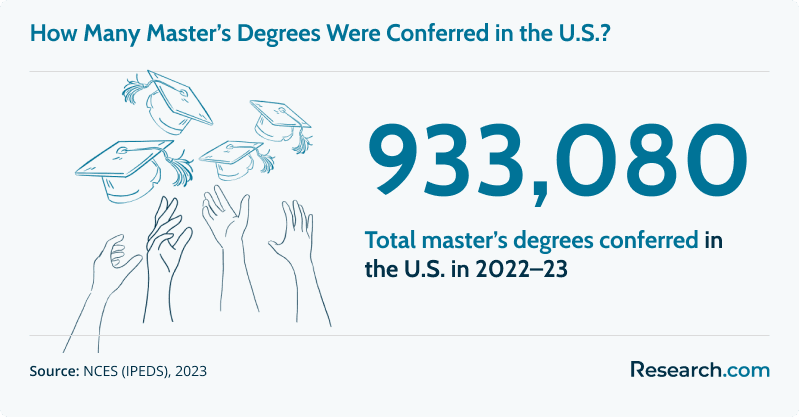
The infographic below shows how many master’s degrees were conferred in the U.S. in 2022–23. With nearly one million graduates in a single year, students increasingly turn to dual and concurrent programs to maximize efficiency and gain an edge in the job market.
Dual vs Concurrent Master’s Program Examples
When students compare dual and concurrent master’s programs, real-world examples help clarify the differences. Some institutions structure their offerings as tightly integrated dual degrees, while others allow concurrent enrollment in two separate programs with limited credit overlap. Both models aim to save time and money, but they do so in different ways. For learners looking for flexible or easy masters degrees online, examples of these pathways highlight how schools design options that match diverse career goals.
Dual MBA/JD (Juris Doctor)
A dual MBA/JD brings together the analytical rigor of business management with the depth of legal training. It is often completed in four years instead of the six required if pursued separately. Programs like those at Northwestern University and Columbia University are designed for students who want to work in corporate law, regulatory compliance, or executive management. This makes sense because the overlap between law and business continues to grow in areas such as mergers, financial regulation, and intellectual property.
Dual MBA/MD (Medical Doctor)
The dual MBA/MD path equips future physicians with leadership and business strategy skills. Medical schools at places like Harvard and Baylor pair this with an MBA to prepare doctors for hospital administration, healthcare startups, or pharmaceutical leadership. Students spend extra time compared to an MD alone, but less than doing both sequentially. This program makes sense for medical professionals who want to balance patient care with systemic decision-making, managing hospitals, or leading innovation in a healthcare market that is both clinical and business-driven.
Dual MBA/MPAcc (Master of Professional Accountancy)
This dual program combines an MBA’s broad business curriculum with the technical mastery of professional accountancy. Universities such as the University of Utah and the University of New Mexico offer it to prepare students for senior roles in auditing, taxation, and corporate finance. The efficiency comes from overlapping coursework in accounting, strategy, and analytics. It makes sense for students who want to become CPAs but also hold executive positions where both leadership and deep accounting expertise are crucial for organizational decision-making.
Dual MBA/MPH (Master of Public Health)
The MBA/MPH dual degree merges management with public health. Schools like Johns Hopkins and Yale offer this program for students interested in healthcare administration, global health leadership, or nonprofit management. Instead of taking four years separately, the program is usually completed in about three. It makes sense for professionals who want to manage hospitals, oversee health policy, or direct public health campaigns while applying both financial management and epidemiological knowledge. This degree highlights the intersection of healthcare systems and leadership strategy.
Dual MBA/MS in MIS (Management Information Systems)
An MBA/MS in MIS combines business decision-making with information systems expertise. Institutions such as the University of Arizona and the University of Nebraska offer this dual program, which equips graduates to lead IT strategy and digital transformation in organizations. The program integrates management training with courses in data management, cybersecurity, and analytics. It makes sense for students targeting leadership roles in tech-heavy industries where business growth depends on managing digital infrastructure and leveraging technology for strategic advantage.
MS in Computer Science/MS in Data Science Concurrent Degree
This concurrent option blends the theory of computer science with the applied focus of data science. Students complete two separate programs, with a limited number of electives counting toward both. This arrangement makes sense for those preparing for roles in machine learning, cybersecurity, or AI product development, where employers value depth in systems design and data analysis alike. Schools like the University of Washington and Indiana University have policies permitting such concurrent combinations within computing-related graduate programs.
MPA/MPH Concurrent Degree
A concurrent Master of Public Administration and Master of Public Health allows students to combine policy-making expertise with training in health systems management. Each program retains its own structure, but certain coursework, such as health policy or organizational management, can overlap. This setup makes sense for future leaders in public agencies, nonprofits, or NGOs that operate in health-focused sectors. University of Arizona and University of Utah both offer recognized MPA/MPH concurrent pathways.
MS in Engineering/MBA Concurrent Degree
Pairing an engineering master’s with an MBA concurrently equips students with both technical knowledge and management skills. The engineering program deepens expertise in design and problem-solving, while the MBA develops decision-making and leadership capabilities. Some electives may be double-counted, but both degrees maintain their own requirements. This combination makes sense for engineers seeking leadership positions in manufacturing, energy, or technology industries. Schools such as University of Wisconsin–Madison and Arizona State University allow engineering and MBA master’s programs to be pursued concurrently.
MSW/M.Ed. Concurrent Degree
A concurrent Master of Social Work and Master of Education provides training for those committed to supporting students and communities. The MSW builds counseling and advocacy skills, while the M.Ed. adds expertise in pedagogy and educational systems. Students can often overlap courses in human development or policy, cutting time without diluting content. This program makes sense for professionals pursuing careers in school counseling, community education programs, or child advocacy organizations. Boston University and University of Michigan have pathways where social work and education can be pursued concurrently.
MIR/MJ Concurrent Degree
The concurrent Master of International Relations and Master of Journalism offers a unique interdisciplinary path. Students gain advanced knowledge of global politics while also building professional media skills. Each program has independent requirements, but overlapping electives in communication and policy reduce the overall load. This combination makes sense for those planning to report on international affairs, work in policy communication, or pursue careers in think tanks with strong media engagement. Syracuse University and American University provide opportunities for journalism and international relations students to complete concurrent master’s degrees.
How much time and cost can you save with a dual or concurrent master’s?
A dual master’s program saves more time and cost than a concurrent program because it is designed to integrate coursework. On average, a dual program can be completed in 3 to 4 years, compared to 5 to 6 years if the two degrees are pursued separately. Concurrent programs often take slightly longer—around 4.5 to 5.5 years—because credit sharing is limited and each program retains its independent requirements.
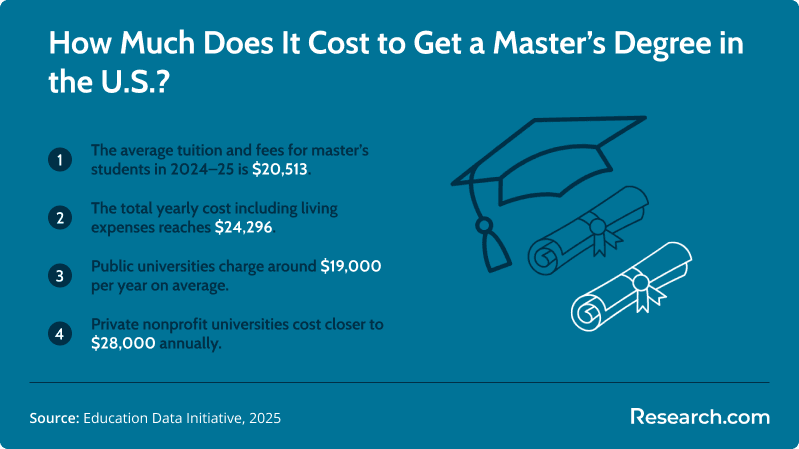
Cost savings follow the same pattern. A single master’s degree averages $20,513 per year in tuition and fees, plus living costs of $24,296 annually. Dual programs reduce total credits, which can cut overall expenses by $20,000 to $40,000 or more. Concurrent programs, however, are treated as two separate degrees, so students often pay closer to the full price of both, with only minimal overlap. For those prioritizing affordability, an inexpensive online master’s degree may provide further financial relief while still offering respected credentials.
The infographic below shows the average cost of a master’s program in the U.S. today. With these figures in mind, students can better estimate how dual or concurrent pathways compare in both time and financial savings against traditional, sequential degrees.
What are the eligibility and admission requirements for dual vs concurrent master’s?
Eligibility and admission requirements for dual and concurrent master’s programs overlap in many ways, but the process differs in how applications are handled. A dual program typically requires one coordinated application since both degrees are offered as an integrated track. A concurrent program requires separate applications to each program, with students admitted independently to both.
Most universities require the following for either pathway:
- A bachelor’s degree from an accredited institution
- A competitive GPA, often 3.0 or higher
- GRE or GMAT scores, though some programs now waive them
- Letters of recommendation (usually 2–3)
- A statement of purpose outlining academic and career goals
- A current résumé or CV
Dual programs may ask for a combined essay or interview explaining why the integrated degree fits your goals. Concurrent programs usually require tailored materials for each application, as departments operate independently. While both options are selective, concurrent admission can be more complex since approval is needed from two separate committees. For students seeking speed and efficiency, some schools also offer one year online masters programs, which represent an alternative to managing two graduate-level commitments at once.
The chart below shows how graduate school enrollment has grown in recent years. This growth underscores why admission standards remain competitive, and why understanding the specific requirements for dual versus concurrent tracks is essential when planning your graduate journey.
How many credits can you overlap in a dual or concurrent master’s?
In most cases, dual master’s programs allow a significant overlap of credits—often 25% to 35% of the total coursework—because the curriculum is intentionally designed that way. For example, in an MBA/MPH program requiring 80 credits if taken separately, a dual track may only require 60–65 credits due to built-in overlap in courses like health economics or organizational management. This efficiency is one of the primary benefits of dual programs.
Concurrent master’s programs, by contrast, have much stricter limits. Universities often permit only 6 to 12 credits to be shared across two degrees, and this requires approval from both departments. For instance, a student pursuing a Master of Public Administration and a Master of Public Health concurrently might be allowed to double count a policy analysis course, but the bulk of credits remain separate. This difference makes concurrent degrees more flexible in pairing subjects, but less efficient in terms of credit savings compared to dual programs.
What are the pros and cons of dual and concurrent master’s programs?
The pros and cons of dual and concurrent master’s programs depend on how much structure, efficiency, and flexibility a student needs. Dual programs are tightly integrated, while concurrent programs prioritize independence and choice. Both carry trade-offs that should be weighed carefully.
Pros of Dual Master’s Programs
- Reduced time to completion, often by one to two years compared to taking the degrees separately.
- Built-in credit sharing that lowers total tuition and living expenses.
- Coordinated curriculum designed for clear career pathways (e.g., law and business, healthcare and management).
- Streamlined admission process requiring only one application.
Cons of Dual Master’s Programs
- Limited to pre-approved pairings, so options may not fit every student’s goals.
- Less flexibility to tailor the combination of courses or fields.
- Heavier workload due to integrated requirements with fewer opportunities to pause.
Pros of Concurrent Master’s Programs
- Greater flexibility in choosing any two master’s degrees, provided the institution permits concurrent enrollment.
- Allows customization for unique interdisciplinary interests not covered by dual programs.
- Independent credentials that stand on their own, with each program managed separately.
Cons of Concurrent Master’s Programs
- Limited credit overlap, often only 6 to 12 credits, meaning less cost and time savings.
- Requires two applications and separate admissions approvals.
- Higher overall cost since universities treat the programs as separate degrees.
How does employer perception differ between dual and concurrent master’s degrees?
Employers generally value both dual and concurrent master’s degrees, but the perception differs in how they interpret structure and intent. Dual programs often carry stronger recognition because they are institutionally designed, showing that a student followed a rigorous and integrated track. Studies of engineering and business dual degrees found that employers believed graduates had broader skills and stronger leadership potential, with some suggesting they could be promoted more quickly than peers with a single degree. However, the same studies noted that employers sometimes questioned whether dual graduates had the same depth of expertise as those who focused solely on one field.
Concurrent programs, on the other hand, highlight initiative and independence. Since students manage two separate admissions, curricula, and schedules, employers may see this as evidence of discipline and resourcefulness. But research on joint and concurrent programs also found that over half of surveyed employers did not view a joint diploma as a distinct advantage, unless the program clearly emphasized integration and relevance. This means employer perception is nuanced: structured duals may signal intentional career alignment, while concurrents reflect flexibility and autonomy. For job seekers weighing return on investment, exploring easy master’s degrees that pay well can also balance perception with salary outcomes.
The chart below shows the earnings gap between education levels, emphasizing why both dual and concurrent degrees can boost career prospects. Employer perception ultimately ties back to how advanced credentials translate into tangible salary and advancement opportunities.
Can you switch or drop one program in a dual or concurrent setup?
Yes, you can switch or drop one program in either a dual or concurrent setup, but the process differs.
- In a dual program, the degrees are formally integrated, so leaving one often means you must reapply to continue the other as a stand-alone masters degree. For example, if a student withdraws from the JD portion of an MBA/JD dual program, they may need to transfer into the standard MBA track, which could add courses to make up for waived requirements.
- In a concurrent program, students have more flexibility because the two degrees are administered separately. Dropping one degree typically doesn’t affect the other, though any shared credits may no longer count. For instance, if a student pursuing a concurrent MPA/MPH decides to discontinue the MPH, the completed MPA courses remain valid toward graduation.
Universities generally require formal petitions and advisor approval in both cases, and scholarships or financial aid may be adjusted accordingly.
How to choose which combination (fields) works best in a dual or concurrent master’s?
The best way to choose which combination works for a dual or concurrent master’s is to align your degrees with long-term career goals, time commitment, and financial resources. Dual and concurrent options differ in structure, so the considerations are not the same.
How to Choose a Dual Master’s Combination
- Look for fields that already intersect in the job market, such as business and law or public health and management.
- Evaluate whether the program reduces time and credits significantly compared to sequential study.
- Check if the university has a clear career pathway tied to the dual program, with internships or networking opportunities.
How to Choose a Concurrent Master’s Combination
- Identify unique interdisciplinary interests that aren’t offered as dual degrees, such as education and social work.
- Be realistic about workload, since concurrent programs require meeting full requirements for both degrees.
- Confirm the institution allows limited credit overlap and make sure the cost is still manageable.
Students should also consider flexibility. For example, the rise of best online masters degrees gives learners more room to customize their education and pair subjects in ways that fit personal and professional goals.
What are the risks or challenges students face in dual or concurrent master’s programs?
The main risks of dual and concurrent master’s programs are tied to workload, finances, and career focus. While both options provide valuable credentials, the challenges differ depending on whether the program is integrated as a dual degree or pursued independently as concurrent degrees.
Risks in Dual Master’s Programs
- Heavy workload: Condensed timelines mean students juggle demanding courses simultaneously, leaving little flexibility.
- Limited choice: Students are restricted to approved degree pairings, which may not align perfectly with their career goals.
- Financial strain: Even with savings from shared credits, tuition and living costs are higher than a single program.
- Burnout risk: Accelerated study schedules can lead to exhaustion and reduced performance in both academic and personal life.
Risks in Concurrent Master’s Programs
- Higher cost: Credit overlap is minimal, so students often pay nearly the full price for both degrees.
- Time commitment: Programs usually take longer, often stretching into five or more years.
- Administrative burden: Students must meet separate admissions and graduation requirements, requiring more coordination.
- Career clarity: Employers may question whether the combination reflects a cohesive career direction.
The chart below shows graduate degree attainment by demographic group in the U.S. This underscores why challenges in dual or concurrent pathways matter: completing advanced degrees is already uncommon, and persistence is essential to gaining their long-term career benefits.
Here's What Graduates Have to Say About Their Dual Master's Programs or Concurrent Master's Programs
- Mia: "Balancing two fields through a dual program was intense, but the online format made it achievable. I completed shared credits in less time and saved thousands in tuition. The flexibility allowed me to work part-time while advancing my career opportunities at a faster pace. "
- Echo: "Concurrent programs require discipline, but studying online gave me the structure I needed. I managed two distinct degrees without commuting and used overlapping coursework to reduce the load. Employers noticed my ability to handle complex tasks across different fields. "
- Brianna: "Pursuing two master’s degrees online felt daunting at first, but the platforms offered excellent support systems. I could tailor my schedule, integrate discussions across disciplines, and complete my program while raising a family. The experience gave me confidence and stronger professional credibility. "
Key Findings
- 933,080 master’s degrees were conferred in the U.S. in 2022–23.
- Dual programs typically save 1–2 years compared to completing two degrees separately.
- The average yearly cost of a master’s program is $20,513 in tuition and fees.
- Graduate degree holders earn a median of $86,372 annually, compared to $74,464 for bachelor’s graduates.
- Only 14.3% of U.S. adults aged 25+ hold a graduate degree.
- Graduate school applications rose 5.6% and first-time enrollment increased 3.1% between 2022 and 2023.
References:
- CGS. Graduate Enrollment and Degrees Report 2024.
- Education Data Initiative. Average Cost of College.
- Education Data Initiative. Educational Attainment Statistics.
- NACE. What Are Employers Looking for When Reviewing College Students’ Resumes?
- NCES. Degrees Conferred by Degree-Granting Institutions: Selected Years, 1869-70 Through 2021-22.
- NCES. Fast Facts: Degrees Conferred by Race/Ethnicity and Sex.
- NCES. Graduate Degree Fields.
- NCES. IPEDS Table: Graduate Degree Trends by Field of Study.
- NCES. IPEDS Trend Generator: Graduate Enrollment.
- ResearchGate. Employers’ Perceptions Regarding Graduates of Engineering Dual Degrees.
- ResearchGate. Joint Degree Program: The Perspective of Employers.
- Statista. Number of Master’s Degree Recipients in the U.S.
- WIETE. Employers’ Perceptions of Engineering Dual Degrees.
Other Things You Should Know About Dual Master's Programs vs Concurrent Master's Programs
In 2027, many universities offer dual and concurrent master’s programs with online components, but fully online options are less common. Whether a program can be completed fully online depends on the specific field of study and institution. Prospective students should verify online availability with individual universities.
Dual master’s programs involve two degrees from different disciplines, typically within the same institution, while concurrent programs may allow for degrees from different institutions or varied timelines. The focus, integration, and structure of curricula differ, catering to distinct academic or career goals.
Most dual programs require only one set of standardized scores, such as the GRE or GMAT, since admissions are coordinated. Concurrent programs often require separate scores because each program has its own criteria. However, some universities are test-optional, especially for online or professional tracks. Students should confirm with admissions offices, as requirements vary widely depending on institution, department, and chosen fields of study.
Dual master’s programs may require around 60–80 credit hours, while concurrent master’s programs often require a similar range but may vary based on the specific fields of study. Credit requirements can differ between institutions and specific program structures in 2027.


