
World Ranking of Female Scientists in 2023 (2nd Edition)

Co-Founder and Chief Data Scientist
Research.com published the 2nd edition of its annual online ranking of the Best Female Scientists in the World on November 20, 2023. The ranking highlights women whose research influence, publication record, and scholarly impact place them among the most recognized scientists globally.
This guide explains what the 2023 ranking shows, how to interpret the results, why female representation in research still matters, and what institutions, policymakers, students, and early-career researchers can learn from the data. It is written for readers who want more than a list of names: students considering STEM, researchers studying gender equity, universities evaluating diversity efforts, and decision-makers looking for evidence-based ways to support women in science.
Quick Answer: What Does the 2023 Ranking Show?
The 2023 Research.com ranking shows that the United States has the largest concentration of highly ranked female scientists, with 609 scholars, or 60.9% of the full list. Harvard University leads all institutions with 40 affiliated female scientists. Professor JoAnn E. Manson of Harvard Medical School ranks first worldwide, with an h-index of 297 and 330,983 citations.
The ranking also reinforces a broader reality: women are producing field-leading research across medicine, physics, immunology, biology, genetics, psychology, and other disciplines, yet they remain underrepresented in scientific recognition, funding, authorship, senior academic roles, and major international awards.
Key Findings from the 2023 World Ranking of Female Scientists
| Finding | What it means |
| 609 scientists in the ranking are affiliated with institutions in the United States. | The United States accounts for 60.9% of the entire ranking, making it the dominant country by institutional affiliation. |
| The United Kingdom has 96 ranked scientists, and Germany has 37. | These countries place second and third in the 2023 ranking. |
| Seven out of 10 scientists in the top 1% are based in the United States. | The strongest concentration at the very top of the ranking is linked to U.S. research institutions. |
| Harvard University has 40 affiliated female scholars in the ranking. | Harvard University leads all institutions in the 2023 list. |
| Professor JoAnn E. Manson ranks first worldwide. | She is recognized for influential work in epidemiology, endocrinology, and women's health. |
| 9 out of 10 institutions with the most leading female scientists are in the United States. | Oxford University is the only non-U.S. institution among those 10. |
| The average number of publications among the top female scientists is 565. | The ranking reflects long-term research productivity as well as scholarly influence. |
The full 2023 ranking is available here: Top Female Scientists in the World 2023.
How to Read This Ranking Responsibly
A scientist ranking can be useful, but it should not be treated as the only measure of scientific value. Bibliometric indicators such as h-index, publications, and citations help show research influence, but they do not capture every form of contribution, including mentoring, teaching, public engagement, interdisciplinary work, policy influence, open science, or institutional leadership.
The country assigned to each scientist is based on the affiliated research institution rather than nationality. That distinction matters because the ranking reflects where top-ranked scholars work, not necessarily where they were born, trained, or began their scientific careers.
Bias Against Women in Research
The ranking exists in a research environment where women have made major scientific contributions but continue to face structural barriers. Academic research remains shaped by gender bias in authorship, recognition, promotion, funding, caregiving expectations, and access to professional networks.
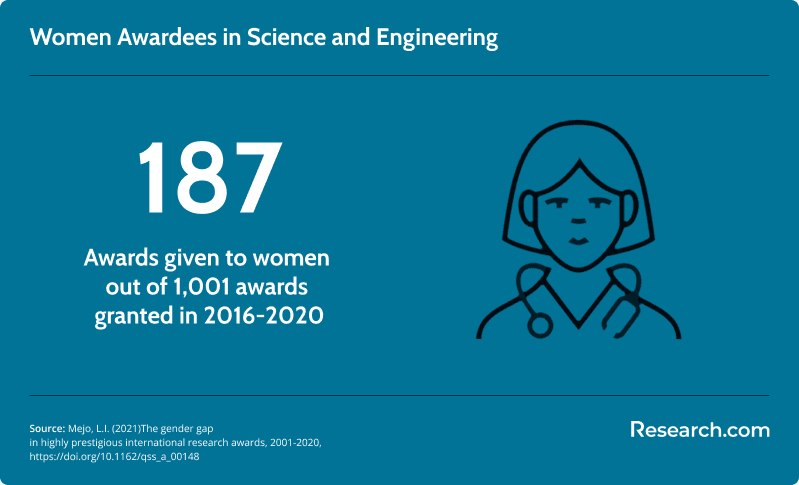
One major issue is unequal recognition. In a study of gender gaps in prestigious international research awards, Meho (2021) found that women's share of awards increased from an annual average of 6% in 2002-2005 to 19% in 2016-2020. However, from 2001 to 2020, those awards were received 3,445 times by 2,011 men and 262 women. The same study reported that 49 of the 141 awards were not received by women at all during 2016-2020. It also found that, when the number of female full professors is considered, the gap remains especially disproportionate in biological and life sciences, computer science, and mathematics. Overall, women would need to increase their share of awards by nearly 50% to reach parity with men.
Global participation also remains uneven. According to UNESCO, roughly 33% of people employed in scientific research are female. Attribution is another concern: one study found that women are less likely than men to be named on patents or articles even when they contribute to research. Among graduate students, female researchers have a 14.97% chance of receiving attribution, compared with 21.47% for men.
Representation in major scientific awards continues to draw attention. None of the 2021 Science Nobel laureates were women. In 2020, however, Emmanuelle Charpentier and Jennifer Doudna received the chemistry prize for work on CRISPR gene editing, while Andrea Ghez shared the physics prize for the discovery of a supermassive black hole.
The COVID-19 research period also exposed gendered pressure points in academic publishing. A longitudinal analysis found that the first-authorship gender gap in COVID-19 publications widened by 14 percentage points during the pandemic. Another study found that women were less likely to hold prominent authorship roles, including first, last, or corresponding author positions, and that COVID-19 manuscripts had fewer female writers overall.
These findings are troubling but not unexpected. The underrepresentation of women in science is not only a pipeline issue. It is also tied to institutional culture, informal networks, expectations around caregiving, promotion systems, and who is viewed as a scientific authority.
Research has repeatedly shown that women in STEM often have less social capital. Economist Dr. Alex Krawiec, whose work focuses on leadership, organizational change, and women in senior hierarchies, argues that bias against women is embedded in both cultural norms and institutional structures. Because science operates inside society, personal assumptions about gender can shape how opportunities are distributed.
Dr. Krawiec explains: “When it comes to opportunities, women will always be at a disadvantage because of our biological wiring. We cannot completely eliminate all obstacles, but we can make some adjustments to the system to allow women to enter the opportunity fair.” She also notes that rigid academic cultures and bureaucratic systems help the problem continue.
Family responsibilities, limited institutional support, and weak policies around parental leave and flexible work can make research careers harder to sustain. A longitudinal study by Huang et al. (2019), based on the publishing histories of 1.5 million gender-identified authors, found that differences in publishing career length and dropout rates explain a substantial part of the inequality between male and female scientists. That finding points directly to the importance of institutional and policy-level intervention.
Countries with the Most Highly Ranked Female Scientists
Female scientists affiliated with U.S. institutions dominate the 2023 ranking. In absolute terms, the United States has 609 ranked scholars, representing 60.9% of the full list. The United States also accounts for seven out of 10 scientists in the top 1%.
The United Kingdom ranks second with 96 scientists, followed by Germany with 37. Canada has 35 scientists, Australia has 34, France has 33, the Netherlands has 29, and Italy has 26.
Canada moved upward compared with the previous year, rising from sixth place to fourth place, ahead of Australia and France.
Important note: the country shown in this ranking is based on institutional affiliation, not the scientist's nationality.
| Country | Ranked female scientists in 2023 | Share or ranking note |
| United States | 609 | 60.9% of the full ranking |
| United Kingdom | 96 | Second-highest total |
| Germany | 37 | Third-highest total |
| Canada | 35 | Rose from sixth to fourth |
| Australia | 34 | Among the leading countries represented |
| France | 33 | Among the leading countries represented |
| Netherlands | 29 | Among the leading countries represented |
| Italy | 26 | Among the leading countries represented |
What Students and Early-Career Researchers Can Learn from the Ranking
The ranking is not just a recognition list. It also offers practical lessons for women planning research careers. The top-ranked scientists often work at institutions with strong research infrastructure, funding access, publication support, interdisciplinary networks, and opportunities to collaborate internationally. Those factors do not guarantee success, but they can shape a researcher's ability to remain productive over time.
Education and Training Choices That Can Support Women in Science
Advanced education can help researchers build technical depth, research management skills, grant-writing ability, and leadership capacity. For women balancing research with work, caregiving, or geographic constraints, flexible study formats may be especially useful. Some professionals may compare options such as the quickest master's degree pathways or programs at affordable online colleges when they need career development that fits around existing responsibilities.
Not every scientific career requires the same degree path. Some researchers remain in academia, while others move into industry, consulting, government, science communication, public health, data analysis, or remote technical roles. Students exploring nontraditional or flexible work models may also benefit from reviewing degree options connected to remote work.
| Career goal | Education or training to consider | Best fit |
| Academic research career | Research-focused graduate programs, doctoral training, publication mentoring | Students who want faculty, laboratory, or principal investigator roles |
| Industry research and development | Applied science coursework, technical certifications, project-based experience | Researchers who want to translate scientific work into products, systems, or services |
| Leadership in research organizations | Management, grant administration, ethics, policy, and communication training | Scientists preparing for lab director, program manager, or institutional leadership roles |
| Flexible or remote scientific work | Data, analytics, writing, consulting, or digital collaboration skills | Professionals seeking location flexibility or alternative career structures |
Institutions with the Most Highly Ranked Female Scientists
Harvard University leads the 2023 ranking with 40 affiliated female scientists. The National Institutes of Health follows with 33 scientists, and Stanford University ranks third with 27.
MIT and Mayo Clinic also appear among the top 10 institutions, with 15 and 14 female scientists in the top 1000 list, respectively. Overall, American universities and research institutions make up 90% of the top 10, with Oxford University as the only non-U.S. institution in that group.
Among the top 1% of ranked scientists, three out of 10 are affiliated with institutions outside the United States. These include two scientists from the University of Cambridge and the University of Oxford in the United Kingdom, ranked fifth and eighth, respectively, and one scientist from Vrije Universiteit Amsterdam in the Netherlands, ranked ninth.
Institutions matter because they shape research careers through hiring practices, funding support, promotion criteria, parental leave policies, pay transparency, mentorship, lab culture, and protection against discrimination. Gender inequity is not only about individual bias; it is also reflected in systems that reward uninterrupted career paths, undervalue caregiving responsibilities, and leave women with fewer routes to sustained recognition.
STEM exposure before college also affects long-term representation. Studies on diverse role models in science suggest that visible examples and extracurricular STEM programs can help girls build a positive connection with science early. Yet representation remains inconsistent. One study reported that the Australian curriculum largely omits female scientists, which may contribute to gender gaps in STEM interest and identity.
The study, published in the Australian Journal of Education, reviewed biology, chemistry, physics, and environmental science curricula taught in years 11 and 12. Only one female scientist, British chemist Rosalind Franklin, was mentioned in secondary school curricula in the Northern Territory, Queensland, and South Australia.
Female Scientists Reaching a Wider Audience Through Online Platforms
Digital education and online public engagement can widen access to women role models in STEM. Online universities, webinars, virtual lab visits, and public science platforms allow students to learn from female scientists even when they do not live near major research institutions.
This matters because research has found that female professors can increase female students' interest in STEM. Exposure to women scientists as teachers, mentors, and public experts can help students see science as a field where they belong.
Examples include online laboratory tours and webinars organized by educational institutions and women-focused science groups. Programs such as the Georgia Tech Center for the Study of Women, Science, and Technology and the Women in Science and Technology Program at Argonne National Laboratory also support visibility, mentoring, and community-building for women in STEM.
Policy and Institutional Actions That Can Reduce Gender Gaps
Closing gender gaps in research requires more than celebrating individual success. Institutions and governments need transparent funding systems, fair grant review processes, stronger protections against harassment, meaningful parental leave, flexible work policies, and clear accountability for discrimination.
Professional development can also play a role, particularly for scientists who need to update skills while maintaining research momentum. Some researchers may consider flexible doctoral formats, including online PhD programs with no dissertation requirement, when their career goals align with project-based doctoral work rather than a traditional dissertation model. Others may use career-focused online programs to build applied skills for research administration, data work, health science, or technical leadership.
| Problem | Better institutional response |
| Women are underrepresented in senior research leadership. | Create transparent promotion criteria, leadership pipelines, and accountable hiring practices. |
| Caregiving responsibilities interrupt research productivity. | Offer meaningful parental leave, flexible schedules, and evaluation policies that account for career breaks. |
| Women receive less recognition for contributions. | Set clear authorship, attribution, and lab contribution standards. |
| Funding patterns disadvantage women over time. | Track award amounts, reapplication outcomes, and reviewer practices by gender. |
| Students lack visible women role models. | Include women scientists in curricula, seminars, mentorship programs, and public science events. |
Scientific Disciplines Represented in the Ranking
Medicine is the most common primary research field among the ranked scientists. In the 2023 list, 468 scholars, or 46.8%, publish most of their work in medicine. Other strongly represented areas include physics at 10.8%, immunology medicine, biology and biochemistry at 4.4%, genetics medicine at 4.2%, and psychology at 4.1%.
Within the top 1%, five out of 10 female scholars publish primarily in medicine. Other disciplines represented in the top 1% include genetics and molecular biology, psychology, and physics.
Research on women scientists active on social media has found that female graduate and postdoctoral researchers are currently involved in biological sciences at 42%, earth, space, and ocean sciences at 22%, and physical sciences at 8%. The same research notes that female scientists in earth and ocean sciences in the United States currently hold more doctoral degrees than male scientists in those areas.
The field distribution shows progress but also concentration. Women are leading research in many scientific areas, but equal opportunity depends on sustained access to funding, mentoring, publication channels, leadership positions, and recognition across every discipline.
H-Index Ranking: Regional Leaders, Averages, and Distribution
The h-index is one of the indicators used to assess scholarly impact. It reflects both publication volume and citation influence, although it should be interpreted alongside other evidence of scientific contribution.
| Region | Top-ranked female scientist in the region | Institution | Ranking detail |
| North America | Professor JoAnn E. Manson | Harvard Medical School | Ranks first worldwide with an h-index of 297 |
| Europe | Professor Kay-Tee Khaw | University of Cambridge | Ranks fifth worldwide with an h-index of 201 |
| Oceania | Professor Louisa Degenhardt | University of New South Wales | Ranks 107th worldwide |
| Asia | Professor Seang-Mei Saw | National University of Singapore | Ranks 421st worldwide with an h-index of 115 |
| Africa | Professor Linda-Gail Bekker | University of Cape Town | Ranks 752nd worldwide |
| South America | Professor Maria-Teresa Dova | National University of La Plata | Ranks 40th worldwide |
The average h-index for the top 1% of scientists is 213, compared with an average of 119 for the top 1000 female scientists in the ranking. The lowest h-index among scientists included in the 2023 ranking is 98.
The top 1% of scientists have an average of 1387 published articles, compared with an average of 565 for the top 1000 female scholars. The average number of citations for the top 1% is 204,828, compared with 65,971 for the top 1000. The most frequently cited female scientist is JoAnn E. Manson, with 330,983 citations.
Readers who want more detail on the ranking process can review the Research.com methodology here.
How the 2023 Ranking Was Built
The 2023 ranking reviewed more than 166,880 scientist profiles across 24 research disciplines. Research.com examined bibliometric sources including OpenAlex and CrossRef, then assessed several indicators and metrics to determine which scientists were included.
The threshold for consideration was applied systematically across disciplines, although it was typically between 30 and 40. The selection process considered h-index, the share of a scientist's work within a given discipline, and documented awards and accomplishments.
How Women in Science Can Use Rankings Without Relying on Them Too Heavily
Rankings can help students identify influential scholars, strong research institutions, and fields with visible women leaders. They can also support mentoring searches, graduate school research, and institutional benchmarking. But rankings should not replace deeper evaluation.
Questions to Ask Before Choosing a Research Program or Institution
- Does the department have women faculty in visible research and leadership roles?
- Are students and early-career researchers given clear authorship and attribution guidelines?
- How does the institution support parental leave, caregiving responsibilities, and flexible work?
- Are promotion, funding, and lab assignment decisions transparent?
- Does the program have a record of mentoring women into research careers?
- Are harassment reporting systems independent, credible, and accessible?
- Does the institution support interdisciplinary work and collaboration across labs?
Common Mistakes to Avoid
| Mistake | Why it can hurt your decision | Better approach |
| Choosing a program only because it appears in a ranking | A ranking may not reflect mentoring quality, lab culture, funding access, or fit with your research interests. | Use rankings as a starting point, then evaluate faculty, funding, outcomes, and support systems. |
| Ignoring institutional culture | A prestigious institution can still have weak support for women researchers. | Ask current students, postdocs, and alumni about mentorship, authorship, workload, and inclusion. |
| Assuming online programs are automatically flexible enough | Some online programs still have fixed schedules, residency requirements, or limited research support. | Compare structure, advising, project expectations, and time commitment before enrolling. |
| Focusing only on speed or cost | A fast or inexpensive program may not provide the research training or professional network you need. | Balance affordability with academic quality, accreditation, faculty expertise, and career relevance. |
| Overlooking alternative career paths | Academic research is not the only way to use scientific expertise. | Consider industry, government, consulting, policy, health science, data, education, and science communication roles. |
Education, Credentials, and Career Mobility for Female Scientists
Strategic education choices can help women build research careers that are both ambitious and sustainable. Early-career scientists may compare research-intensive degrees, interdisciplinary programs, online coursework, applied credentials, or bridge programs depending on their goals and constraints.
Students who are still choosing an undergraduate path may want to compare majors carefully rather than selecting only by perceived difficulty. A guide to easier college majors can be useful as one reference point, but scientific career planning should also consider research opportunities, graduate school prerequisites, quantitative preparation, and long-term career fit.
Professional certifications can also complement formal degrees. For researchers moving into applied science, analytics, management, health technology, regulatory work, or industry roles, online certificate programs for career advancement may help build targeted skills without requiring a full additional degree.
Women Scientists Breaking Barriers
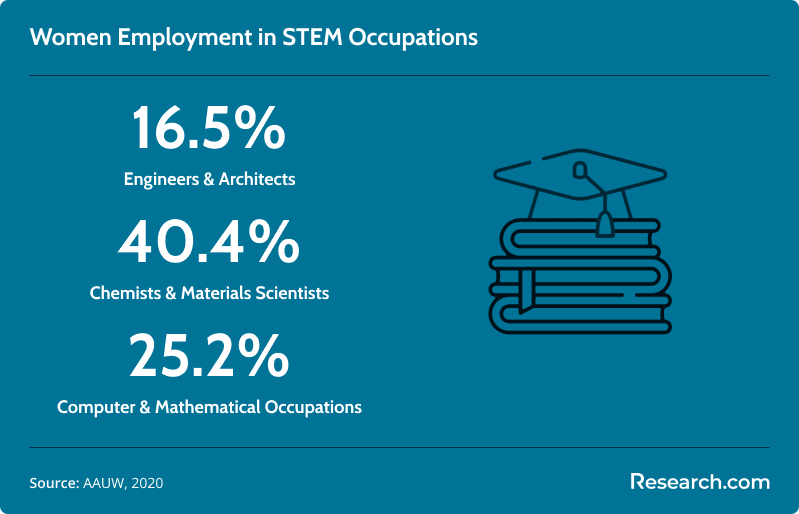
The 2023 ranking recognizes women whose scientific work has reached exceptional levels of influence. It also appears during a period of gradual but incomplete progress in STEM representation. From 2002 to 2022, the percentage of women in engineering increased slowly. Female biological scientists outnumbered males, rising from 44% in 2002 to 57.9% in 2022. The share of female chemists and materials scientists also increased from 29.8% in 2002 to 46.3% in 2022.
Progress does not erase the risks and barriers women continue to face. A survey of more than 5,000 researchers across 117 countries found that half of women scientists worldwide have experienced sexual harassment. Reports from remote research environments, including Antarctica, have further shown how isolation and power imbalances can intensify unsafe conditions.
Dr. Krawiec points to positive developments such as special funding schemes, maternity leave incentives, and conference satellite events. Still, she emphasizes that these efforts are not enough to resolve long-standing inequities.
Representation also has to extend into leadership. Dr. Orchard argues that too few women occupy influential positions in funding, publication, research governance, and public scientific authority. She notes that many institutions discuss gender equity while still operating within deeply embedded male-dominated cultures. As Research.com has also documented, important women in science are often less visible than their contributions warrant.
Funding disparities remain a major barrier. Research on grant outcomes reported that women researchers receive substantially less funding. According to a large meta-analysis, women receive an average of about $342,000 compared with men's $659,000. Women were also less likely to receive follow-up grants. Although equal numbers of male and female scientists were funded for first grant applications, 9% fewer women than men were funded for reapplications.
Dr. Orchard argues that more women should serve on funding boards, in government agencies, community organizations, media, and other decision-making bodies. Dr. Krawiec agrees but adds that appointing one woman to a board is not enough. Long-term change requires women supporting one another across science, institutions, and public life.
Quoting Ruth Bader Ginsburg's view that “women belong in all places where decisions are being made,” Dr. Krawiec states: “As an embarrassment to all of us. And my perspective on misrepresentation and bias against women is that of a disappointed citizen of the 21st-century world. By now, it should already be obvious to everyone, that discrimination of any kind is simply wrong. Every time women with merits and potential are discriminated against, societies are losing on multiple levels. This truth is universal across all scientific fields and in every social context.”
There are signs of improvement. From 38.8% in 1991 to 55.7% in 2021, a growing share of female scientists built publishing careers in the life sciences. Over the same period, female research doctorate recipients in the physical and earth sciences increased from 19.2% to 35.1%.
Research.com will continue publishing this annual recognition of leading female scientists with the hope that future rankings reflect a research world where women receive equal opportunity, equal recognition, and equal support across every scientific field.
Key Insights
- The 2023 Research.com ranking identifies Professor JoAnn E. Manson of Harvard Medical School as the top female scientist worldwide.
- The United States dominates the ranking, with 609 scientists, or 60.9% of the total list, and seven out of 10 scientists in the top 1%.
- Harvard University leads all institutions with 40 affiliated female scientists in the 2023 ranking.
- Medicine is the most represented field, accounting for 468 ranked scholars, or 46.8% of the list.
- The ranking highlights excellence, but it also exposes persistent inequities in awards, authorship, funding, recognition, leadership, and institutional support.
- Students and early-career researchers should use rankings as one research tool, not as the only basis for choosing a program, mentor, institution, or career path.
- Institutions that want to support women in science need transparent funding, fair promotion systems, strong mentorship, parental leave, harassment protections, and visible women in leadership.
About Research.com
All research was coordinated by Imed Bouchrika, Ph.D., a computer scientist with a substantial record of collaboration on international research projects with academic partners. His role was to help ensure that the data remained unbiased, accurate, and up to date.
Research.com is a research portal for science and educational rankings. Its mission is to help professors, research fellows, and students advance their research and identify leading experts across scientific disciplines. Research.com also provides educational guidance to help students compare colleges, academic options, and career paths.


